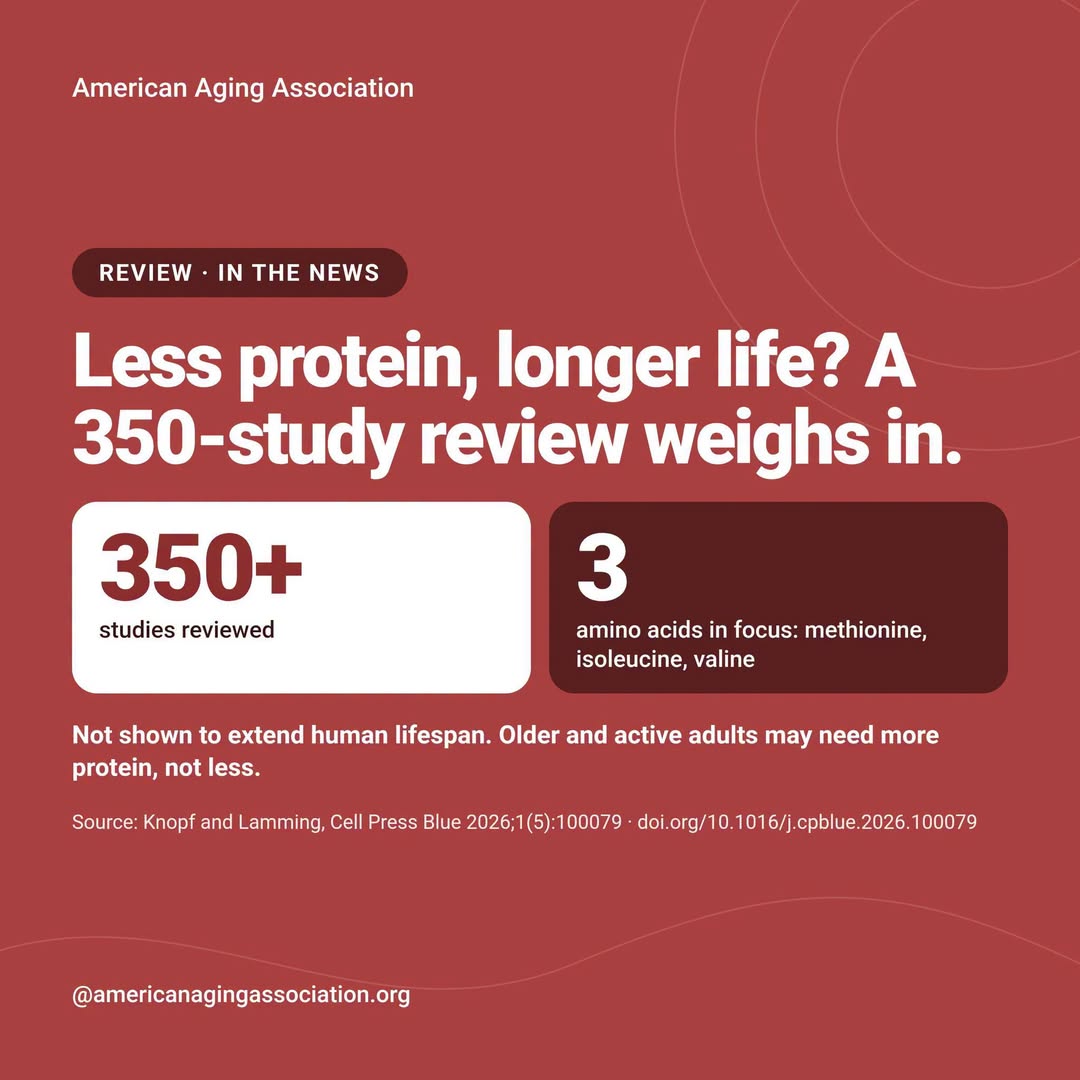
I want to comment on this “sugar diet” that has recently become popular.
This is not a healthy long-term diet.
I definitely would not recommend it for long-term use.
BUT there are some theoretical reasons why it probably works. And there are compelling experiments in mice that back those reasons up. A very old study in humans also offers some confirmation.
Isoleucine restriction extends lifespan by 33% in male HET3 mice, and dramatically improves insulin sensitivity and fascilitates weight loss.
These type of mice are the gold standard used in aging research, because they are genetically heterogenous just like mice in the wild. They are the same mice used in the Interventions Testing Program (ITP) to study aging at the NIH.
This 33% lifespan extension is comparable to the effects of 30% calorie restriction in male mice, and beats every single intervention ever tested in males in the ITP.
(In females, the lifespan extension was 7%.)
 Lifespan Research Institute | Building a Future Free of Age-Related DiseaseIsoleucine Restriction Boosts Lifespan in Mice | Lifespan Research InstituteA new study reports a massive 33% increase in median lifespan in male genetically heterogeneous mice following prolonged isoleucine restriction.lifespan.io
 Department of MedicineUncovering how low-protein diets might reprogram metabolismIn 2014, Dudley Lamming, PhD, associate professor, Endocrinology, Diabetes and Metabolism, was reading a study out of Australia that looked at how mice responded to dozens of controlled diets when one thing caught his attention: The mice fed the least amount of protein were the healthiest.medicine.wisc.edu
Has this diet ever been tested in humans?
Yes, it has… in the 1940’s.
But it has been forgotten.
It was called the “rice diet” at that time, and it consisted of a normal (not restricted) number of calories that came entirely from white rice, white sugar, and fruit juice. This diet had the minimum isoleucine necessary to survive.
It showed shocking results in short term controlled feeding studies in humans. People lost an enormous amount of weight, and diabetes was reversed. (We now know that clearing out the liver and pancreas of ectopic fat reverses diabetes.)
 McDougallWalter Kempner, MD - Founder of the Rice Diet - McDougallClick to learn about the founder of the rice diet, Dr. Walter Kempner. This incredible diet can be safe and therapeutic for a range of conditions.drmcdougall.com
Paper · J Clin Invest · 1950Dietary treatment of hypertension; clinical and metabolic studies of patients on the rice-fruit diet.ncbi.nlm.nih.gov
Some recent small RCT’s in humans have also confirmed that protein restriction improves insulin sensitivity and metabolic syndrome:
Paper · Nat Metab · 2025Dietary protein restriction elevates FGF21 levels and energy requirements to maintain body weight in lean mennature.com PaperMDPI articlemdpi.com Paper · Aging Cell · 2017In a randomized trial in prostate cancer patients, dietary protein restriction modifies markers of leptin and insulin signaling in plasma extracellular vesicles.Obesity, metabolic syndrome, and hyperleptinemia are associated with aging and age-associated diseases including prostate cancer. One experimental approach to inhibit tumor growth is to reduce dietary protein intake and hence levels of circulating amino acids. Dietary protein restriction (PR) increases insulin sensitivity and suppresses prostate cancer cell tumor growth in animal models, providing a rationale for…pmc.ncbi.nlm.nih.gov#sugardietHD #isoleucineHD #ricedietHD #kempnerHD #itpHD #dudleylammingHD #proteinHD #proteinrestrictionHD