I want to address the so-called “protein leverage hypothesis”.
This is the theory that lowering protein intake causes you to overeat even more calories from carbs and fat to compensate.
Whether or not this is actually true…
The idea that this in turn causes you to gain weight is likely oversimplified.
Both the human and mouse data show the opposite.
The study that he is referring to in the video clip:
Paper · Nat Metab · 2025Dietary protein restriction elevates FGF21 levels and energy requirements to maintain body weight in lean mennature.comReference for video clip:
 ▶Video · YouTube · Nick Norwitz MD PhDI Literally Couldn’t Eat Enough Calories…m.youtube.com
We know this is false in the best animal models.
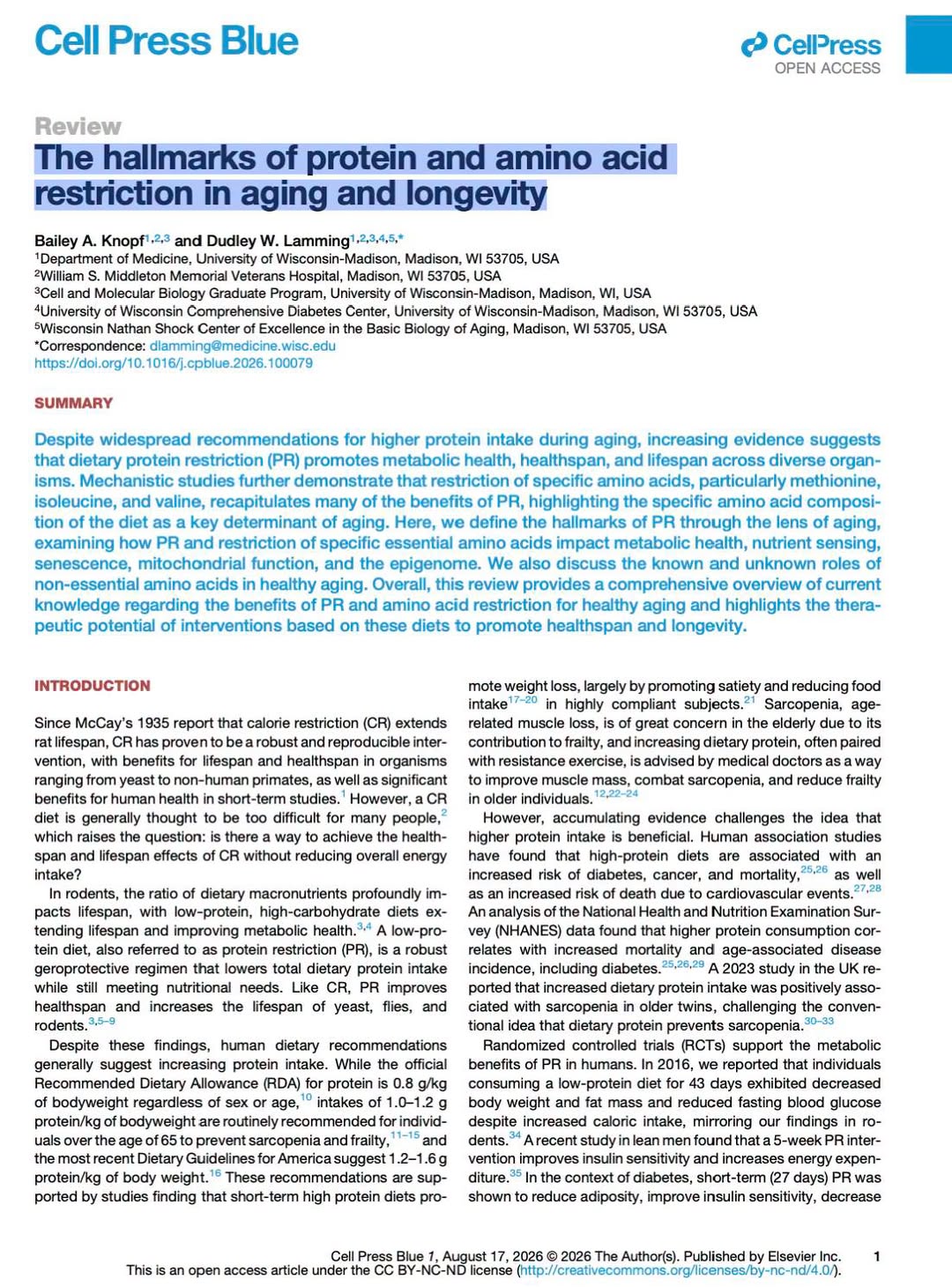
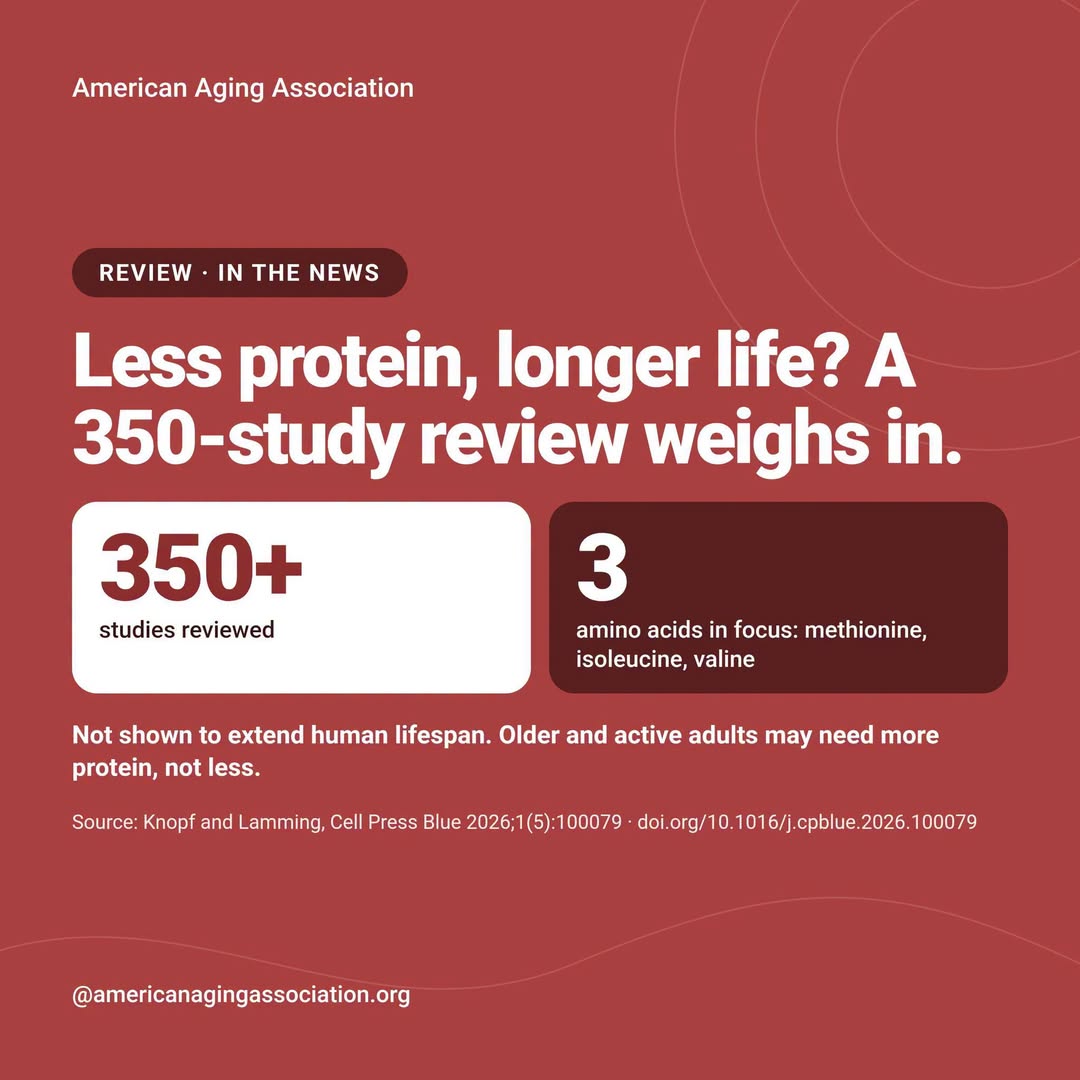
Protein restricted HET3 mice eat considerably more calories than controls when both groups are allowed to eat ad libitum, yet still lose more weight and live much longer. They are significantly leaner and healthier than controls who eat more calories. Dudley Lamming’s research at the University of Wisconsin has proven this:
.
sciencealert.comCutting back one amino acid increased the lifespan of mice up tosciencealert.com↪ Isoleucine restriction extended male HET3 mouse lifespan 33% despite higher calorie intake
↪ Cutting dietary isoleucine by two-thirds extended male mouse lifespan 33%
These HET3 mice are the same as used in the NIA’s Intervention Testing Program (ITP). They are the gold standard animal models used in longevity research.
We now have a carefully done feeding study in humans which shows a similar effect:
PaperMDPI articlemdpi.com↪ Cutting protein to 10% of calories matched 25% calorie restriction in a 27-day RCT
In this randomized trial of people with metabolic syndrome, lowering protein intake to 10% of calories produced many of the same short term metabolic benefits as restricting calories by 25%, including significant weight loss. This was a small short-term study, but was done in a very tightly controlled hospital setting where all meals were provided.
Other human trials have confirmed this:
Paper · Aging Cell · 2017In a randomized trial in prostate cancer patients, dietary protein restriction modifies markers of leptin and insulin signaling in plasma extracellular vesicles.Obesity, metabolic syndrome, and hyperleptinemia are associated with aging and age-associated diseases including prostate cancer. One experimental approach to inhibit tumor growth is to reduce dietary protein intake and hence levels of circulating amino acids. Dietary protein restriction (PR) increases insulin sensitivity and suppresses prostate cancer cell tumor growth in animal models, providing a rationale for…pmc.ncbi.nlm.nih.govLamming’s work likely provides the mechanistic basis by which the “sugar diet” and “rice diet” seem to work in humans. These diets are extremely low protein, yet people seem to lose considerable weight without feeling overly hungry:
↪ Isoleucine restriction extends mouse lifespan 33%, and may explain the old rice diet
↪ Keto influencer with LDL near 500 mg/dL discovers isoleucine restriction (Lamming work)
#proteinHD #proteinleverageHD #isoleucineHD #norwitzHD #dudleylammingHD #fgf21HD #miceHD #proteinrestrictionHD