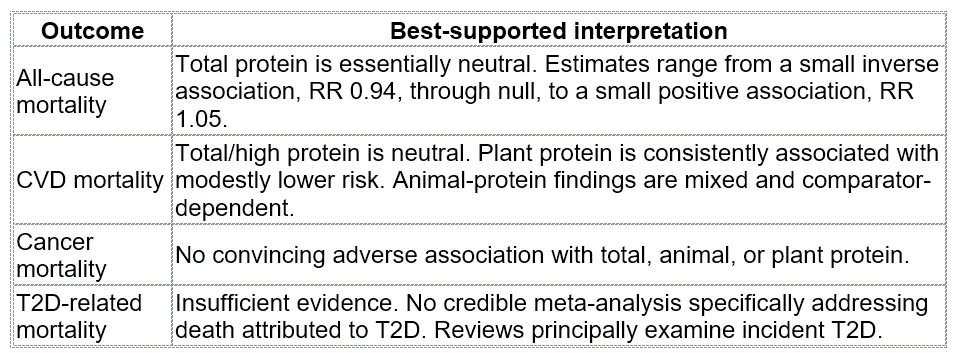
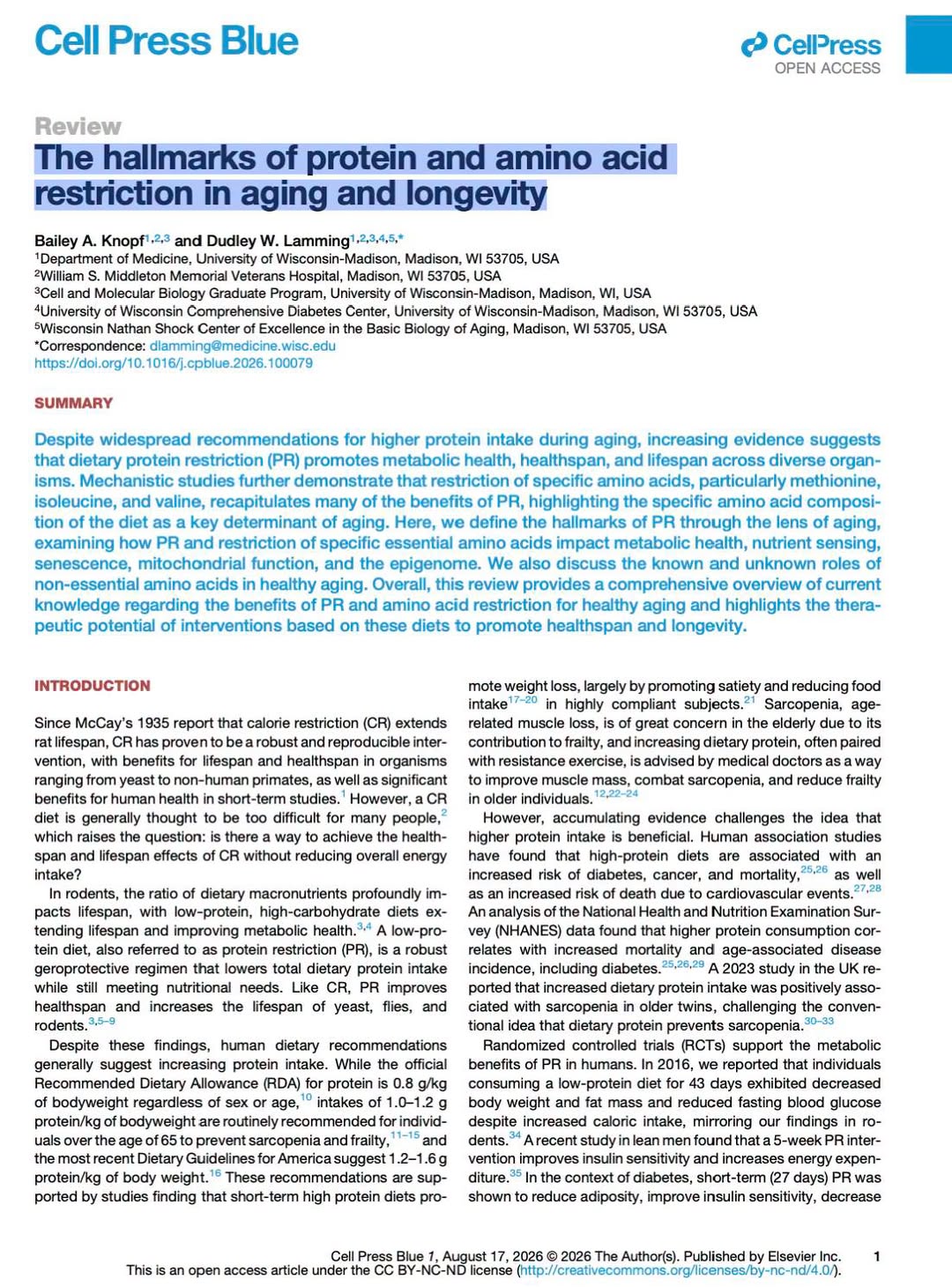
Substituting plant protein for animal protein might stimulate thermogenesis more than cold plunges.
Lowering methionine and cysteine, two amino acids found heavily in high-quality animal protein, increased calorie burning by 20 percent in mice.
The effect on calorie burning was almost as strong as living at 5 degrees Celsius all day.
The mice did not eat less. They did not exercise more. Diet alone stimulated the thermogenesis.
The metabolic shift occurred as their beige fat converted to heat-producing energy-consuming brown fat, without reducing food intake or increasing exercise. This effect mimicked what normally happens during prolonged cold exposure.
Plant-based proteins such as legumes, nuts, seeds, and whole grains, are naturally much lower in these two amino acids.
Link to study:
“Dietary sulfur amino acid restriction elicits a cold-like transcriptional response in inguinal but not epididymal white adipose tissue of male mice” (eLife, Mar 2026)
elifesciences.orgClient Challengeelifesciences.org ScienceDailyScientists discover diet that tricks the body into burning fat without exerciseResearchers found that cutting two amino acids common in animal protein—methionine and cysteine—made mice burn significantly more energy. The boost in heat production was nearly as powerful as constant exposure to cold temperatures. The mice didn’t eat less or exercise more; they simply generated more heat in their beige fat. The discovery hints that diet…sciencedaily.com
This is not the first study to show this. Previous research at Yale also showed that restricting the amino acid cysteine increased fat burning in mice, and promoted conversion of white fat to thermogenic brown fat:
Paper · Nat Metab · 2025Cysteine depletion triggers adipose tissue thermogenesis and weight lossnature.com medicine.yale.eduConsuming Less Cysteine Can Burn Fat to Induce Weight LossReducing calorie intake can improve health and longevity. A new study finds the amino acid cysteine may be a key reason why.medicine.yale.edu
There is also a whole body of previous evidence in mice that methionine restriction extends lifespan and protects against weight gain.
Additionally, it is interesting to note that isoleucine restriction increases the rate at which calories are burned in mice, and dramatically extends lifespan. Most of this research was done by Dudley Lamming’s group at the University of Wisconsin Madison. Isoleucine is another amino acid found in high concentrations in animal protein, but not in plant protein. There were several previous posts on this in the group:
Quoted:
“Researchers found that cutting two amino acids common in animal protein—methionine and cysteine—made mice burn significantly more energy. The boost in heat production was nearly as powerful as constant exposure to cold temperatures. The mice didn’t eat less or exercise more; they simply generated more heat in their beige fat. The discovery hints that diet alone might activate the body’s calorie-burning machinery.”
“Many scientists and drug companies are trying to find ways to make the body behave as if it is cold, triggering thermogenesis without ice baths or freezing temperatures. But obesity researchers Philip Ruppert and Jan-Wilhelm Kornfeld from the Department of Biochemistry and Molecular Biology (BMB) at the University of Southern Denmark explored a different strategy.
Instead of lowering temperature, they investigated whether diet alone could switch on thermogenesis.
Their focus was on reducing two specific amino acids in food: methionine and cysteine.
After a series of experiments in mice, the team found that diet induced thermogenesis produced almost the same weight loss as constant exposure to five degrees Celsius around the clock.”
“The mice that burned the most energy ate the same amount of food as the others, and they didn't move more or less. We saw a 20% increase in their thermogenesis. They lost more weight, and it was not because they ate less or exercised more -- they simply generated more heat," explains Jan-Wilhelm Kornfeld.”
“Methionine and cysteine are found in high amounts in animal based proteins such as meat, eggs, and dairy. They are present in much lower amounts in plant foods like vegetables, nuts, and legumes that are associated with healthy aging (as shown in this study).”
“The researchers also wanted to know where the extra calorie burning occurred. They found that it took place in beige fat, a type of fat stored just under the skin in both mice and humans. This same fat tissue is activated during cold exposure.
Fat was burned in beige fat during both cold induced thermogenesis and diet induced thermogenesis.
‘This tells us that beige fat doesn't care whether the burning is triggered by cold or by diet,’ says Philip Ruppert.”
#thermogenesisHD #plantproteinHD #animalproteinHD #proteinHD #coldplungesHD #methionineHD #cysteineHD #miceHD #brownfatHD #isoleucineHD #dudleylammingHD