HD-OPM Archive
Topics › Fats & oils (saturated fat, seed oils, omega-6, olive oil)

Seed-oil fears rebutted: pooled cohorts link higher omega-6 to lower CVD and diabetes risk

Louis Nervegna · Jul 18, 2025 · ♥ 14 reactions · 2 comments · original Facebook post
Fats & oils (saturated fat, seed oils, omega-6, olive oil)Myths, misinformation & controversies
↻ This is a repost. The main version (highest ranked) is Medical schools push back on seed-oil myths; pooled cohorts link omega-6 to lower risk · Jun 18, 2025.
AI summary & key facts

Louis criticises influencer misinformation about seed oils and shares a Harvard-style infographic stating that scientific studies consistently show seed oils are not toxic. He cites a 2019 pooled analysis of 30 prospective cohorts in which higher blood linoleic acid predicted lower risk of heart disease and diabetes.

The major medical schools and schools of public health are finally pushing back on the nonsense from influencers about seed oils.

I’ve had it with the constant barrage of misinformation on this topic. It is harming people.

You can read the many posts about seed oils in this group by clicking the tag #seedoilsHD or the tag #omega6HD.

The photos in the post below refer to a 2019 pooled analysis of 30 prospective cohort studies that showed higher blood levels of omega6 (linoleic acid) predict lower risk of heart disease and diabetes in the long term (2.5 years to 30 years). You can read the posts on this 2019 pooled analysis by clicking the links underneath:

↪ Higher omega-6 biomarker levels linked to 22% lower CVD death in 30-cohort pooled analysis

↪ Higher omega-6 (linoleic acid) biomarker levels linked to 43% lower type 2 diabetes risk

↪ Johns Hopkins: highest-quality evidence shows seed oils and omega-6 are not harmful

————-

#seedoilsHD #inflammationHD #inflammation6HD #canolaoilHD #soybeanoilHD #unsaturatedfatHD #vegetableoilsHD #ultraprocessedfoodHD #diabetesHD #cvdHD #linoleicacidHD #insulinresistanceHD #glycemiccontrolHD #ldlHD #omega6HD #saturatedfatHD #omega6diabetesHD #omega6cvdHD
Research cited

Some wellness influencers warn against consuming seed oils, blaming them for a range of health problems and characterizing them as toxic. Scientific studies consistently show otherwise.

The discourse around seed oils focuses on eight particular oils: canola, corn, cottonseed, grapeseed, rice bran, safflower, soybean, and sunflower. Products sold as “vegetable oil” generally contain one or more of these oils.

Swipe through to learn what nutrition scientists say about seed oils.

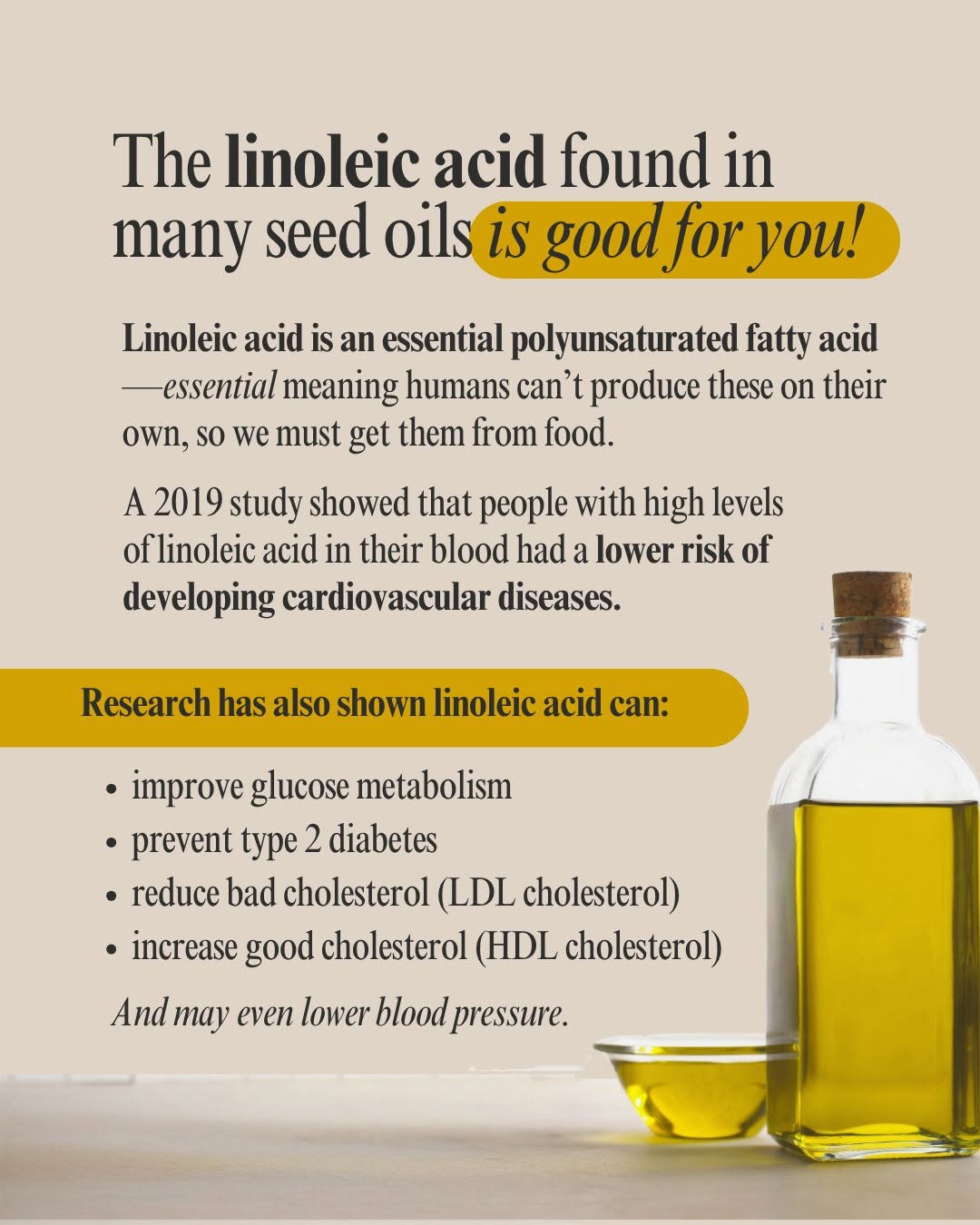
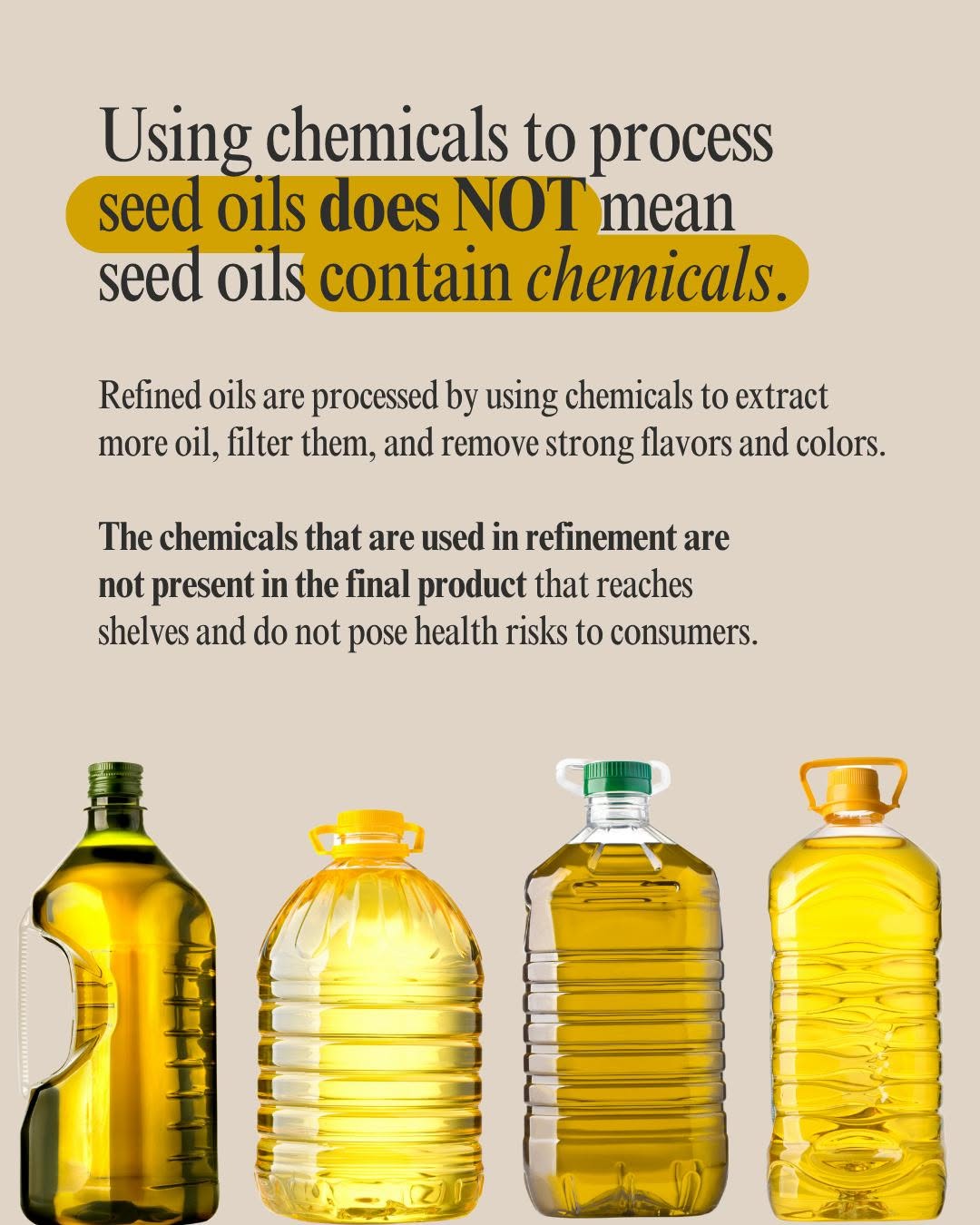
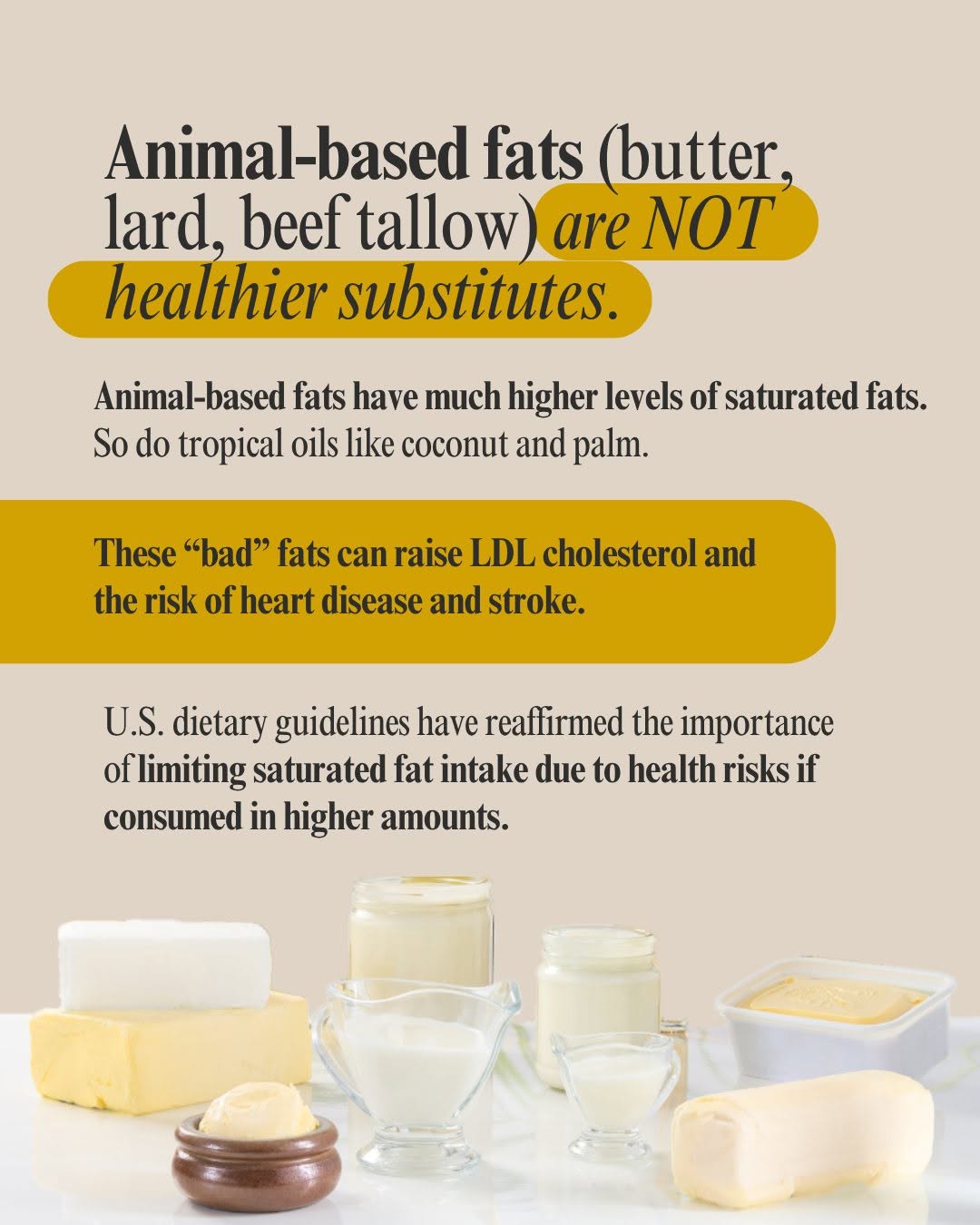
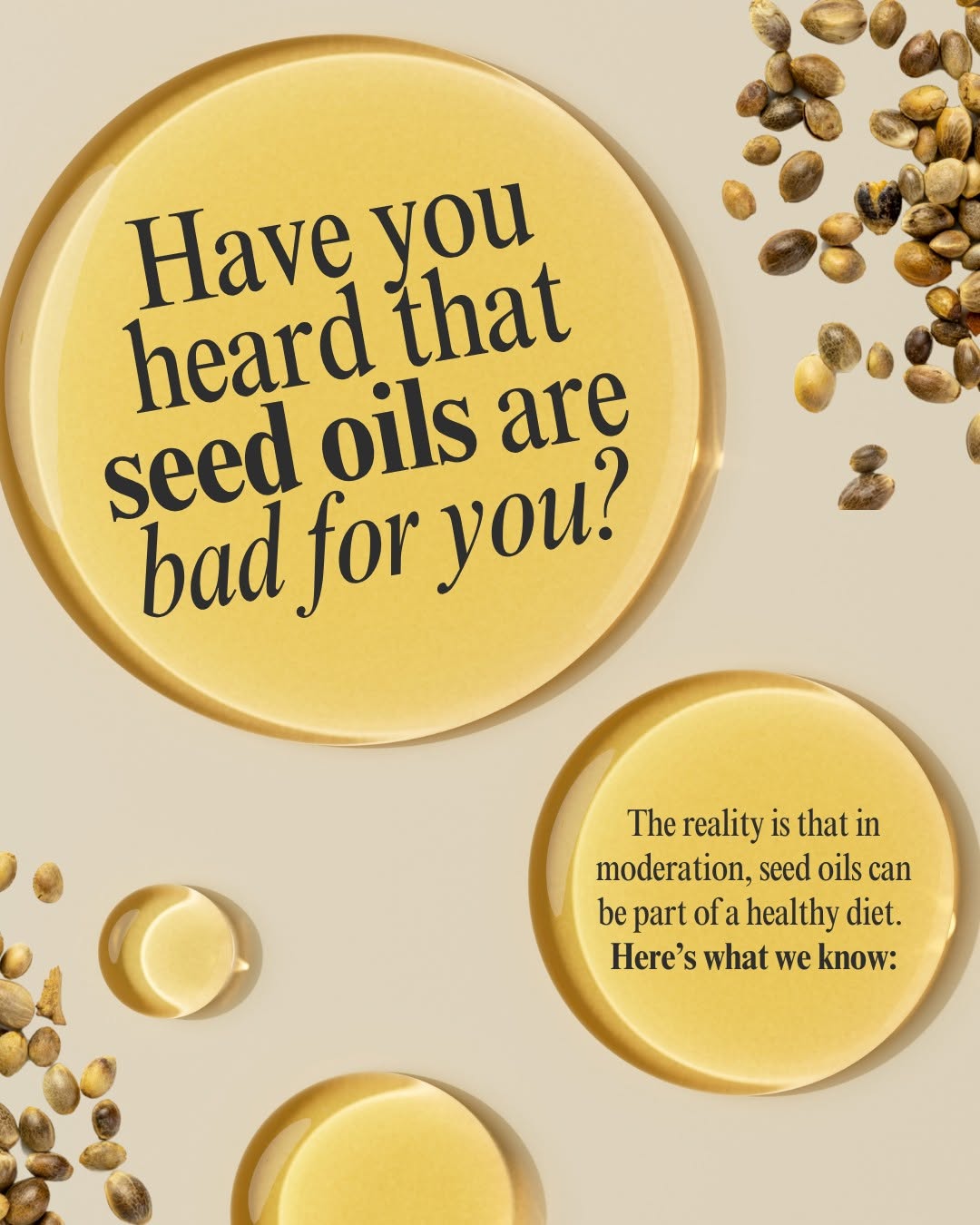
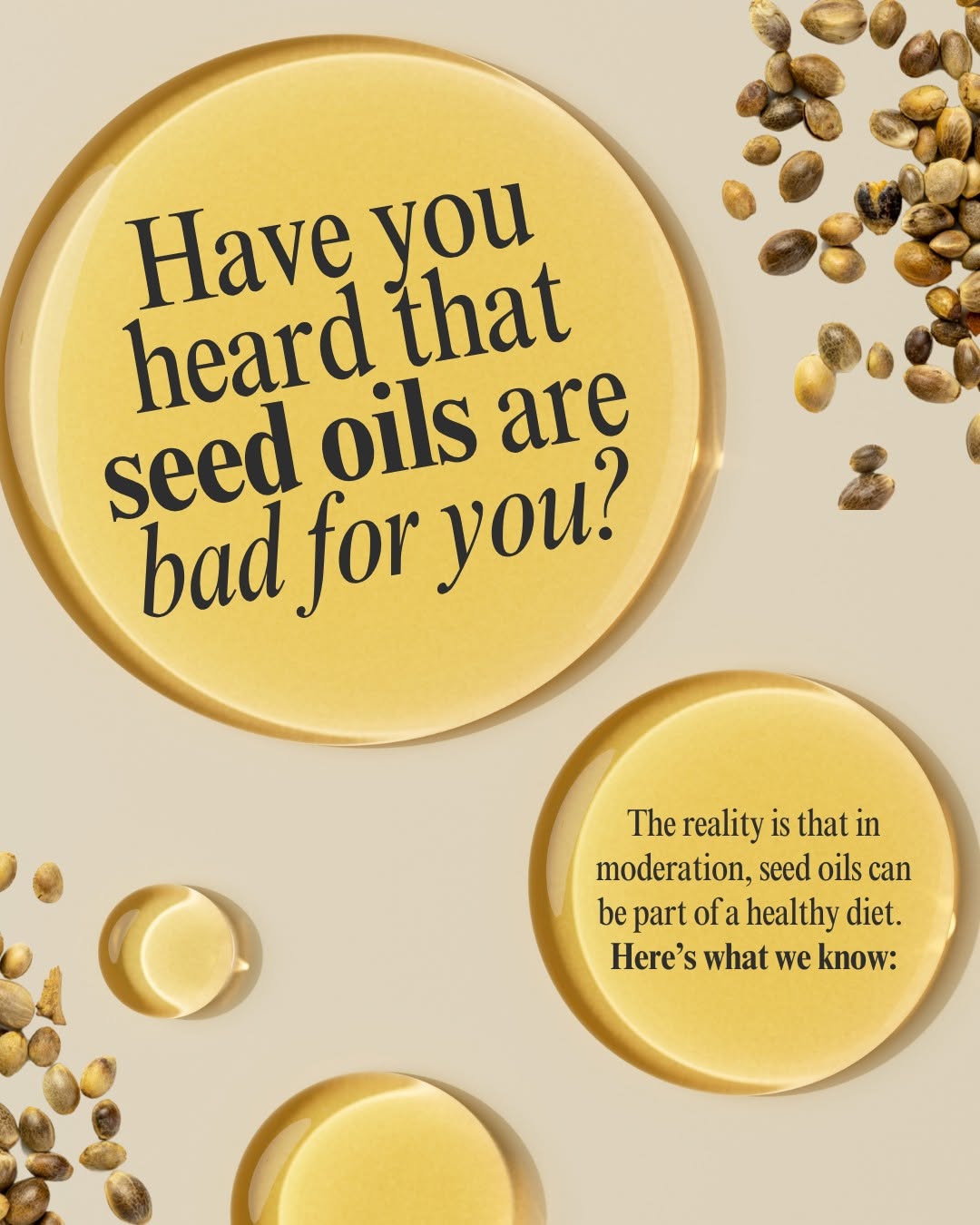
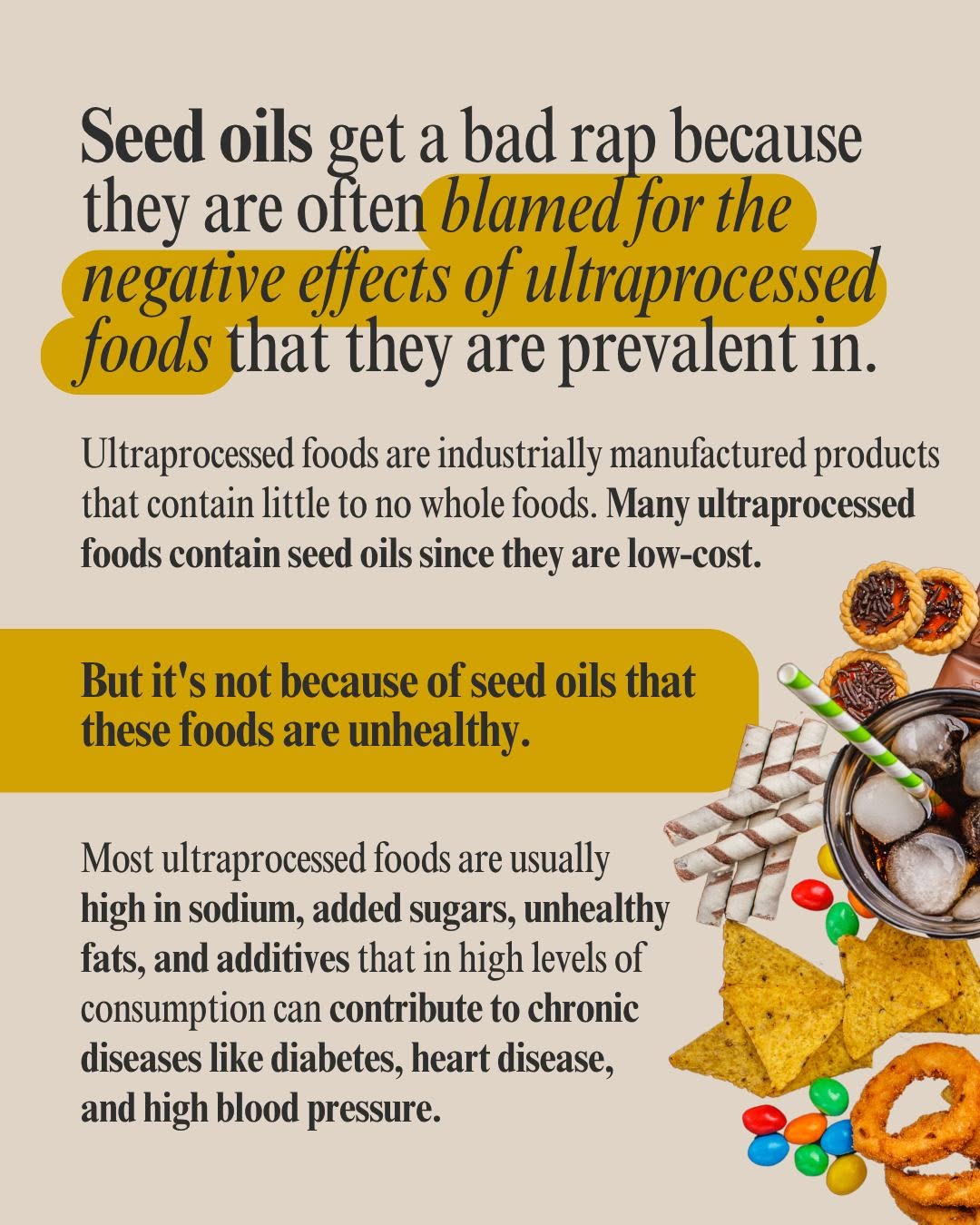
publichealth.jhu.eduThe evidence behind seed oils health effectspublichealth.jhu.eduOil drops and seeds. Text reads: Have you heard that seed oils are bad for you? The reality is that in moderation, seed oils can be part of a healthy diet. Here’s what we know:Ultraprocessed foods. Text reads: Seed oils get a bad rap because they are often blamed for the negative effects of ultraprocessed foods that they are prevalent in. Ultraprocessed foods are industrially manufactured products that contain little to no whole foods. Many ultraprocessed foods contain seed oils since they are low-cost. But it's not because of seed oils that these foods are unhealthy. Most ultraprocessed foods are usually high in sodium, added sugars, unhealthy fats, and additives that in high levels of consumption can contribute to chronic diseases like diabetes, heart disease, and high blood pressure.Oil in a glass bottle and in a dish. Text reads: The linoleic acid found in many seed oils is good for you! Linoleic acid is an essential polyunsaturated fatty acid—essential meaning humans can’t produce these on their own, so we must get them from food. A 2019 study showed that people with high levels of linoleic acid in their blood had a lower risk of developing cardiovascular diseases. Research has also shown linoleic acid can: improve glucose metabolism, prevent type 2 diabetes, reduce bad cholesterol (LDL cholesterol), increase good cholesterol (HDL cholesterol). And may even lower blood pressure.Four jugs of oil. Text reads: Using chemicals to process seed oils does NOT mean seed oils contain chemicals. Refined oils are processed by using chemicals to extract more oil, filter them, and remove strong flavors and colors. The chemicals that are used in refinement are not present in the final product that reaches shelves and do not pose health risks to consumers.Animal-based fats on a table. Text reads: Animal-based fats (butter, lard, beef tallow) are NOT healthier substitutes. Animal-based fats have much higher levels of saturated fats. So do tropical oils like coconut and palm. These “bad” fats can raise LDL cholesterol and the risk of heart disease and stroke. U.S. dietary guidelines have reaffirmed the importance of limiting saturated fat intake due to health risks if consumed in higher amounts.
← newer: APOE e4 carriers share a pro-inflammatory protein profile inolder: Chronic venous insufficiency explained: faulty leg vein valv →