HD-OPM Archive
Topics › Cardiovascular disease: the big picture

Clonal hematopoiesis (CHIP) increasingly linked to cardiovascular disease and cancer

Louis Nervegna · Sep 18, 2025 · ♥ 8 reactions · 1 comments · original Facebook post
Cardiovascular disease: the big pictureCancerAging & longevity
AI summary & key facts

A JACC CardioOncology review examines clonal hematopoiesis of indeterminate potential, an age-related mutation in blood stem cell lines, as a shared risk factor for both cardiovascular disease and cancer. Louis notes that evidence keeps accumulating.

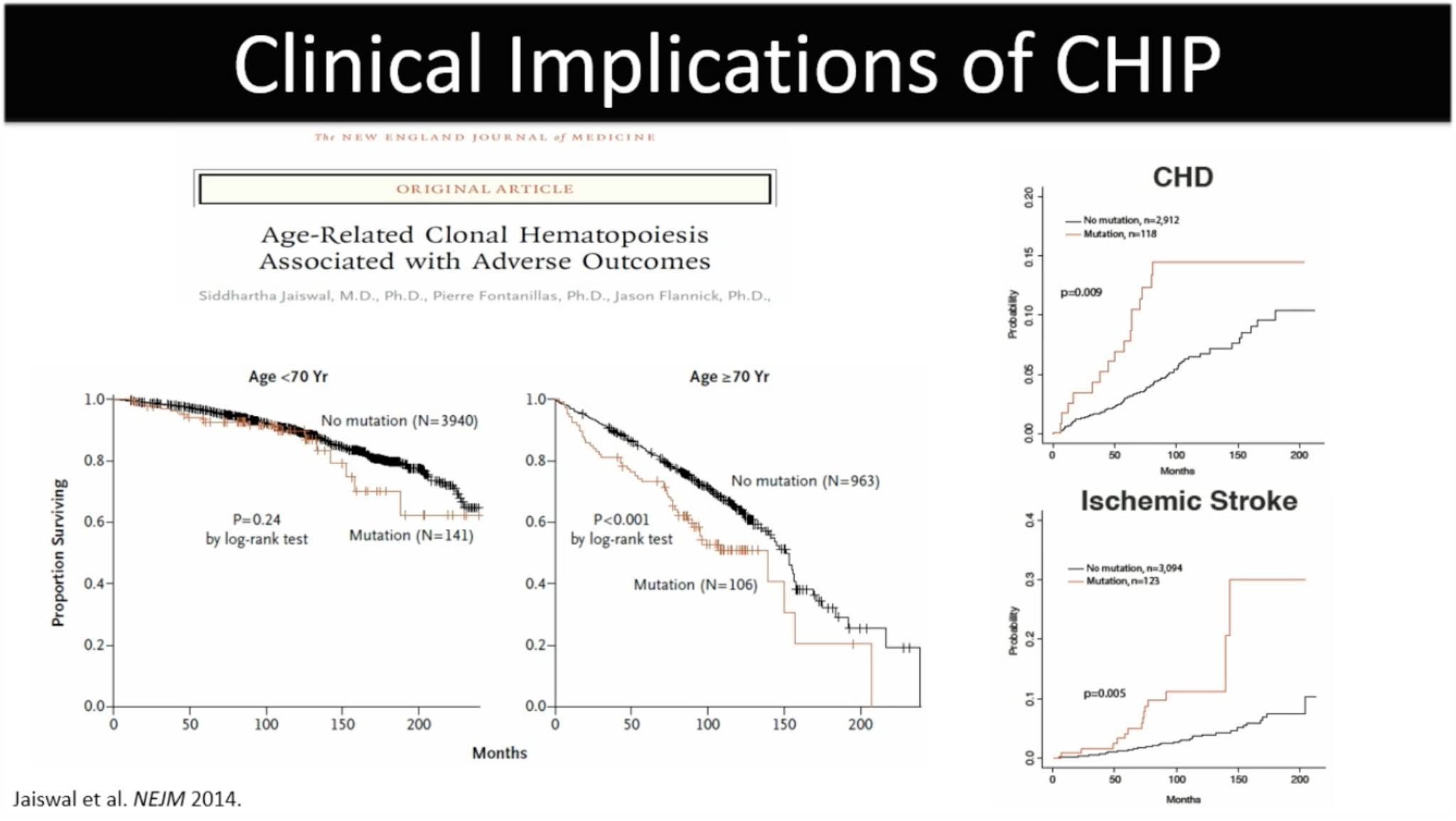
More and more evidence keeps pointing to clonal hematopoiesis (CHIP) as a risk factor for CVD and other age-related diseases like cancer.

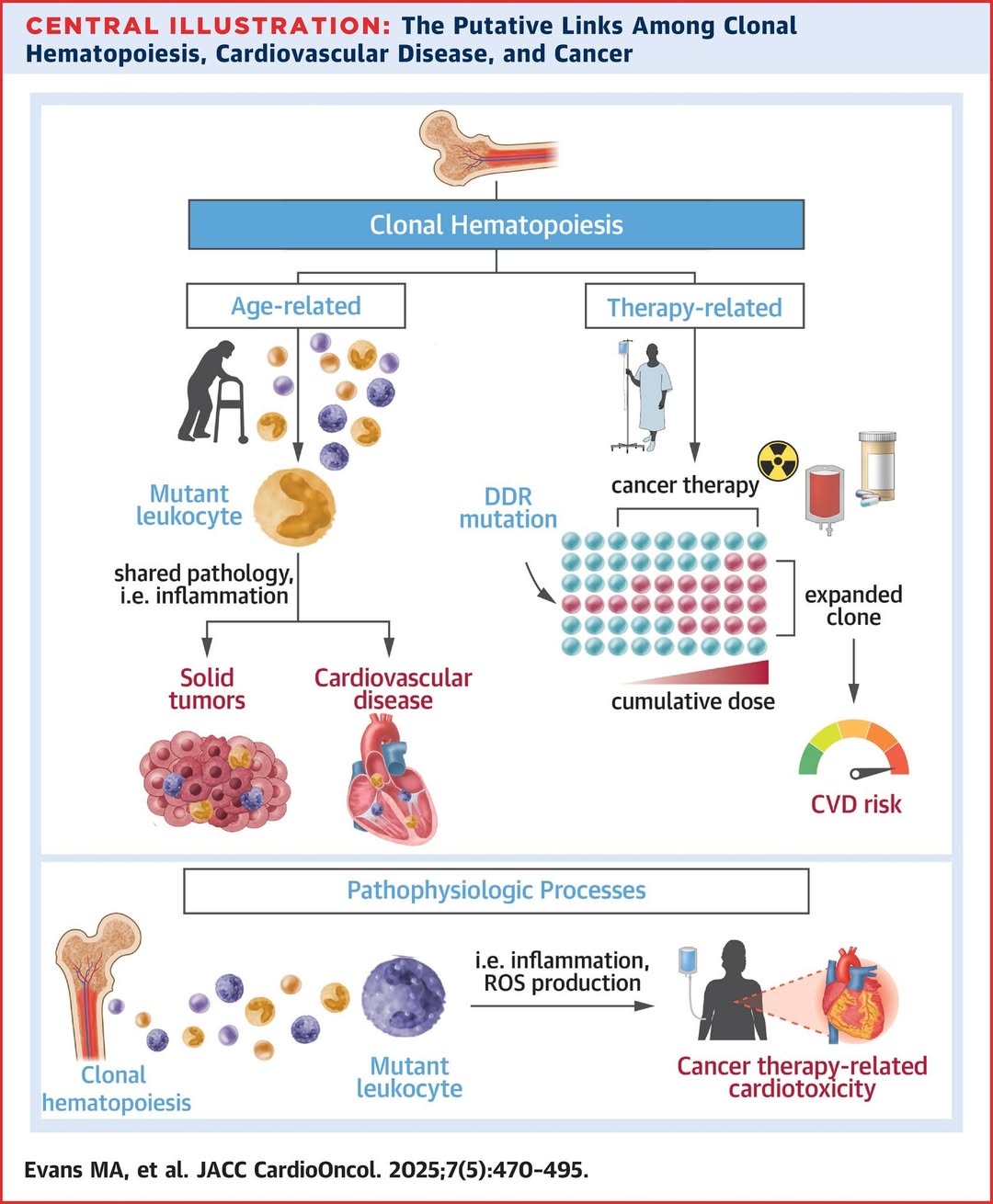
Clonal hematopoiesis of indeterminate potential, or CHIP, is a common aging-related phenomenon in which hematopoietic stem cells (produced by the bone marrow) or other early blood cell progenitor cells contribute to the formation of a genetically distinct mutated subpopulation of blood cells. This mutated subpopulation of blood cells is pathological and contributes to the formation of disease.

If we live long enough, all of us will ultimately develop CHIP. It appears to be an inevitable consequence of the aging process itself, except in rare cases. This is one of the mechanisms by which aging itself causes diseases like CVD and cancer.

It can also be caused earlier in life by exposure to certain mutagenic agents, such as cytotoxic chemotherapy drugs for cancer treatment.
#chipHD

Research cited

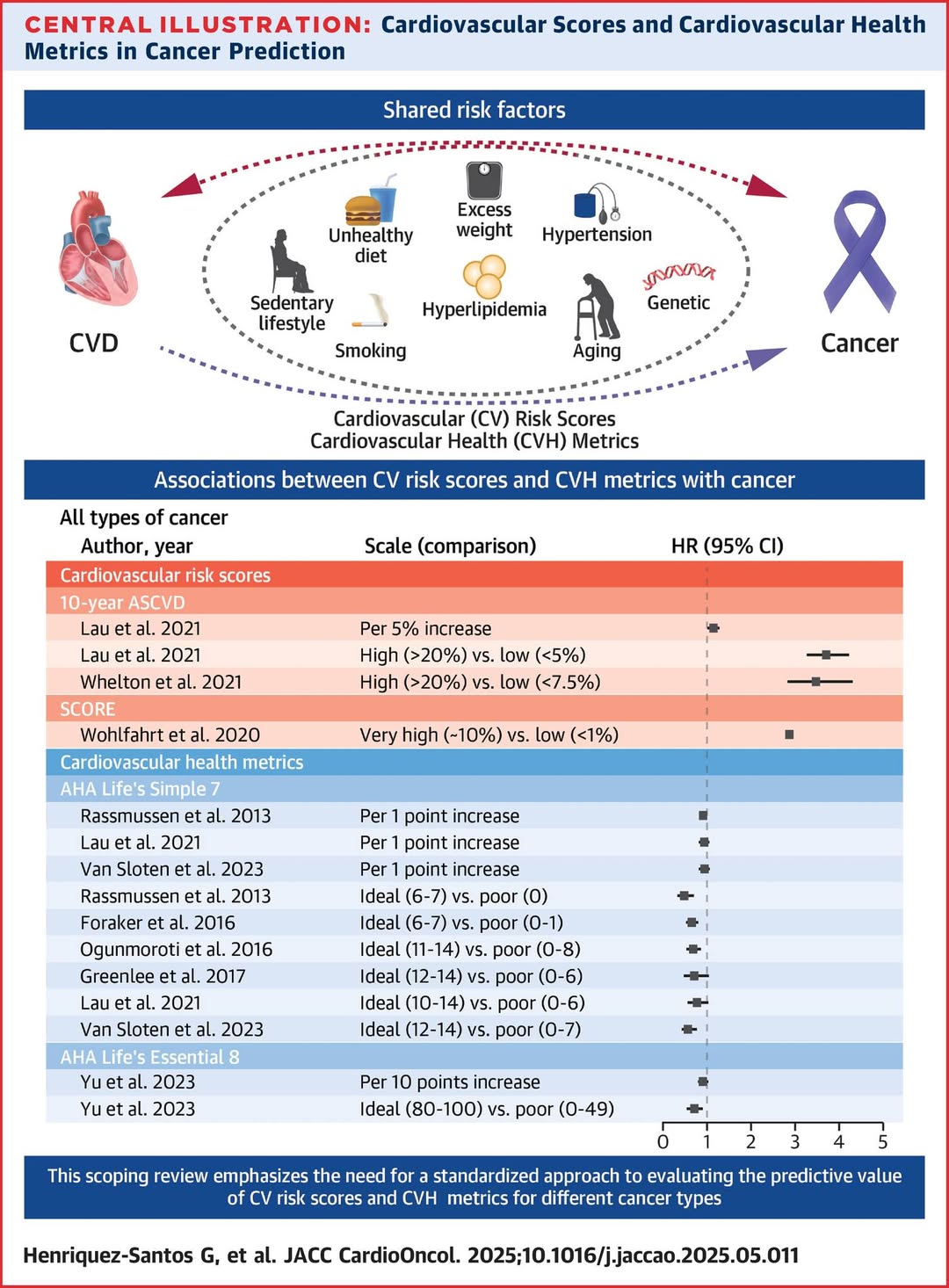
#JACCCardioOnc review provides an in-depth analysis of the evidence linking clonal hematopoiesis with solid organ malignancies and explores its role as a shared risk factor for the development of both cardiovascular disease and cancer. Clonal Hematopoiesis in Cancer and Cardiovascular Disease (JACC: CardioOncology, 2025)

No photo description available.
← newer: Japan-ACS: modest statin doses cut non-culprit plaque volumeolder: Sumo wrestlers avoid metabolic disease by storing fat under →