CHIP
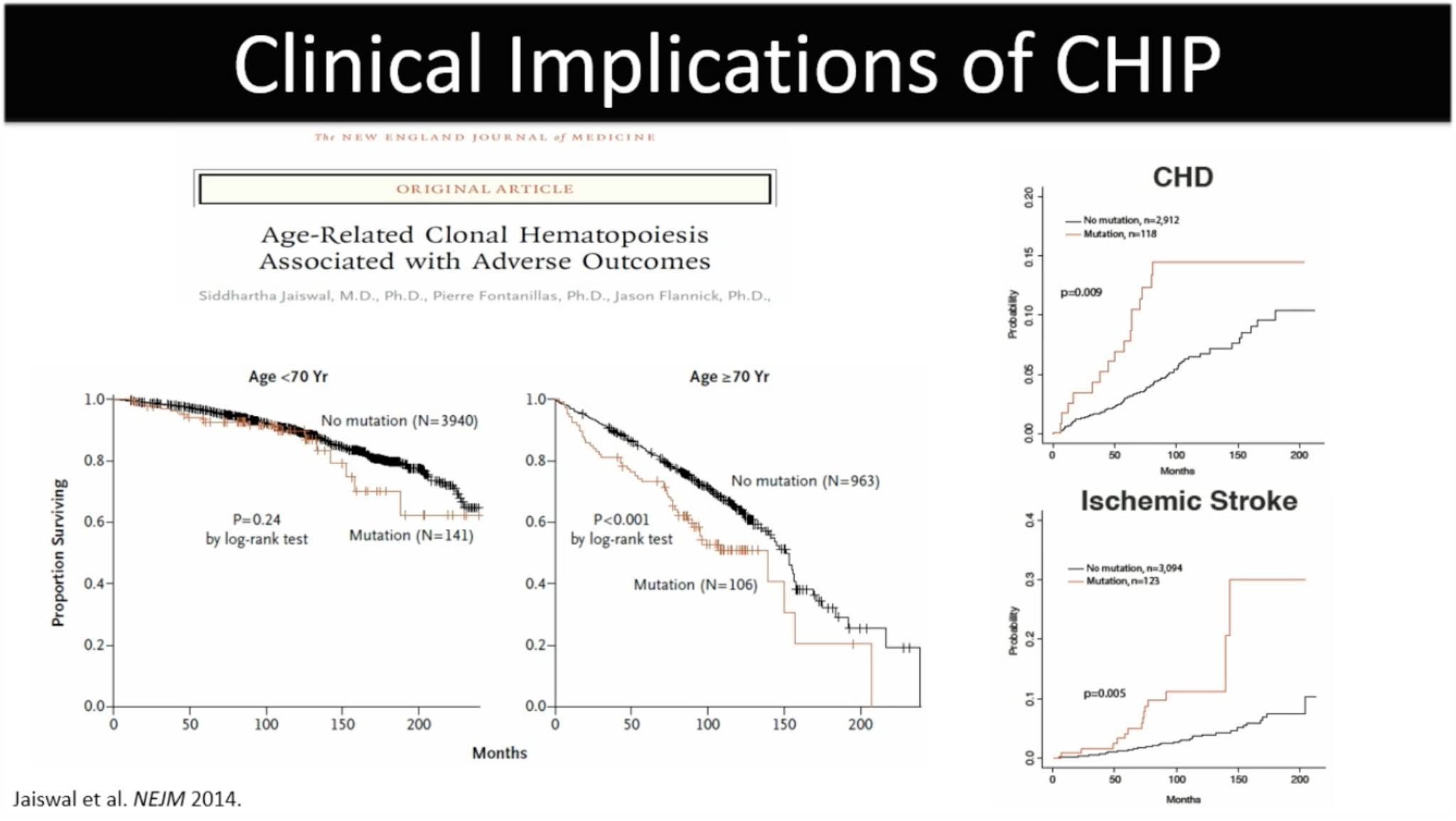
CHIP is a relatively unknown major risk factor for heart disease, stroke and deaths.
What is CHIP?
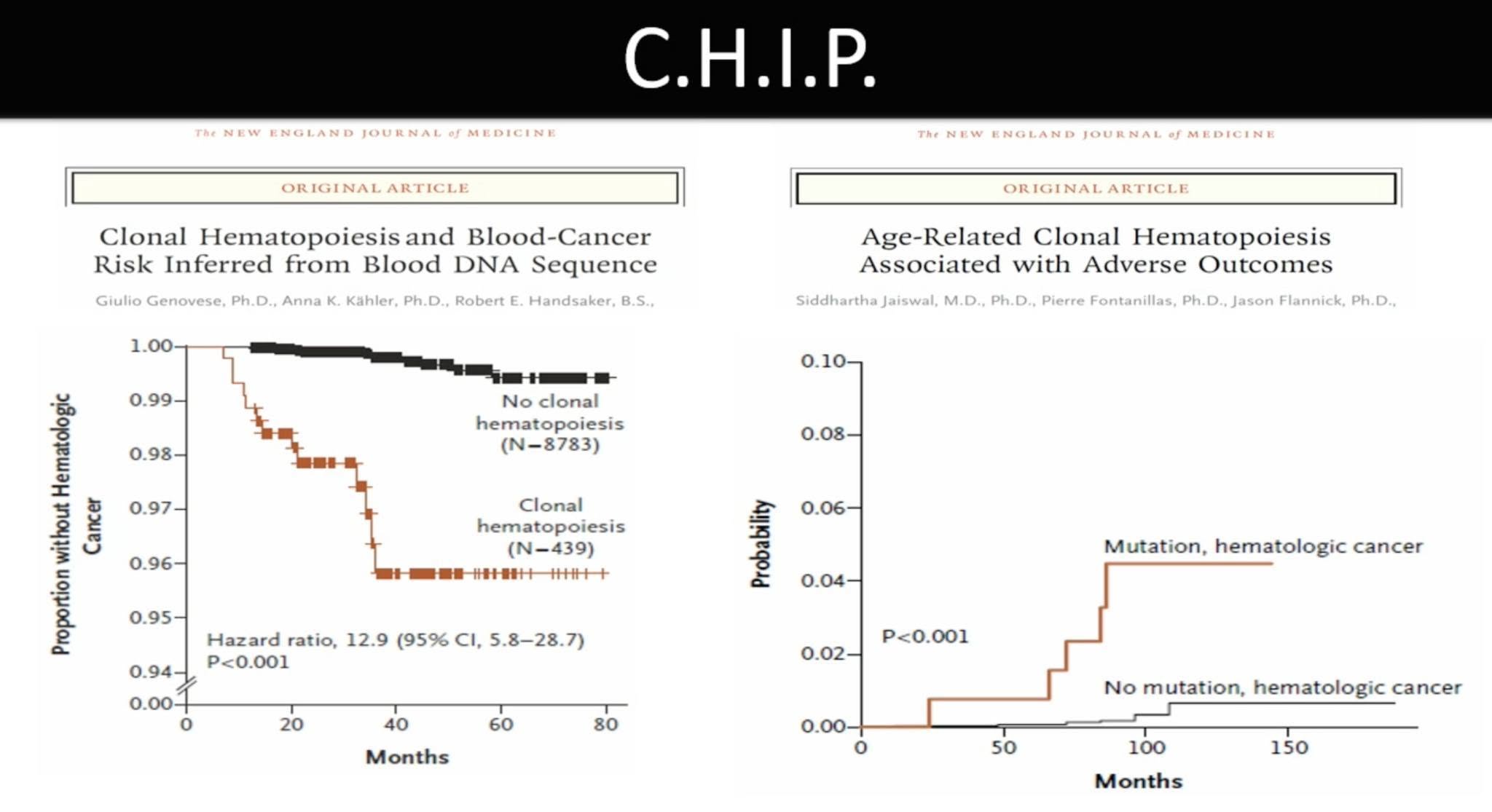
- CHIP (Clonal Hematopoiesis of Indeterminate Potential) is a condition where a portion of blood cells have acquired genetic mutations, increasing the risk of blood cancers, heart disease, and stroke.
CHIP prevelance by age?
- The prevalence of CHIP increases with age, affecting less than 1% of individuals under 40 years but rising to over 10-20% in those over 70 years. In one study, 37.8% of those hospitalized with covid had CHIP (vs 17% of same age controls).
Effect of hormone replacement therapy (testosterone in particular) on CHIP?
- Hormone replacement therapy, especially with testosterone, can have adverse effects on CHIP. Anything that is strongly stimulative to your bone marrow helps CHIP grow and progress.
Can you get tested for CHIP?
- Yes, you can. If you find a hematologist, and convince them to run an NGS (Next Gen Sequencing) panel on your blood, you'll find out if you have CHIP.
Is there a treatment for CHIP?
- No, not at the moment (unless it converts into overt blood cancer)
What are the effects of having a CHIP?
- Blood cancers: CHIP mutations are associated with a higher likelihood of developing blood cancers -- around 0.5-1% per year.
- Cardiovascular disease: Individuals with CHIP have over two-fold higher risk of coronary heart disease compared to those without the mutation.
- Stroke: CHIP may contribute to the development of stroke by promoting inflammation and the formation of blood clots.
- Increased mortality: Individuals with CHIP have a higher overall mortality rate compared to those without the mutation.
- Inflammatory conditions: CHIP has been linked to an increased risk of developing inflammatory diseases such as rheumatoid arthritis and other autoimmune disorders.
Can you pass CHIP to your children?
- No. CHIP is a somatic mutation affecting your blood stem cells only. It cannot be passed onto your children.