This post is from our group member Kenny Yu:
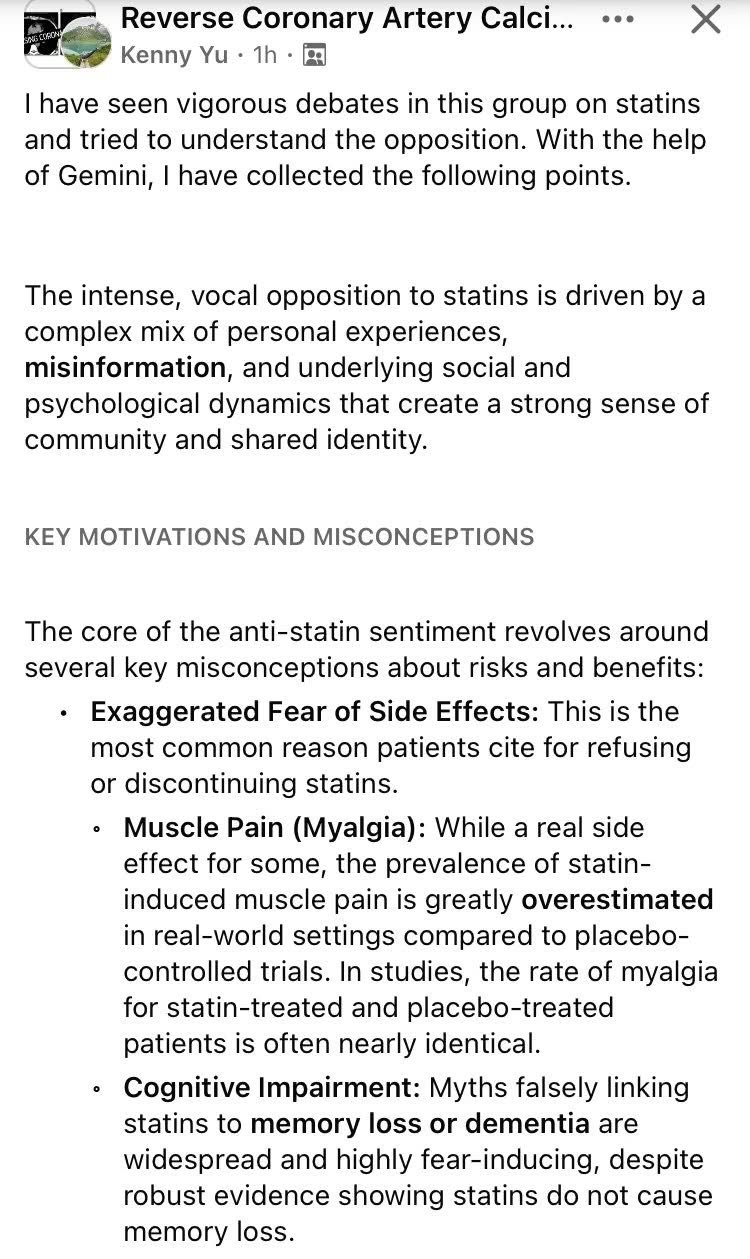
“I have seen vigorous debates in this group on statins and tried to understand the opposition. With the help of Gemini, I have collected the following points.
The intense, vocal opposition to statins is driven by a complex mix of personal experiences, misinformation, and underlying social and psychological dynamics that create a strong sense of community and shared identity.
KEY MOTIVATIONS AND MISCONCEPTIONS
The core of the anti-statin sentiment revolves around several key misconceptions about risks and benefits:
- Exaggerated Fear of Side Effects: This is the most common reason patients cite for refusing or discontinuing statins.
- Muscle Pain (Myalgia): While a real side effect for some, the prevalence of statin-induced muscle pain is greatly overestimated in real-world settings compared to placebo-controlled trials. In studies, the rate of myalgia for statin-treated and placebo-treated patients is often nearly identical.
- Cognitive Impairment: Myths falsely linking statins to memory loss or dementia are widespread and highly fear-inducing, despite robust evidence showing statins do not cause memory loss.
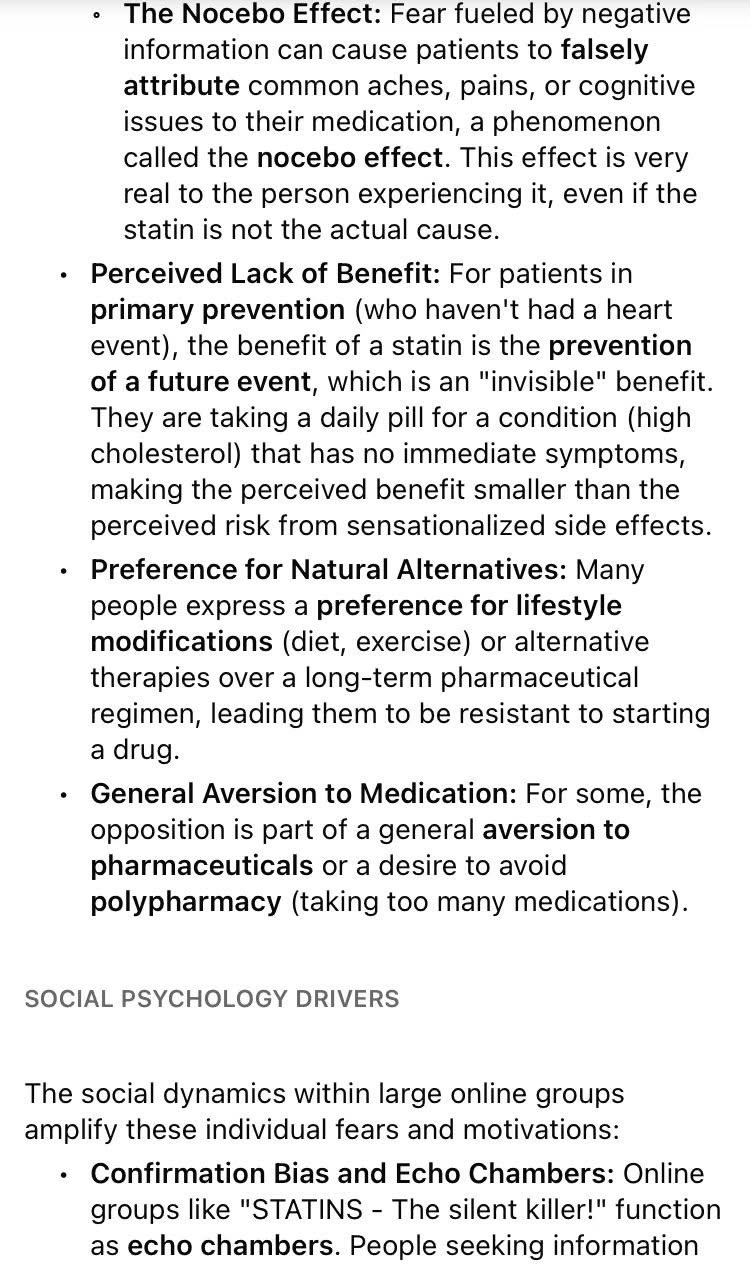
- The Nocebo Effect: Fear fueled by negative information can cause patients to falsely attribute common aches, pains, or cognitive issues to their medication, a phenomenon called the nocebo effect. This effect is very real to the person experiencing it, even if the statin is not the actual cause.
- Perceived Lack of Benefit: For patients in primary prevention (who haven't had a heart event), the benefit of a statin is the prevention of a future event, which is an "invisible" benefit. They are taking a daily pill for a condition (high cholesterol) that has no immediate symptoms, making the perceived benefit smaller than the perceived risk from sensationalized side effects.
- Preference for Natural Alternatives: Many people express a preference for lifestyle modifications (diet, exercise) or alternative therapies over a long-term pharmaceutical regimen, leading them to be resistant to starting a drug.
- General Aversion to Medication: For some, the opposition is part of a general aversion to pharmaceuticals or a desire to avoid polypharmacy (taking too many medications).
SOCIAL PSYCHOLOGY DRIVERS
The social dynamics within large online groups amplify these individual fears and motivations:
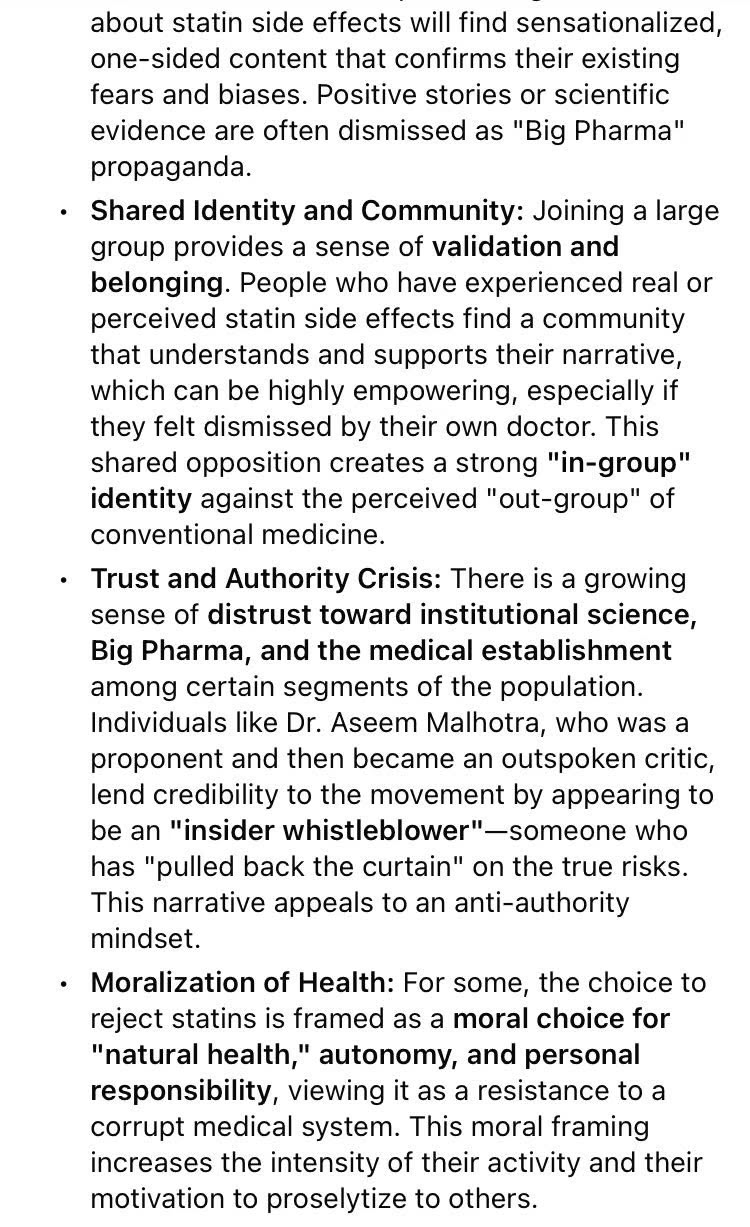
- Confirmation Bias and Echo Chambers: Online groups like "STATINS - The silent killer!" function as echo chambers. People seeking information about statin side effects will find sensationalized, one-sided content that confirms their existing fears and biases. Positive stories or scientific evidence are often dismissed as "Big Pharma" propaganda.
- Shared Identity and Community: Joining a large group provides a sense of validation and belonging. People who have experienced real or perceived statin side effects find a community that understands and supports their narrative, which can be highly empowering, especially if they felt dismissed by their own doctor. This shared opposition creates a strong "in-group" identity against the perceived "out-group" of conventional medicine.
- Trust and Authority Crisis: There is a growing sense of distrust toward institutional science, Big Pharma, and the medical establishment among certain segments of the population. Individuals like Dr. Aseem Malhotra, who was a proponent and then became an outspoken critic, lend credibility to the movement by appearing to be an "insider whistleblower"—someone who has "pulled back the curtain" on the true risks. This narrative appeals to an anti-authority mindset.
- Moralization of Health: For some, the choice to reject statins is framed as a moral choice for "natural health," autonomy, and personal responsibility, viewing it as a resistance to a corrupt medical system. This moral framing increases the intensity of their activity and their motivation to proselytize to others.
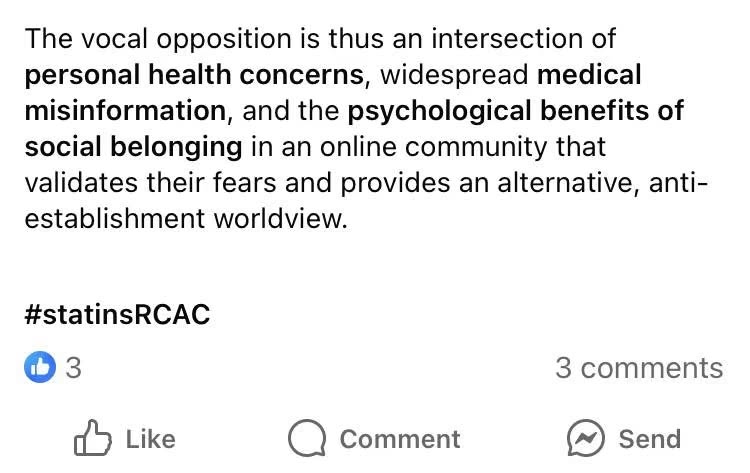
The vocal opposition is thus an intersection of personal health concerns, widespread medical misinformation, and the psychological benefits of social belonging in an online community that validates their fears and provides an alternative, anti-establishment worldview.”