HD-OPM Archive
Hashtags

#influencers

44 posts

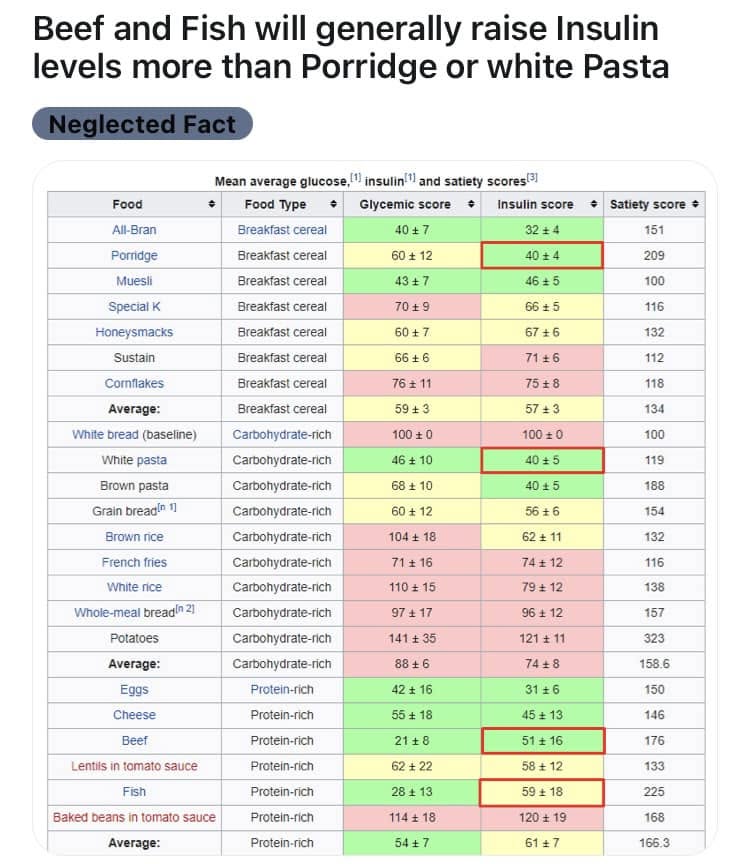
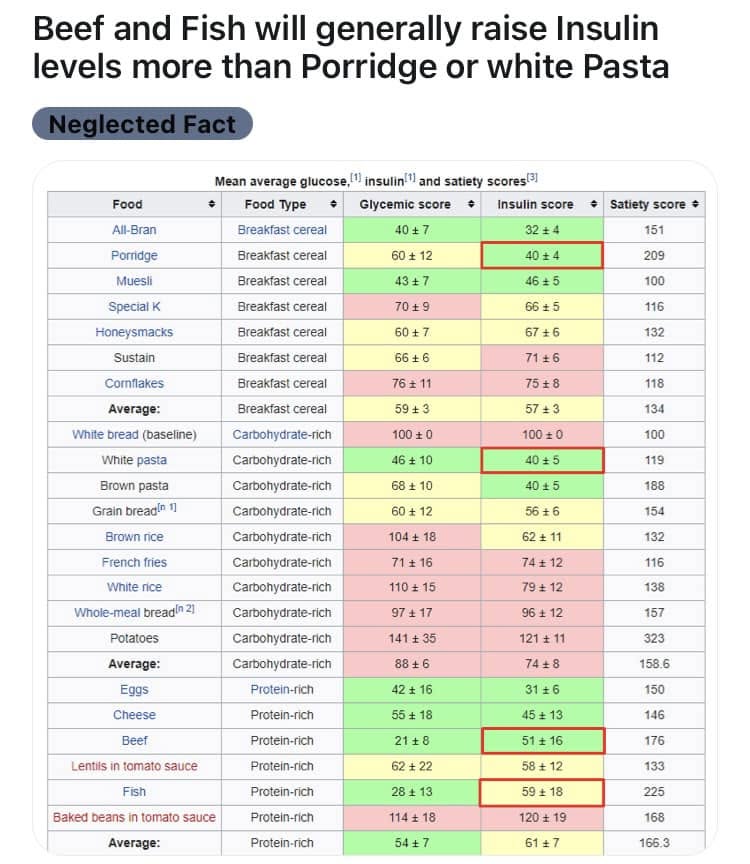
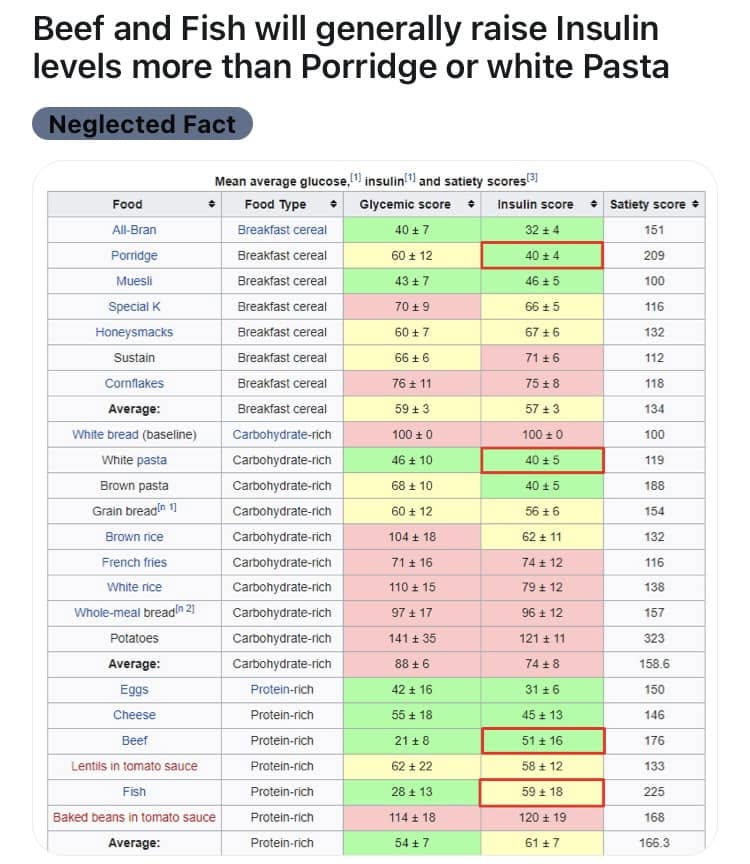
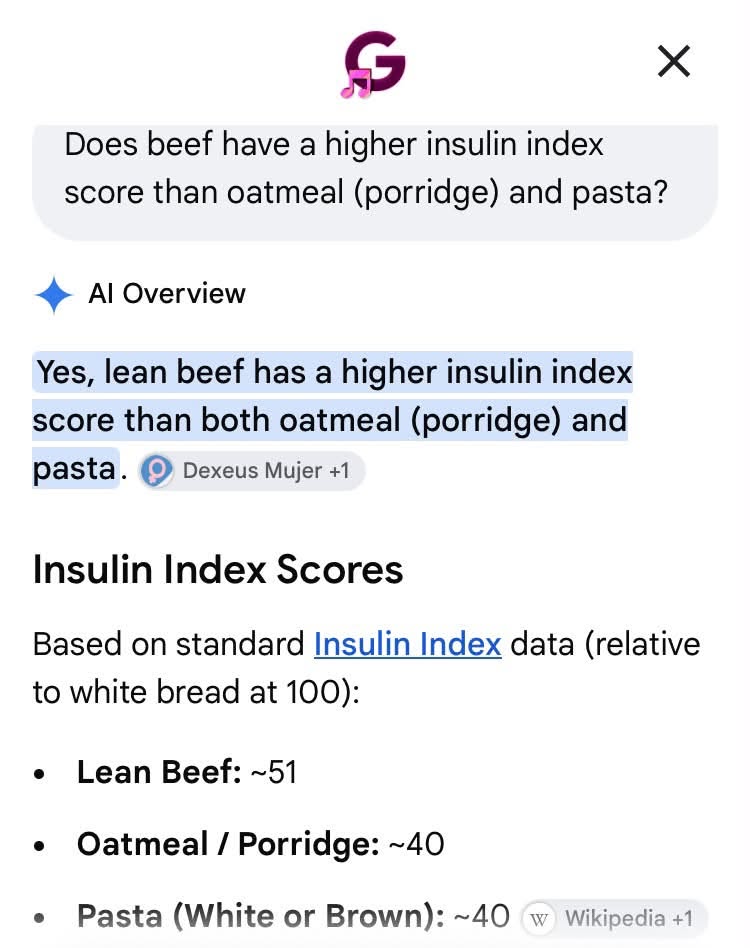
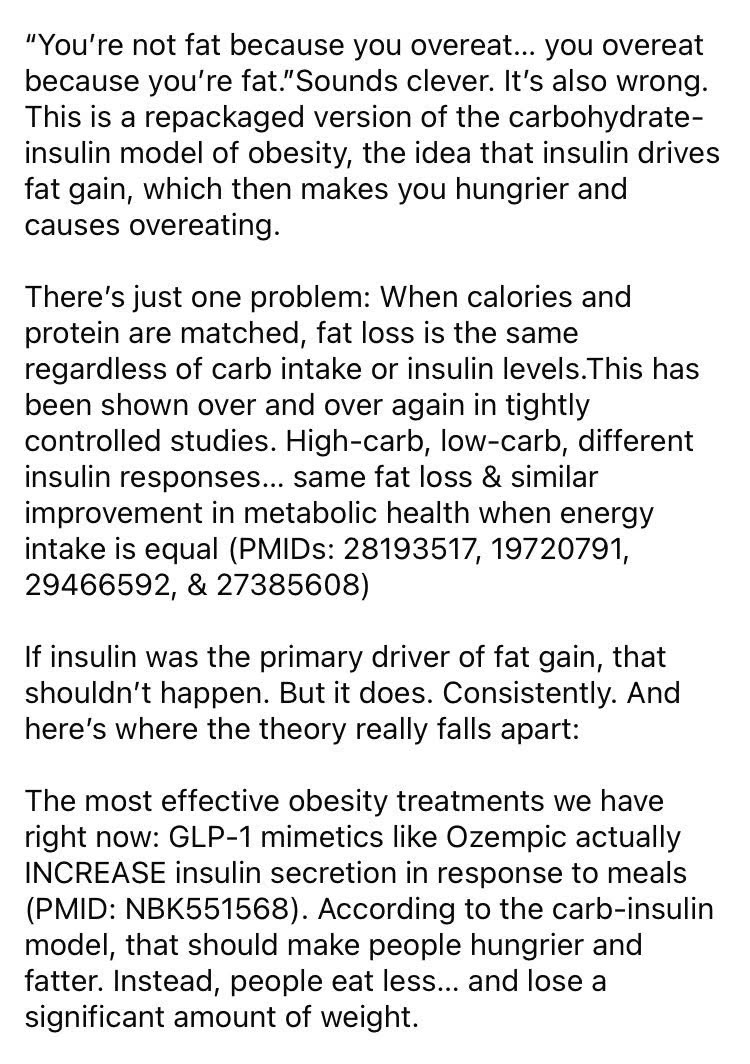
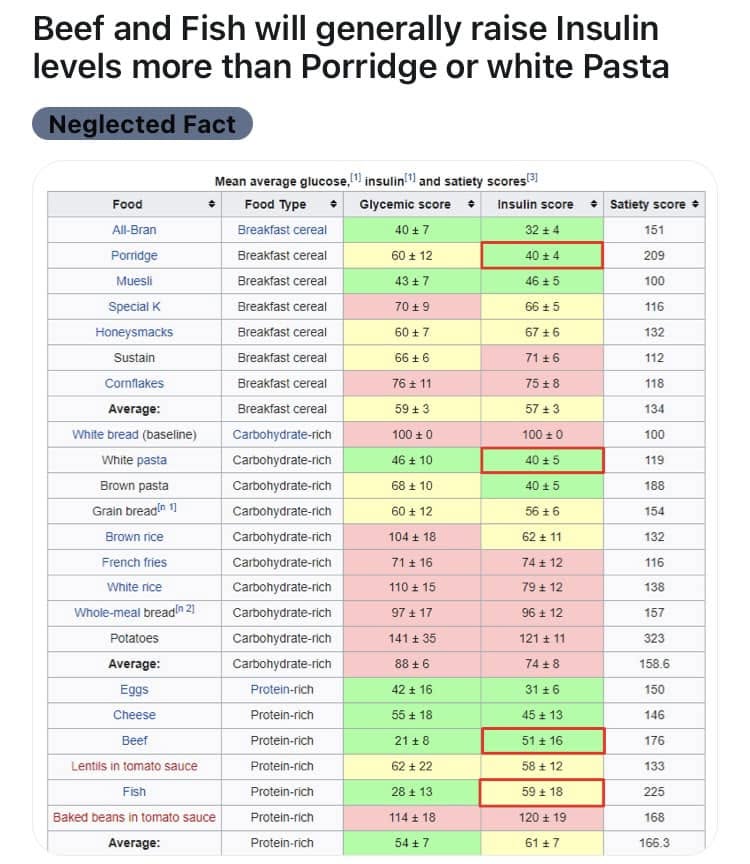
Beef and whey raise insulin more than pasta, oatmeal or glucose: use the insulin index

May 26, 2024 · Louis Nervegna ♥ 23 · 💬 71 ↩ 27 Insulin resistance & diabetes

Louis points out that some proteins are more insulinogenic than carbs: beef raised insulin more than equal-calorie white pasta or oatmeal in the 1997 insulin index study, and whey more than glucose or white bread in a 2012 study. He says influencers have misled people about this and recommends learning the insulin index rather than assuming carbs alone drive insulin.
Beef and whey raise insulin more than equal-calorie oatmeal, pasta or bread

May 09, 2025 · Louis Nervegna ♥ 10 · 💬 41 Insulin resistance & diabetes

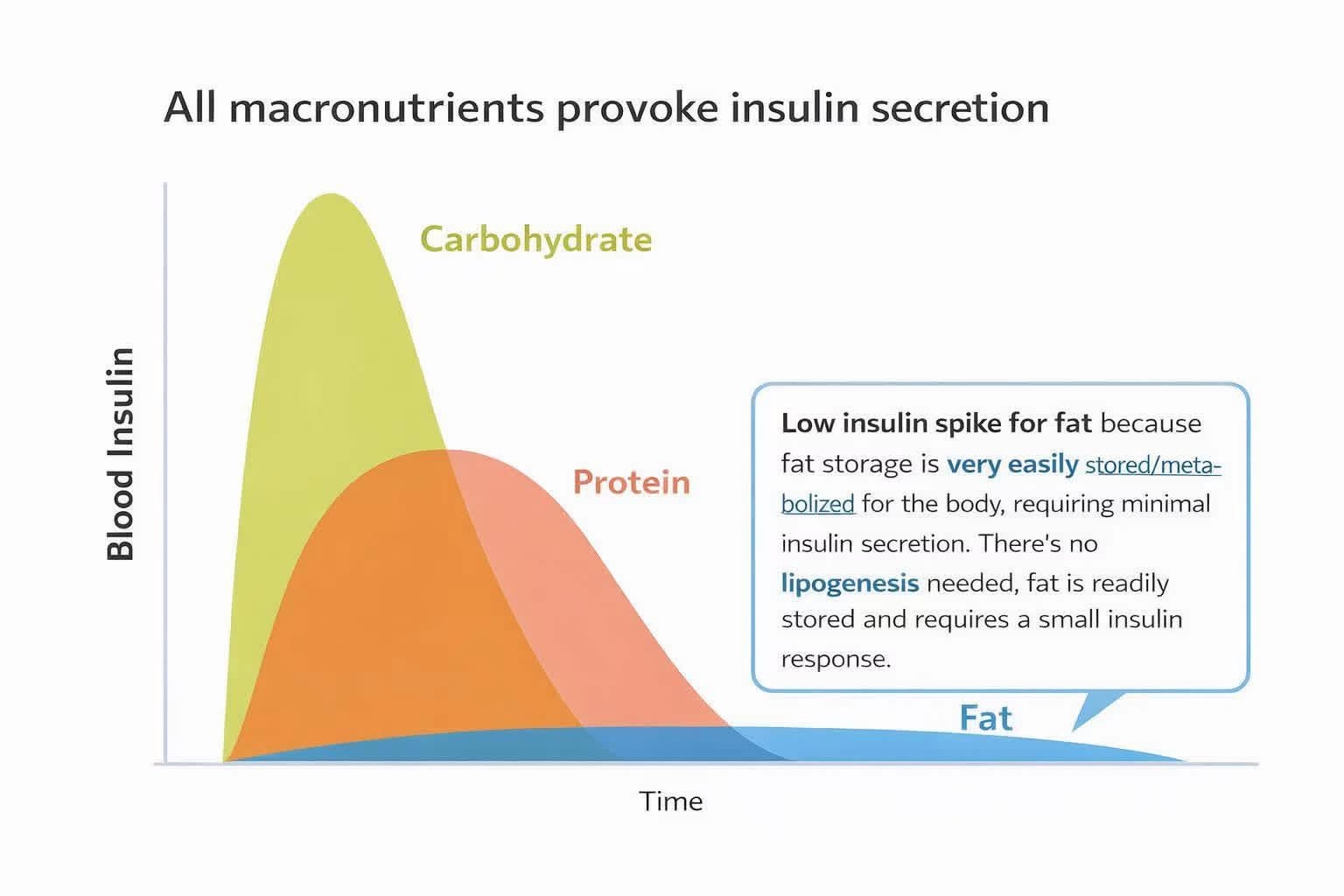
Louis explains that CGMs measure glucose, not insulin, and that some proteins provoke as much or more insulin than carbohydrates. Citing the 1997 insulin index paper and a 2012 whey study, he shows beef raises insulin more than pasta or oatmeal calorie for calorie, and whey more than glucose or white bread, so swapping protein for carbs may raise post-meal insulin.

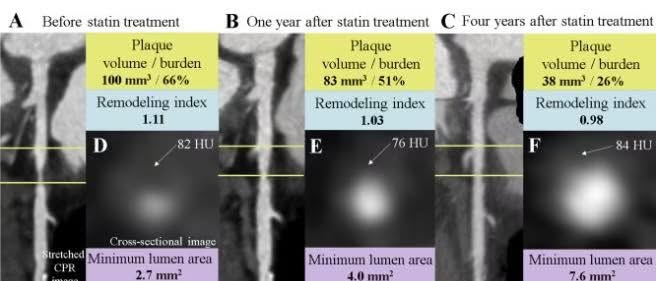
Case report: 10 mg atorvastatin cleared most of a severe LAD blockage over 4 years

Oct 06, 2025 · Louis Nervegna ♥ 29 · 💬 14 Statins

Responding to influencers who say plaque cannot be reversed with statins, Louis cites a case report in which a patient taking low-dose atorvastatin went from a severe to a mild LAD narrowing, documented on CT angiography. It is a single case, but illustrates that statin-associated plaque regression can occur.

Video series tallies ages of death of 100+ health influencers by diet type

Jun 08, 2024 · Louis Nervegna ♥ 13 · 💬 23 Aging & longevity

Louis shares a three-part video series that surveys the ages at which more than 100 famous health influencers died. His takeaway is that influencers promoting diets high in red and processed meat and low in whole grains, fruit, vegetables and beans did not live long on average. This is an anecdotal survey, not controlled research.

Why diet-health epidemiology may mislead: reverse causation and socioeconomic confounding

Jan 15, 2025 · Gokhan Can ♥ 15 · 💬 17 How to read research

Gokhan argues that dramatic personal improvements on low-carb diets undermine trust in guidelines, and that observational nutrition studies can be distorted by reverse causation (people with insulin resistance may prefer fat and protein) and socioeconomic confounding. He says only intervention trials resolve this, and shares a Viva Longevity video on influencers versus epidemiologists reposted by Louis Nervegna. The argument is one-sided.

Blending whole fruit does not cause bigger blood-sugar spikes than eating it whole

May 10, 2026 · Louis Nervegna ♥ 10 · 💬 13 Carbs, fiber, sugar & whole grains

Louis rebuts the claim that blending fruit spikes blood sugar. Per the shared response, an RCT comparing whole apples and blackberries with a smoothie of the same fruits found a slightly smaller glucose rise with the smoothie, and blending mangoes also did not raise the spike. Fiber remains in the blend and still slows sugar absorption.

Keto causes bigger temporary insulin resistance than statins, so statin fear is overplayed

Sep 16, 2024 · Louis Nervegna ♥ 8 · 💬 16 Statins

Louis argues that keto influencers who fixate on statins slightly reducing insulin sensitivity overlook that a keto diet causes the same effect to a much greater degree. Without carbohydrate, skeletal muscle becomes insulin resistant to preserve glucose for the brain and heart, so a glucose tolerance test on keto looks poor. Both effects are temporary and reverse on stopping.

Meat-heavy, low-carb health influencers rarely reach 90, per a video survey

Apr 19, 2025 · Louis Nervegna ♥ 13 · 💬 13 Aging & longevity

Louis shares a video series surveying ages at death of over 100 health influencers and says those advocating diets high in red and processed meat and low in whole grains, fruit, vegetables and legumes did not live long. Richard Bernstein, who died at 90, is the only one he found who reached 90. This is an anecdotal tally, not controlled evidence.

Claude AI summary: Paleolithic humans were omnivores, not carnivores

May 14, 2024 · Louis Nervegna ♥ 11 · 💬 4 Low-carb, keto & carnivore

Louis uses Claude AI to summarize the totality of evidence on whether Paleolithic humans were carnivores, as a quick fact check on influencer claims. The summary cites coprolites with plant remains, grinding stones, dental and skeletal adaptations, stable isotope data and hunter-gatherer ethnography, concluding they were omnivores. No specific papers are cited, and it is an AI-generated overview.

Health influencers on high red/processed meat diets rarely lived long, a video series says

Apr 01, 2025 · Louis Nervegna ♥ 6 · 💬 3 Mediterranean, DASH, MIND & plant-forward diets

Louis shares a video series (Viva Longevity) reviewing the ages at death of over 100 health influencers, claiming those advocating diets high in red and processed meat and low in whole grains, fruit, vegetables and beans did not live long on average. He asks members to name any such influencer who reached their 90s; the only one he found is Richard Bernstein. This is an informal, anecdotal tally rather than a controlled study.

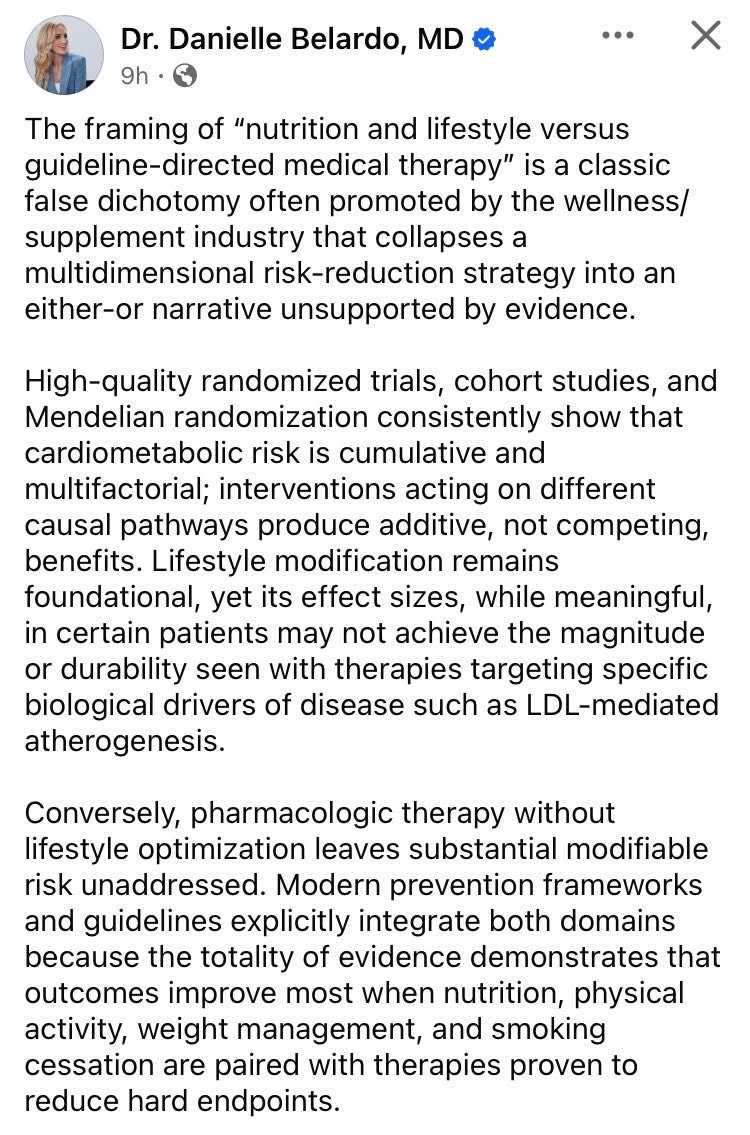
Lifestyle and drug therapy have additive benefits, so prevention should combine both

Dec 10, 2025 · Louis Nervegna ♥ 7 Cardiovascular disease: the big picture

Louis quotes a statement arguing that cardiometabolic risk is cumulative and multifactorial, that interventions on different pathways give additive rather than competing benefits, and that lifestyle remains foundational while drugs targeting LDL-driven atherogenesis can add durable effect. He posts it as a counter to influencers who pit the two against each other.

200+ studies and 2 million participants show LDL drives atherosclerosis dose-dependently

Oct 28, 2026 · Louis Nervegna ♥ 1 LDL, ApoB & lipid panel

A shared post rebuts a claim that LDL research is incomplete and flawed. It cites over 200 prospective cohort, genetic and randomized studies involving over 2 million participants, 20 million person-years and 150,000+ cardiovascular events that consistently show a dose-dependent LDL-ASCVD relationship. It also addresses the U-shaped curve claim and Mendelian randomization.