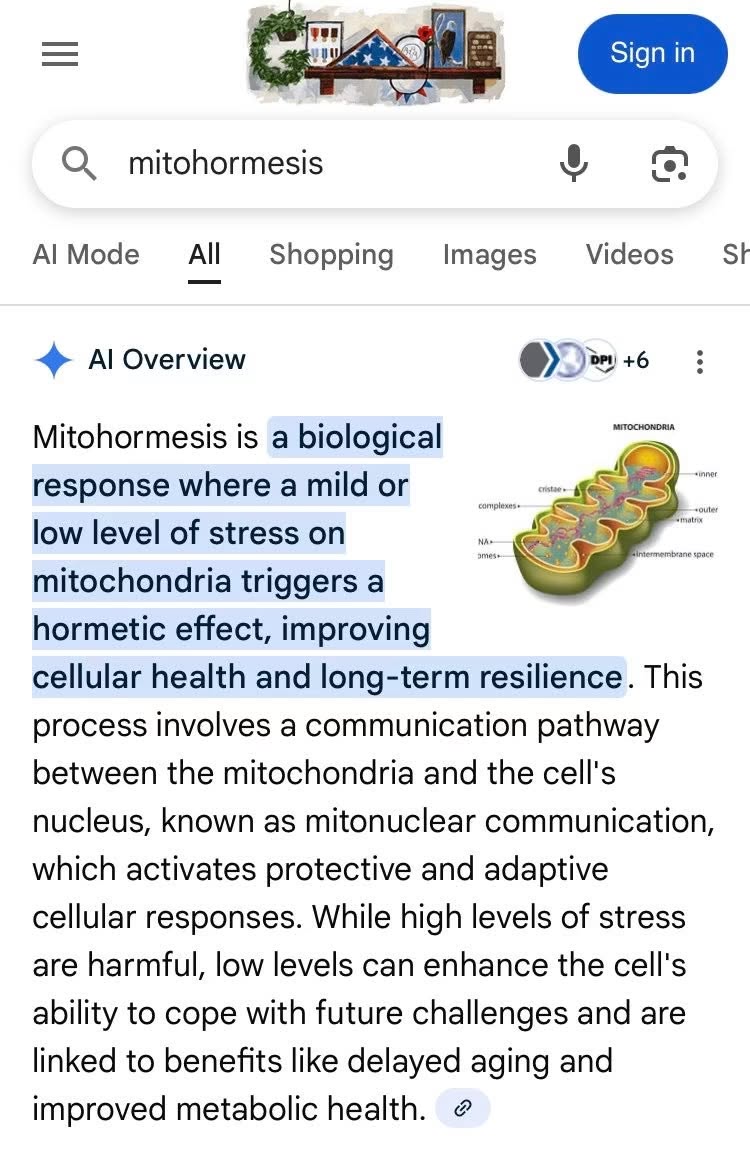
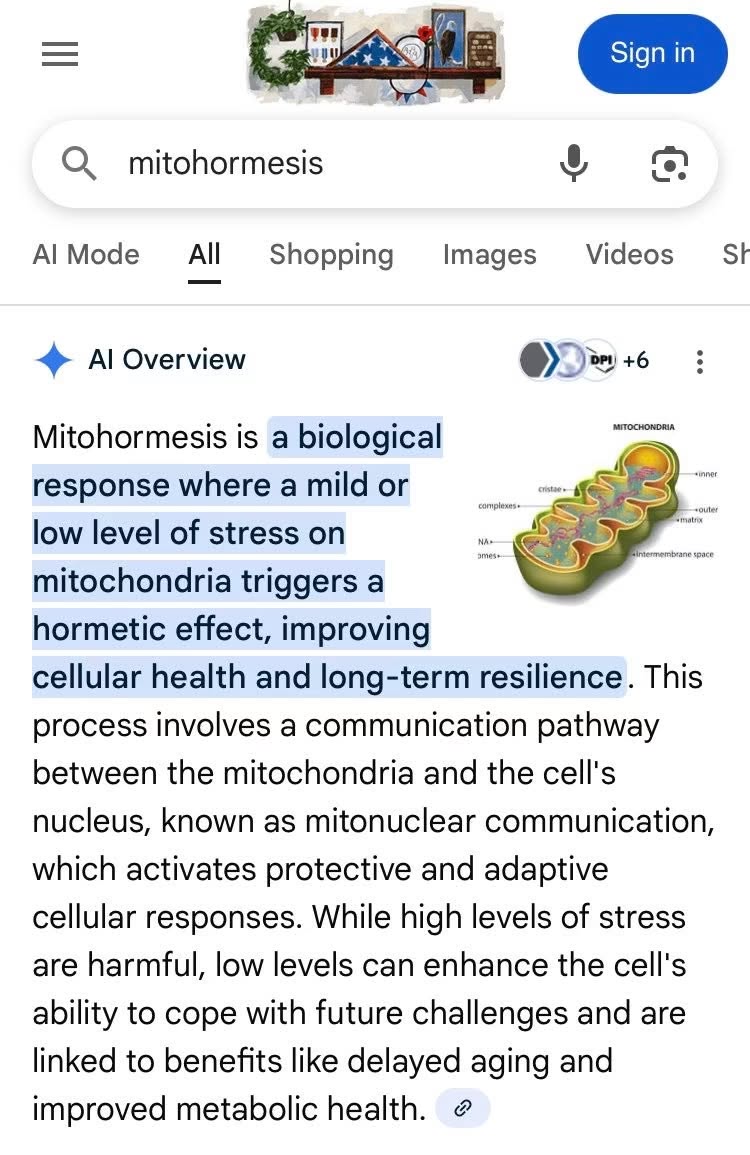
Statins do not damage mitochondria at normal doses. This is not true at all. Statins do create stress in mitochondria at normal doses, but this stress is hormetic. It turns on defensive pathways that protect the cell. It is called “mitohormesis” and has many health benefits. This hormetic mechanism (mitohormesis) is one of the reasons why statins have pleiotropic benefits that go beyond just lowering LDL. Statins only outright damage mitochondria at high doses well above what are actually used in humans. At normal human doses, they are hormetic. Take some time to google the terms “hormesis” and “mitohormesis”. This is an important concept to understand.
Statins do not impair mitochondrial function in a harmful way. This is nonsense.
In fact, it is the opposite. The mild stress that they put on mitochondria may be one of the reasons why they are good for you.
Just like metformin, statins activate an important longevity pathway called AMPK by inducing hormetic stress in mitochondria. This may be one of multiple reasons why statins (and metformin) benefit the cardiovascular system.
The term for this kind of mitochondrial hormetic stress is mitohormesis. Google it. Mitohormesis has many health benefits.
If you understand the most important papers in geroscience (the science of aging), you know that mildly impairing mitochondrial function is often a good thing. This can be an example of hormetic stress, and it is exactly what metformin does. When mitochondrial function is impaired by metformin, defensive pathways such as AMPK are turned on which extend lifespan in lower animals. In this way, metformin acts like a calorie restriction mimetic, a drug that mimics the life extending benefits of calorie restriction.
These defensive pathways are energy sensors. When they sense that energy in the mitochondria is low they turn on, because low energy in the mitochondria usually indicates calories are restricted. By mildly impairing mitochondrial function, statins (and metformin) lower energy in the mitochondria, and as a result, the AMPK defensive pathway gets turned on. Like metformin, statins also extend lifespan in lower animals. Hormetic mitochondrial stress is probably one of the mechanisms by which statins also extend lifespan in lower animals— it is probably a good thing.
Obviously if you overdo it, then it can cause harm, but as long as the doses are reasonable, this hormetic mitochondrial stress (mitohormesis) is likely good for you.
#statinsHD #mitochondriaHD #hormesisHD #mitohormesisHD #ampkHD #metforminHD