HD-OPM Archive
Topics › Protein

Protein benefits for muscle plateau near 1.2 g/kg, with no proven gain beyond 1.5-1.6 g/kg

Louis Nervegna · Dec 19, 2025 · ♥ 8 reactions · 1 comments · original Facebook post
ProteinExercise & fitness
AI summary & key facts

Louis summarizes what he sees as the preponderance of evidence: extra protein without resistance training has no proven muscle-strength benefit, and with resistance exercise most benefit is reached around 1.2 g/kg/day. He links a Simon Hill podcast discussing randomized trials and meta-analyses (Morton et al., Tagawa et al.) and a list of earlier group posts.

(no text — see the shared post below)
Research cited

Protein recommendations from some famous influencers are not evidence-based.

What the preponderance of evidence actually shows is this:

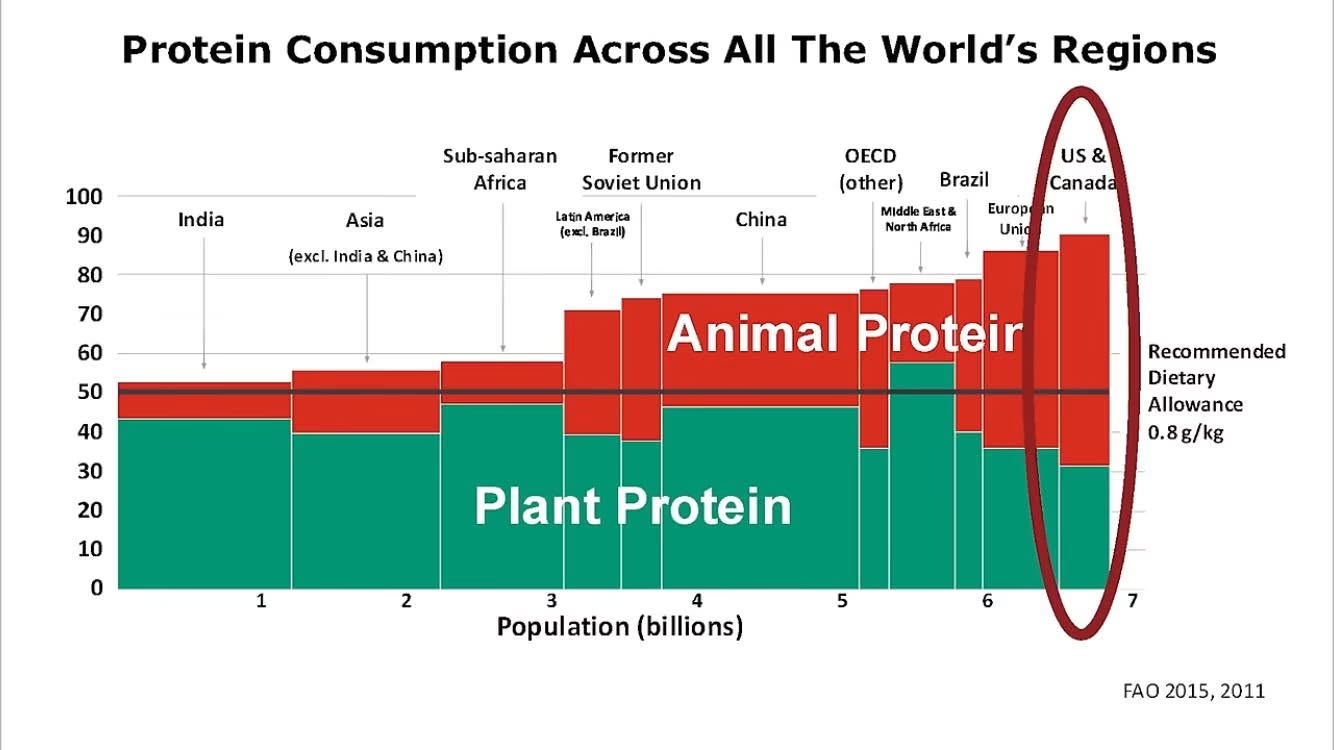
Consuming extra protein beyond what you get in a normal diet has no proven benefit on muscle strength in the absence of resistance training. The majority of benefit in combination with resistance exercise is achieved around a daily intake of 1.2g/kg, for normal people. This is pretty close to what the average American eats anyway. The results modestly improve at higher levels, but there is no proven benefit beyond 1.5-1.6g/kg when combined with resistance exercise, unless you are on anabolic drugs (steroids).

Previous posts on this topic:

  1. facebook.com/share/v/1AUGoyFxQb
  1. ↪ Meta-analysis of 69 RCTs: protein strength gains plateau at 1.5 g/kg and need lifting
  1. ↪ Sports science says 1 g/lb protein is excessive; extra protein needs resistance training
  1. ↪ The US leads the world in protein intake, about 1.5 g/kg per day
  1. ↪ Nurses' Health Study: plant but not animal protein linked to lower frailty in older women
  1. facebook.com/share/v/176wahkoi1
  1. facebook.com/share/v/16TF5U36qQ
  1. ↪ Midlife plant protein raised odds of healthy aging 22-58% per 3% of calories (NHS)
  1. ↪ Harvard: swapping red and processed meat for plant protein, fish or poultry cuts CVD risk
  1. ↪ Harvard summary: protein source matters for diabetes; red meat raises type 2 diabetes risk

#proteinHD #proteinsummaryHD

← newer: Average US protein intake is about 1.48 g/kg per day, well aolder: Frailty in older adults is not a protein-deficiency disease, →