Well, I just learned something today…
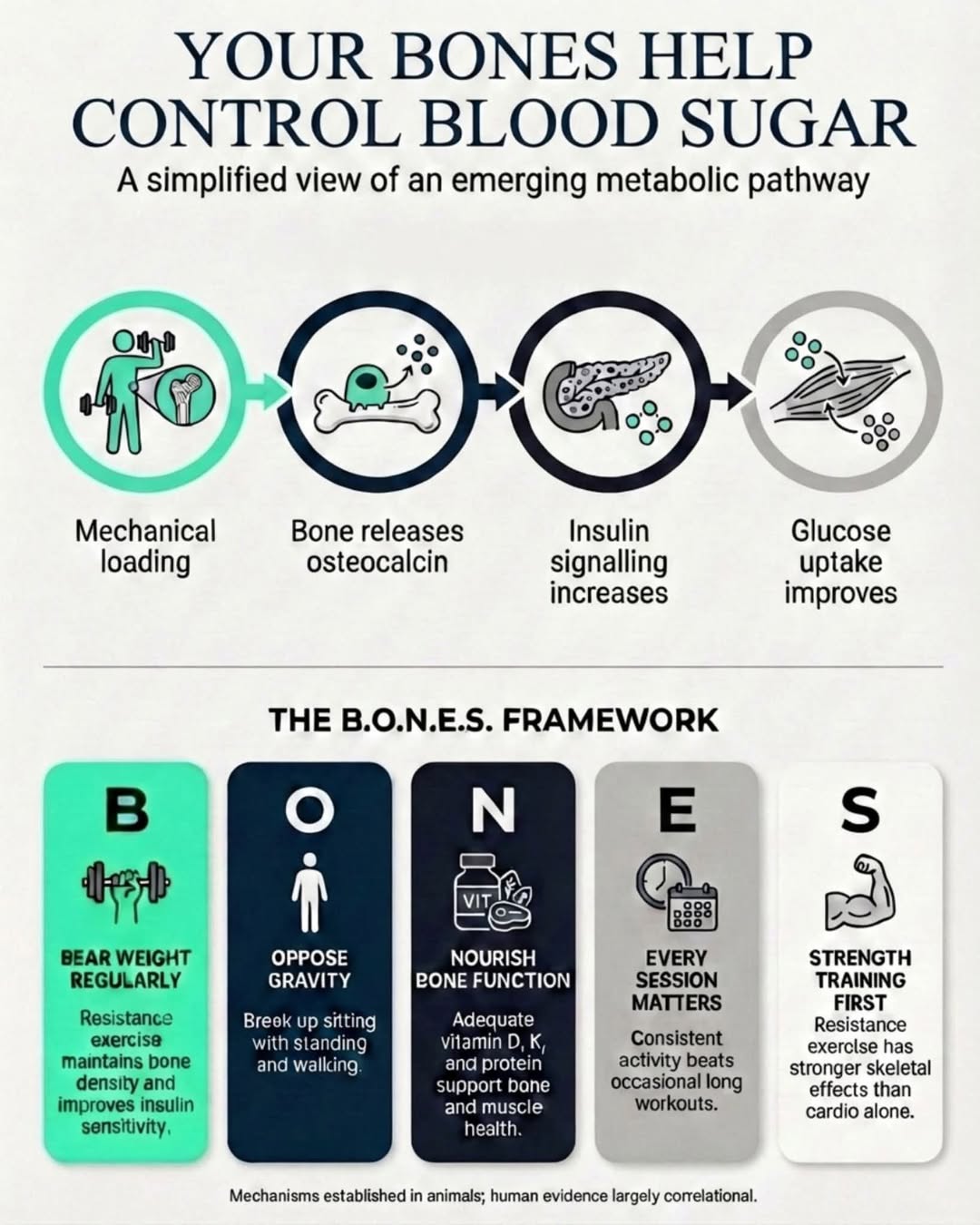
Mechanically loading your bones helps to control your blood sugar. Bones are more metabolically-active than originally thought.
Louis shares a post stating bone is metabolically active: loading bone increases osteoblast and osteoclast activity, releases osteocalcin and improves insulin sensitivity, contributing to blood sugar control.
Well, I just learned something today…
Mechanically loading your bones helps to control your blood sugar. Bones are more metabolically-active than originally thought.
Bones aren’t just structural. They’re metabolic.
Mechanical loading on bone doesn’t stop at strength or density. It triggers endocrine signaling that directly influences glucose regulation.
When bone experiences load:
- Osteoblast and osteoclast activity increases
- Osteocalcin is released into circulation
- Insulin sensitivity improves
- Skeletal muscle glucose uptake increases
This creates a bone–pancreas–muscle feedback loop that links movement, bone health, and blood sugar control.
In simple terms:
Load the skeleton → signal the pancreas → improve glucose handling.The B.O.N.E.S. framework captures how this works in practice:
- Bear weight regularly – resistance and impact matter
- Oppose gravity often – prolonged sitting blunts signaling
- Nourish bone function – vitamin D, K, protein, and minerals
- Every session matters – consistency beats intensity
- Strength training first – skeletal loading outperforms cardio alone for this pathway
This pathway is well-established in animal models, with growing human data showing strong correlations between bone loading, insulin sensitivity, and metabolic health.
Bone is not passive tissue.
It’s an active organ participating in energy regulation.Movement doesn’t just burn glucose.
It teaches your body how to handle it.
Summary of a presentation by Shirin Hooshmand: in postmenopausal women with osteopenia, eating prunes with calcium and vitamin D preserved bone density better than supplements alone, and a larger Penn State study found similar results. Prunes may also help men aged 50-79.
Describes a trial of donor bone-marrow mesenchymal stem cells in 148 walking adults aged 70-85 with frailty (118 on varying doses, 30 on placebo). The cells lack immune-triggering surface proteins so no immunosuppressants were needed; at nine months the highest dose group walked about 60 m farther in a six-minute walk test than at baseline.
Review of preclinical evidence that high LDL pulls hematopoietic stem cells out of dormancy, causing proliferation, oxidative stress, telomere shortening, impaired repopulation and lasting epigenetic changes that program blood and immune cells toward chronic inflammation. This offers a molecular basis for residual inflammatory risk after cholesterol is treated.
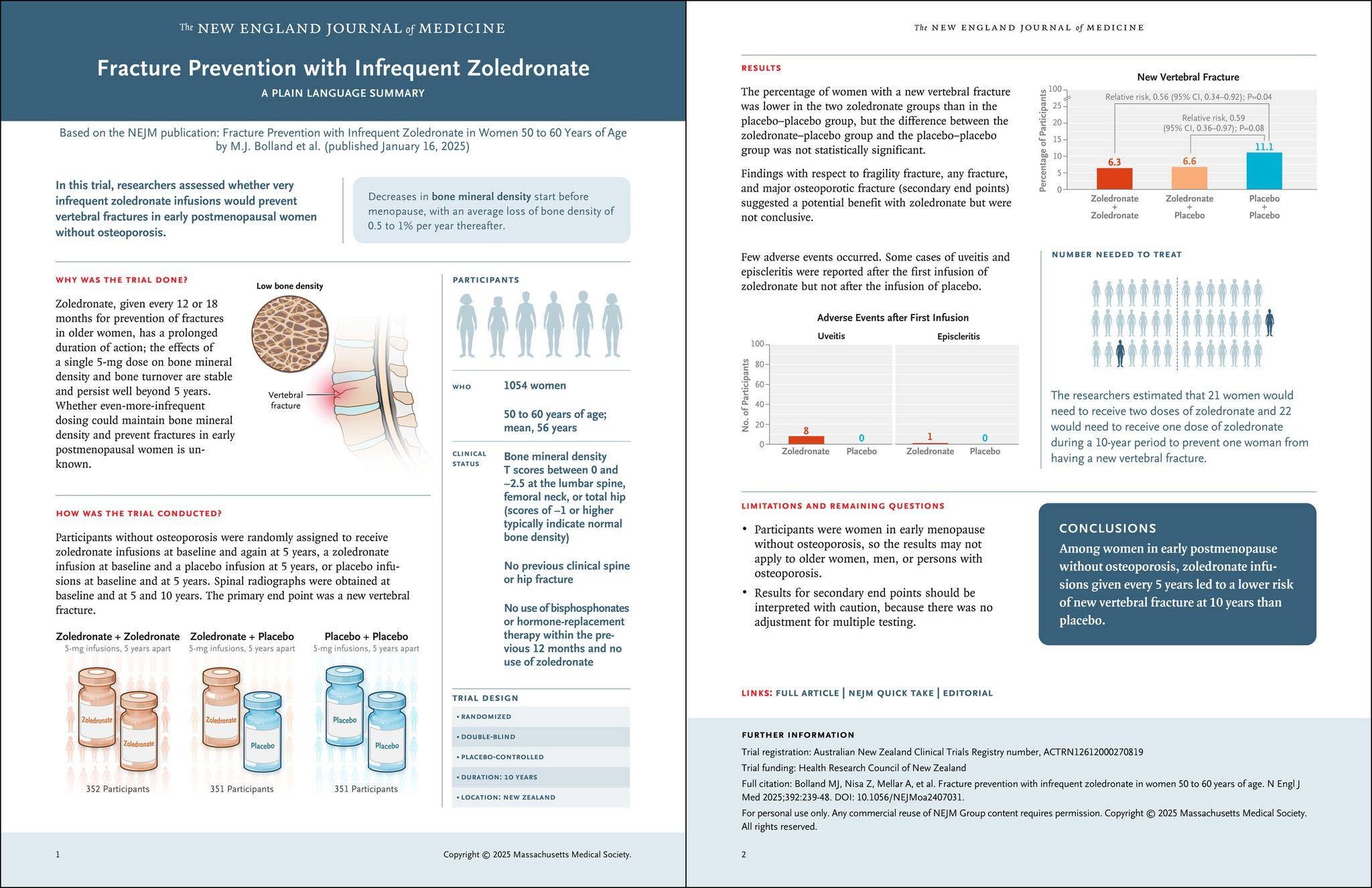
Gokhan shares the NEJM 10-year randomized trial of infrequent zoledronate in early postmenopausal women (50-60 years) with normal-to-low-normal bone density. Zoledronate roughly halved new morphometric vertebral fractures versus placebo, and he calls it a longevity-type drug like statins or aspirin. The trial concerns bone rather than heart outcomes.
Gokhan's checklist for osteopenia/osteoporosis: weight-bearing exercise first, discuss hormones with an endocrinologist, eat 5-10 prunes a day, have labs reviewed, and consider bisphosphonates if nothing else helps. He warns against starting calcium on your own because of cardiovascular risk.
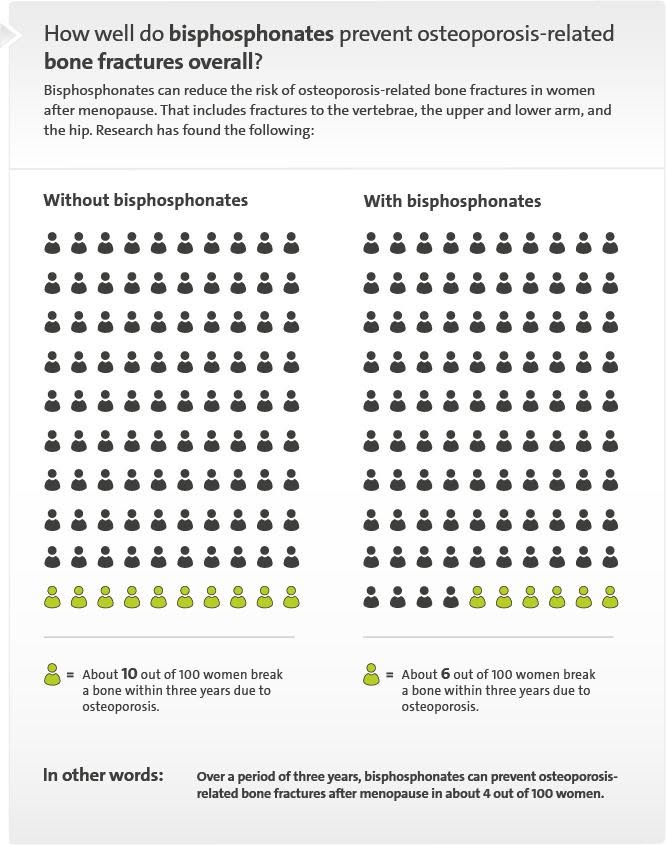
Review of bisphosphonate evidence for osteoporosis. Alendronate cuts vertebral and non-vertebral fractures by about 50% in women with prior vertebral fractures; yearly IV zoledronic acid cuts vertebral fractures 70% and hip fractures 40%; a 2017 meta-analysis found overall fracture OR 0.62. Not a heart topic but relevant to aging.