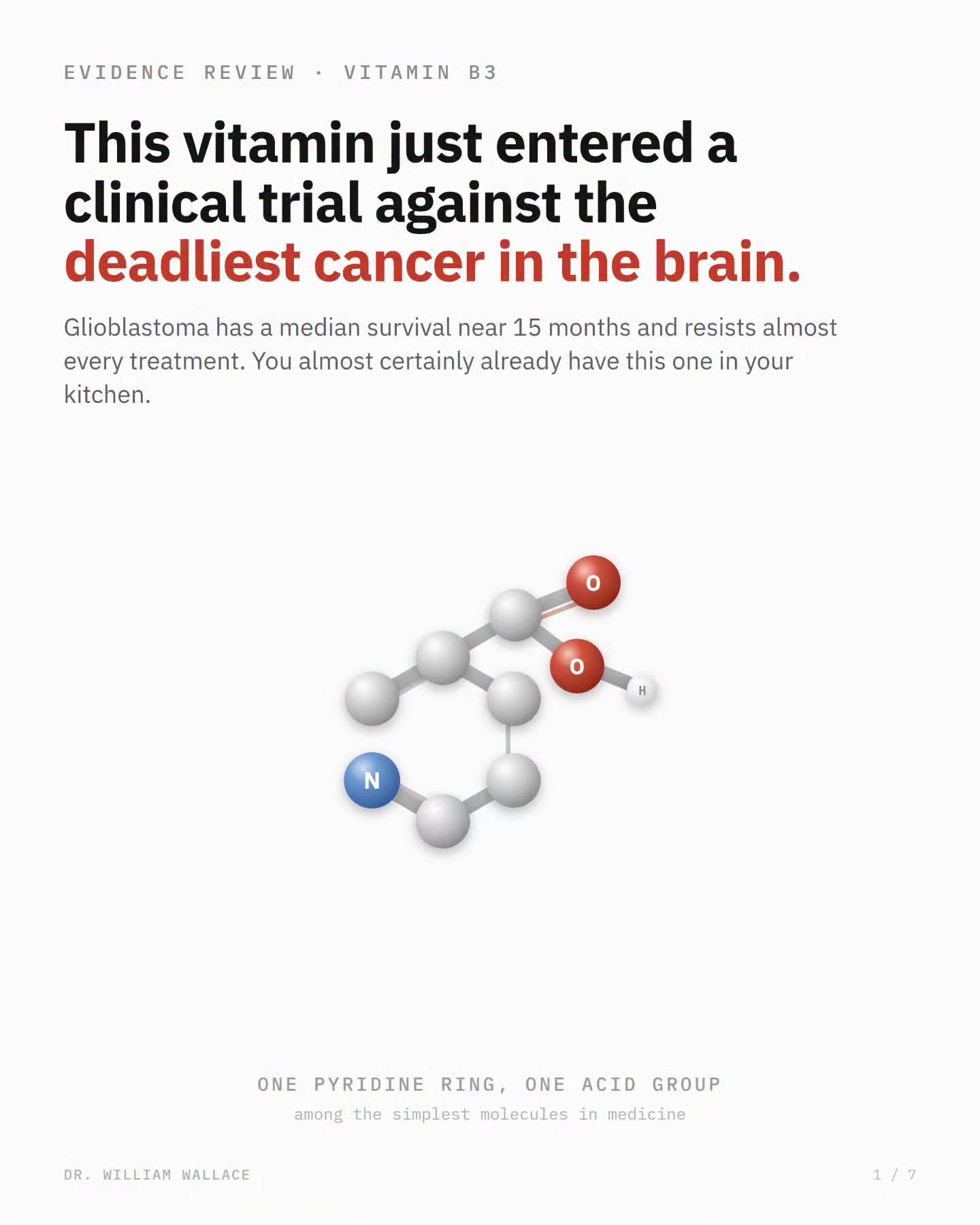
Glioblastoma is a death sentence. Long term survivors are very rare, even with the most cutting-edge treatment.
The idea that a simple vitamin (niacin) might have such a big impact on the progression of the disease is astonishing.
The caveat here is that this was a very small pilot study which used historical controls.
Niacin does not directly attack the tumor. Instead, it seems to have a rejuvenative effect on the cancer-suppressed immune system, which in turn makes it more efficient at fighting the cancer.
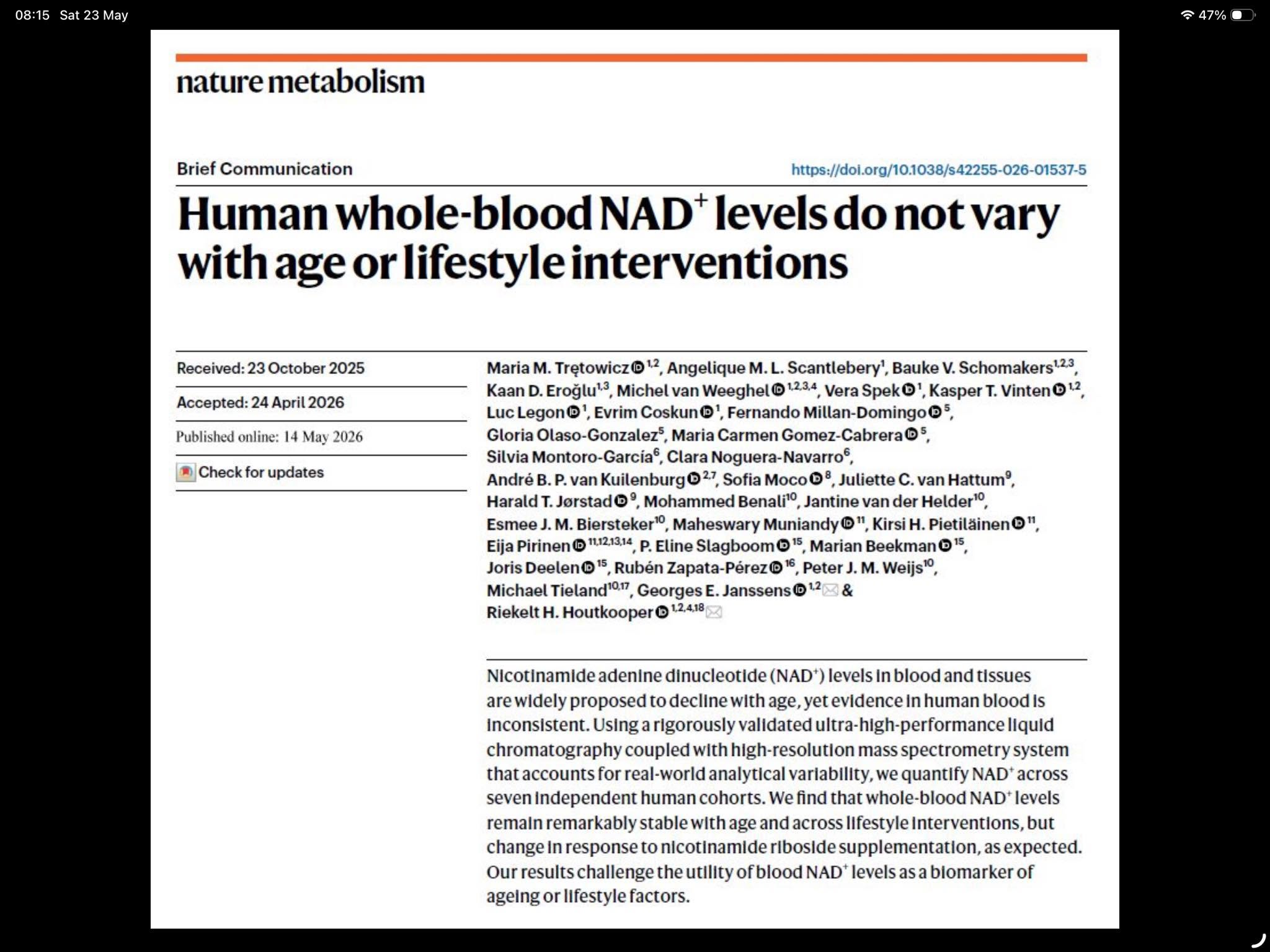
My note: It seems likely to me that the mechanism of action on the immune system involves NAD.
Quoted:
“The research was led by two members of both the Hotchkiss Brain Institute and Arnie Charbonneau Cancer Institute, Drs. Gloria Roldan Urgoiti, MD, an oncologist specializing in brain cancers, and Wee Yong, Ph.D., a neuroscientist whose research focuses on immune effects on the brain. Together they designed a study to investigate whether niacin could rejuvenate compromised immune cells to kill tumor cells. The research began in the Yong lab, with mice, where findings showed niacin prolonged survival. That work evolved into a Phase I and II clinical trial.
"Normally, the immune system will try to counter and prevent tumor growth. However, this brain cancer suppresses the immune system," says Yong, a professor at the Cumming School of Medicine (CSM). "Niacin treatment rejuvenates immune cells so they can do what they are supposed to do: Attack and kill the cancer cells. I see it as an ongoing 'battle for the brain.'"
The clinical trial was designed to determine the maximum dose and potential benefit of controlled-release niacin that could be added to the recommended chemotherapy and radiotherapy treatments. Researchers decided the study would stop if the progression-free survival over six months did not improve by at least 20% compared with older studies.
Early results involving 24 patients showed 82% of the participants were free of progression of the cancer at six months; an increase of 28% from previous studies. The researchers say this is a promising advancement for this incurable cancer.”
medicalxpress.comCommon vitamin aggressive brain cancermedicalxpress.com#niacinHD #glioblastomaHD #cancerHD #nadHD #immunesystemHD #vitaminb3HD