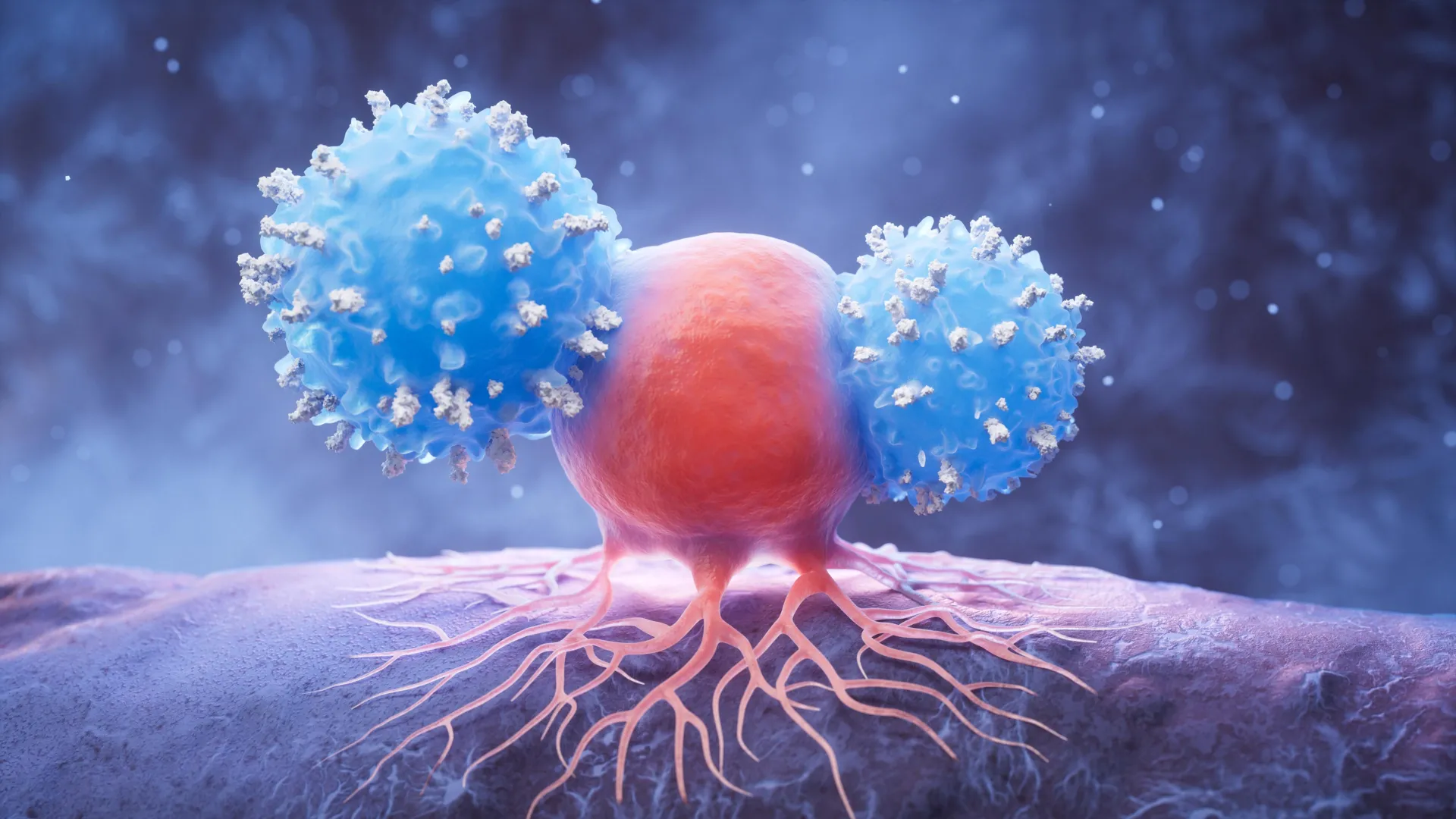
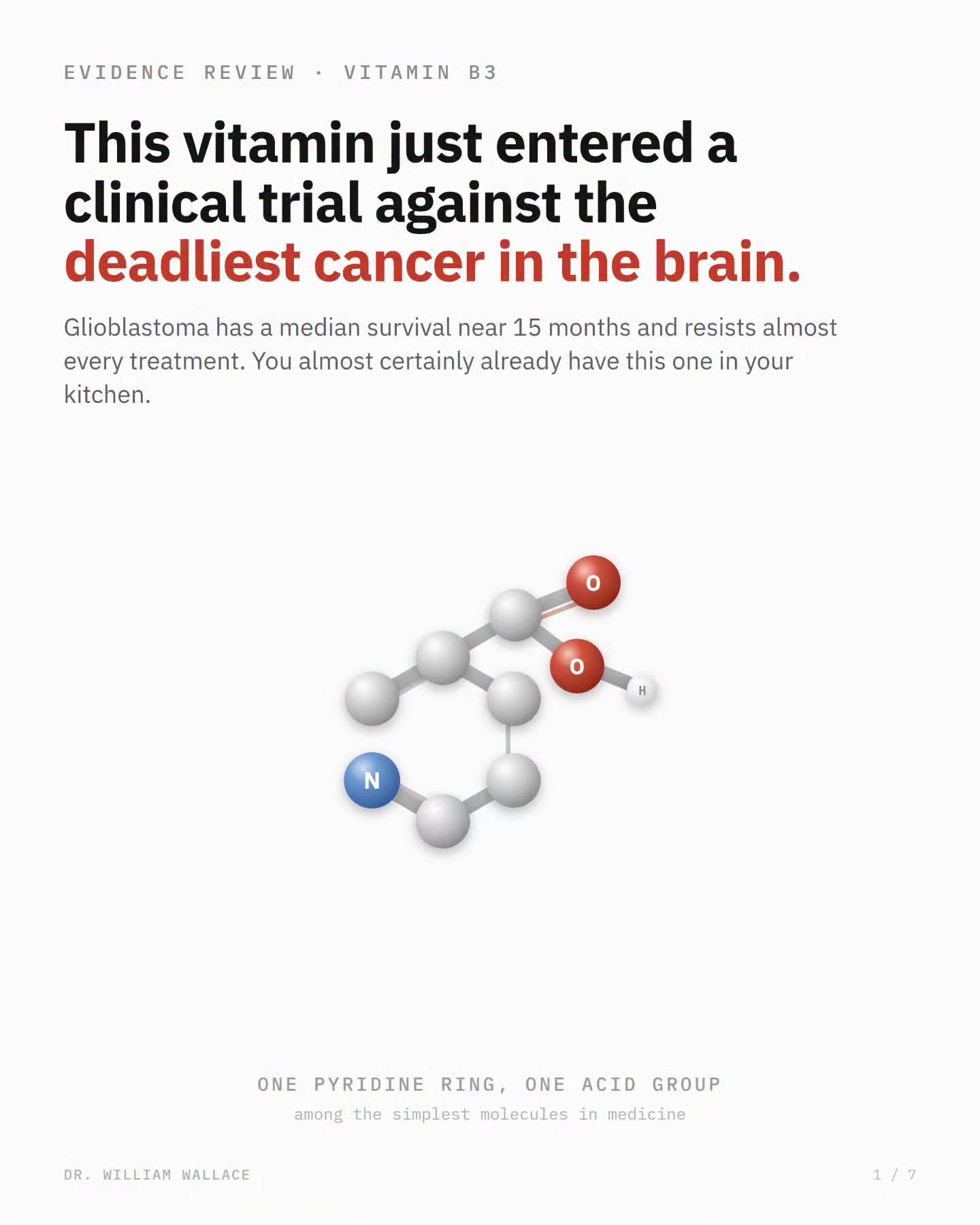
High doses of niacin (nicotinic acid) might be promising as a treatment for aggressive glioblastoma brain tumors.
A small phase 1 trial recently reported very good results.
The doses were similar to what has been used historically to treat high cholesterol.
I have posted previously about niacin and brain tumors. See these older posts:
↪ Niacin in a small glioblastoma pilot study: long survival, but historical controls
↪ Vitamin B3 forms and NAD: strong evidence in skin cancer, only preliminary in glioblastoma
The idea that a simple vitamin (taken in high doses) might have a significant impact on the progression of glioblastoma is astonishing. This is a disease that carries an average survival time of around 1 year. It is almost universally fatal, even with the most cutting-edge treatments.
The big caveat here is that this was a very small pilot trial which used historical controls. A more rigorous randomized-controlled phase 2 trial is now on-going.
Quoted:
High-dose vitamin B3 is showing intriguing early promise as an addition to standard glioblastoma treatment, with 82% of patients in a small trial remaining progression-free after six months. Researchers believe niacin may help revive immune cells suppressed by the cancer, but larger studies are still needed to confirm the benefit and safety.
Their research centers on a key problem with glioblastoma: the tumor can interfere with the immune system, weakening the very cells that might otherwise help attack the cancer.
The team designed the study to determine whether niacin could restore some of those impaired immune cells and help them destroy tumor cells.
Normally the immune system will try to counter and prevent tumor growth, however, this brain cancer supresses the immune system," says Yong, a professor at the Cumming School of Medicine (CSM). "Niacin treatment rejuvenates immune cells so they can do what they are supposed to do, attack and kill the cancer cells. I see it as an ongoing 'battle for the brain'."
For the current trial, researchers are studying controlled release niacin given alongside recommended chemotherapy and radiotherapy. One goal is to establish the highest dose that can be used safely. Another is to look for evidence that adding niacin may improve how long patients remain alive without their cancer getting worse.
Before beginning the study, researchers established a threshold for continuing the otrial. They planned to stop if progression free survival at six months failed to improve by at least 20 percent compared with older studies.
Early results from 24 patients surpassed that threshold. At six months, 82 percent of participants had not experienced progression of their cancer. According to the researchers, that represents a 28 percent increase compared with previous studies.
The team describes the early findings as promising for a cancer that remains incurable, but the results are still preliminary and involve a relatively small group of patients.
"Glioblastoma is the most aggressive brain cancer in adults. Survival of patients with this condition hasn't changed significantly for 20-years," says Roldan Urgoiti, a clinical associate professor at the CSM. "Anything that may help should be explored, but it requires strict protocols and safety monitoring."