HD-OPM Archive
Topics › Aspirin, antiplatelets & blood thinners

Aspirin blocks platelet thromboxane A2 that suppresses T cells, limiting metastasis

Louis Nervegna · Feb 15, 2026 · ♥ 21 reactions · 1 comments · original Facebook post
Aspirin, antiplatelets & blood thinnersCancer
AI summary & key facts

A Nature study found platelets release thromboxane A2, suppressing T cell activity during early metastasis, which aspirin blocks. Mechanistic preclinical work.

#aspirinHD #cancerHD

Research cited

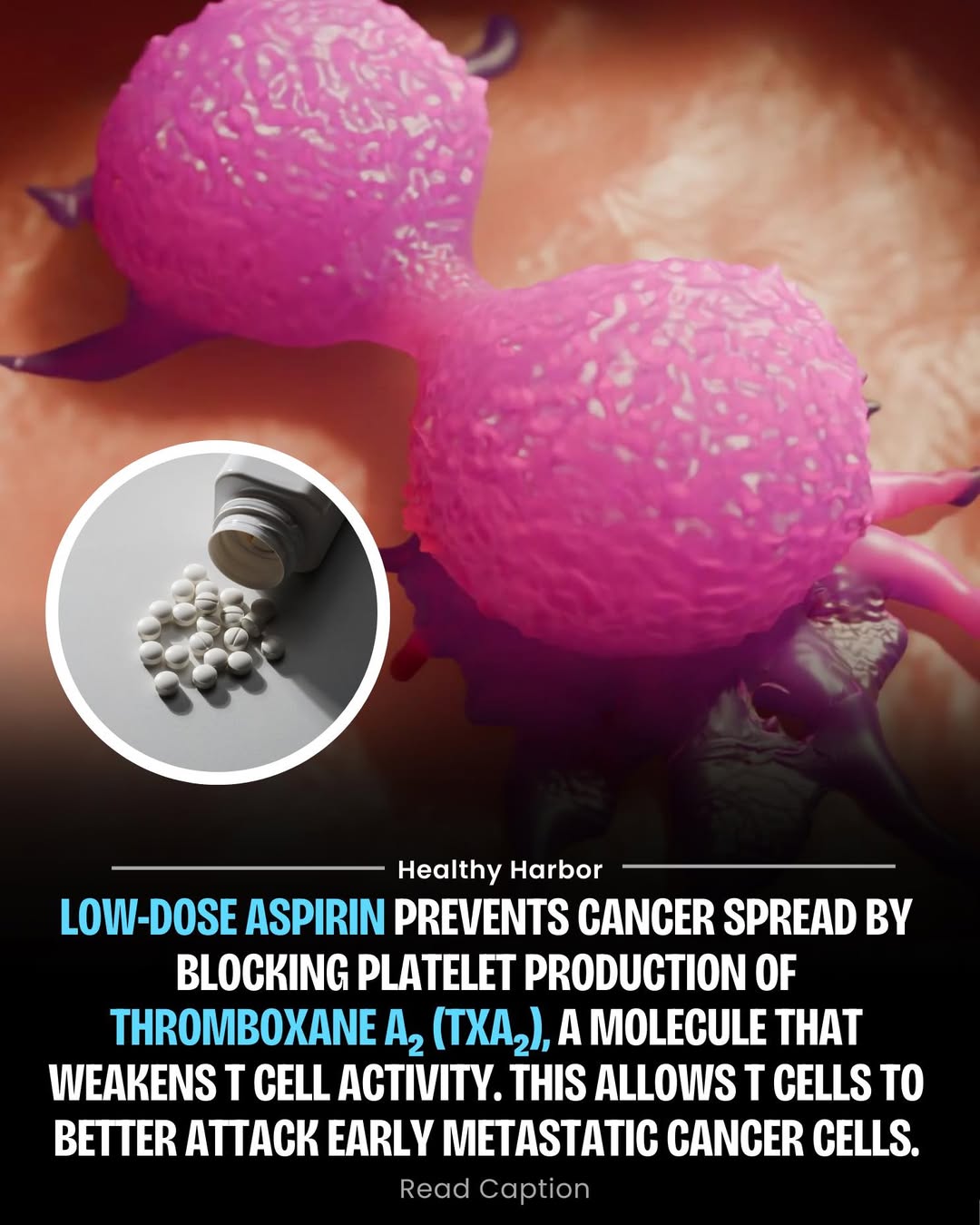
The study published in Nature (March 2025) reveals a previously unknown immune mechanism explaining how aspirin helps prevent cancer metastasis. Researchers led by Rahul Roychoudhuri discovered that platelets release thromboxane A2 (TXA2), a molecule that suppresses T cell activity during early metastatic spread. Normally, newly disseminated cancer cells are vulnerable because they lack the highly immunosuppressive environment of established tumors. However, platelet-derived TXA2 activates a signaling pathway inside T cells through the guanine exchange factor ARHGEF1, which dampens T cell receptor signaling, reduces proliferation, and limits cytokine production. In mouse models, deleting ARHGEF1 specifically in T cells significantly reduced lung and liver metastases, demonstrating that this pathway directly restrains anti-metastatic immunity.

The researchers further showed that aspirin prevents metastasis by blocking platelet COX-1, the enzyme required for TXA2 production. By lowering systemic TXA2 levels, aspirin releases T cells from ARHGEF1-mediated suppression, restoring kinase signaling (including AKT and ERK pathways), cytokine polyfunctionality, and tumor-specific immune responses. Importantly, aspirin’s anti-metastatic effect disappeared in mice lacking ARHGEF1 in T cells, confirming that its benefit depends on this immune mechanism rather than direct tumor toxicity. Selective COX-1 inhibitors and platelet-specific COX-1 deletion produced similar protective effects, whereas COX-2 inhibition did not, highlighting the central role of platelet-derived TXA2. These findings provide a mechanistic explanation for epidemiological evidence linking low-dose aspirin to reduced metastatic recurrence and suggest that targeting the TXA2–ARHGEF1 axis could enhance future anti-metastatic immunotherapies.

No photo description available.
← newer: Introduction to Eric Topol and his book Super Agersolder: Louis: some proteins like whey raise insulin more than sugar →