The Power of the CT Angiogram (CTA)
The SCOT-HEART trial followed 4,146 patients with stable chest pain for five years and provided groundbreaking evidence on how we diagnose and manage heart disease. The study compared patients who received standard care alone against those who received standard care plus a Coronary CT Angiography (CTA)—a specialized scan that creates detailed images of the heart’s arteries. The results were clear: using the CTA scan to guide treatment significantly reduced the risk of future heart attacks.
Key Results: Preventing Heart Attacks
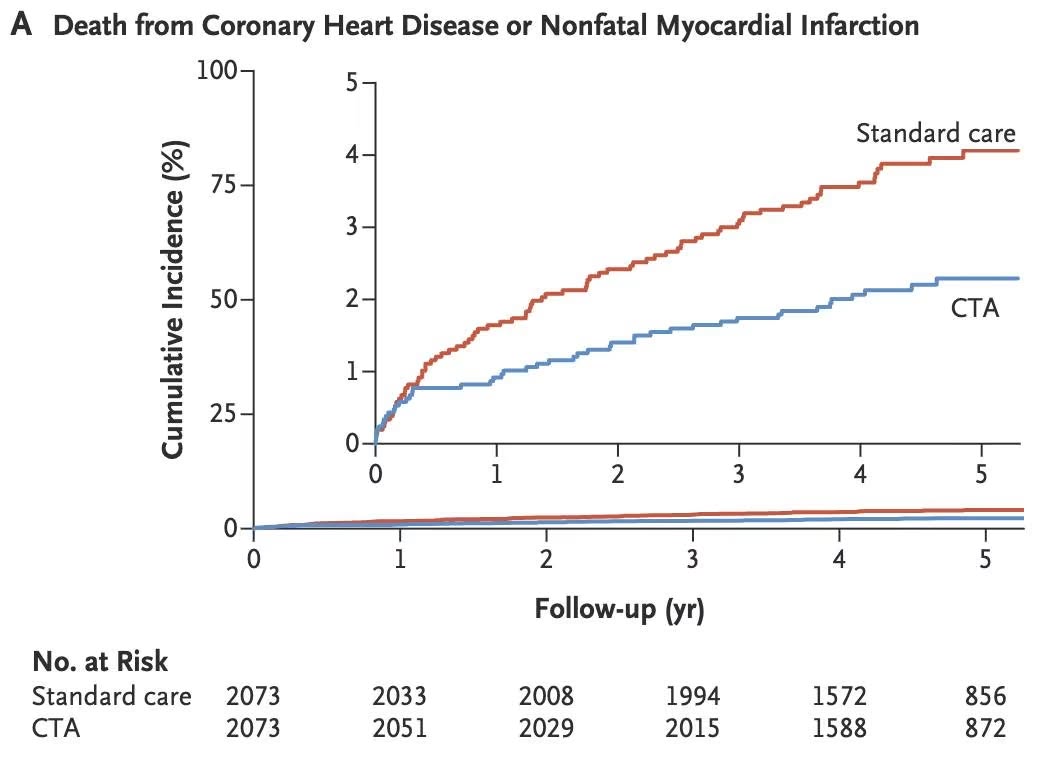
The most important finding for patients is that those who received the CTA scan were significantly less likely to die from heart disease or suffer a nonfatal heart attack. Over the 5-year follow-up period, the rate of these serious events was 2.3% in the CTA group compared to 3.9% in the standard care group. While those percentages might look small, this represents a 41% lower risk of dying from heart disease or having a heart attack for those who got the scan. This benefit was consistent across different types of patients, including those with "atypical" symptoms and those with "possible" angina.
Why It Worked: Better Medication Management
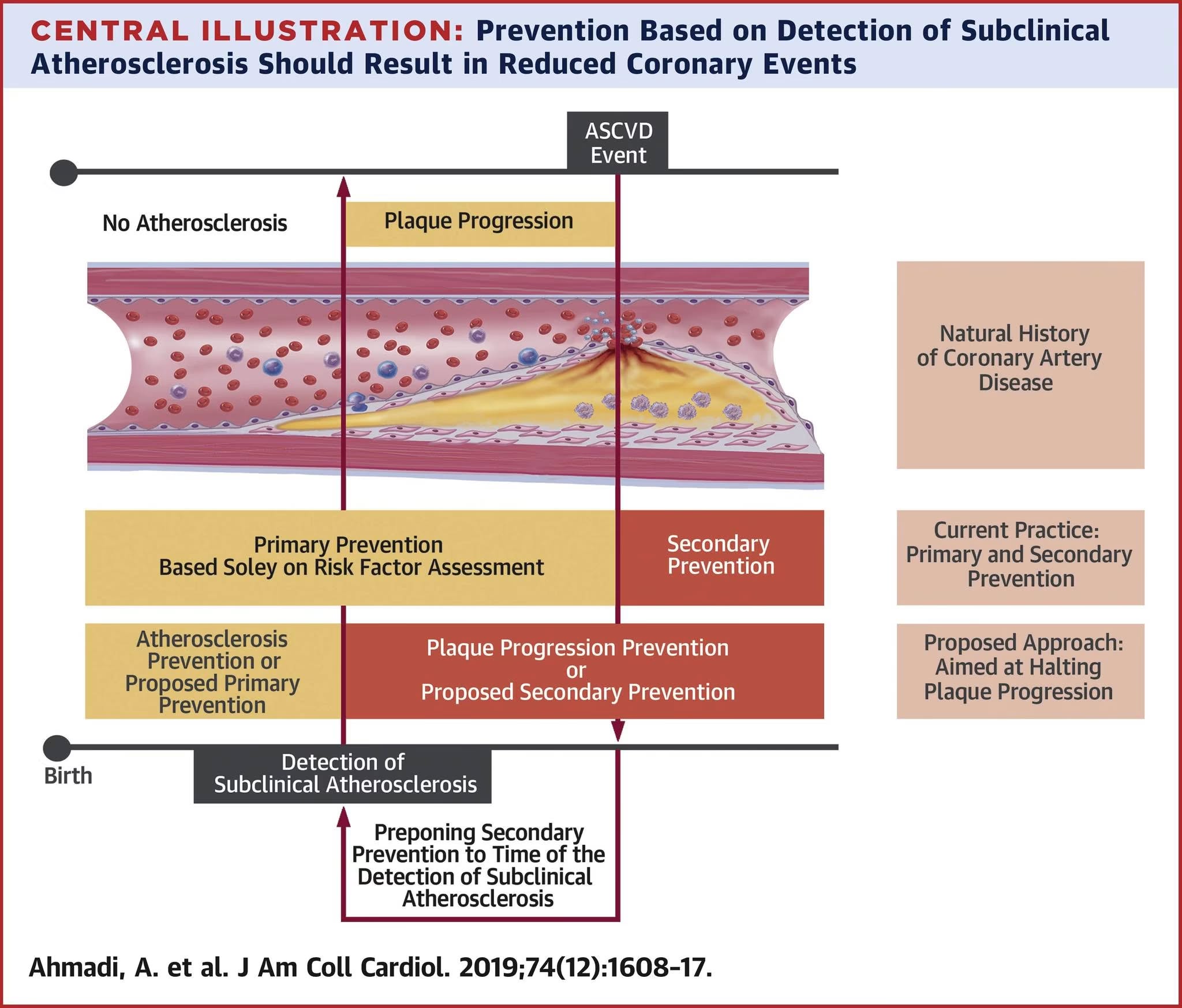
The follow-up analysis (published in JACC, 2019) revealed why the scan was so effective. It wasn't that the scan itself healed the heart, but rather that it gave doctors the certainty they needed to prescribe the right preventative medications.
- Patients in the CTA group were more likely to be started on preventive therapies, such as aspirin and statins, because the scan clearly showed who actually had plaque buildup.
- Conversely, for patients where the scan showed no disease, doctors could safely stop unnecessary medications.
- Essentially, the scan allowed for "precision medicine"—targeting the patients who needed help the most.
Procedures and Safety
A common fear is that having more scans leads to more invasive surgeries. The study found that while the CTA group had slightly more procedures (like stents or bypass surgery) in the first year to fix immediate problems, they had fewer procedures in the years that followed. By the end of the five years, the total number of invasive procedures was roughly the same between both groups. This suggests that the CTA scan helps catch and fix problems early, preventing emergency situations later on.
The Takeaway
For the heart disease community, these results offer great encouragement. They demonstrate that getting a clear picture of your coronary arteries leads to more accurate diagnoses . This clarity allows your medical team to fine-tune your medication, ensuring you aren't under-treated or over-treated, which ultimately significantly lowers your risk of a future heart attack. Potential downsides include the cost and the radiation received during the test. One caveat: This study admitted participants with chest pain only, therefore its conclusions won't necessarily be applicable to everyone.
[1] Coronary CT Angiography and 5-Year Risk of Myocardial Infarction (2018)
openaccess.sgul.ac.ukLink to openaccess.sgul.ac.ukopenaccess.sgul.ac.uk Paper · J Am Coll Cardiol · 2019Guiding Therapy by Coronary CT Angiography Improves Outcomes in Patients With Stable Chest Pain.Conclusion: The beneficial effect of coronary CTA on outcomes is consistent across subgroups with plausible underlying mechanisms. Coronary CTA improves coronary heart disease outcomes by enabling better targeting of preventative treatments to those with coronary artery disease. (Scottish COmputed Tomography of the HEART Trial [SCOT-HEART]; NCT01149590).pmc.ncbi.nlm.nih.gov