This trial shows very clearly that lowering high triglycerides— without treating the underlying insulin resistance that causes it— does not slow plaque growth.
#triglyceridesHD #vldlHD #apobHD #remnantsHD #insulinresistanceHD
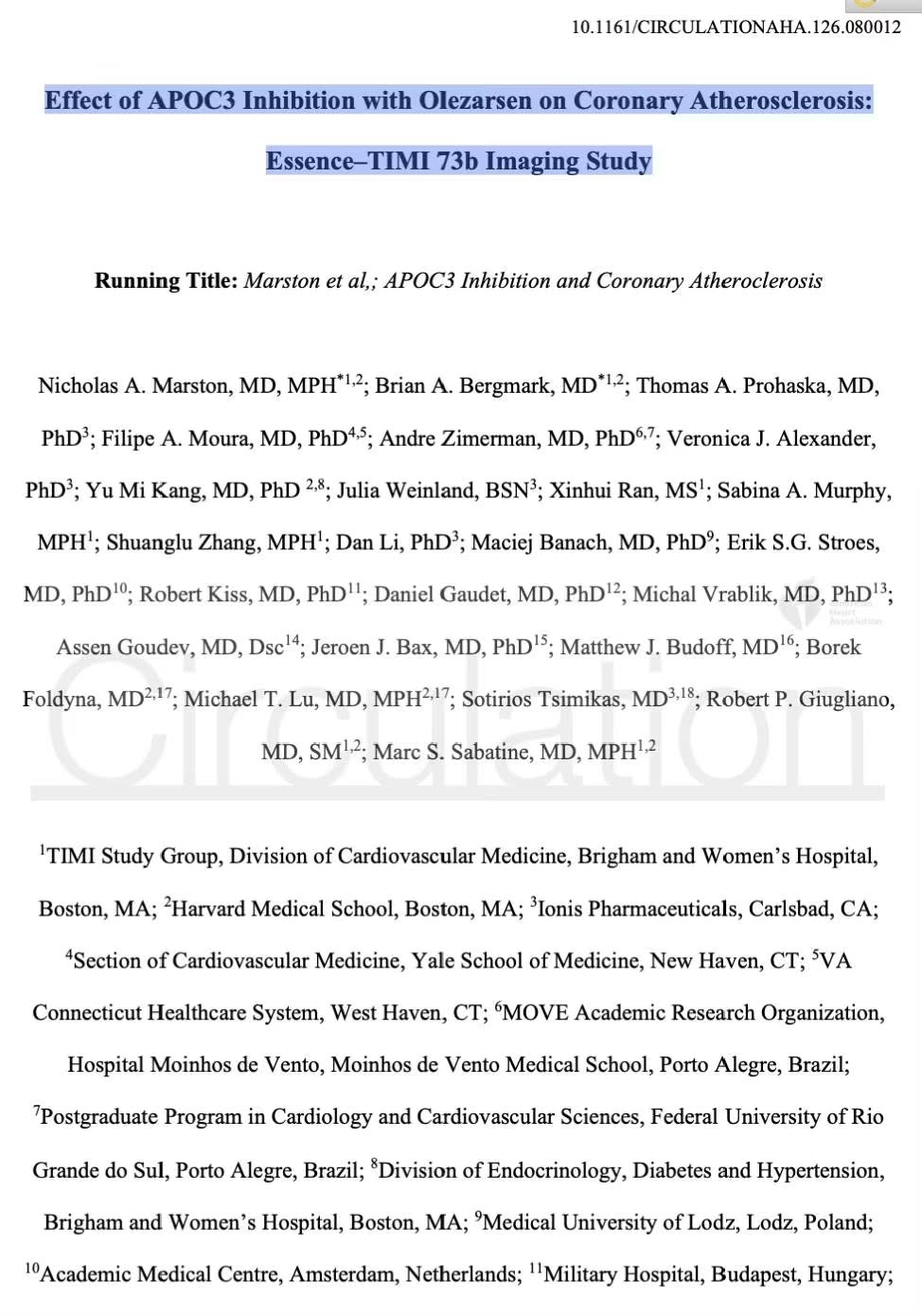
The ESSENCE-TIMI 73b imaging study found olezarsen lowered triglycerides about 64% and remnant cholesterol about 72%, with ApoB down only about 16%, yet 12-month CCTA showed no difference in plaque. Louis reads it as showing TG lowering alone, without treating insulin resistance, does not slow plaque.
This trial shows very clearly that lowering high triglycerides— without treating the underlying insulin resistance that causes it— does not slow plaque growth.
#triglyceridesHD #vldlHD #apobHD #remnantsHD #insulinresistanceHD
🧬🫀 Massive triglyceride reduction… zero plaque impact?
Very interesting study but IMHO with methodological flaws affecting the results.
The Essence–TIMI 73b imaging study tested a bold hypothesis:
👉 If you dramatically reduce triglyceride-rich lipoproteins,
👉 you should slow atherosclerosis.Enter olezarsen (APOC3 inhibition).
🔬 What did they achieve?
Impressive biology:
🔻 Triglycerides ↓ ~64%
🔻 Remnant cholesterol ↓ ~72%
🔻 ApoB ↓ ~16%
➖ LDL-C unchangedAnd yet…
📊 What happened to coronary plaque?
Measured by CCTA over 12 months:
👉 No difference vs placebo in:
✔️ Non-calcified plaque volume
✔️ Low-attenuation plaque
✔️ Total plaque burden📉 Primary endpoint: neutral (p=0.36)
⚠️ So what’s going on?
This is the key message:
👉 Not all lipid lowering is equal.Despite massive triglyceride reduction:
✔️ ApoB reduction was modest (~16%)
✔️ Patients were already aggressively treated (97% on therapy)
✔️ Follow-up may be too short for structural change💡 The uncomfortable implication
We’ve been told:
“Triglyceride-rich lipoproteins are highly atherogenic.”But this study challenges the clinical translation of that concept.
👉 Lowering TRLs ≠ necessarily shrinking plaque (at least short-term)
🎯 Clinical perspective
This is not a negative study.It’s a clarifying one:
✔ Biology ≠ imaging effect
✔ Surrogate ≠ disease modification
✔ Mechanism matters🔮 Bottom line
If you want to move plaque, you still need to move:
👉 atherogenic particle burden (apoB)Everything else may be… secondary.
And maybe it’s time to stop asking:
“Did we lower triglycerides?”
…and start asking:
👉 “Did we actually change the disease?”
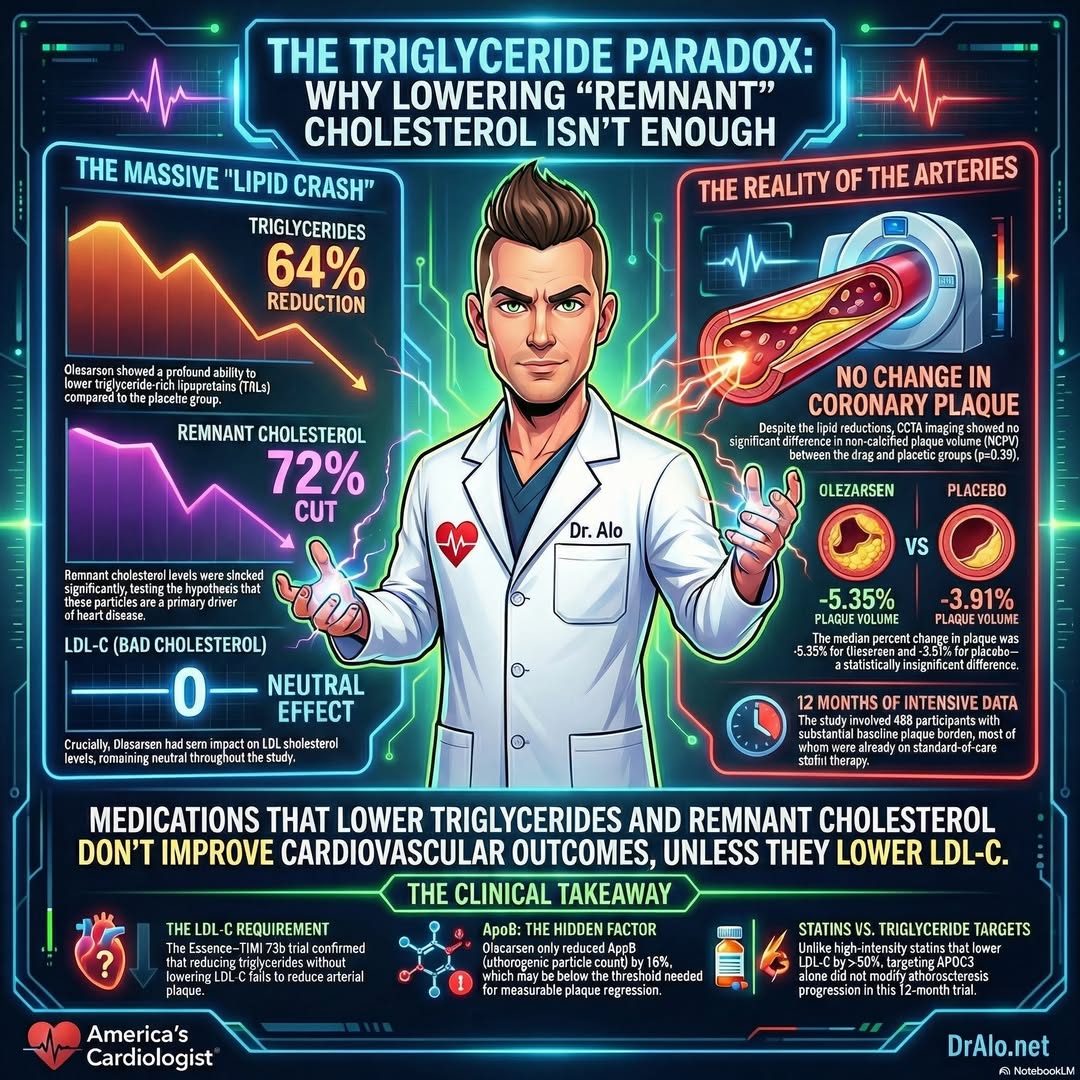
Louis explains that unless triglycerides exceed about 400-500 mg/dL, drug-lowering them makes little difference to plaque or hard outcomes. In BRIDGE-TIMI 73a olezarsen cut triglycerides 64% with no plaque volume change; VLDL particles are atherogenic but are already counted by apoB.
Louis explains the TG/HDL ratio as an indirect marker of insulin sensitivity that tracks visceral and liver fat. Insulin resistance and LDL are independent causal risk factors, and high triglycerides carry ApoB on VLDL, making them directly atherogenic.
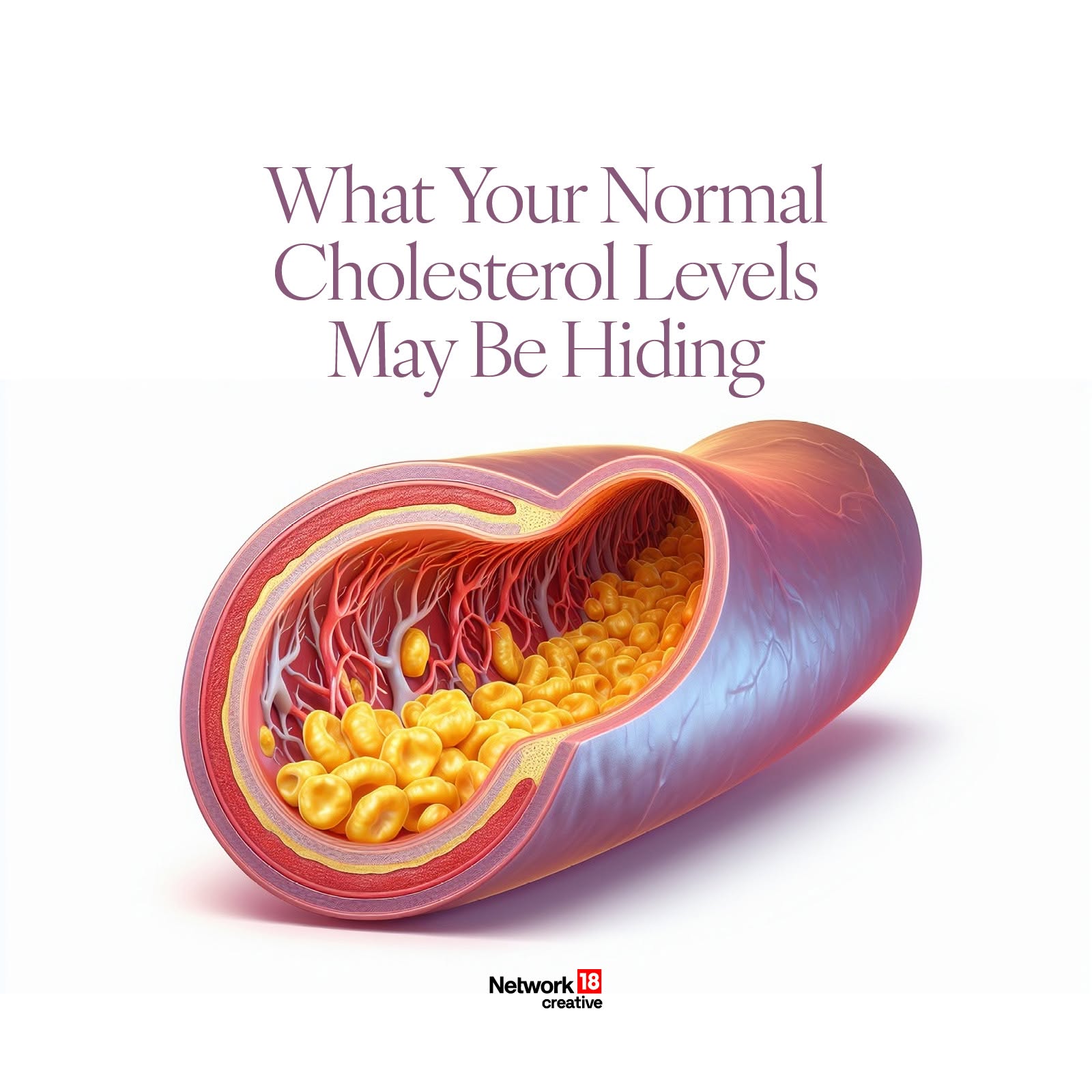
Louis shares a brief explainer that heart risk goes beyond LDL and HDL, as hidden lipoprotein particles such as Lp(a), remnants and ApoB-rich particles cause many heart attacks and are invisible on standard panels.
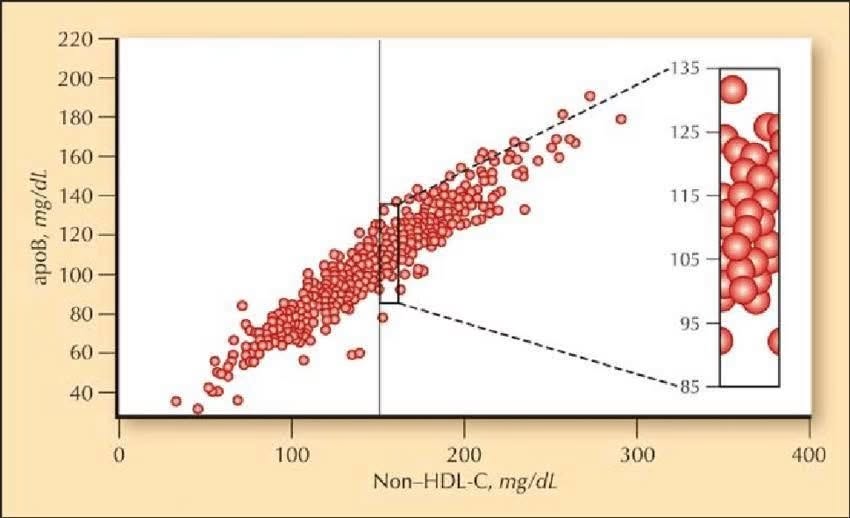
Louis offers a rough formula for estimating ApoB and explains that non-HDL cholesterol is a proxy but measures cholesterol amount, not particle number, so ApoB remains more accurate.
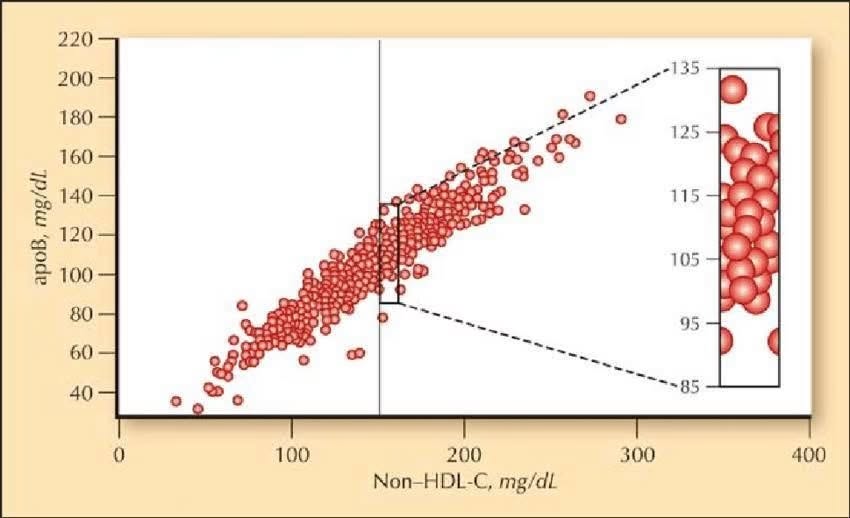
Louis explains that ApoB counts particles while non-HDL cholesterol (total minus HDL) measures the cholesterol they carry, so non-HDL is only a rough proxy. A crude estimate is ApoB approximately 0.7 x non-HDL-C, but a direct ApoB test is more accurate.
The poster points out that keto and carnivore influencers who deny LDL/ApoB causality but accept Lp(a) and triglycerides as causal are contradicting themselves: Lp(a) and VLDL (measured as triglycerides) are ApoB-tagged particles just like LDL. Most triglyceride is carried by VLDL, which differs little from LDL.