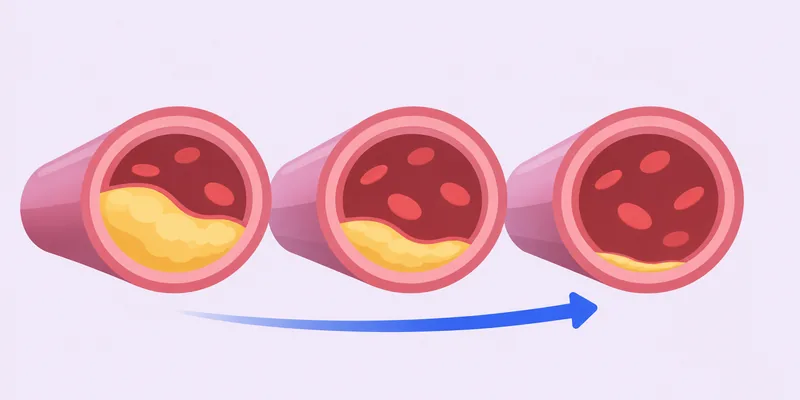
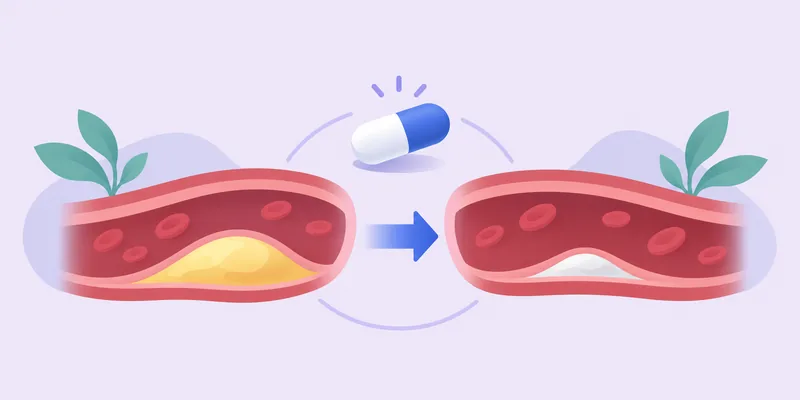
A coronary CT angiogram (CCTA) is a heart CT scan done with injected contrast dye. Unlike a calcium score scan, which only picks up calcium, CCTA outlines the inside of the coronary arteries and the plaque in their walls, including the soft, lipid-rich plaque that does not contain calcium. A calcium score tells you plaque is definitely there but not the whole picture, whereas AI-assisted plaque analysis of a CCTA can describe how much plaque there is, where it sits and what type it is1.
Group admins Louis Nervegna and Gokhan Can return to CCTA often because it is the tool behind most of the plaque-tracking trials the group discusses. It is also the test that SCOT-HEART, a large randomized trial, tied to fewer heart attacks in people with chest pain2. The scan is not perfect, though. It costs more, involves more radiation than a calcium scan, and the numbers it produces depend on the software that reads them.
This summary walks through what CCTA shows beyond CAC, what SCOT-HEART found, what the plaque-tracking studies say, and who the group's posts suggest might consider one. None of this is personal medical advice; the group's admins consistently suggest discussing imaging decisions with your own doctor.
What CCTA shows that a calcium score does not
Soft plaque versus calcified plaque
Louis describes calcified plaque (what a CAC score measures) as the stable, older material and non-calcified, especially low-density soft plaque, as what ruptures and causes heart attacks1. He argues that a high CAC predicts risk mainly because calcified plaque is a proxy for the amount of soft plaque that came before it9. A staging explainer shared by Gokhan describes coronary disease as beginning with soft plaque, sometimes in childhood or young adulthood, with calcification showing up later and symptoms later still10. Louis adds that by the time calcium appears, a person has probably had soft plaque for years, maybe decades3.
A related point comes from the PARADIGM imaging analysis quoted in the group: low-attenuation plaque (a dark, fatty type of soft plaque on CT) strongly predicts future events such as heart attack, and in SCOT-HEART it predicted events better than a risk score, CAC or the presence of obstructive disease. Very dense calcified plaque, by contrast, was associated with a lower risk of acute coronary syndrome11.
Why a zero calcium score is not a clean bill of health
Because soft plaque has no calcium, CAC can miss it. The group has repeatedly pointed to the Western Denmark Heart Registry: of 23,759 consecutive symptomatic patients (median age 58, 55% women) who had CT angiography, 54% had a CAC of zero, and half of the people with obstructive blockages had a zero score34. Louis's summary of this is that CAC shows late-stage disease and is a poor tool for early detection3.
The NEJM REACT study, shared in the group, studied 16,808 adults aged 18 to 70 without known disease using vascular ultrasound plus coronary CT angiography. Plaque was present in 57% overall. Among 30 to 39 year olds who had plaque on CT angiography, 41.8% of men and 48.4% of women had a calcium score of zero, because early plaques may be non-calcified and invisible to calcium scoring12. Louis summarizes the study as showing that age is the biggest risk factor; roughly 1 in 13 people in their 20s had plaque, rising to about 9 in 10 in their 60s, with men developing silent disease about 5 to 10 years earlier than women13. It is a cross-sectional study, meaning it counted plaque at a single point in time rather than following people over years13.
How plaque is measured on CCTA
Plaque studies use a few recurring terms.
- TAV (total atheroma volume) is the overall plaque volume, soft and calcified together. PAV (percent atheroma volume) expresses it as a share of the vessel volume14.
- NCPV (non-calcified plaque volume) is the soft plaque alone. NCPV is reported in mm3 or in microlitres (uL); one mm3 is exactly one uL, which matters when comparing studies15.
- Low-attenuation plaque is the fattiest, highest-risk subset of soft plaque11.
Software does the measuring. The group mentions Cleerly, HeartFlow and QAngio, and the American College of Cardiology guidance on AI-based quantitative coronary plaque analysis (QCPA) that Louis shared. According to the summary posted, the guidance supports QCPA for people who already have plaque on their scan, to help make treatment decisions and follow the response, with rescans at intervals of at least two to five years1.
Louis also quotes a review arguing that, in large contemporary cohorts, total plaque burden and non-calcified plaque volume often outperform stenosis (how narrow the artery is) as predictors of future events16. He predicts that as cost and radiation fall, CCTA will become standard in preventive cardiology, though he presents that as his expectation rather than current practice16.
One extension is the CaRi-Heart analysis, which uses AI on a standard CT angiogram to estimate coronary inflammation through the fat attenuation index (FAI). A member shared a case in which stenosis fell from 70% to under 25% after LDL was lowered to 35-50 mg/dL, yet the FAI score was high (8.1, 93rd percentile) despite an hs-CRP of 0.15 mg/L. Louis's view is that this is probably the most accurate non-invasive way to measure residual inflammatory risk and that no blood test captures it; that is his opinion, not an established standard17.
SCOT-HEART: what it found
SCOT-HEART followed 4,146 patients with stable chest pain for five years. Everyone received standard care, and half also had a coronary CT angiogram. Coronary death or nonfatal heart attack occurred in 2.3% of the CTA group versus 3.9% of the standard-care group, a 41% lower risk, and the benefit was consistent in people with "atypical" symptoms and "possible" angina2.
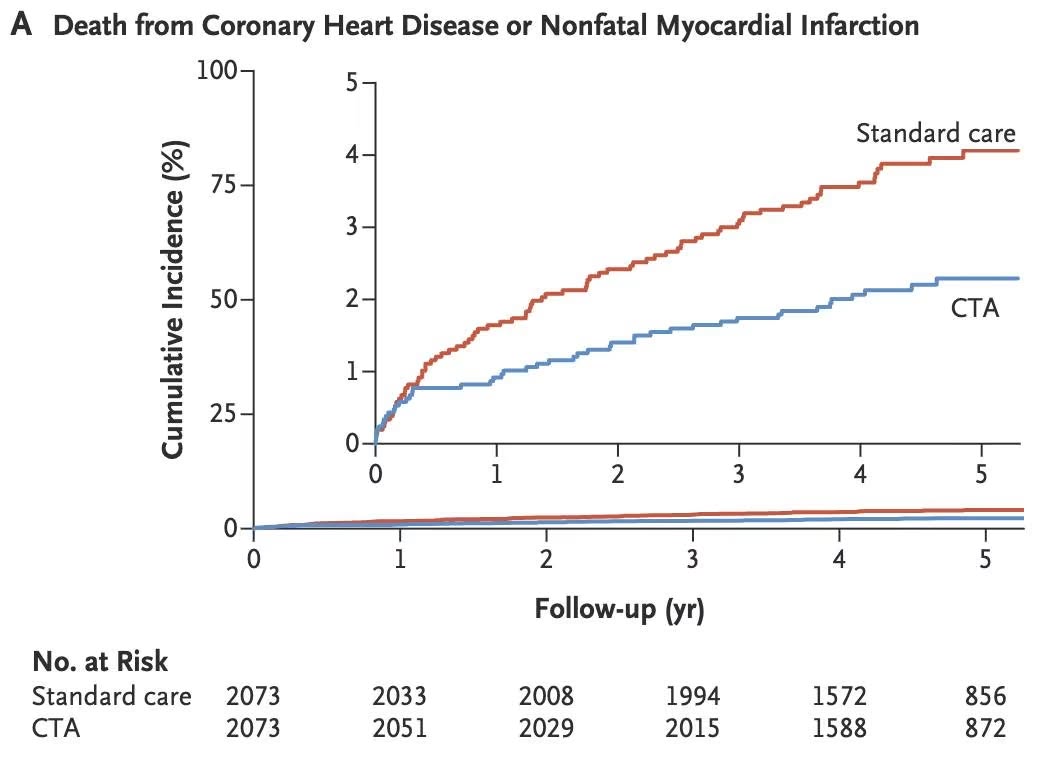
Gokhan's summary of a follow-up analysis (JACC, 2019) explains why. The scan did not heal anything on its own. It showed who actually had plaque, so more of those patients were started on aspirin and statins, and people with no disease could safely avoid unnecessary medication2. The CTA group had slightly more procedures such as stents or bypass surgery in the first year and fewer later, with roughly equal totals by year five2.
The caveats Gokhan lists are important. Participants were people with chest pain, so the findings do not automatically apply to everyone, and the downsides include cost and radiation2.
What plaque-tracking trials have found
CCTA made it possible to measure soft plaque change over a year or so. Louis often benchmarks results against a typical at-risk person, who following a standard Western diet grows about 5 mm3 of non-calcified plaque a year; the Nature-CT analysis of healthy individuals with no statins put the median at 4.9 mm356. In the group's framing, anything much below zero is regression.
Statins and other lipid-lowering drugs
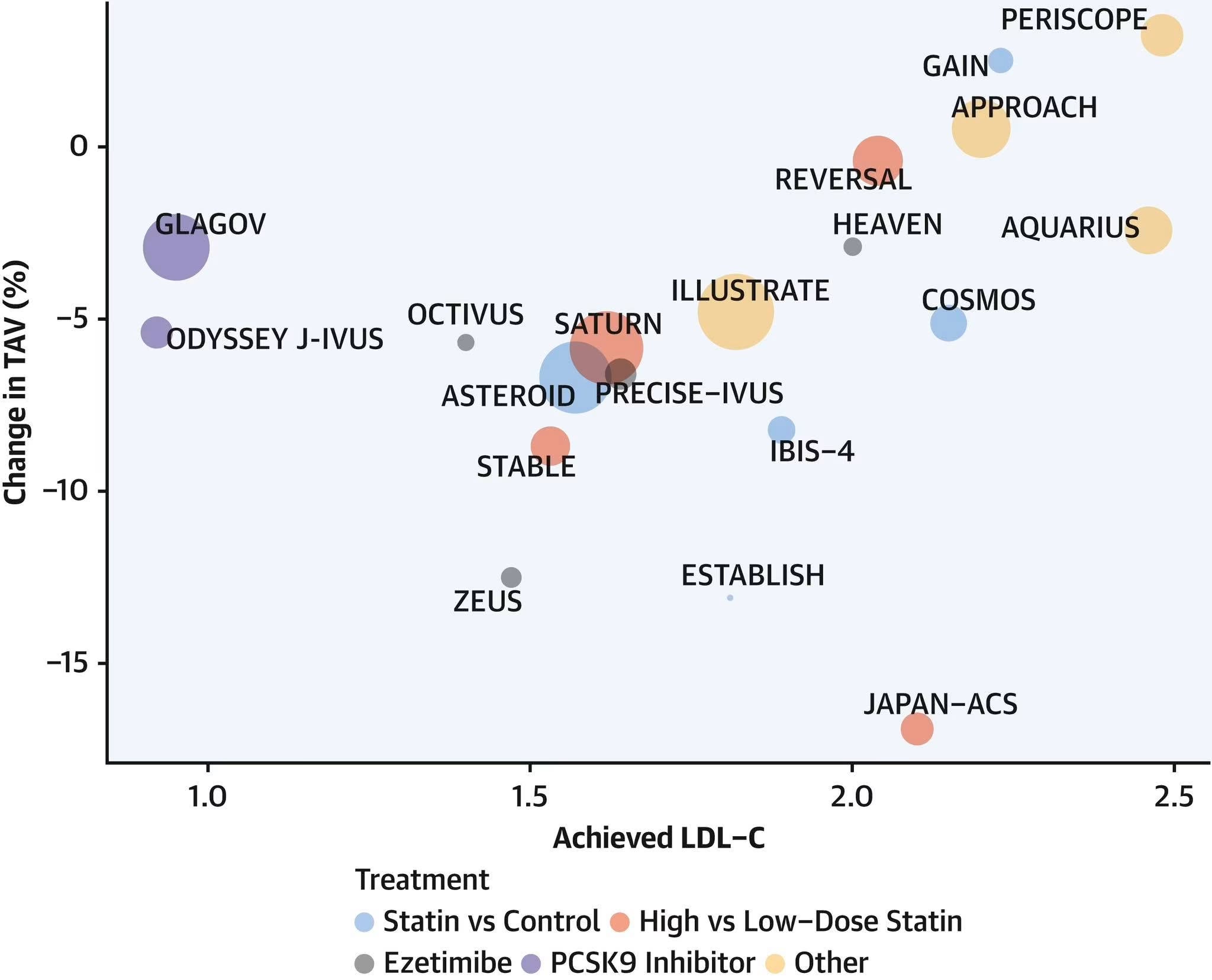
- Six statin trials (COSMOS, SATURN, ASTEROID, IBIS-4, STABLE, JAPAN-ACS), measured by CCTA or IVUS (intravascular ultrasound, a catheter-based ultrasound), showed total plaque volume falling by about 5% to 17%. Louis notes the falls came from soft plaque, not calcified plaque1819. A chart from a 2022 JACC review suggests regression begins once LDL-C falls below roughly 90 mg/dL, with JAPAN-ACS (atorvastatin 20 mg or pitavastatin 4 mg in acute coronary syndrome) the best result at 17%14.
- FLOWPROMOTE (JAMA Cardiology, 2026) randomized 104 statin-naive patients with coronary disease to atorvastatin 40 mg or rosuvastatin 40 mg plus ezetimibe 10 mg, with CCTA at baseline, 9 and 18 months. LDL fell to 42.5 versus 69.5 mg/dL; total plaque volume fell 21.1% versus 13.6% and soft plaque 28.2% versus 20.0%. Calcified plaque rose in both groups, which the shared write-ups describe as soft plaque hardening and stabilizing2021. The trial measured imaging, not heart attacks20.
- Evolocumab (Repatha) was studied in 47 patients (mean age 61.8, 87% male) over 18 months with LDL around 30 mg/dL. Soft plaque fell from 607.3 to 562.1 uL and low-attenuation plaque from 37.1 to 20.4 uL, while calcified plaque rose from 108.9 to 148.7 uL, so total plaque was essentially unchanged (716.2 to 710.8 uL). Thirty-seven of 47 patients had some soft-plaque reduction15. Louis stresses there was no randomization or control group, and that PCSK9 inhibitors as monotherapy have not been proven to reduce heart attacks22.
- A comparison of progression rates, quoted from Dr Brad Stanfield, reports that in the SMARTool cohort high-risk people not on statins gained about 6.4 mm3 of soft plaque per year versus about 1.0 mm3 per year for those on statins23.
Diet and lifestyle
DISCO-CT randomized 92 non-diabetic people with non-obstructive coronary disease (91 completed) to a dietitian-guided DASH-style diet plus more exercise, or to usual care; everyone was on intensive medical therapy including statins. Soft plaque fell by 51.3 mm3 with the DASH diet versus 21.3 mm3 in the control group. Louis calculates that is 2.4 times more reversal, and adjusts the diet result to 39.5 mm3 per year because the trial ran 66 weeks. In his words this is the largest dietary soft-plaque regression on CT to date, equal to about 8 years of typical progression6. He adds an explicit caveat: the benchmark is a typical American, not these patients' own history6. Calcified plaque did not increase in either DISCO-CT group6. The DASH diet used was about 30% fat, mostly unsaturated24.
Other agents measured with CCTA
- Colchicine 0.5 mg daily reduced percent atheroma volume by over 1% in one year in a Budoff-led CCTA trial, with lower CRP and slower calcified plaque progression. Budoff described it as a relatively small study25.
- Aged garlic extract was reported in a small randomized trial using serial CCTA to slow plaque growth and reduce low-attenuation plaque26.
- Testosterone went the other way. In a 2017 randomized trial of 170 men aged 65 or older with low testosterone, the testosterone group had an estimated 41 mm3 greater increase in soft plaque than placebo after a year (95% CI 14 to 67). Louis notes that the later TRAVERSE trial found no increase in heart attacks or strokes when treating diagnosed hypogonadism, but only over about 22 months27.
- Olezarsen lowered triglycerides about 64% and ApoB about 16%, yet 12-month CCTA showed no difference in soft, low-attenuation or total plaque (primary endpoint p=0.36). Louis reads this as showing that lowering triglycerides alone does not slow plaque; the shared write-up itself flagged methodological limits such as short follow-up and near-universal background therapy28.
- High-dose EPA: a member reported a CCTA-documented regression of a 70% stenosis soft plaque after six months on 6 g/day, without a statin. Louis presented it as a single case and warned that very high fish-oil doses can raise AFib risk29.
Limits and controversies
The lumen "blind spot" and the Glagov effect
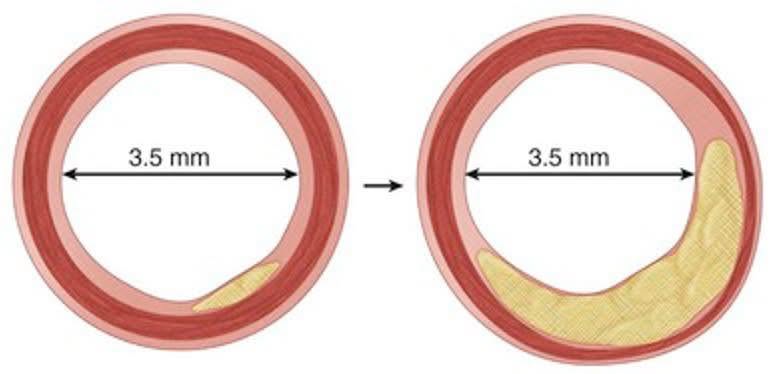
Louis has said that CT angiography is a form of "lumenography": dye fills the lumen (the channel where blood flows), so early plaque inside the artery wall is mostly invisible until it narrows the lumen, and a perfect-looking CCTA can coexist with early wall plaque830. Elsewhere in the group, he describes modern high-resolution CT angiography as directly measuring plaque in the wall, soft and hard, long before it narrows the lumen, in contrast to old x-ray angiography3132. These posts are best read together: CCTA sees far more than x-ray angiography, yet early disease can still escape it.
The same logic explains why the older x-ray angiography in the small 1986-1992 Ornish trial is criticized. Early plaque makes arteries expand outward (the Glagov phenomenon), keeping the lumen looking normal32. Louis points out that the lumen changes reported there, 2.1% at one year and 3.4% at five, are below what standard x-ray angiography can reliably resolve31.
Software and the Keto-CTA controversy
The Keto-CTA study followed lean people with very high LDL (about 237 to 254 mg/dL depending on the post) on ketogenic diets, using CCTA and Cleerly software. Louis compared it with Nature-CT, from the same institute, scanners and software, with a mean age near 55, no diabetes and no lipid drugs. Median soft-plaque progression was 18.8 mm3 in Keto-CTA versus 4.9 mm3 in Nature-CT, or 3.8 times faster533.
Several critics noted that the preregistered primary outcome (NCPV) was missing from the paper343536. The original paper was then retracted over concerns about the Cleerly analysis, and the 200 scans were re-analyzed. HeartFlow gave a median rise of 5.5 mm3 and QAngio 5.6 mm37. Louis argues this is still no better than the standard-diet group and that both studies would need re-analysis with the same software for a fair comparison3738. His view is that of an admin; the lesson that applies to everyone is that absolute CCTA plaque numbers can shift with the analysis program. A statistician's independent reanalysis of the released data also alleged statistical problems, to which the authors had not yet responded39.
Radiation and cost
Louis says CAC scans use much less radiation than CT angiography but predict risk less accurately. He cautions about a JAMA Internal Medicine projection of cancers from CT imaging because it is observational and subject to confounding40. Gokhan lists cost and radiation as downsides of CCTA2.
Sex differences
A Danish cohort of 10,003 asymptomatic adults over 40 found plaque less frequent in women at every age (6% versus 20% at ages 40 to 44). Obstructive disease carried a 4.1-fold higher heart attack risk in women versus 12-fold in men over about six years, although the sex interaction was not statistically significant41.
Exercise and plaque
Louis highlighted the Master@Heart analysis linking higher wearable-measured training load to more coronary atherosclerosis on CCTA in middle-aged and older athletes. He stresses this concerns extremes of intensity plus volume, not typical exercisers42.
What this means for you
The group's posts do not provide a formal guideline for who should get a CCTA, but they suggest these themes. Discuss each with your doctor.
- Chest pain. The best randomized evidence in the group, SCOT-HEART, is in people with stable chest pain2.
- Known plaque. The ACC guidance as summarized supports plaque analysis for people who already have plaque on a scan, with rescans at two to five year intervals at minimum1.
- Zero calcium but concern remains. Given the Danish and REACT findings, a zero CAC does not rule out soft plaque, particularly in younger people312.
- Very high LDL on a keto diet. Budoff recommends CT angiograms for his ketogenic patients and a statin, low-dose aspirin and tight blood pressure control for those with significant plaque43.
- Radiation-free alternatives. One member who is a keto practitioner with high Lp(a) chose a carotid intima-media thickness test first and planned CCTA later44.
- Motivation. Louis shared JAMA findings that CCTA, compared with risk scoring, was linked to modest improvements in lifestyle, acceptance of preventive therapy and risk factor control45.
- Read results carefully. Ask whether total plaque, soft plaque and calcified plaque are reported separately, and which software was used.
Frequently asked questions
What does CCTA show that CAC does not?
CAC reflects calcified plaque only, while quantitative analysis of a CCTA characterizes all plaque types, including soft low-density plaque1.
Does a normal CCTA mean I have no plaque?
Not necessarily. Louis notes that contrast CT mainly shows plaque that has grown enough to affect the lumen, so early wall plaque can be missed8.
Why did my soft plaque shrink but my total plaque stay flat?
Calcified plaque can rise as soft plaque hardens. In the evolocumab study total plaque was unchanged while soft plaque fell and calcified plaque rose15. In FLOWPROMOTE calcified plaque rose but total plaque still fell20.
How often should I rescan?
The ACC guidance as summarized in the group says two to five years at minimum1.
Does SCOT-HEART prove scanning prevents heart attacks in everyone?
No. It enrolled people with stable chest pain, and the benefit appears to come from better targeting of aspirin and statins2.
Are numbers from different studies directly comparable?
Only with caution: different software gave very different results for the same scans, and units (mm3 versus uL) and baseline risk vary715.