In addition to reversing plaque, statins are also proven to thicken the fibrous cap.
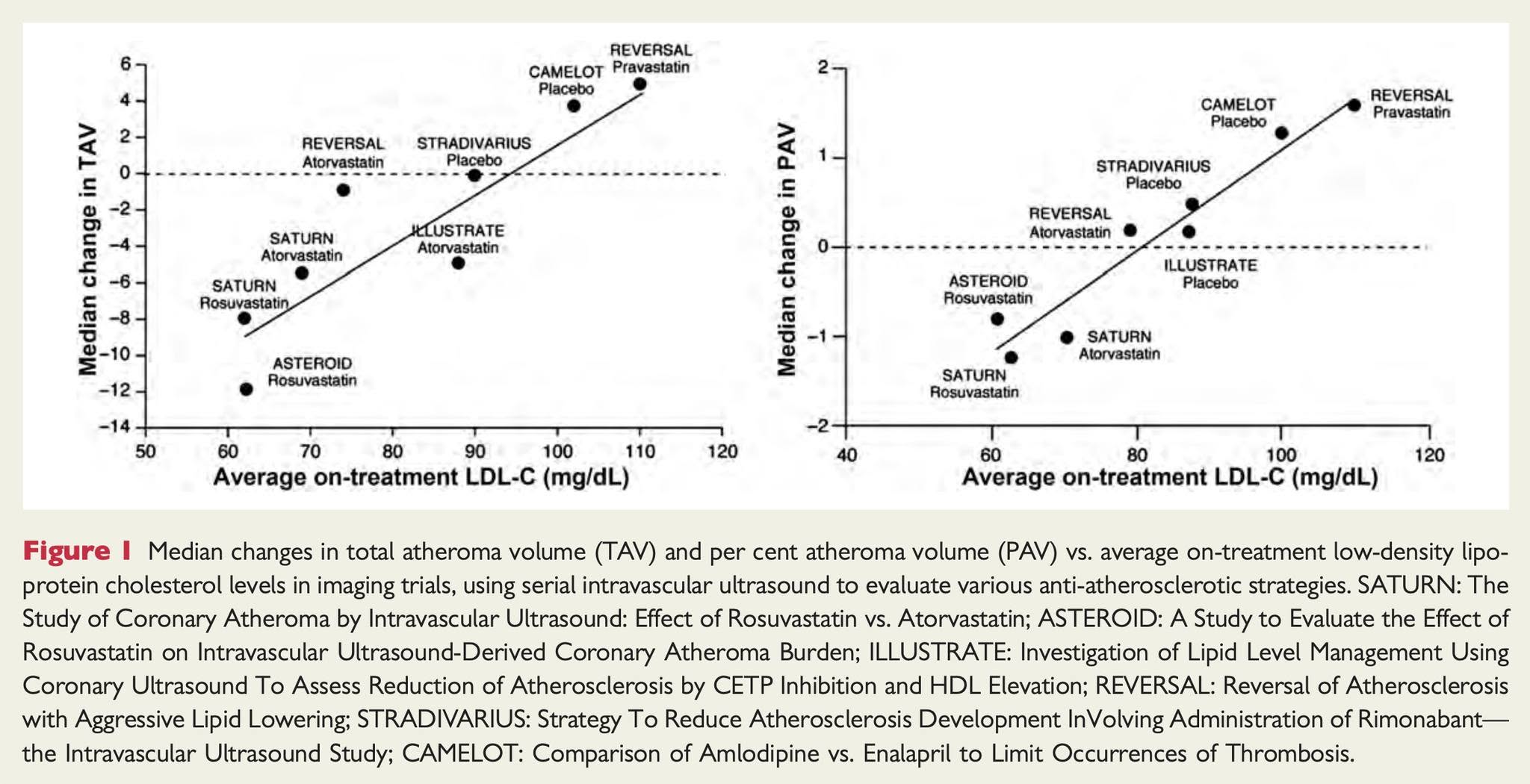
Six large randomized trials have proven that statins reverse both total plaque and soft plaque:
↪ Six randomized trials show statins reduce total plaque volume 5-17% from baseline
In addition to reversal, statin therapy significantly increases the thickness of the fibrous cap in atherosclerotic plaques. This thickening is a key component of plaque stabilization, making the plaque less likely to rupture.
Multiple clinical studies using optical coherence tomography (OCT) have documented this effect. This test is the gold standard for measuring the thickness of the fibrous cap on plaques.
Key Evidence for Statin-Driven Thickening
Significant Increases: In a meta-analysis of multiple studies, statin therapy was found to increase the fibrous cap thickness (FCT) by an average of roughly 59um.
Paper · J Interv Cardiol · 2015Effect of Statin Therapy on Fibrous Cap Thickness in Coronary Plaques Using Optical Coherence Tomography: A Systematic Review and Meta-Analysis.Conclusion: Statin therapy induced a significant increase in coronary FCT evaluated by OCT. This increase in FCT was independent of traditional coronary risk factors including the lipid profile.pubmed.ncbi.nlm.nih.govIntensity Matters: Higher doses of statins typically result in more significant thickening. For example, the EASY-FIT study showed that 20 mg/day of atorvastatin increased cap thickness by 69% compared to just 17% for a 5 mg/day dose.
Paper · Journal of the American College of Cardiology · 2014Effect of Atorvastatin Therapy on Fibrous Cap Thickness in Coronary Atherosclerotic Plaque as Assessed by Optical Coherence Tomographyjacc.orgTargeting Vulnerable Areas: The thickening effect is often more pronounced in plaques that initially have the thinnest, most vulnerable caps.
Early vs. Late Initiation
Starting statins immediately following an acute cardiac event can show measurable thickening within just 3 to 4 weeks.
One of the most notable studies demonstrating this timeframe was published in JACC: Cardiovascular Imaging (2017).
Paper · JACC: Cardiovascular Imaging · 2018The Immediate Effects of Statins on Coronary Atherosclerosisjacc.org thecardiologyadvisor.comHigh intensity statins affect coronary plaque composition after stemithecardiologyadvisor.comStudy Design: Researchers used Optical Coherence Tomography (OCT)—a high-resolution imaging tool—to look at plaques in patients who had just suffered an Acute Coronary Syndrome (ACS) event.
Early Statin Group: Patients who started statins immediately at the time of the event showed an increase in fibrous cap thickness (FCT) from 140um to 160um in just 3 weeks.
Deferred Group: Patients who had their statin therapy delayed for 3 weeks actually saw their cap thickness decrease slightly (from 135um to 130um) during that same window.
Significance: This study proved that statins exert an immediate effect on the plaque's "phenotype" (its physical structure), making it more stable almost immediately after starting treatment, even if the total amount of "clogging" hasn't changed yet.
Mechanism of Stabilization
Beyond lowering LDL cholesterol, statins thicken the cap through several "pleiotropic" (non-lipid) effects.
Inflammation Reduction: Statins decrease macrophage accumulation and the activity of enzymes like matrix metalloproteinases (MMPs) that normally break down the fibrous cap.
Collagen Deposition: By reducing inflammation, statins promote the deposition of interstitial collagen, which physically strengthens the cap.
Composition Shift: Over the long term (months to years), statins help transform unstable, lipid-rich plaques into denser, more calcified, and stable "scars".
Why does it happen so fast?
The rapid thickening isn't just about cholesterol; it's driven by pleiotropic effects:
Immediate Inflammation Drop: Statins quickly reduce the number of macrophages (inflammatory cells) that eat away at the fibrous cap.
Enzyme Inhibition: They inhibit enzymes like MMP-9 that digest collagen. When these enzymes stop working, the body's natural repair process can quickly reinforce the cap with new collagen fibers.