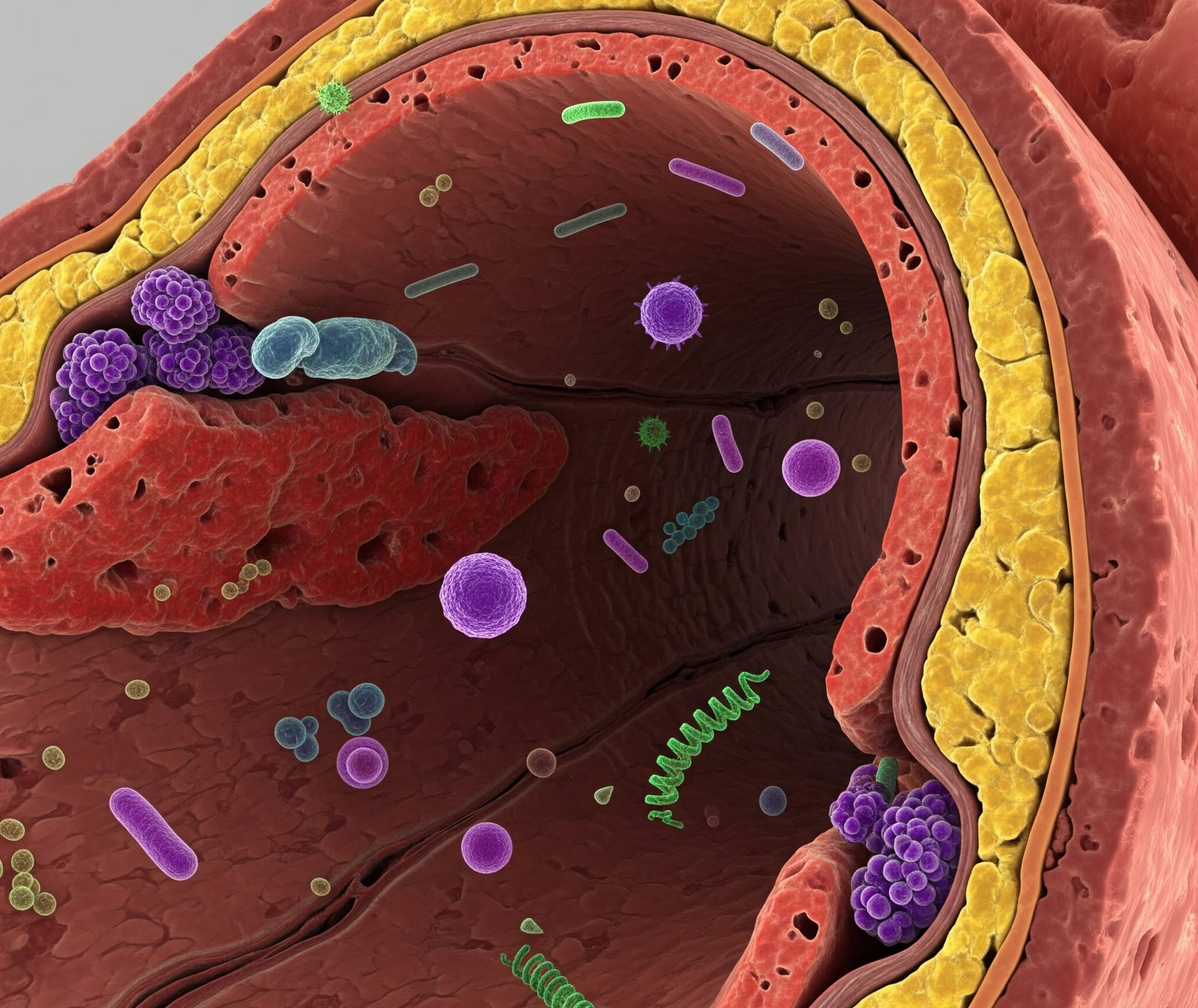
Beyond Cholesterol: An Infectious Trigger for Heart Attacks
A study published in the Journal of the American Heart Association reveals how infections can trigger a myocardial infarction by activating dormant bacteria within arterial plaques. Researchers found that bacteria, including some from the mouth, can form a protective, gelatinous biofilm inside cholesterol-filled atherosclerotic plaques, where they remain shielded from the immune system and antibiotics for years. An external trigger, such as a viral infection, can awaken these bacteria, causing them to multiply and provoke an intense inflammatory response. This inflammation may then rupture the plaque's fibrous cap, leading to the formation of a blood clot and a subsequent heart attack. This discovery challenges the long-held belief that only oxidized LDL cholesterol initiates coronary artery disease and paves the way for novel diagnostics, therapies, and potentially even preventative vaccines.