HD-OPM Archive
Hashtags

#oxidizedldl

9 posts

Engineered regulatory T cells targeting oxidized LDL cut plaque 70% in mice

Nov 22, 2025 · Gokhan Can ♥ 35 · 💬 7 Inflammation & CRP

Summarises a University of Pennsylvania preclinical study adapting CAR T therapy: Tregs engineered to recognise oxidized LDL dampened arterial inflammation and reduced plaque 70% in cholesterol-prone mice. Unlike cancer CAR-T, the cells suppress rather than destroy; it is a possible add-on for patients at risk despite cholesterol drugs.
How LDL causes atherosclerosis: oxidation, inflammation, foam cells and genetics

May 19, 2024 · Gokhan Can ♥ 12 · 💬 9 LDL, ApoB & lipid panel

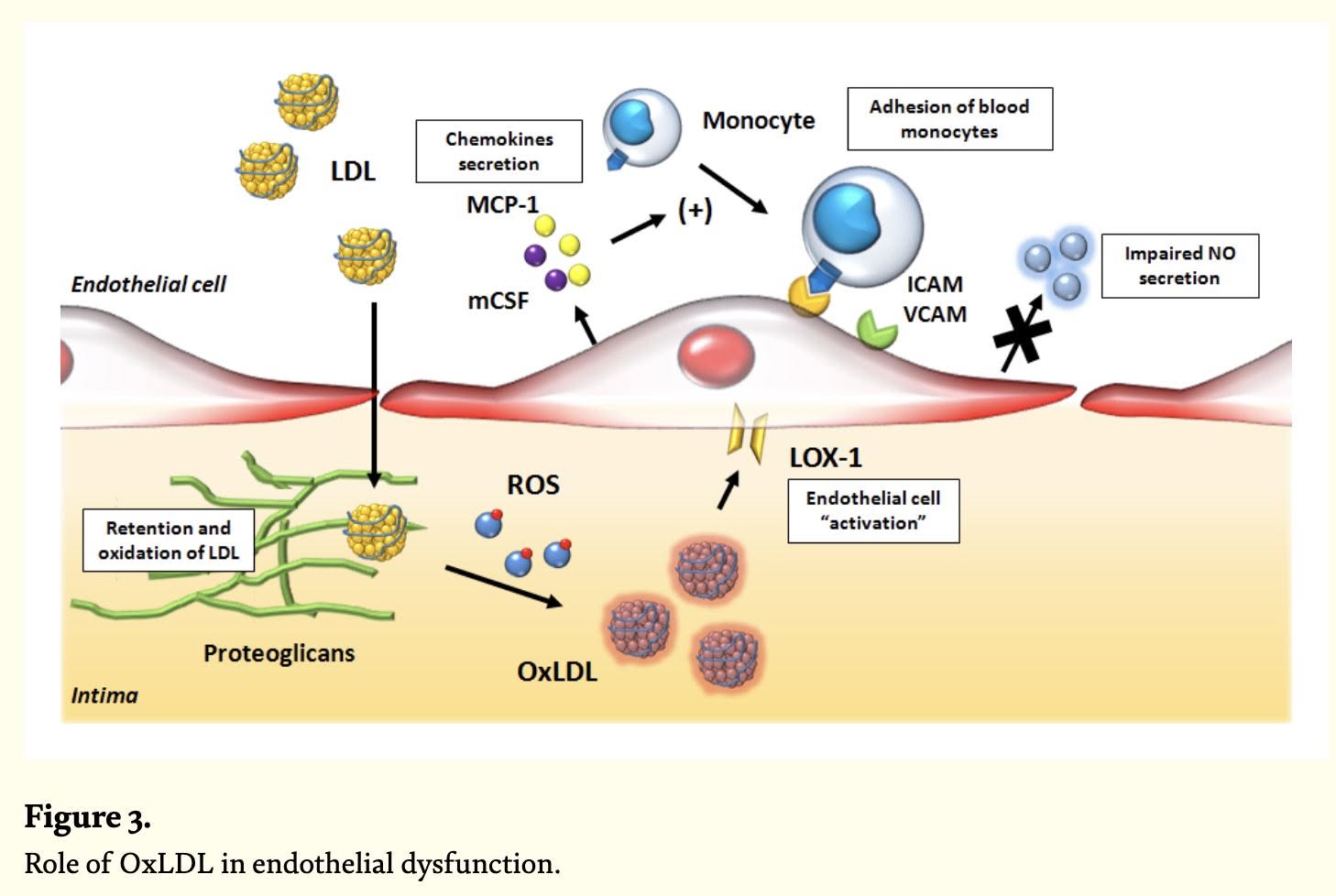
Explains five lines of evidence for a causal role of LDL in atherosclerosis: oxidized LDL in the artery wall, endothelial dysfunction and inflammation, macrophage foam-cell formation, Mendelian randomization and familial hypercholesterolemia, and the benefit of LDL-lowering therapies. Useful as a mechanism overview for readers who doubt that LDL is a cause rather than a bystander.

Circulating oxidized LDL is a poor test; measure ApoB instead, says Dayspring

Feb 04, 2024 · Louis Nervegna ♥ 9 · 💬 12 LDL, ApoB & lipid panel

Tom Dayspring argues that oxidized LDL measured in the bloodstream is a 'useless' biomarker and that ApoB should be measured instead. Louis adds that this refers to circulating oxidized LDL, not oxidized LDL inside plaques, which still matters but cannot be measured by blood test. Newer studies that adjust for ApoB reportedly show circulating oxidized LDL is not related to CVD risk.

Layne Norton rebuts seed-oil claims with human evidence on inflammation, LDL and oxidation

Nov 03, 2026 · Louis Nervegna ♥ 3 · 💬 5 Fats & oils (saturated fat, seed oils, omega-6, olive oil)

A shared post argues that human trial evidence does not support the claim that seed oils are harmful. Systematic reviews of randomized trials find that raising linoleic acid does not consistently increase inflammatory markers, replacing saturated fat with polyunsaturated fat lowers LDL and cuts coronary events, and trials show no significant increase in lipid peroxidation. It adds that LDL oxidation mostly occurs after retention in the artery wall, so LDL concentration still matters.