The “dirty dozen” list is not accurate.
By all means, eat organic produce if you can afford it.
Use common sense and wash your fruits and vegetables.
But the idea that eating conventional produce is bad for you is just plain wrong.
A mountain of scientific evidence demonstrates fruits and vegetables are good for you. Almost all of the studies involved fruits and vegetables that were conventionally grown. Some of these studies went on for decades. For example, we have high quality data on hundreds of thousands of people consuming conventionally grown fruits and vegetables for 30 consecutive years of their lives in the Harvard Nurses Study and Harvard Physicians Followup Study. The net effect after 30 years? Major benefits.
Link to the video that goes along with the post:
 ▶Video · YouTube · Barbell MedicineThe Dirty Dozen Is Harming Public HealthThe Environmental Working Group's Dirty Dozen list has caused real public-health harm. It's convinced people to eat less fruit. The actual pesticide data tells a different story: most consumer exposures sit roughly a million times below the safe reference dose. Here's what the evidence actually says, and why your strawberries are fine. Resources:…m.youtube.com
#dirtydozenHD #organicHD #vegetablesHD #fruitsHD
Only 3 in 10 Americans believe the health benefits of eating conventionally grown produce outweigh the pesticide risk. In a 2024 survey of 1,000 U.S. adults, 7 in 10 were either ambivalent, opposed, or unsure.
Every spring, the Environmental Working Group publishes the Dirty Dozen, a ranked list of fruits and vegetables with the highest pesticide residues. Strawberries have topped it for years. The list is downloaded millions of times and covered by every influencers and mainstream media alike. It's also built on a strange methodology that EWG describes in their own documentation: "All pesticides are weighted equally, and we do not factor in the levels deemed acceptable by the EPA."
That sentence violates the foundational principle of toxicology that the dose makes the poison.
When researchers applied EPA dietary safety thresholds to the 120 pesticide and produce combinations on the Dirty Dozen, 75% came in below 0.01% of the reference dose, which is roughly one million times below the level that produces no observed adverse effect in animal studies. Only one combination exceeded 1% of the threshold, and that one was still ~50 times below the safety limit.
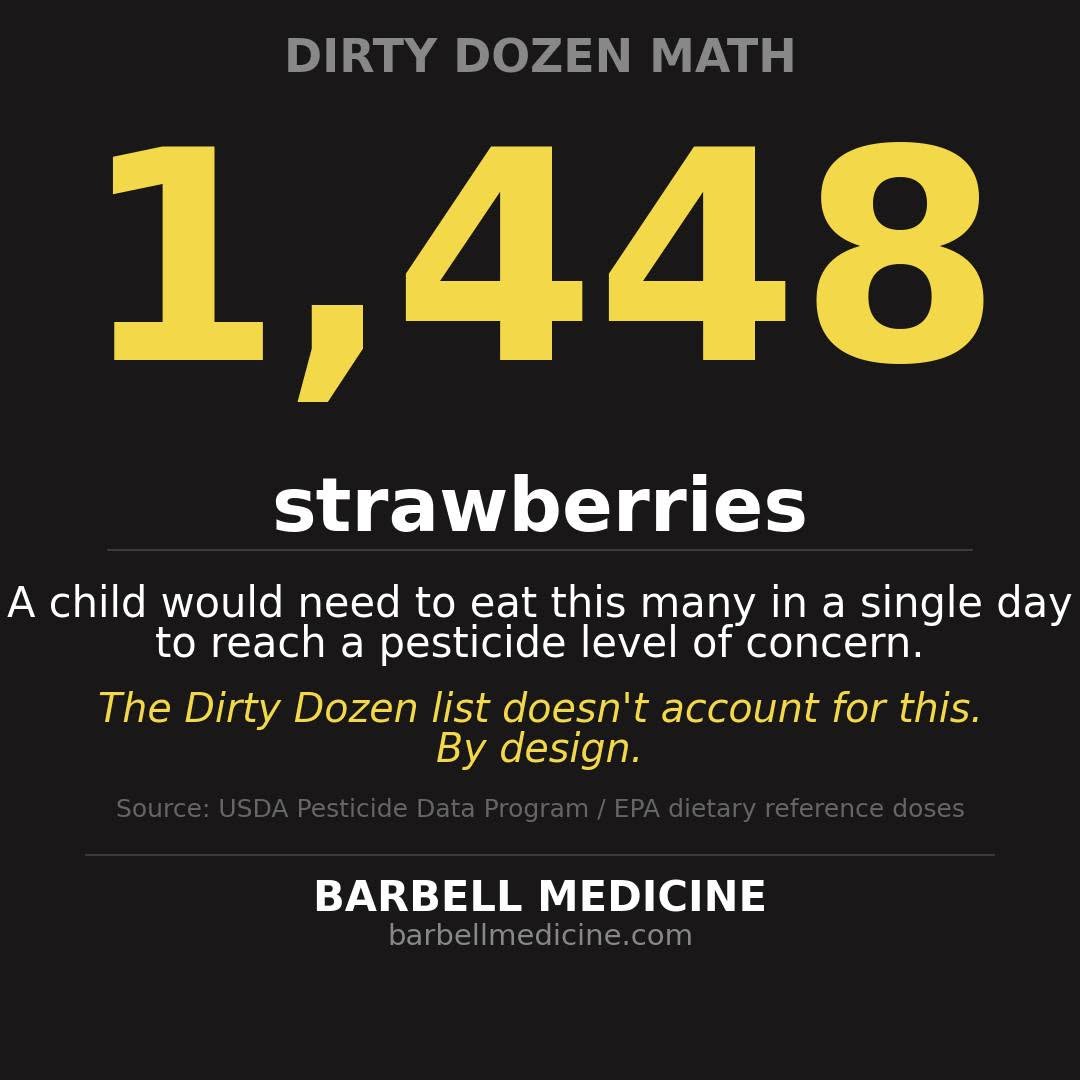
For perspective, a child would have to eat 1,448 non-organic strawberries in a single day to reach a level of concern.
The framing that pesticides in produce are a real concern and that organic foods are healthier can have real consequences. Only 1 in 10 Americans eats enough fruits and vegetables and organic costs about 50% more than conventional. Suggesting that people should buy and consume organic foods creates an unnecessary barrier. The Dirty Dozen operates outside the actual framework of toxicological risk, scares people away from the foods most likely to help them, and charges a premium for the alternative.
Eat more produce. Conventional or organic, whichever you'll buy.
What made you first start thinking about pesticides on produce?
Full episode breakdown in the comments.