Polyphenols are plant chemicals, found in cocoa, berries, tea, coffee, olive oil, nuts and whole grains, that act as antioxidants and may influence inflammation, blood vessels and gut bacteria. The best-tested example in the group's posts is cocoa. A concentrated cocoa-flavanol supplement lowered cardiovascular deaths in a large randomized trial, and smaller trials show better artery function and slightly lower blood pressure. Berries, especially blueberries, have a more modest evidence base: good signs for blood vessel function, but no hard-outcome trials.123
It is important to separate cocoa flavanols from chocolate. The trial results come from a standardized extract, not a candy bar. Chocolate adds sugar, fat and calories, and the researchers behind one study of cocoa's aging compounds specifically cautioned against treating chocolate as a longevity shortcut.4 The group's practical view, voiced mainly by Louis Nervegna, is to favor dark chocolate low in sugar and made with cocoa butter, to eat a wide variety of polyphenol-rich foods, and to keep expectations realistic.156
Much of the polyphenol story is mechanism and association rather than proof. Where a result comes from mice, cells or observational cohorts, the sections below say so.
What polyphenols and flavanols are
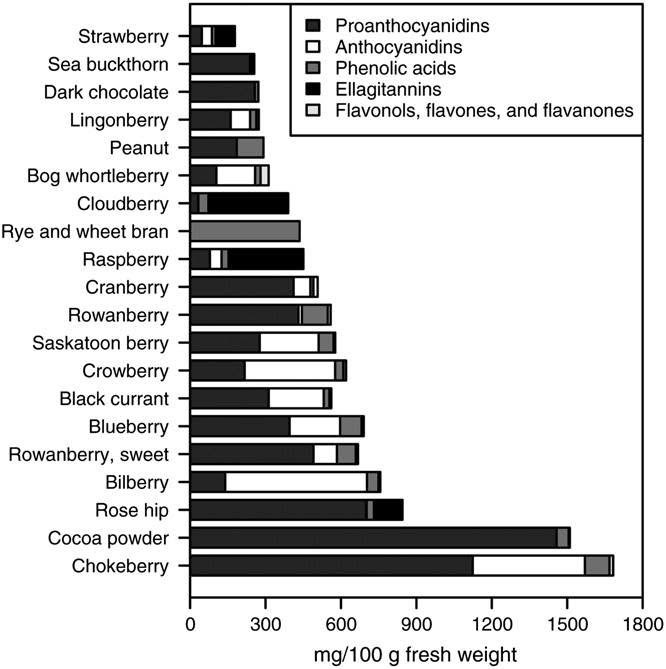
Polyphenols include four main groups: flavonoids, phenolic acids, stilbenes and lignans.10 Flavanols (also written flavonols or flavan-3-ols in the posts) are a flavonoid subclass abundant in cocoa. Anthocyanins are the pigments that make blueberries blue.1 A shared chart of polyphenol content (mg per 100 g fresh weight) put chokeberry and cocoa powder on top at over 1,500 mg, berries such as bilberry, blueberry, black currant, cranberry and raspberry at roughly 400-800 mg, and dark chocolate at about 200-300 mg.1
How polyphenols work is less settled than the foods that contain them. The older explanation is antioxidant chemistry, but Louis shared a Harvard Wyss Institute study in cultured cells and computer models suggesting that flavonoids such as quercetin can stack into nanofibers that stabilize cellular proteins under stress. The summary says this is preliminary and not from dietary trials.11 Another proposed route is nitric oxide: cocoa flavanols are said to help the lining of blood vessels make nitric oxide, which lets arteries relax.9 Louis also notes that gut bacteria turn polyphenols from pomegranates, walnuts and berries into urolithin A, which he describes as a mild mitochondrial stressor that may trigger protective responses. This is his mechanistic opinion.12
At the diet level, a TwinsUK study of more than 3,100 adults over ten years found that diets rich in tea, coffee, berries, nuts and whole grains were linked to healthier blood pressure and cholesterol and lower predicted cardiovascular risk. Higher urinary polyphenol metabolites tracked with lower risk scores and higher HDL cholesterol. It is observational.13 Louis's conclusion is that "getting as wide a variety of polyphenols as possible from your diet seems to make a lot of sense" and that the richest foods tend to be heart-healthy anyway, so "the polyphenols are a bonus."1
Cocoa and the COSMOS trial
What the trial tested
The COSMOS trial (COcoa Supplement and Multivitamin Outcomes Study), run at Harvard Medical School and Brigham and Women's Hospital, randomized 21,442 older adults (women 65 and older and men 60 and older) to 500 mg a day of cocoa flavanols, a multivitamin, both or neither. The cocoa capsules were donated by Mars Edge. The cocoa extract contained 500 mg of flavanols including 80 mg of epicatechin, and follow-up was a median of 3.6 years.79
What it found
- The primary outcome, a composite of total cardiovascular events (heart attacks, stroke, revascularization, cardiovascular death and others), fell by 10%, which was not statistically significant.78
- Cardiovascular death, a secondary outcome, fell by a significant 27% (hazard ratio about 0.73).78
- A composite of major cardiovascular events (heart attack, stroke and cardiovascular death) was also significantly reduced.7
- Among people who took their pills regularly, the analysis showed a 15% reduction in total events and a 39% reduction in cardiovascular death. The authors said their results warrant cautious interpretation and more research.714
Louis describes COSMOS as one of the highest-quality long-term trials of a dietary supplement, tested "just as rigorously as you would test a promising new pharmaceutical", and notes how unusual it is to see hard endpoints such as heart attacks and deaths in a supplement trial.714 That is his assessment. A careful reader should keep the headline in context: the 27% figure came from a secondary outcome, and the primary endpoint did not reach statistical significance.8
Follow-up analyses from COSMOS
- Inflammation. In 598 COSMOS participants, hsCRP (a blood marker of inflammation) fell 8.4% a year compared with placebo, while other inflammation markers stayed roughly unchanged or rose modestly. Louis suggests this may partly explain the cardiovascular benefit. Gokhan Can notes he does not supplement cocoa but eats it often.1516
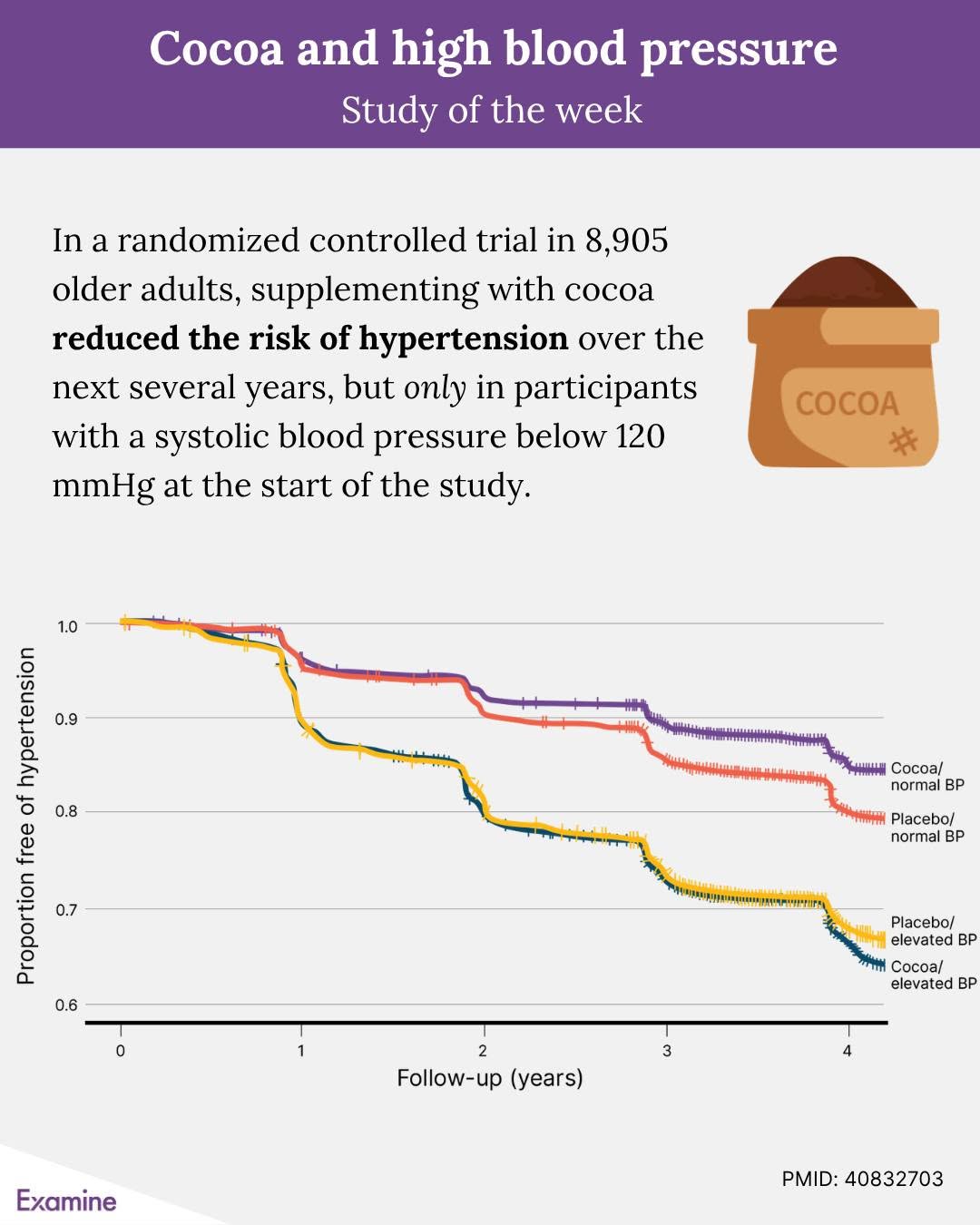
- Blood pressure. An Examine.com breakdown of the trial said cocoa extract may prevent high blood pressure, but only in people whose blood pressure was healthy at the start, not in those who already had hypertension.17
- Cognition. Louis reported that cocoa failed to slow cognitive decline overall in COSMOS, despite other studies showing benefit.18 A later summary of a podcast with COSMOS leader JoAnn Manson described a cognitive benefit, particularly for age-related memory loss, only in people with low flavanol intake at baseline, not those with normal intake. Taken together, the cognitive results look mixed.19
- Severity-ranked reanalysis. A 2026 reanalysis by Ogata and colleagues ranking events by severity was reported as favoring cocoa.9
Smaller trials and meta-analyses
A 2026 meta-analysis in the Journal of Nutrition, Health and Aging pooled 25 randomized trials (1,167 participants, 10.6-1,680 mg of flavanols a day). Compared with placebo, systolic pressure fell 2.7 mmHg and diastolic 1.8 mmHg, in people with and without high blood pressure, and flow-mediated dilation (FMD, how well an artery widens with blood flow) rose 1.3 percentage points. Higher doses were linked to larger pressure drops. An earlier Cochrane review (Ried and colleagues, 2017; 40 comparisons, 1,804 mostly healthy adults) found drops of about 1.8 mmHg each.9
Other small studies in the pack:
- Heart disease and stem cells. A UCSF crossover study in men with heart disease found high-flavanol cocoa improved flow-mediated vasodilation by 47% versus low-flavanol cocoa, increased circulating angiogenic cells (CD34+/KDR+) 2.2-fold, lowered systolic blood pressure 4.2 mmHg and raised plasma nitrite. Louis proposes that the stem-cell effect might help explain COSMOS.20 He also shared a Dr. William Li video on foods that influence stem cells, with the caveat that the science is somewhat oversimplified.21
- Peripheral artery disease. In a six-month double-blind pilot trial of 44 older adults with PAD, a daily flavanol-rich cocoa drink improved six-minute walk distance by 42.6 m at 2.5 hours after consumption, relative to placebo, with better calf mitochondrial activity, capillary density and perfusion. The authors said larger studies are needed.22
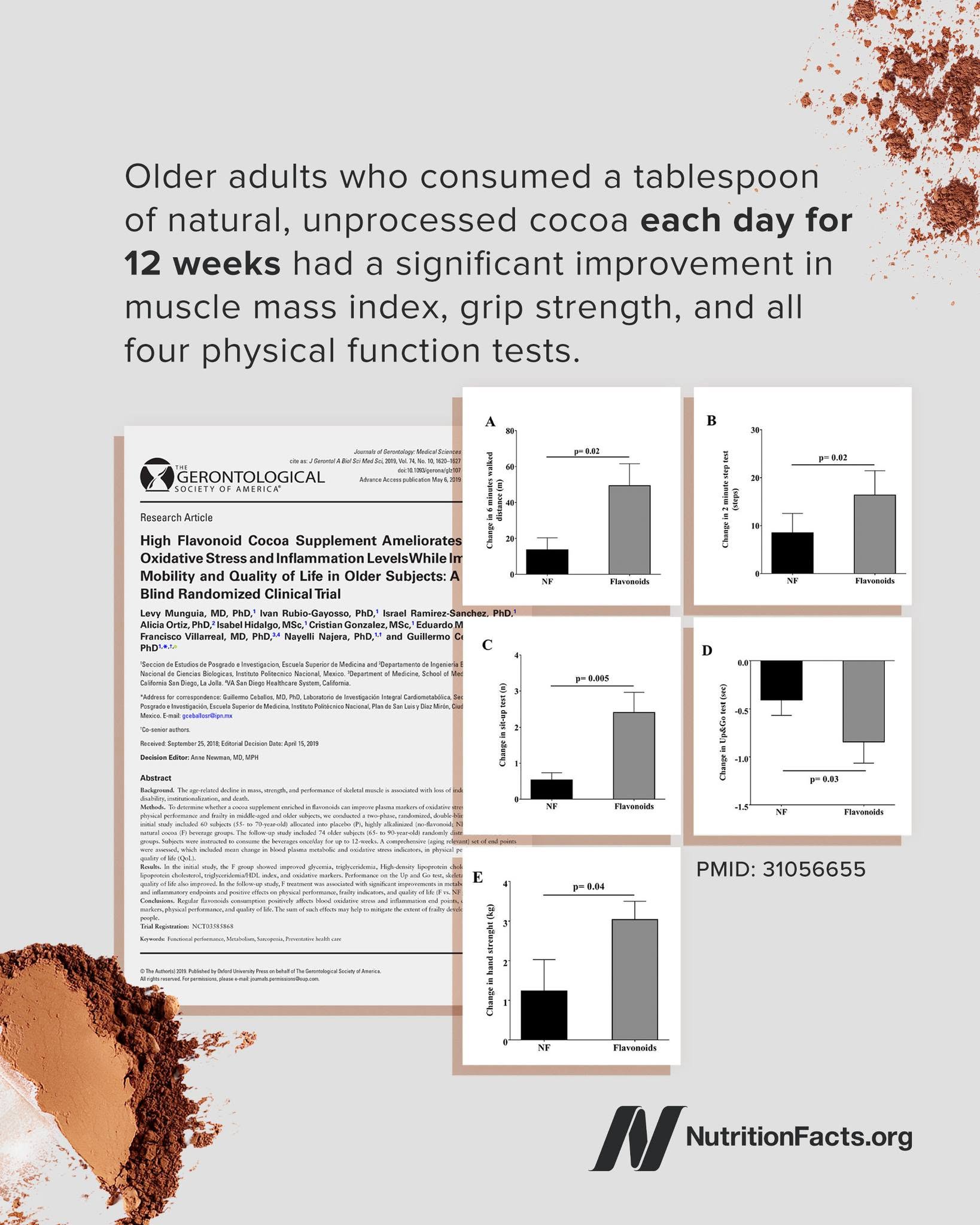
- Muscle. In a NutritionFacts summary, older adults who took a tablespoon of natural unprocessed cocoa daily for 12 weeks improved muscle mass index, grip strength and four physical function tests.23
- Aging. In TwinsUK and KORA cohorts (more than 1,600 people), blood theobromine, a cocoa compound, was the only cocoa or coffee compound consistently linked to slower epigenetic aging. Louis flags that this is observational and speculates it may partly explain COSMOS; he adds that the supplement used there probably contained about 60 mg of theobromine per serving.4
- Mice. In the NIA Interventions Testing Program, epicatechin raised median lifespan by about 5% in male mice, but not in females.24
Dark chocolate: what the evidence supports and what to watch
Large Harvard cohorts (the Nurses' Health Studies I and II and the Health Professionals Follow-up Study; about 192,000 adults followed for more than 30 years) found that people eating at least five ounces of any chocolate a week had a 10% lower type 2 diabetes risk. Dark chocolate at five or more servings a week was linked to a 21% lower risk, with about 3% lower risk per weekly serving. Milk chocolate was not associated with lower risk, and higher milk chocolate intake, not dark, was linked to long-term weight gain.5 Corresponding author Qi Sun said the split was surprising and suggested the polyphenols in dark chocolate might offset the effects of saturated fat and sugar on weight and diabetes. This is a hypothesis in an observational study.5
Cocoa butter versus milk fat
Louis advises choosing dark chocolate low in added sugar whose only fat is cocoa butter, avoiding versions with milk fat, because cocoa butter raises LDL about a quarter as much.5 A longer explanation says cocoa butter is roughly 33-35% stearic acid, which has a largely neutral effect on LDL, while milk fat is richer in palmitic and myristic acids, which downregulate liver LDL receptors and raise LDL. (The post notes it was written with AI help.)6 In a separate post about saturated fat, Louis cites cocoa butter in dark chocolate and full-fat yogurt as clear exceptions that "consistently do well in studies on CVD", while arguing most saturated fat does raise risk compared with healthy foods.25
Practical notes from members
- Gokhan lists low-carb chocolate among his favorite foods.26
- A UK member compared a bulk cacao extract with CocoaVia's product, estimating that 1.5 g of the 20:1 extract provides about 500 mg of flavanols. By the poster's own account, the supplier does not test flavanol or epicatechin content, so that figure is a calculation. It is a consumer tip, not evidence.27
- Louis shared an article suggesting cocoa added to coffee may smooth caffeine's jitters. It is not about heart health.28
- A shared University of New Mexico study (test-tube experiments) found that oxalic acid, present in chocolate, spinach and produced from vitamin C, can cause gadolinium from MRI contrast agents to form nanoparticles. Louis suggests avoiding such foods before a contrast MRI. This is early evidence, and it is best to follow the scanning center's instructions.29
Berries and other polyphenol-rich foods
Blueberries
A 2026 review of wild blueberries and cardiometabolic health in Critical Reviews in Food Science and Nutrition concluded that the strongest and most consistent evidence is for improved blood vessel function.2 A podcast excerpt Louis shared says about one cup (150-180 g) of fresh or frozen blueberries a day overlaps with most positive human studies. It lists endothelial function as the clearest benefit, selected memory benefits in older adults with cognitive vulnerability, and better glucose handling when metabolism is already strained. It also says randomized trials have not shown that blueberries prevent dementia, diabetes, heart attacks or strokes.3 Another podcast summary reported that daily blueberries changed expression of more than 600 genes in blood cells, with 14 of 63 circulating anthocyanin-derived metabolites associated with improved artery dilation.30
Harvard's Walter Willett, in an interview Louis shared, says he eats blueberries on most days and that berries, blueberries especially, appear protective against neurodegenerative diseases in study after study, though more research is needed.3132
Other berries and fruit
- Strawberries: in a review of foods affecting small dense LDL, 50 g of freeze-dried strawberries for 8 weeks cut small LDL particles by 14% in a controlled trial.33
- Pomegranate: Gokhan summarized a review in which pomegranate juice lowered carotid intima-media thickness and blood pressure, and a meta-analysis of 8 randomized trials found about 5 mmHg lower systolic pressure.34 Louis calls pomegranate polyphenols promising but says larger trials were never done, so it remains unknown whether it really works.35
- Visceral fat: a magazine piece Louis shared claims a polyphenol-enriched Mediterranean diet with berries, green tea and leafy greens cut visceral fat by about 75% in 90 days. That is a media report, not a trial the group read.36
- Plaque: Louis shared a magazine story of a man who reported reversing plaque in 16 weeks with a six-food diet including berries and pomegranate, saying randomized trials support diet-based plaque reversal. This anecdote shows what is possible, not what is typical.37
- Apple before rice: a small 2022 study found eating an apple before a rice meal lowered the glucose peak by 14% and the insulin peak by 19% in people with normal tolerance, and the glucose peak by 16.5% in those with impaired tolerance. Louis credits fiber and polyphenols.38
Blending, freezing and washing
- Bananas in smoothies. Louis disagreed with claims that bananas cancel berry polyphenols. Banana polyphenol oxidase can break down certain polyphenols such as epicatechins, but not most anthocyanins, and the larger losses in the test came from letting the smoothie sit for 30-60 minutes. He calls the effect likely minor.39
- Blended fruit. A shared response says blending fruit does not cause bigger glucose spikes than eating it whole; in one trial a smoothie of apples and blackberries gave a slightly smaller spike.40
- Frozen fruit. A UC Davis comparison found frozen produce, including strawberries and blueberries, was never lower than fresh for four vitamins in eight commodities, and higher for vitamin C and E in 3 of 8.41
- Pesticides. Louis argues the EWG "Dirty Dozen" list ignores dose and that decades of Harvard cohort data on conventionally grown produce show major benefits. He still says to wash produce and eat organic if you can afford it.42
Polyphenol-rich oil, tea and coffee
Gokhan's routine includes a tablespoon of high-polyphenol olive oil at lunch and dinner.43 A randomized crossover trial in adults at risk for type 2 diabetes found a single 50 mL dose of high-polyphenol extra virgin olive oil improved FMD by an absolute 4.8% compared with refined olive oil, with no acute blood pressure effect.4445 Tea and coffee are covered in many group posts as other polyphenol sources, and Gokhan drinks green tea, hibiscus and coffee daily.46
Nuances and misconceptions
- "Cocoa trial = chocolate is medicine." The COSMOS intervention was a capsule of 500 mg of flavanols. Dark chocolate varies widely, and the aging study authors warned against chocolate as a shortcut because of sugar and fat.47
- "The 27% is the main result." The primary endpoint (total events, down 10%) was not significant; the 27% drop in cardiovascular death was secondary, so the finding is promising rather than definitive.78
- "Polyphenols are just antioxidants." Posts propose other roles (nitric oxide, protein stabilization, gut metabolites), but these are mostly lab-level findings.911
- "More berries prevent disease." The blueberry summary explicitly says randomized trials have not shown prevention of dementia, diabetes, heart attacks or strokes.3
- Observational data. Gokhan, summarizing a New York Times guide, adds that reverse causality and confounding such as socioeconomic status and personality are strong possibilities in observational diet studies, and that overall diet quality matters more than any one food.47
What this means for you
These points come from the group's discussions and are not personal medical advice. The group's admins recommend discussing any supplement with your doctor.
- If you eat chocolate, the group's admins favor dark chocolate that is low in added sugar and contains cocoa butter rather than milk fat.56
- Cocoa flavanol results come from a standardized capsule with 500 mg of flavanols a day. Ordinary chocolate and cocoa powder differ in flavanol content, and one member's bulk extract estimate is unverified.727
- About one cup (150-180 g) of fresh or frozen blueberries a day matches the dose in most positive human studies.341
- Aim for variety. Louis suggests a wide range of polyphenol-rich foods rather than relying on one.1
- Fruit eaten whole or blended does not appear to produce larger glucose spikes, and frozen berries are a reasonable option.4041
- People with heart disease are best advised to treat these foods as additions to, not substitutes for, their prescribed treatment, and to talk to their doctor first.
Frequently asked questions
Does cocoa actually prevent heart attacks?
Not proven. In COSMOS, cocoa flavanols reduced cardiovascular death by 27%, but the primary composite of total cardiovascular events fell only 10%, which was not statistically significant. A major cardiovascular events composite was significantly reduced.78
Is dark chocolate or a cocoa supplement better?
The group does not directly compare them. COSMOS used an extract. Cohort data link dark chocolate (not milk chocolate) to lower diabetes risk, and Louis advises checking labels for added sugar and milk fat.57
Does cocoa butter raise cholesterol like other saturated fat?
Less so. The group's explanation is that cocoa butter's stearic acid is largely neutral on LDL, while milk fat's palmitic and myristic acids raise it, and Louis puts the difference at about one-quarter.56
How many blueberries should I eat?
The podcast excerpt Louis shared points to about one cup (150-180 g) a day of fresh or frozen, mainly for vascular benefit, with no proof of preventing heart attacks or dementia.3
Do bananas ruin the polyphenols in a berry smoothie?
Louis says the effect is likely minor, since the banana enzyme does not degrade most anthocyanins and the larger losses in the test came from a smoothie sitting for 30-60 minutes.39
Does cocoa help memory or brain health?
Results are mixed. Louis noted that COSMOS did not slow cognitive decline overall, while a podcast summary described a benefit confined to people with low baseline flavanol intake, especially for age-related memory loss.1819