Garlic and Heart Disease, 2016
Three small-scale, randomized, double-blind, placebo-controlled studies have demonstrated the positive effects of garlic on the progression of Coronary Artery Calcification (CAC), employing it as a surrogate marker for clinical endpoints (Budoff et al., 2004; Budoff et al., 2009; Zeb et al., 2012). These studies uniformly utilized the standardized Kyolic brand Aged Garlic Extract (KB AGE) at typical doses (e.g. 1.2g/day).
The first study by Budoff et al. (2004) indicated that among 23 patients with known coronary artery disease or high-risk patients (Framingham risk >20% over 10 years), KB AGE reduced the progression of CAC over a year compared to a placebo. Specifically, the progression rate was 7.5 ± 9.4% in the KB AGE group, whereas it was 22.2 ± 18.5% in the placebo group.
In a subsequent study, Budoff et al. (2009) achieved significant outcomes in a sample of 65 intermediate-risk patients (average age of 60 ± 9 years) with a Framingham risk of 10–20% and a baseline CAC greater than 30. The treatment involved KB AGE supplemented with vitamin B-12, folic acid, vitamin B-6, and L-arginine. Over a one-year follow-up period, the CAC progression was significantly lower in the treatment group compared to the placebo group (6.8% compared to 26.5%, P = 0.005).
Lastly, Zeb et al. (2012) conducted a study involving 65 asymptomatic, intermediate-risk men (average age 55 ± 6 years, baseline CAC >10), who were treated with KB AGE plus coenzyme Q10. The results after a year demonstrated a significantly lower mean CAC progression in the treatment group than in the placebo group (32 ± 6 compared with 58 ± 8, P = 0.01).
Given the connection between CAC progression and an elevated risk of Ischemic Heart Disease (IHD), and considering the evidence from these three studies indicating that garlic treatment reduces the progression rate of CAC, it is reasonable to hypothesize that garlic could help decrease IHD rates. However, it's important to highlight that while all three studies used KB AGE, two of them used additional treatments alongside KB AGE, which could potentially have influenced the outcomes.
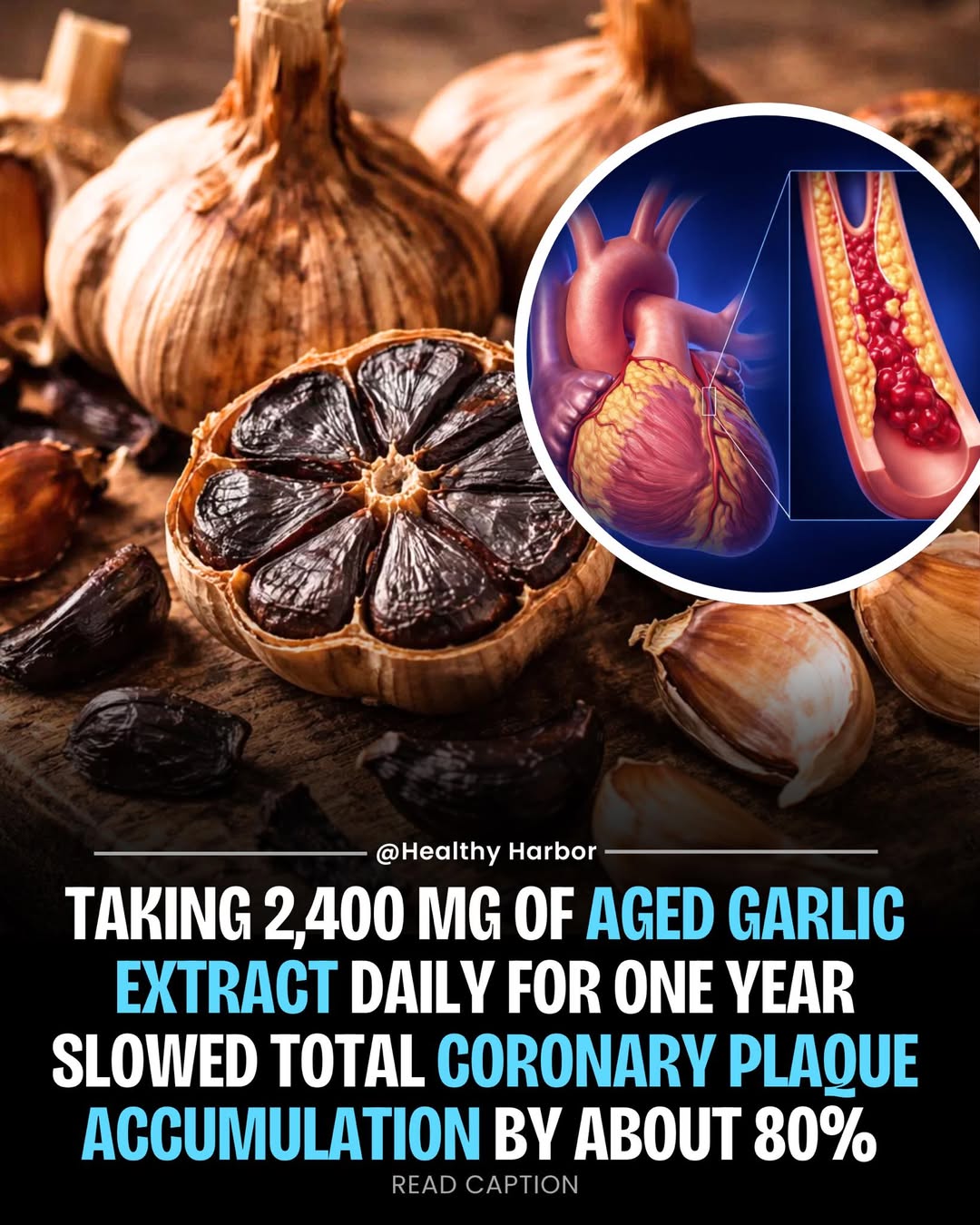
In a 2020 study with 2.4g Aged Garlic Extract, the placebo group had a significantly increased annular CAC progression of 28% compared to the AGE supplement group (20%).
The rate of increase in coronary artery calcium scoring, a marker for atherosclerosis, was measured in subjects taking an aged garlic product or placebo (2004). The mean change of the calcium score was significantly lower in subjects taking the active garlic product along with a trend towards improved high-density lipoprotein cholesterol levels and homocysteine levels.
Since then, studies using coronary CT angiography, a more advanced imaging modality, have been completed (2016). Over the course of a year, subjects consuming aged garlic extract experienced a significantly lower change in plaque compared to subjects taking a placebo. Using a different vascular assessment, the carotid intima-media thickness (CIMT) test, a group of subjects taking garlic powder tablets or placebo were studied (2013). After 3 months of treatment, CIMT differences existed with superior prevention of progression in the garlic group.