Eggs might protect against Alzheimer’s.
This is the latest finding from the Adventists Health Study, in Loma Linda California.
 ScienceDailyEating eggs could cut Alzheimer’s risk by 27%Eating eggs might do more than just start your day—it could help protect your brain. Researchers found that people 65 and older who eat eggs regularly have a significantly lower risk of developing Alzheimer’s disease, with daily or near-daily consumption linked to up to a 27% reduction. Even modest egg intake showed benefits, suggesting that small dietary…sciencedaily.com
These results were just published.
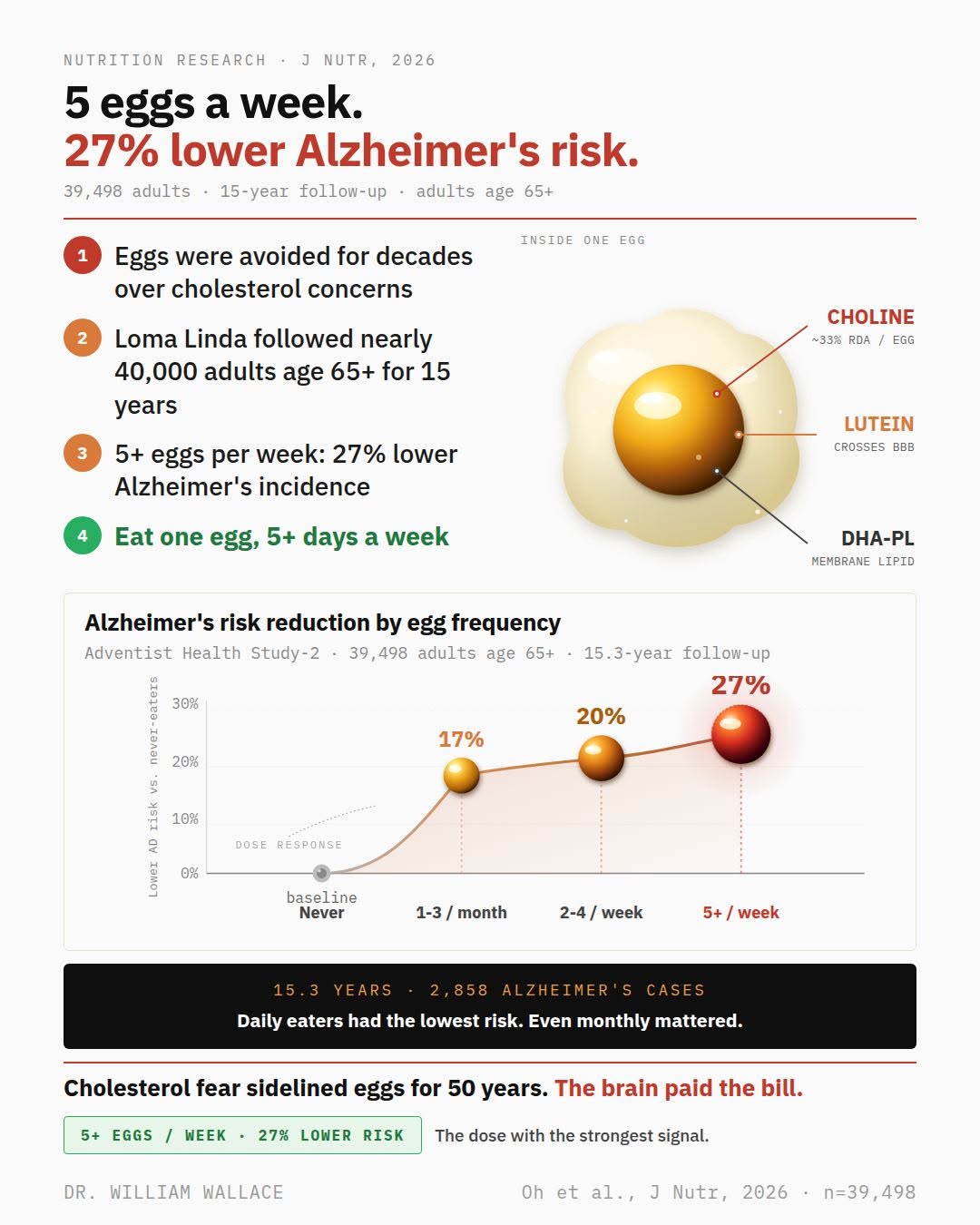
It didn’t take much to see a benefit. Eating just 1-3 eggs per month was associated with a 17% reduction in risk. Eating 5 or more eggs per week was associated with a 27% reduction.
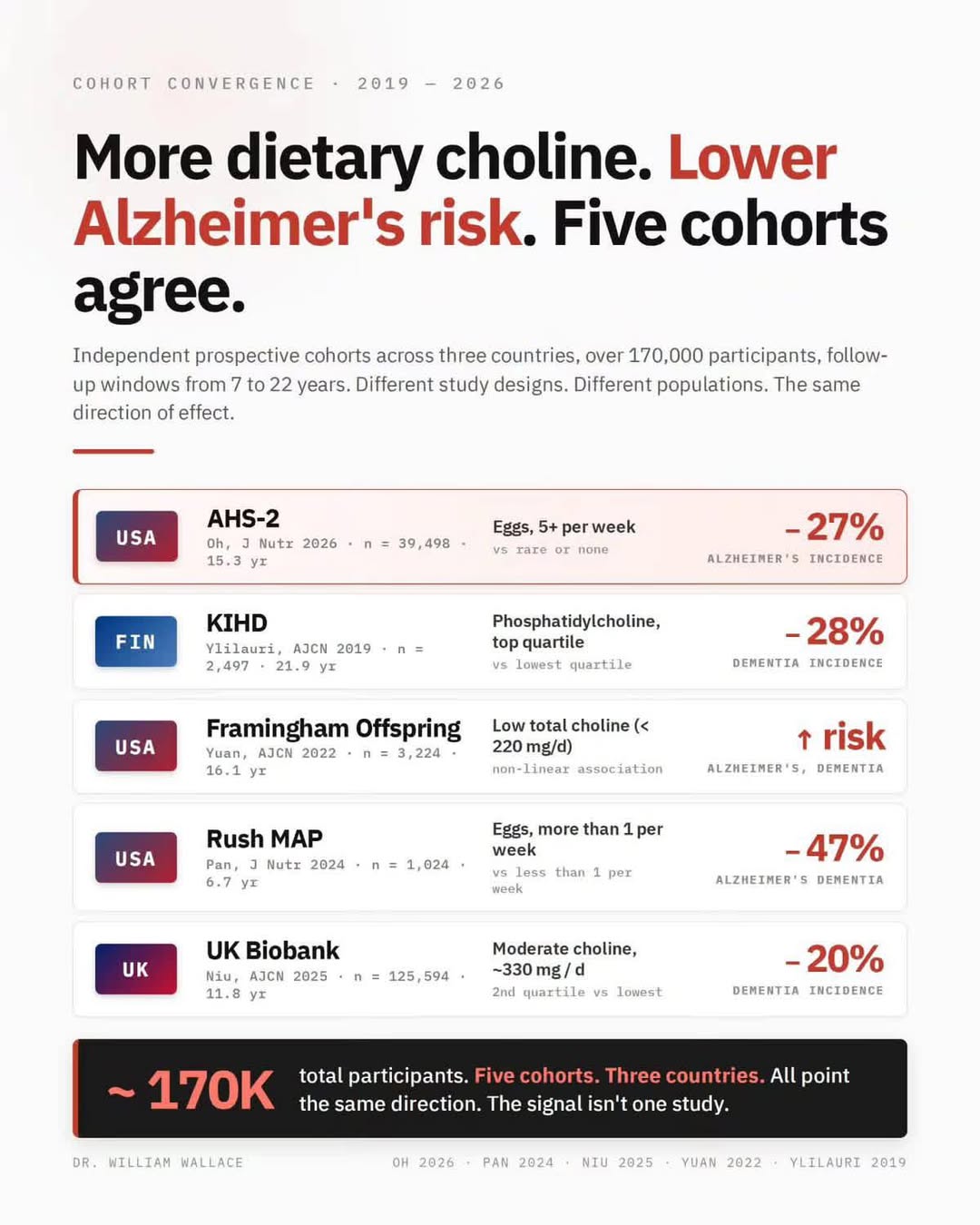
This is not the first study to link egg consumption with lower risk of Alzheimer’s. See these previous posts:
↪ Eating eggs weekly linked to lower Alzheimer's dementia risk in older adults
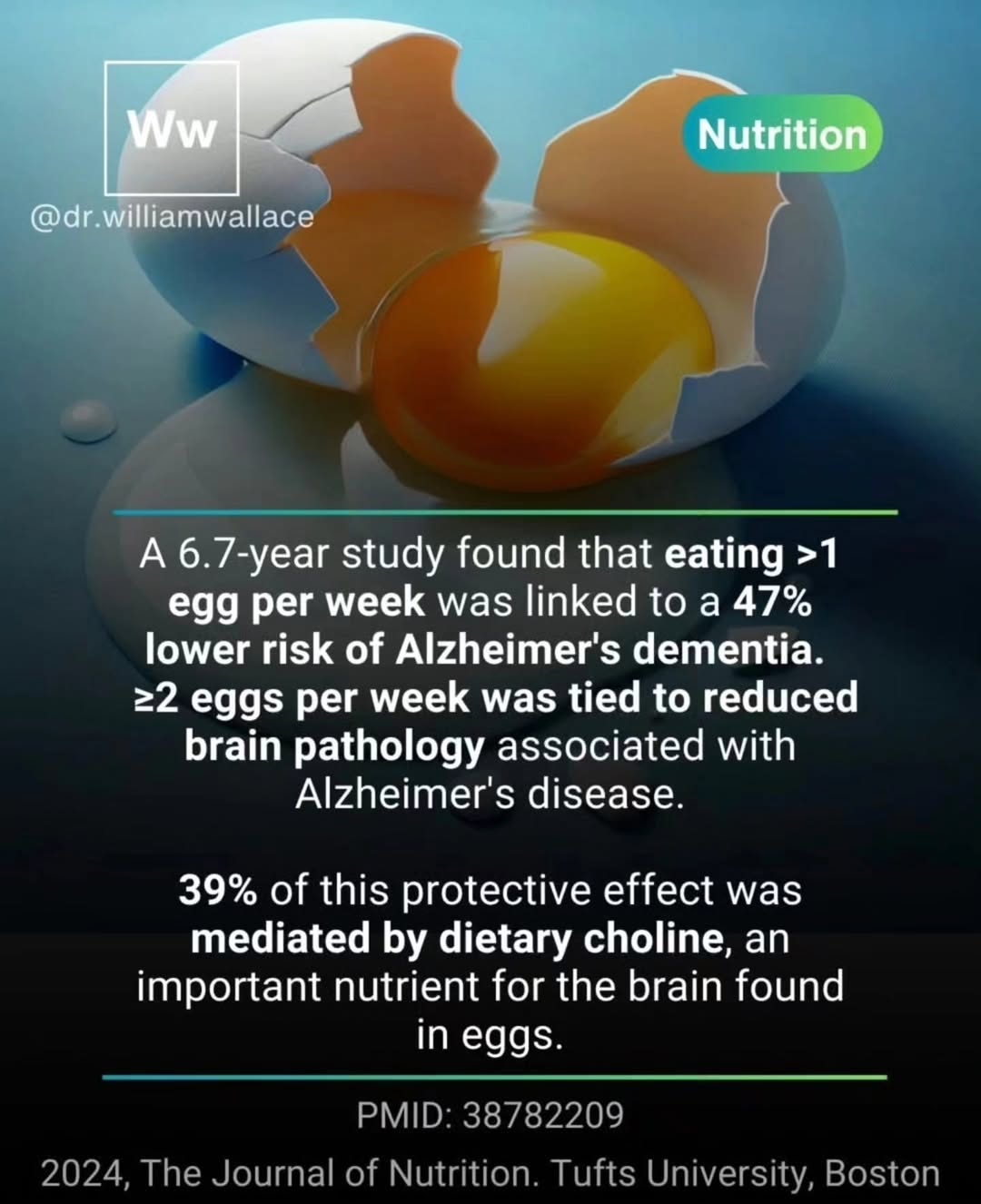
↪ Rush study: more than 1 egg per week linked to 47% lower Alzheimer's dementia risk
Note that the form of choline in eggs (phosphatidylcholine) does not raise levels of TMAO:
↪ Eggs and phosphatidylcholine did not raise TMAO in an RCT, unlike choline bitartrate
Quoted:
The study found that people who ate at least one egg for five or more days each week had up to a 27% lower risk of being diagnosed with Alzheimer's disease.
"Compared to never eating eggs, eating at least five eggs per week can decrease risk of Alzheimer's," said Joan Sabaté, MD, DrPH, a professor at Loma Linda University School of Public Health and the study's principal investigator.
Even smaller amounts of egg consumption were associated with benefits. Eating eggs just 1 to 3 times per month was linked to a 17% reduction in risk, while those who ate eggs 2 to 4 times per week saw about a 20% lower risk, Sabaté said.
Eggs contain several nutrients that are important for the brain, Sabaté said. They are a rich source of choline, which the body uses to produce compounds such as acetylcholine and phosphatidylcholine that are essential for memory and communication between brain cells.
Eggs also provide lutein and zeaxanthin, which are carotenoids that build up in brain tissue and have been linked to better cognitive performance and lower levels of oxidative stress. In addition, eggs contain omega-3 fatty acids, and the yolk is especially high in phospholipids, making up nearly 30% of total egg lipids. These compounds play a key role in how neurotransmitter receptors function.
“Research supports eggs as part of a healthy diet," said Jisoo Oh, DrPH, MPH, an associate professor of epidemiology at Loma Linda University School of Public Health and the study's lead author. "Seventh-day Adventists do eat a healthier diet than the general public, and we want people to focus on overall health along with this knowledge about the benefit of eggs."