A pair of randomized controlled trials found that eating peanut butter daily improved muscle power in older adults and sharpened memory in younger ones, with no weight gain in either group.
Links to journal publications from both studies:
Paper · J Cachexia Sarcopenia Muscle · 2026Effects of Peanut Butter Supplementation on Older Adults' Physical Function: A 6-Month Randomised Controlled Trial.Conclusion: In community-dwelling older adults at risk for falls, daily peanut butter consumption for 6 months improved 5STS time and muscle power based on 5STS, but not gait speed, muscle strength or body composition.pmc.ncbi.nlm.nih.gov Paper · Clin Nutr · 2021Consumption of peanut products improves memory and stress response in healthy adults from the ARISTOTLE study: A 6-month randomized controlled trial.Conclusion: Regular peanut and peanut butter consumption may enhance memory function and stress response in a healthy young population. These effects seem to be associated with the intake of peanut polyphenols, increased levels of fecal SCFAs, and unexpectedly, VLCSFAs, which were also present in the control product.pubmed.ncbi.nlm.nih.gov PaperScienceDirect articlesciencedirect.com PaperMDPI articlemdpi.comQuoted:
The [COINS] muscle study: 120 older adults, six months, three tablespoons a day
The first trial, published in the Journal of Cachexia, Sarcopenia and Muscle in February 2026, enrolled 120 adults aged 66 to 89. All were living independently but had been assessed as being at higher risk of falls.
Half were assigned to eat 43 grams of natural peanut butter daily (roughly three tablespoons). The other half maintained their usual diet and avoided nuts entirely.
Neither group changed their exercise routine. The trial ran from May 2023 to July 2024 at Deakin University’s Burwood Campus.
At the six-month mark, most measures of physical function showed no significant difference between the groups. Gait speed, balance, and upper-body strength were similar.
But two things stood out clearly. The peanut butter group completed the five-times sit-to-stand (5STS) test 1.23 seconds faster on average (95% CI: 2.09 to 0.37, p = 0.006).
They also generated significantly more muscle power in absolute terms (22.0 W more, p = 0.004) and relative to body weight (0.27 W/kg more, p = 0.002). The 5STS test is a standard clinical measure of fall risk and daily independence.
Dr. Sze-Yen Tan, associate professor at Deakin’s Institute for Physical Activity and Nutrition, summarised it directly: “Being able to complete the test faster means greater muscle power. Muscle power enables older people to perform activities of daily living.”
Participants were adding roughly 250 extra calories to their diet every single day for six months. And yet body weight, BMI, and body composition showed no significant change in the peanut butter group compared to the control.
One explanation is displacement.
When people add a filling food high in protein, fat, and fibre, they often eat slightly less of something else without realising.
Researchers also suggest that the high protein and unsaturated fat content may improve metabolic efficiency.
They’re careful to note this remains a hypothesis, not a confirmed finding.
A second hypothesis involves arginine, an amino acid present in peanuts at around 1.2g per 43g serving. Arginine is a precursor to nitric oxide, which dilates blood vessels and improves blood flow to muscles.
Better muscle perfusion could help explain the power improvements seen in the trial.
This is especially plausible in older adults, whose vascular function naturally declines with age.
Quoted:
The [ARISTOTLE] brain study: 63 young adults, the gut-brain axis, and what memory tests showed
The ARISTOTLE study, published in Clinical Nutrition and run at the University of Barcelona, tracked cognition and stress response in 63 healthy adults aged 18 to 33 over six months.
Participants were split into three groups. One ate 25g of skin-roasted peanuts daily, one ate 32g of peanut butter daily, and one ate 32g of a control butter made from peanut oil but stripped of fibre and phenolic compounds.
The control product matched the macronutrient profile of peanut butter exactly. That made it a genuinely rigorous comparison, because any difference in outcomes couldn’t be explained by calories or fat content alone.
Both the peanut and peanut butter groups improved on immediate memory scores compared to the control. Anxiety scores also dropped significantly in both groups.
The peanut butter group showed lower depression scores (p = 0.003). Urinary cortisol levels, a direct biochemical marker of stress, were also reduced.
The researchers were explicit about the mechanism they believe is driving these results.
It’s the gut-brain axis, specifically the way dietary polyphenols interact with gut bacteria to produce compounds that influence brain chemistry.
Dr. Sara Hurtado-Barroso, co-author of the ARISTOTLE study, explained: “Prebiotic substances present in peanuts and peanut butter, such as polyphenols, may positively affect cognition and mood by promoting production of microbial phenolic metabolites.”
Peanut polyphenols aren’t fully absorbed in the small intestine. They pass into the colon, where gut bacteria convert them into short-chain fatty acids (SCFAs) and other compounds that can reach the brain via the vagus nerve and hormonal pathways.
This is why the control butter showed no cognitive benefit despite having the same fat and calorie content. Without fibre and polyphenols, the gut-brain pathway had nothing to work with.
Links to previous posts on the ARISTOTLE trial:
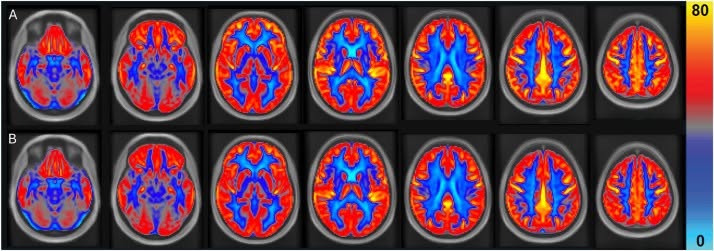
↪ Daily peanuts for 16 weeks improved brain blood flow in healthy older adults
↪ Daily peanuts raised brain blood flow about 4% in older adults, possibly via arginine
————-
#nutsHD #peanutsHD #peanutbutterHD #coinsHD #aristotleHD #muscleHD #memoryHD #arginineHD #anxietyHD #depressionHD #microbiomeHD #gutbrainaxisHD #cortisolHD #polyphenolsHD #brainHD