(no text — see the shared post below)
Testosterone therapy accelerates plaque progression in older men
Randomized controlled trial 2017
This was a well-done randomized trial conducted by a principal investigator (Mathew Budoff) who is considered a world-class expert in using CT-angiography to conduct cardiology trials on various interventions.
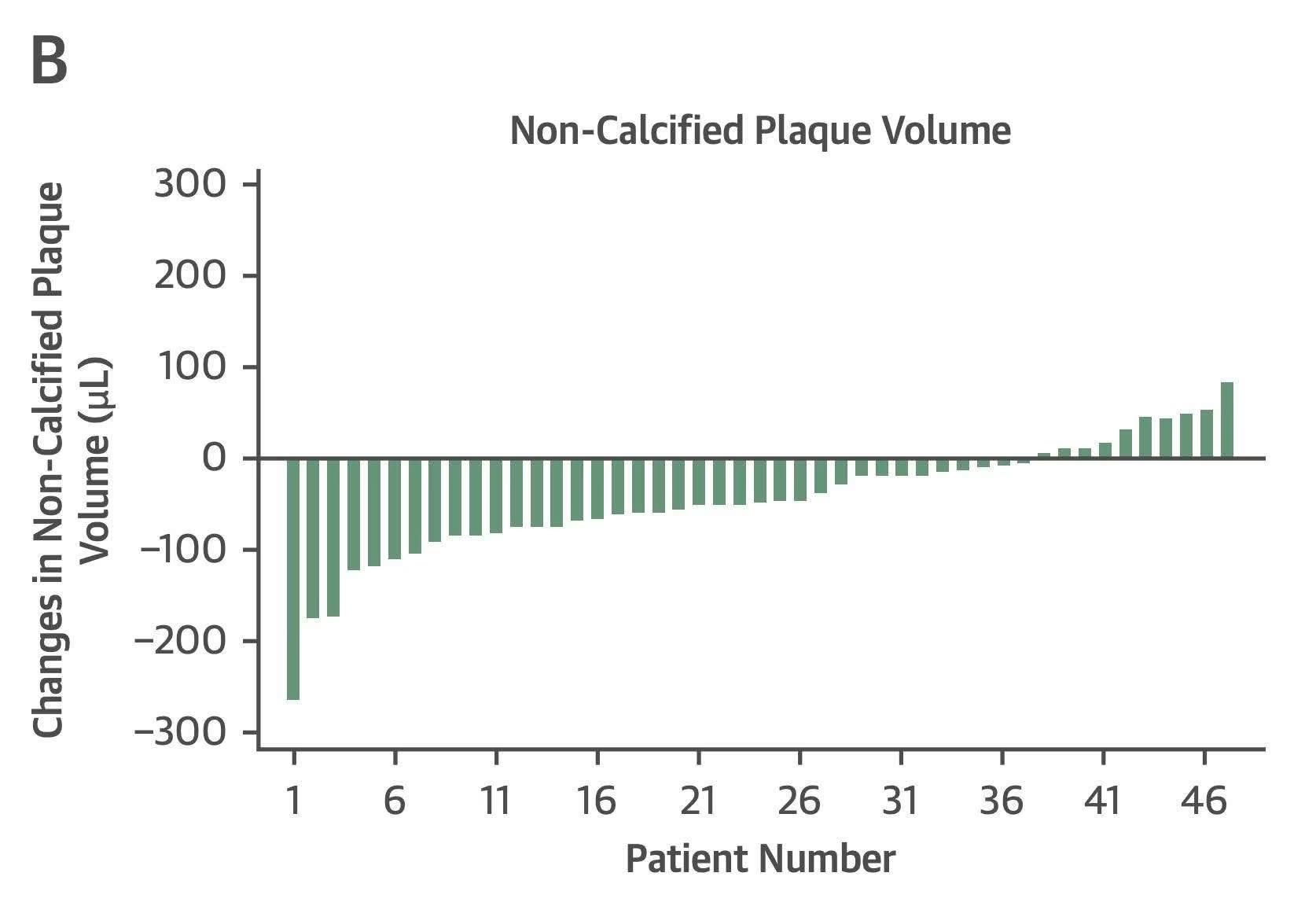
The testosterone group saw an estimated 41 mm^3 larger increase in soft plaque growth (NCPV) after one year, compared to the placebo group.
This is large.
To put these results in perspective… An average person at risk for CVD, following the standard American diet and sedentary lifestyle, grows about 5 mm^3 of soft plaque (NCPV) per year:
.
Paper · Circulation · 2024Abstract 4139340: Atherosclerotic Plaque Progresses Over Time in Healthy Individuals Without MACE, Risk Factors, or InterventionsIntroduction: Studies on the natural history of coronary artery disease have traditionally evaluated the progression of the disease in the presence of MACE, risk factors or risk modifying interventions including pharmacological and non-pharmacological treatment. It is not known how atherosclerotic plaque progresses over the time in the absence of MACE, risk factors or risk modifying interventions. Aim: To evaluate…ahajournals.org
The people taking testosterone in this trial grew roughly 41 mm^3 more plaque than the placebo group in just one year. That is the equivalent of 8 years of normal plaque growth.
(41 mm^3) / (5 mm^3) = 8.2 years !
Note that several clinical trials, especially the TRAVERSE trial in 2023, have demonstrated that treating clinically-diagnosed hypogonadism does NOT increase risk of heart attacks and strokes, over periods of a few years. This is true even in people with hypogonadism that have existing heart disease.
However, no such evidence exists in men taking testosterone absent this clinical diagnosis.
It’s important to remember that heart disease takes decades to develop, so a few years timeframe may not be long enough to understand the full extent of any possible risk. For example, the TRAVERSE trial only lasted 22 months.
Quoted:
“Testosterone treatment in older men was linked to a significantly greater increase in coronary artery noncalcified plaque volume, according to a new study in JAMA.”
Although testosterone replacement is increasingly being used clinically, the [CV] benefits and risk of testosterone administration to older men with age-related decline in testosterone levels remain uncertain,” Matthew J. Budoff, MD, professor of medicine at David Geffen School of Medicine at UCLA and program director and director of cardiac CT at Harbor-UCLA Medical Center, and colleagues wrote.
In a double blind, placebo-controlled trial, Budoff and colleagues analyzed 170 men aged 65 years or older with an average of two serum testosterone levels lower than 275 ng/dL and symptoms suggestive of hypogonadism. Participants were enrolled between June 2010 and June 2014 and were randomly assigned testosterone gel (n = 82) or placebo gel (n = 88) for 12 months.
From baseline to 12 months, participants in the testosterone arm had a significantly greater increase in noncalcified plaque volume (from median value 204 mm3 to 232 mm3) compared with placebo (from median value 317 mm3 to 325 mm3) with an estimated difference of 41 mm3 (95% CI, 14-67; P = .003).
“The increase in coronary artery noncalcified and total plaque volumes in men treated with testosterone is concerning because any limitation of the vascular lumen could be considered deleterious,” Budoff and colleagues wrote. “The clinical significance of these increases could depend on the differential effects of testosterone on the individual components of noncalcified plaque.”
 healio.comIncrease in noncalcified plaque associated with testosterone treatment in older menTestosterone treatment in older men was linked to a significantly greater increase in coronary artery noncalcified plaque volume, according to a new study in JAMA. “Although testosterone replacement is increasingly being used clinically, the [CV] benefits and risk of testosterone administration to older men with age-related decline in testosterone levels…healio.com
#trtHD #testosteroneHD #budoffHD #hypogonadismHD #ncpvHD #ctaHD #traverseHD