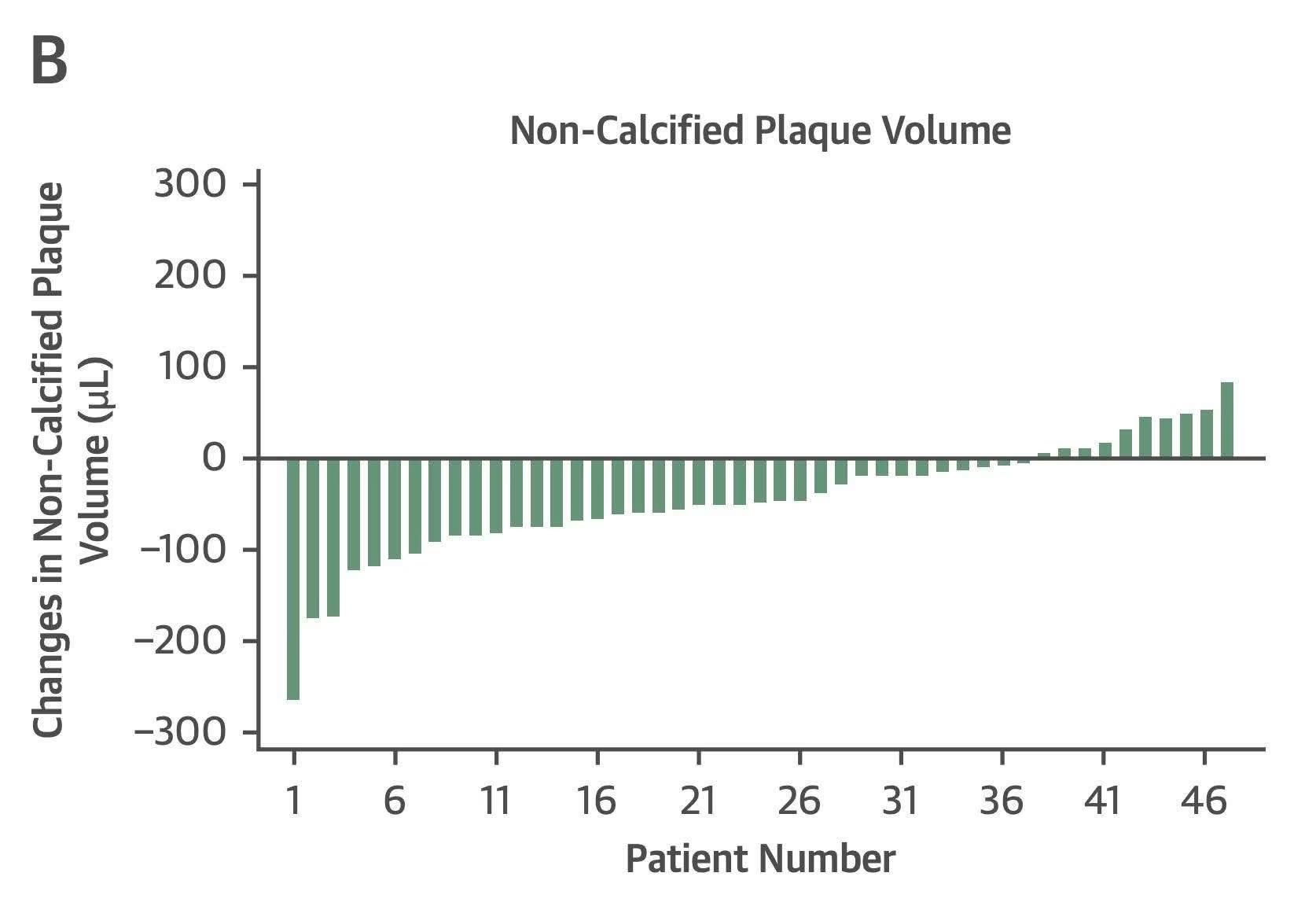
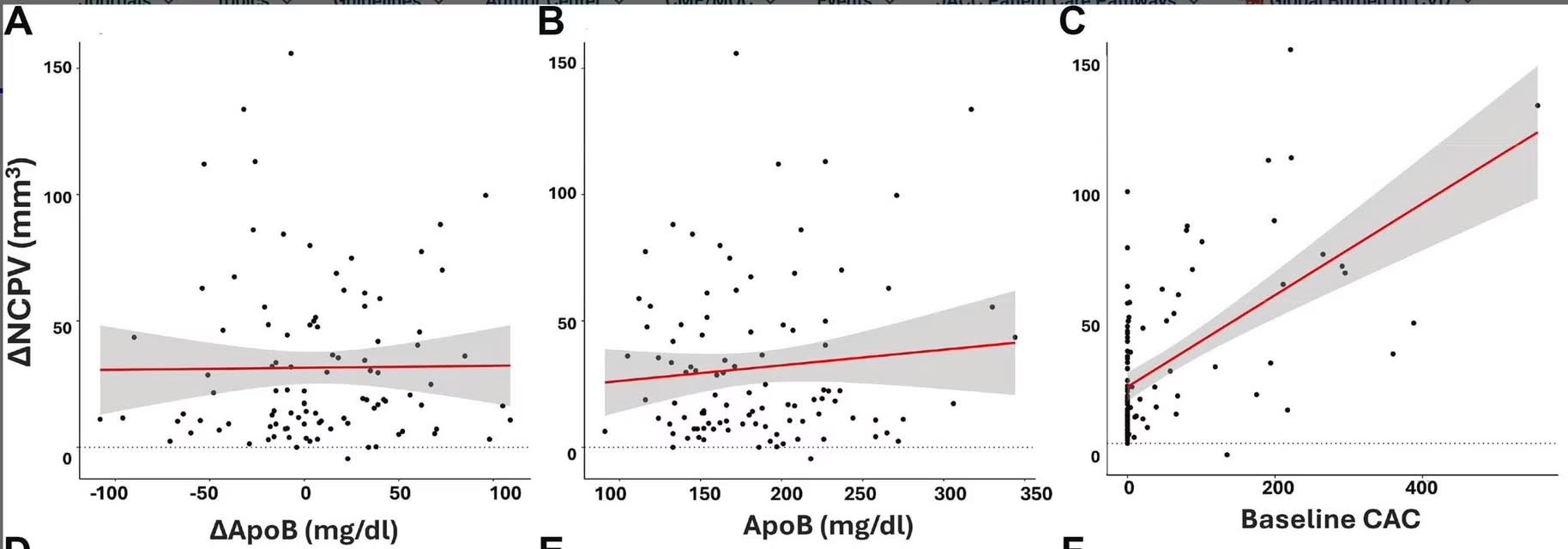
Aggressive cholesterol lowering with the PCSK9 inhibitor Repatha (evolcumab) induced a major reversal of non-calcified plaque (NCPV) on CT-angiography after 1.5 years.
This was a small 47 person clinical trial. Mathew Budoff was one of the investigators.
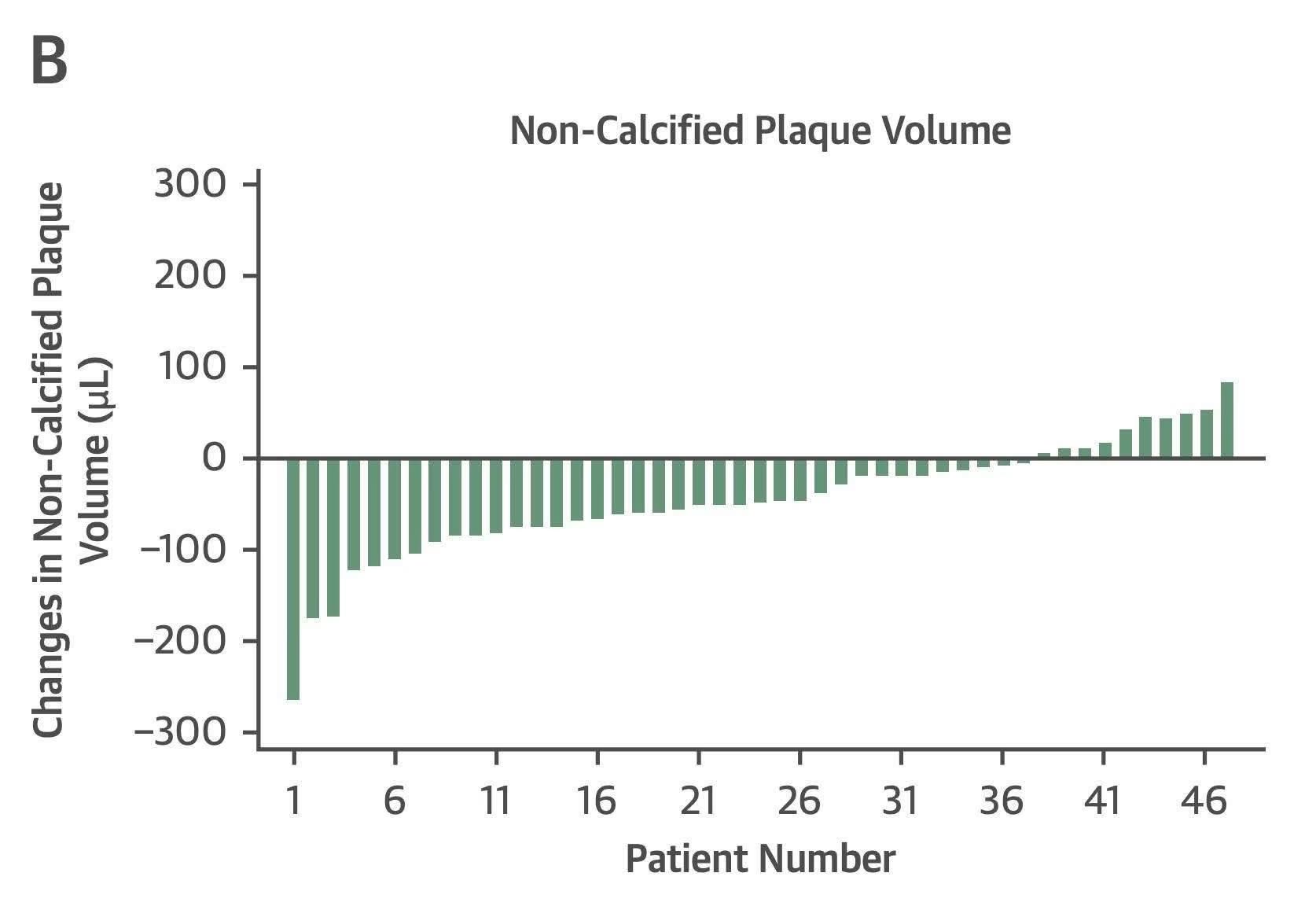
Out of all 47 participants, 37 saw some degree of soft plaque (NCPV) reversal. Many of the reversals were large.
The average LDL of the participants on Repatha was around 30 mg/dL.
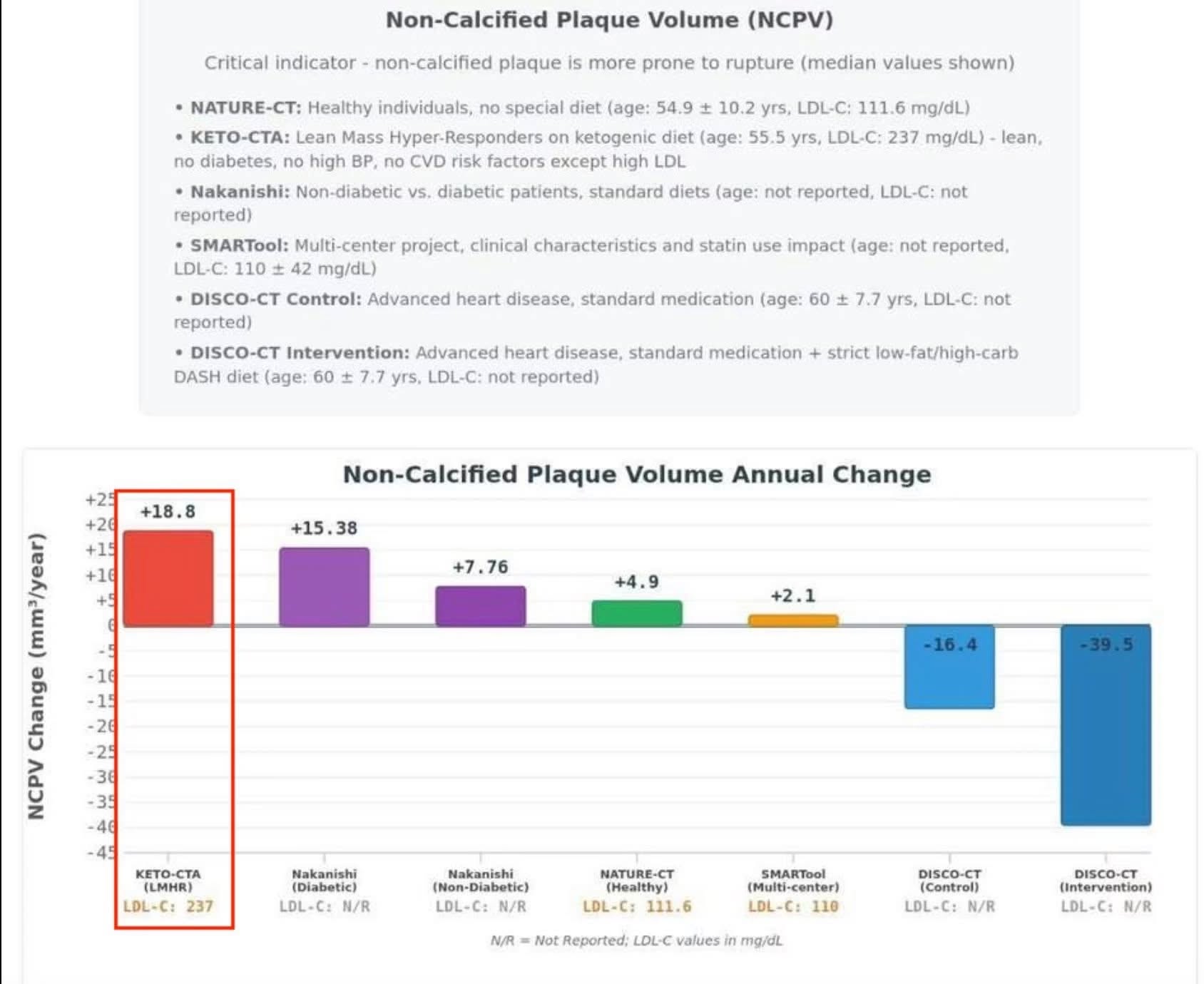
To put this in perspective… A typical person at risk for CVD, following the standard American diet and sedentary lifestyle, grows about 5uL of soft plaque (NCPV) per year:
.
Paper · Circulation · 2024Abstract 4139340: Atherosclerotic Plaque Progresses Over Time in Healthy Individuals Without MACE, Risk Factors, or InterventionsIntroduction: Studies on the natural history of coronary artery disease have traditionally evaluated the progression of the disease in the presence of MACE, risk factors or risk modifying interventions including pharmacological and non-pharmacological treatment. It is not known how atherosclerotic plaque progresses over the time in the absence of MACE, risk factors or risk modifying interventions. Aim: To evaluate…ahajournals.orgSo based on the graph below from the journal paper, a large portion of the people in this Repatha study reversed the equivalent of MANY years of soft plaque growth in just 18 months on the drug. That is remarkable.
Link to full study:
PaperScienceDirect articlesciencedirect.comNote that NCPV can be measured in either units of uL or units of mm^3. These are the same thing. One cubic millimeter (1 mm^3) is exactly the same volume as one microliter (1 uL). Keep this in mind when comparing different studies to one another.
Quoted:
“A total of 47 patients (age 61.8 ± 10.1 years, 87% male) and 196 lesions were studied. Twenty-three (48.9%) patients were asymptomatic, 16 (34%) presented with chest pain, and 8 (17%) presented with dyspnea. Four (8.5%) patients had a prior coronary artery disease history. At a mean follow-up of 18 months, there was no significant change in total plaque volume (716.2 ± 431.4 µL to 710.8 ± 456.2 µL, difference: 5.4 ± 97.4 µL; P = 0.705). Changes in plaque composition were observed, with a significant reduction in noncalcified plaque (607.3 ± 346.8 µL to 562.1 ± 337.3 µL, difference: 45.2 ± 63.8 µL; P < 0.001) and low-attenuation noncalcified plaque (37.1 ± 28.9 µL to 20.4 ± 15.4 µL, difference: 16.6 ± 23.5 µL; P < 0.001). In contrast, there was an increase in calcified plaque (108.9 ± 133.7 µL to 148.7 ± 175.3 µL, difference: 39.8 ± 56.1 µL; P < 0.001). There was a significant reduction in coronary microcalcification activity (1.35 ± 1.68 to 1.08 ± 1.37; P = 0.004) and lesion target-to-background ratio (1.73 ± 0.85 to 1.62 ± 0.83; P = 0.005).”
“Conclusion - In stable patients with extensive noncalcified plaque volume at baseline, 18 months of evolocumab treatment was associated with a shift toward a lower risk quantitative plaque phenotype and reduction in microcalcification activity. (Effect of Evolocumab on Coronary Atherosclerosis; NCT03689946).”
My note:
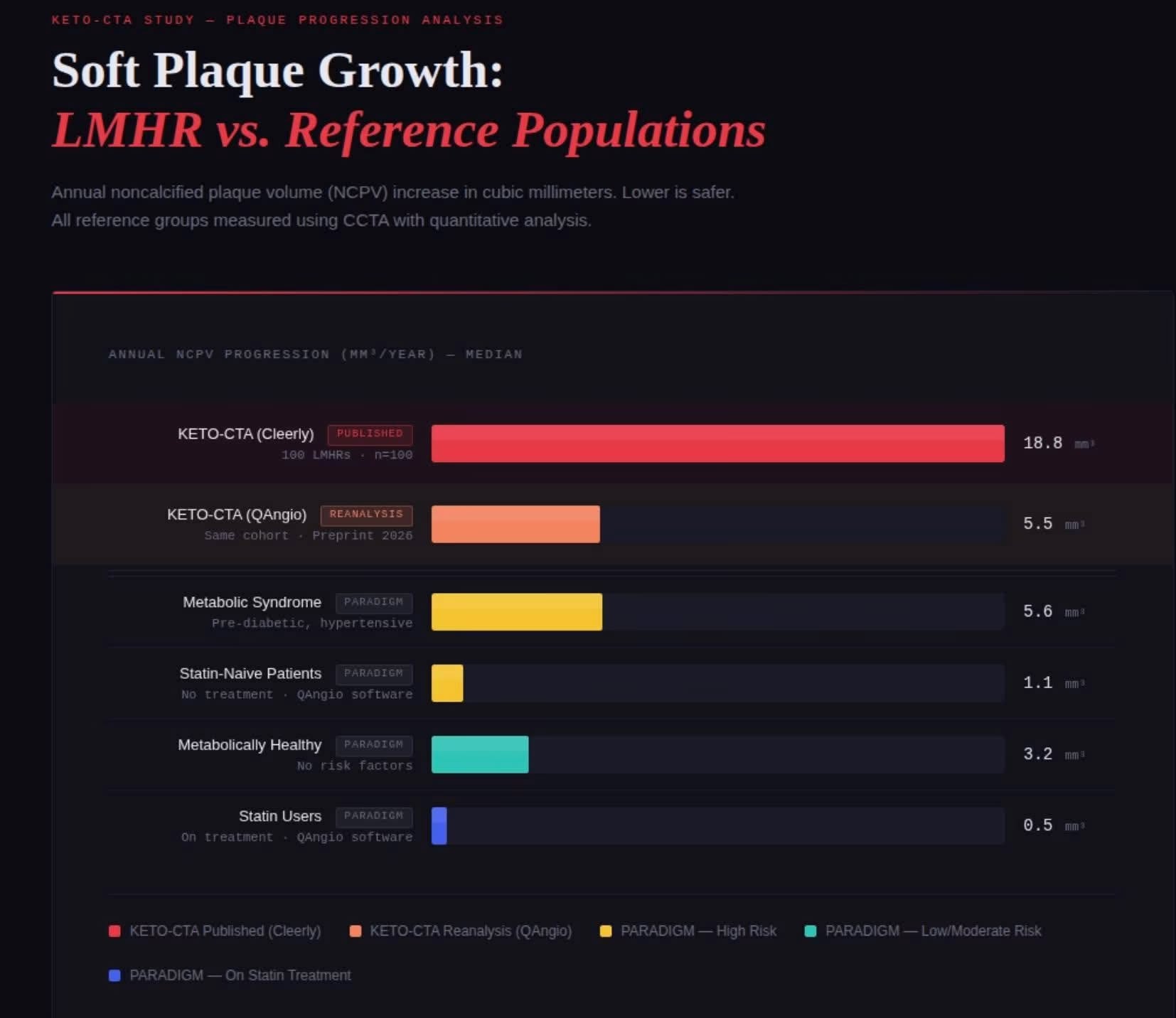
Compare these results to the recent Keto-CTA study (also by Mathew Budoff), which showed an average NCPV increase of 5.5 uL after only one year on a keto diet (LDL 254 mg/dL), with re-analysis using QAngio software:
↪ After reanalysis, Keto-CTA plaque growth still matches untreated metabolic syndrome
↪ Keto-CTA reanalysis: plaque progression still no better than the standard American diet
#reverseHD #pcsk9reverseHD #repathaHD #budoffHD #ncpvHD #ketoctareanalysisHD #ketoctaHD #ketoctasummaryHD