Quoted:
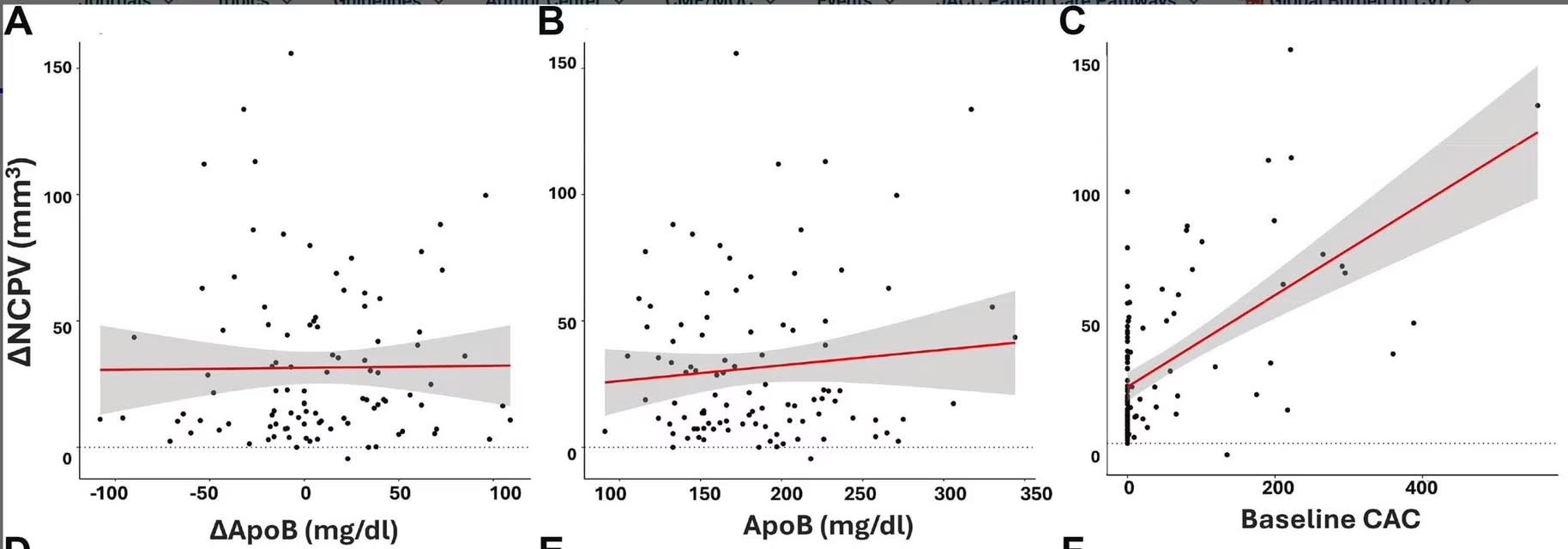
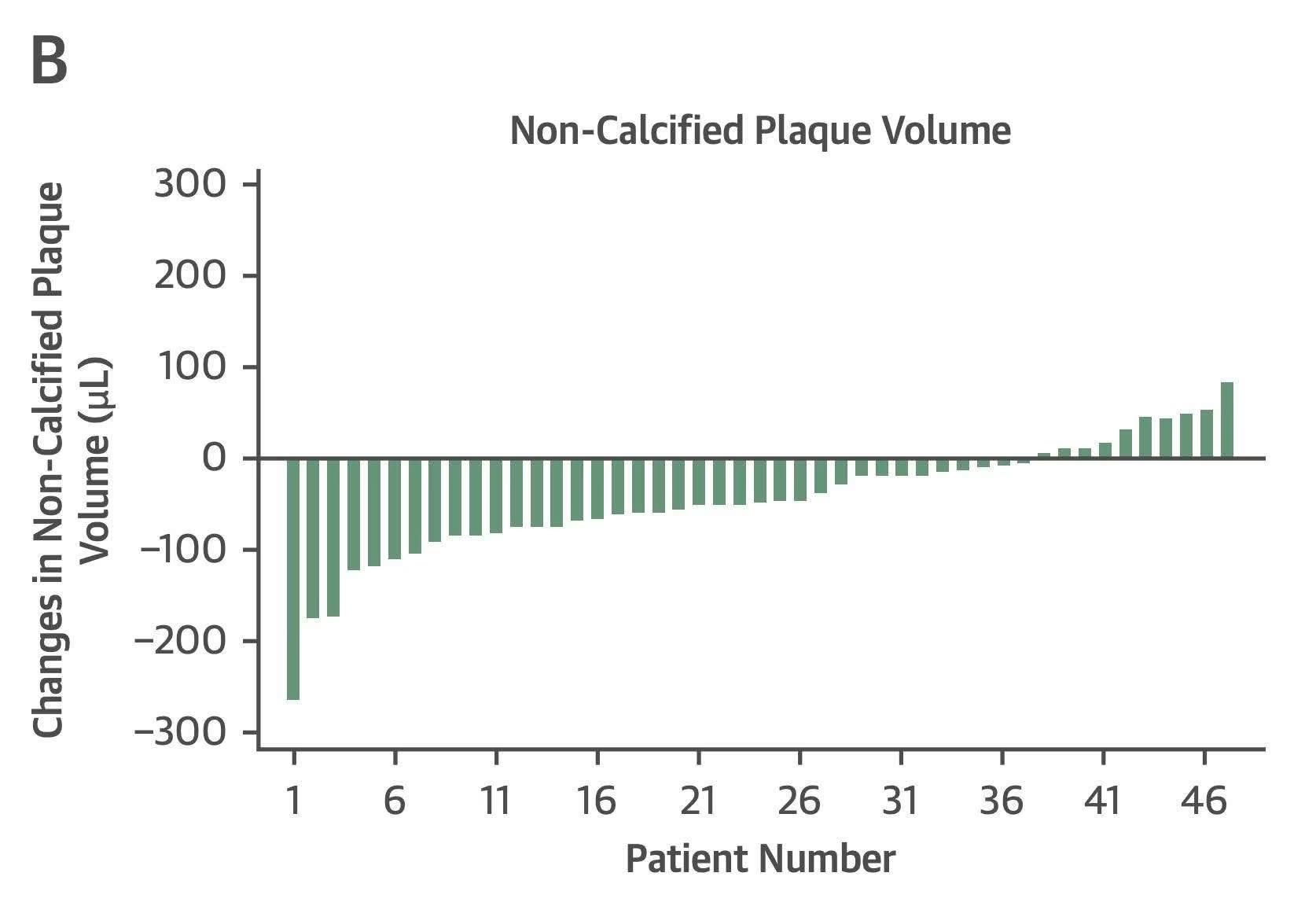
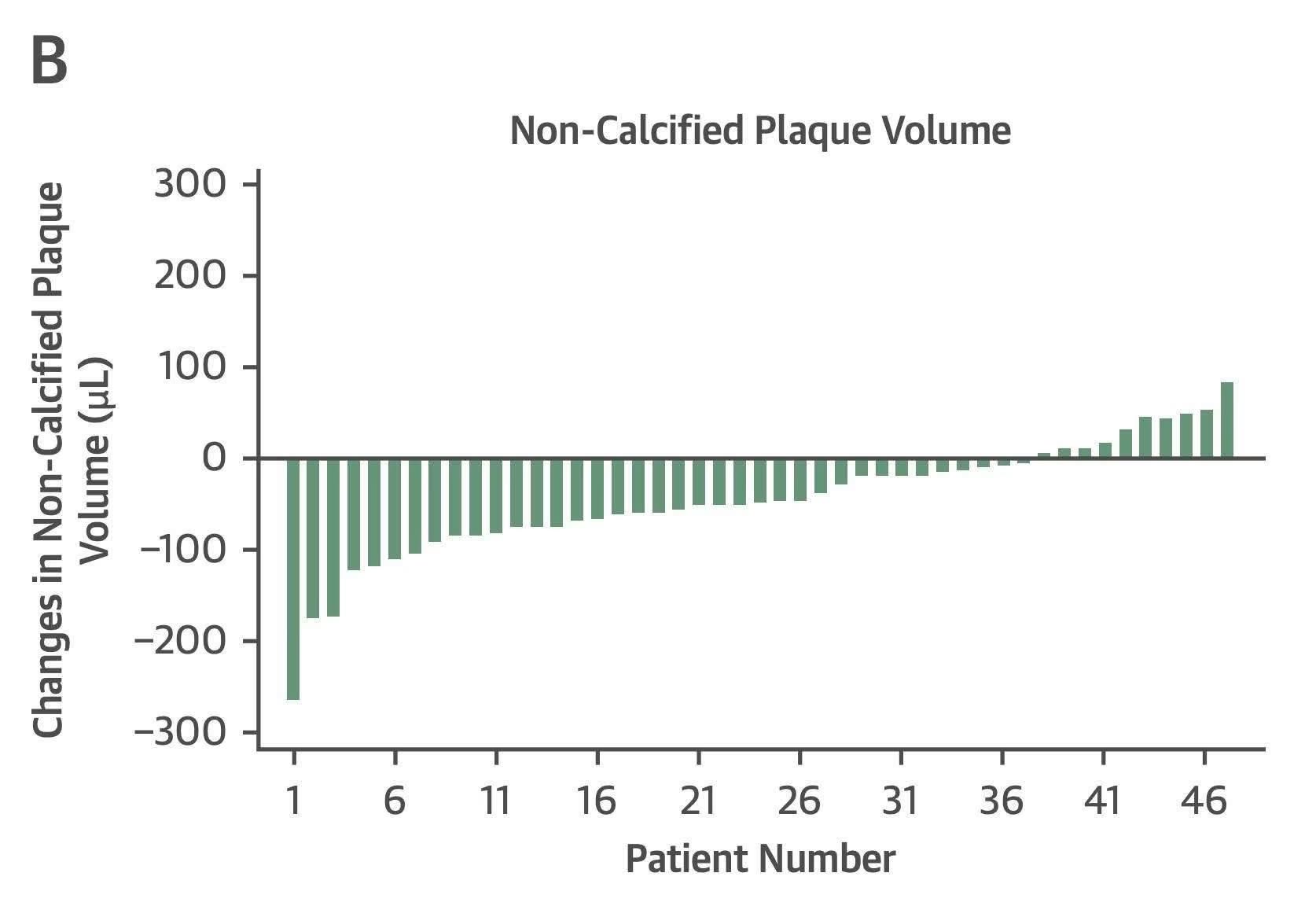
“Yet despite its importance, NCPV was barely mentioned in the published paper. The only real reference to it appears in Figure 1A, a graphic showing individual-level changes over one year. There are no numbers reported in the text, and the authors only comment that ‘most participants presented with stable NCPV.’
But when you look at the figure, that interpretation doesn’t hold up. Each line represents a participant, and while a few appear stable, the majority clearly experienced increases in NCPV, especially those who started with higher baseline values.
Clinicians and researchers took note of this and raised concerns on social media. In response, lead author Adrian Soto-Mota shared the actual number that was missing from the paper: the median increase in NCPV was 18.8 mm3—more than 2.5 times higher than the 7 mm3 increase the authors themselves predicted in the study protocol.
So, how does this compare to other populations?
In the PARADIGM study, adults without metabolic syndrome saw an average NCPV increase of 10.3 mm3 over 3.2 years. Those with metabolic syndrome increased by 17.8 mm3 over the same period.
That means the LMHR group had a one-year increase (18.8 mm3) equivalent to what someone with metabolic syndrome would typically develop over three years.
In another study co-authored by Dr. Matthew Budoff (also a co-author on Keto-CTA), adults with dyslipidemia and hypertension (but no diabetes) had an NCPV increase of 28.9 mm3 over 3 years, or ~9.6 mm3 per year. People with type 2 diabetes in that same study saw a change of 52.3 mm3 over 3 years, or ~17.4 mm3 per year.
Again, LMHRs clocked in at 18.8 mm3 per year, which is on-par with type 2 diabetes.
I brought this up to Dr. Budoff, but have not yet heard a response.
Lastly, in the SMARTool Project, which enrolled participants with smoking, obesity, diabetes, hypertension, and dyslipidemia, the annual NCPV increase in non-statin users was just 6.4 mm3. For statin users, it was only 1.0 mm3. Despite being lean and free of metabolic disease, LMHRs had a plaque progression rate nearly three times greater than these high-risk statin-naive participants.
This kind of context was completely absent from the published Keto-CTA paper. And that’s troubling. The data do not support the idea that the LMHR phenotype is protective against atherosclerosis. On the contrary, it appears to be associated with accelerated progression of unstable plaque — worse than in many metabolically unhealthy groups with lower LDL-C levels.”
 Alex Leaf, MS, CISSNLean Mass Hyper-Responders Are Not Protected From Atherosclerosis - Alex Leaf, MS, CISSNI wanted to highlight a newly published paper that’s been gaining a lot of social media attention: Plaque Begets Plaque, ApoB Does Not: Longitudinal Data From the KETO-CTA Trial. This study centers its focus on so-called Lean Mass Hyper-Responders (LMHRs), which are people who have very high levels of LDL-C but have a normal body [...]Read More »alexleaf.com
#ketoctaHD #lmhrHD #ncpvHD #paradigmHD #budoffHD #smartoolHD