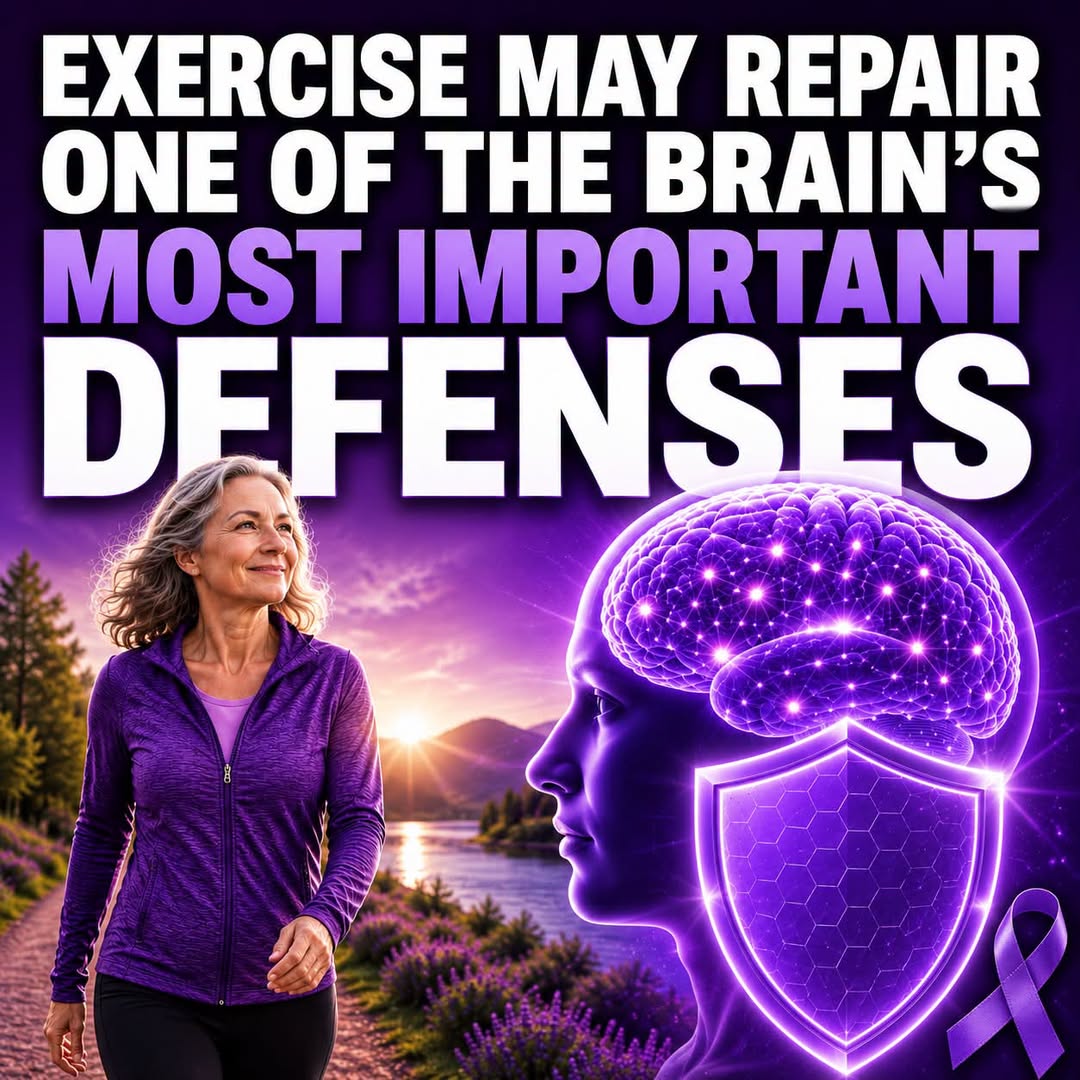
🧠 Exercise May Repair One of the Brain’s Most Important Defenses
For years we’ve known that regular exercise helps protect the brain, but researchers haven’t fully understood why. A fascinating new study from researchers at the University of California, San Francisco (UCSF), published in the journal Cell, may have uncovered one of the missing pieces.
The research suggests that exercise doesn’t just improve blood flow or stimulate new brain cells. It may actually help repair the blood-brain barrier—the brain’s protective shield.
The blood-brain barrier is a tightly regulated network of blood vessels that acts like a security system, allowing nutrients into the brain while keeping harmful substances out. As we age, this barrier becomes weaker and more “leaky.” When that happens, inflammatory molecules and toxins can enter the brain more easily, contributing to chronic neuroinflammation, cognitive decline, and diseases such as Alzheimer’s.
Several years ago, scientists discovered that exercise causes the liver to release an enzyme called GPLD1, which appeared to rejuvenate the aging brain. But there was one big mystery: GPLD1 cannot actually enter the brain. So how was it producing these remarkable cognitive benefits?
This new research provides the answer.
The team found that GPLD1 travels through the bloodstream and acts on the blood vessels surrounding the brain. There it removes a protein called TNAP, which accumulates with age and weakens the blood-brain barrier. By reducing TNAP, GPLD1 helps restore the barrier’s integrity, making it less permeable and reducing inflammation.
In aging mice, lowering TNAP levels led to:
✅ A stronger blood-brain barrier
✅ Less brain inflammation
✅ Better memory
✅ Improved cognitive performance
Perhaps most exciting of all, these improvements occurred even in mice equivalent to about 70 human years of age, suggesting it may never be too late to benefit.
The researchers believe this discovery opens an entirely new direction for preventing and treating cognitive decline. Instead of focusing only on changes inside the brain, future therapies may target the health of the blood-brain barrier itself.
This study also reinforces something many of us often underestimate:
Movement is medicine.
Every walk, bike ride, swim, strength training session, dance class, or gardening session may be doing far more than strengthening your muscles. It may be helping preserve the very barrier that protects your brain.
As Dr. Dale Bredesen has emphasized for years, exercise is one of the foundational pillars of brain health. This research helps explain one of the biological mechanisms behind those benefits.
I would add one more important thought.
While physical exercise is incredibly powerful, it isn’t the whole story. Chronic emotional stress, unresolved trauma, ongoing grief, relationship conflict, poor sleep, metabolic dysfunction, infections, toxins, and inflammation all influence the health of the blood-brain barrier as well. Supporting the brain means supporting the whole person.
That’s why improving brain health requires a truly comprehensive approach.
Your brain is constantly responding to the choices you make every day. The encouraging news is that many of those choices are within your control.
Have you noticed improvements in your thinking, mood, or memory since becoming more physically active? I’d love to hear your experience in the comments.
—
Julie Zanforlin
Founder, Reversing Alzheimer’s and Cognitive Decline