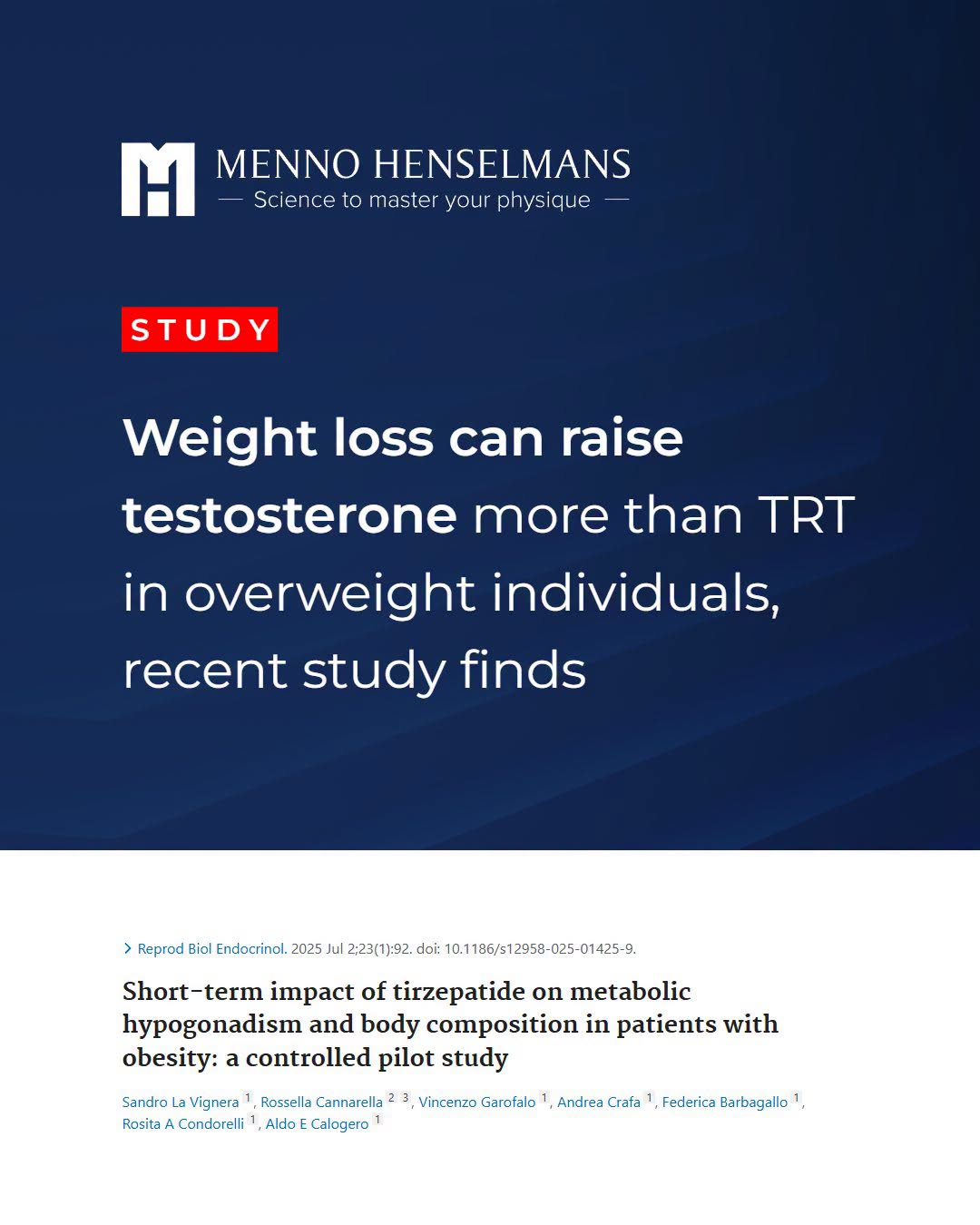
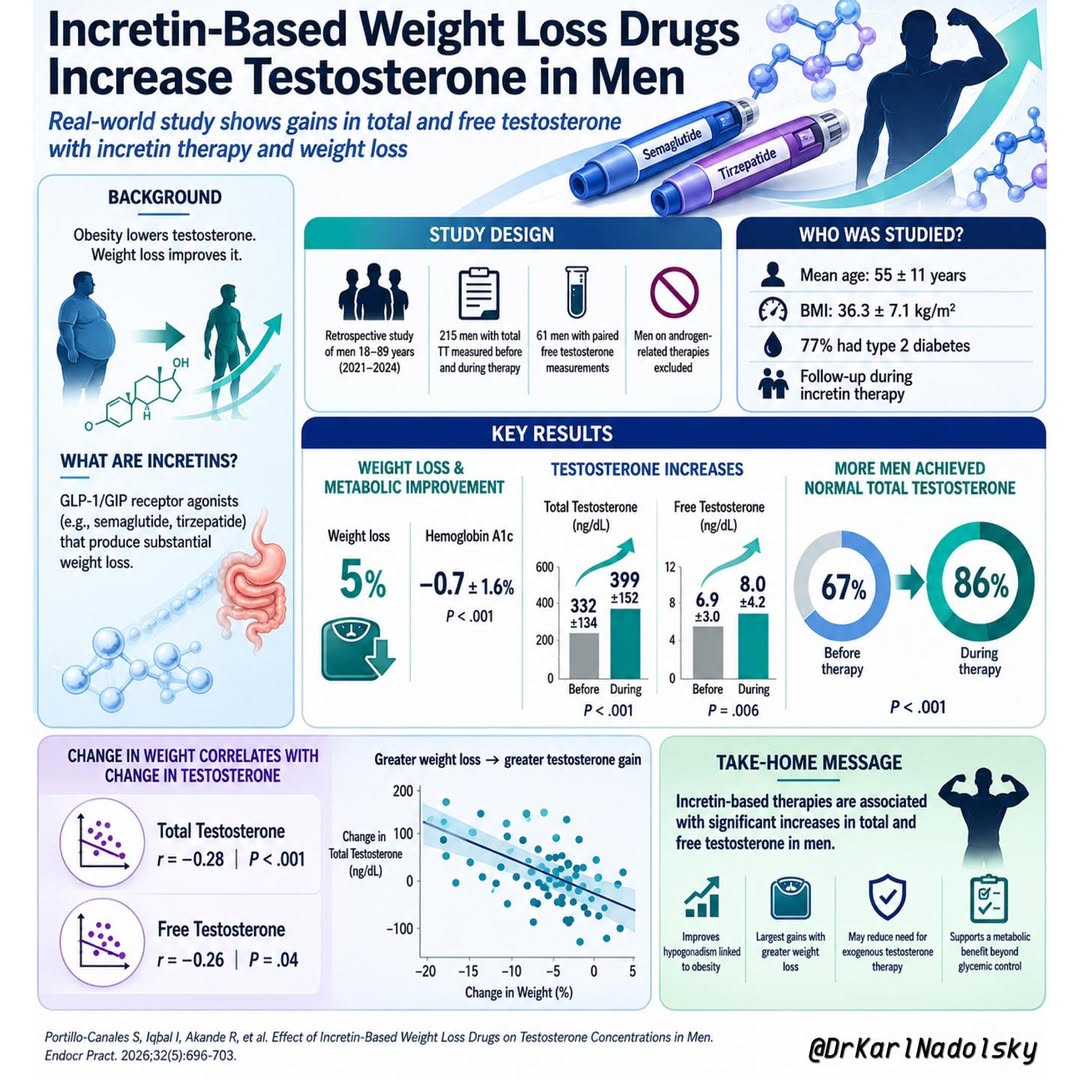
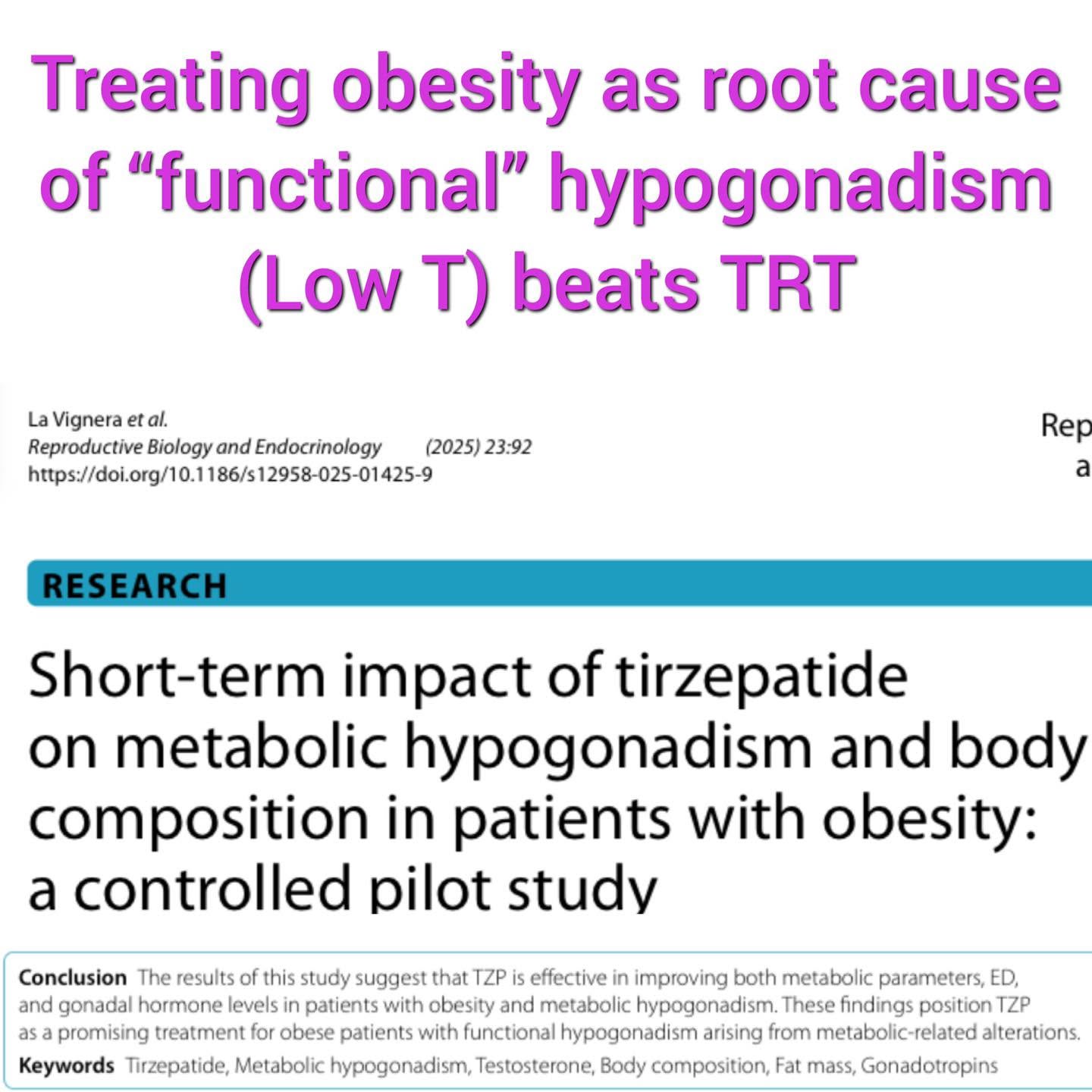
What happens to testosterone when you start taking a GLP-1?
Spoiler alert: It goes up.
And if you’re obese… it goes WAY up.
The truth is that there is nothing magical about the drug. You can accomplish the same thing with good old-fashioned diet & exercise, if that is your preference. The drug just makes it easier.
Link to article:
 MenThe New Science on What Happens to Testosterone Levels When You Start Taking a GLP-1After years of research, we finally understand how GLP-1s impact T on day 1 versus years later.menshealth.com
Quoted:
Testosterone and body weight are closely connected. Yes, low T can lead to weight gain. But most of the time, the lower testosterone production is because of obesity.
“Most guys have this backwards,” says Justin Houman, MD, assistant professor of urology at Cedars-Sinai Medical Center. “They think low testosterone is what made them gain weight, but it's usually the other way around, and it snowballs.”
ACCORDING TO DR. Houman, body fat is actively working to lower T production. Inside fat is an enzyme called aromatase that turns testosterone into estrogen. The increased estrogen sends a message to the brain to ease off signals that keep the testes producing.
To make things worse, added weight increases inflammation. Herbert Ruckle, MD, chair of the department of urology at Loma Linda University Health, says obesity and the constant inflammatory response suppresses the hypothalamic-pituitary gonadal relationship. “This is the brain to testicle stimulation pathway,” says Dr. Ruckle. Basically, disruption of this brain pathway can slow down or stop testosterone production.
Fat gain also lowers a protein called sex hormone-binding globulin (SHBG), adds Dr. Houman. This controls how much testosterone and estrogen is actively present in the body.
“The testes are usually fine. The fat is the problem,” Dr. Houman explains. “That's why I get nervous when someone wants to put a heavy guy with a borderline number straight on testosterone. You can spend all your time chasing the symptom and never touch what's actually causing it.”