Dementia takes decades to develop.
Most randomized trials on vitamin D lasted only a few years.
So it is extremely unlikely that we would ever see a randomized trial that tests whether taking a vitamin D supplement for 20 years might lower risk for dementia and Alzheimer’s.
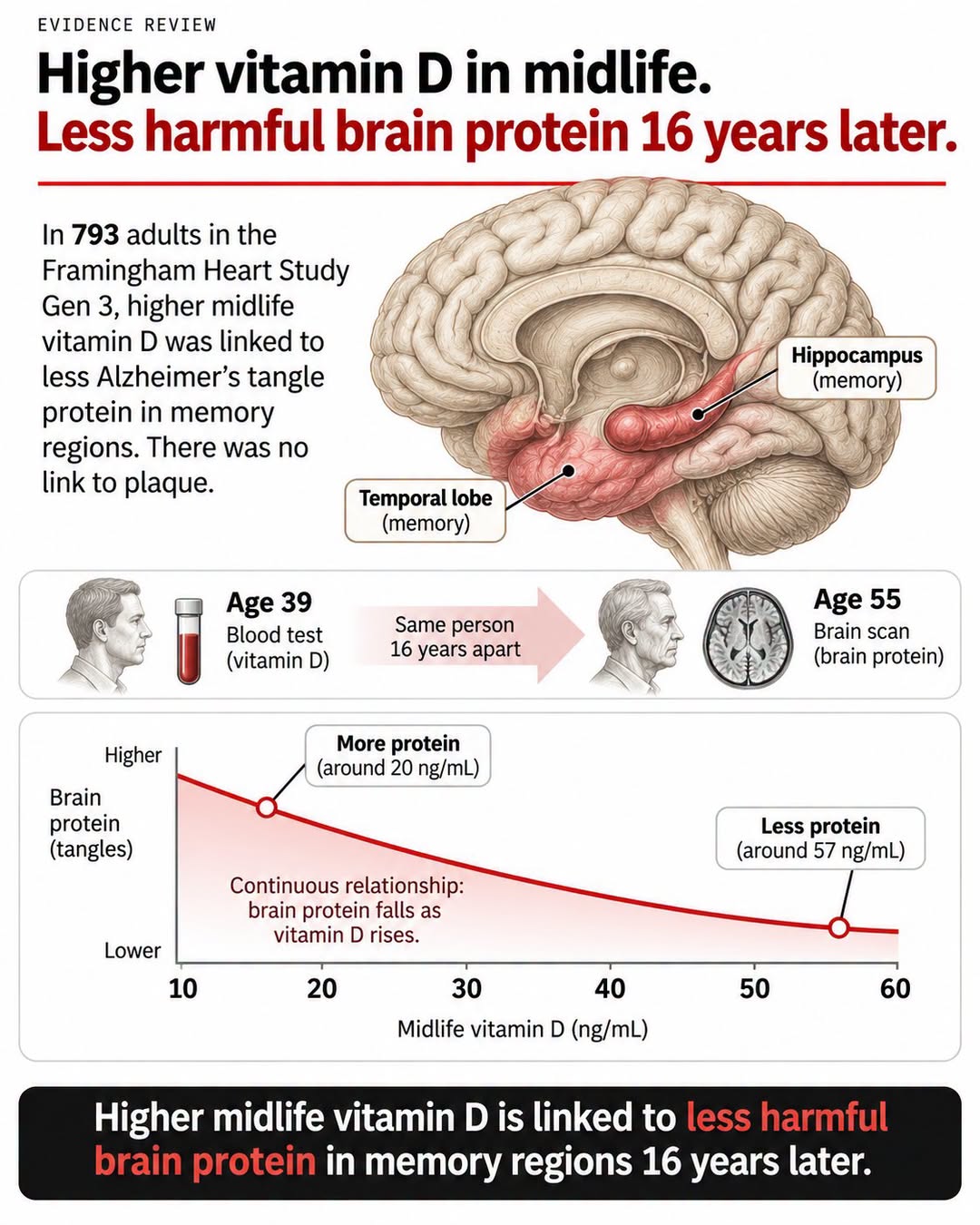
When it comes to the long term, the best we can do is look at high-quality prospective cohort studies such as the famous Framingham Heart Study. Prospective observational studies like the the Framingham Heart Study suffer from major problems such as confounding and reverse causality. They can only prove associations. Nevertheless, the Framingham study has been instrumental in understanding long-term risk factors for CVD. Now it is being used in a similar fashion to understand long-term risk factors for dementia and Alzheimer’s.
There is now evidence from randomized trials (such as VITAL) that vitamin D can lower risk for autoimmune conditions: ↪ VITAL: vitamin D 2000 IU for over 2 years cut autoimmune disease risk about 40%. This is especially true for multiple sclerosis: ↪ JAMA RCT: high-dose vitamin D reduced disease activity in early multiple sclerosis. The pathogenesis of Alzheimer’s and other forms of dementia might have an autoimmune component that vitamin D can causally address. (Emphasis on “might”.)
Link to journal paper:
Paper · Neurology Open Access · 2026Association of Circulating Vitamin D in Midlife With Increased Tau-PET Burden in Dementia-Free Adultsneurology.orgLinks to press coverage of the study:
 News-MedicalCould vitamin D in midlife protect your brain from early Alzheimer’s?Higher serum vitamin D in midlife is associated with reduced tau burden in the brain, highlighting its potential role in early dementia risk assessment.news-medical.net
 Fisher Center for Alzheimer's Research FoundationLow Vitamin D Levels Tied to Alzheimer’s Brain ChangesMen and women with low vitamin D levels in their 30s and 40s were at increased risk of having brain changes typical of Alzheimer’s disease later in life, accoalzinfo.org
BrainHealth.comVitamin D in midlife linked to brain health later in lifeNew research suggests vitamin D may support brain health and may be linked to dementia-related brain changes later in life.brainhealth.com
 MDSpire NewsMidlife Vitamin D Linked to Lower TauHigher vitamin D levels in early midlife were tied to lower tau burden on later brain imaging, while no association was seen with amyloid.news.mdspire.com
#vitamindHD #framinghamHD #dementiaHD #alzheimersHD #tauHD #amyloidHD