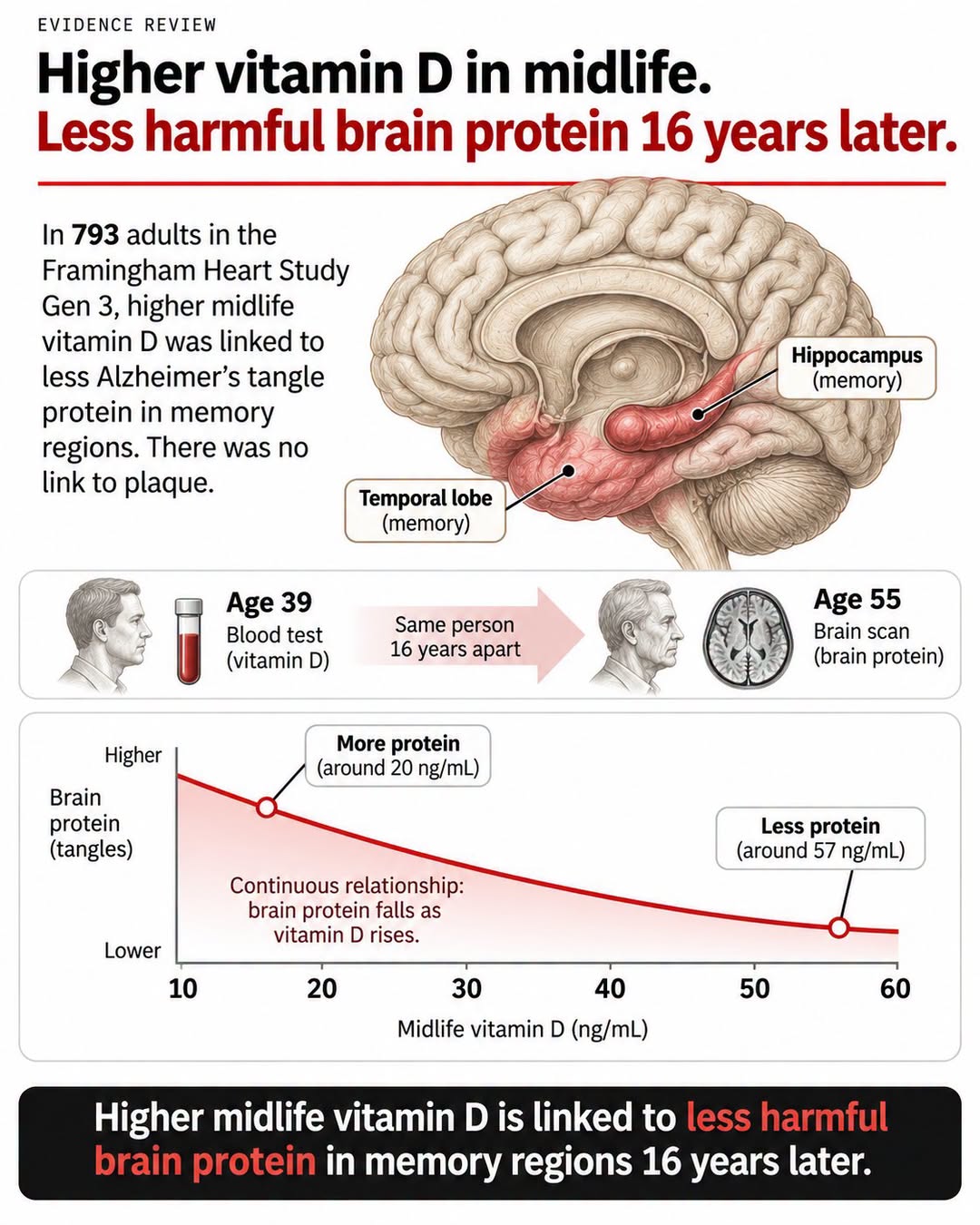
In the Framingham Heart Study, higher blood levels of vitamin D in midlife were linked with lower levels of tau tangles in the brain (a hallmark of Alzheimers) 16 years later.
Interestingly, there was no correlation with amyloid.
Link to journal paper (2026):
Paper · Neurology Open Access · 2026Association of Circulating Vitamin D in Midlife With Increased Tau-PET Burden in Dementia-Free Adultsneurology.org
#vitamindHD #tauHD #alzheimersHD #dementiaHD #framinghamHD #amyloidHD
Vitamin D works less like a vitamin and more like a steroid hormone, crossing into the brain and acting on receptors throughout it, including the memory regions where tau, the protein behind Alzheimer's tangles, builds up first.
An analysis from the Framingham Heart Study followed 793 adults for 16 years, starting at an average age of 39. Their vitamin D was measured in a blood test between 2002 and 2005 and their brains were scanned between 2016 and 2019, and people with higher vitamin D in midlife had less tau in the memory areas where Alzheimer's changes begin. The more vitamin D they had, the less tau showed up.
Vitamin D was linked only to tau and not to amyloid, the plaque protein, which fits its biology because it helps control an enzyme that tags tau and makes it clump, and it calms inflammation in the brain's immune cells.
This was an observational study, so it cannot prove vitamin D lowers tau, and early brain changes could also affect how people handle vitamin D. The usual 30 ng/mL cutoff (the standard lab unit for vitamin D) did not make a clear difference by itself, and only the steady overall trend held up, so the data supports the idea that more is generally better rather than the idea that anything below 30 is bad. The effect was also small, and the study measured natural blood levels rather than supplements.
Most vitamin D research focuses on adults over 65, but by then tau has been building for two decades. A reasonable step is to have your vitamin D level (the 25-hydroxyvitamin D test) checked in your 30s and 40s. In this analysis the benefit kept going above the 30 ng/mL "sufficient" level, which is a reasonable reading of the data but not proof of cause.
Mulligan et al., Neurology Open Access, 2026