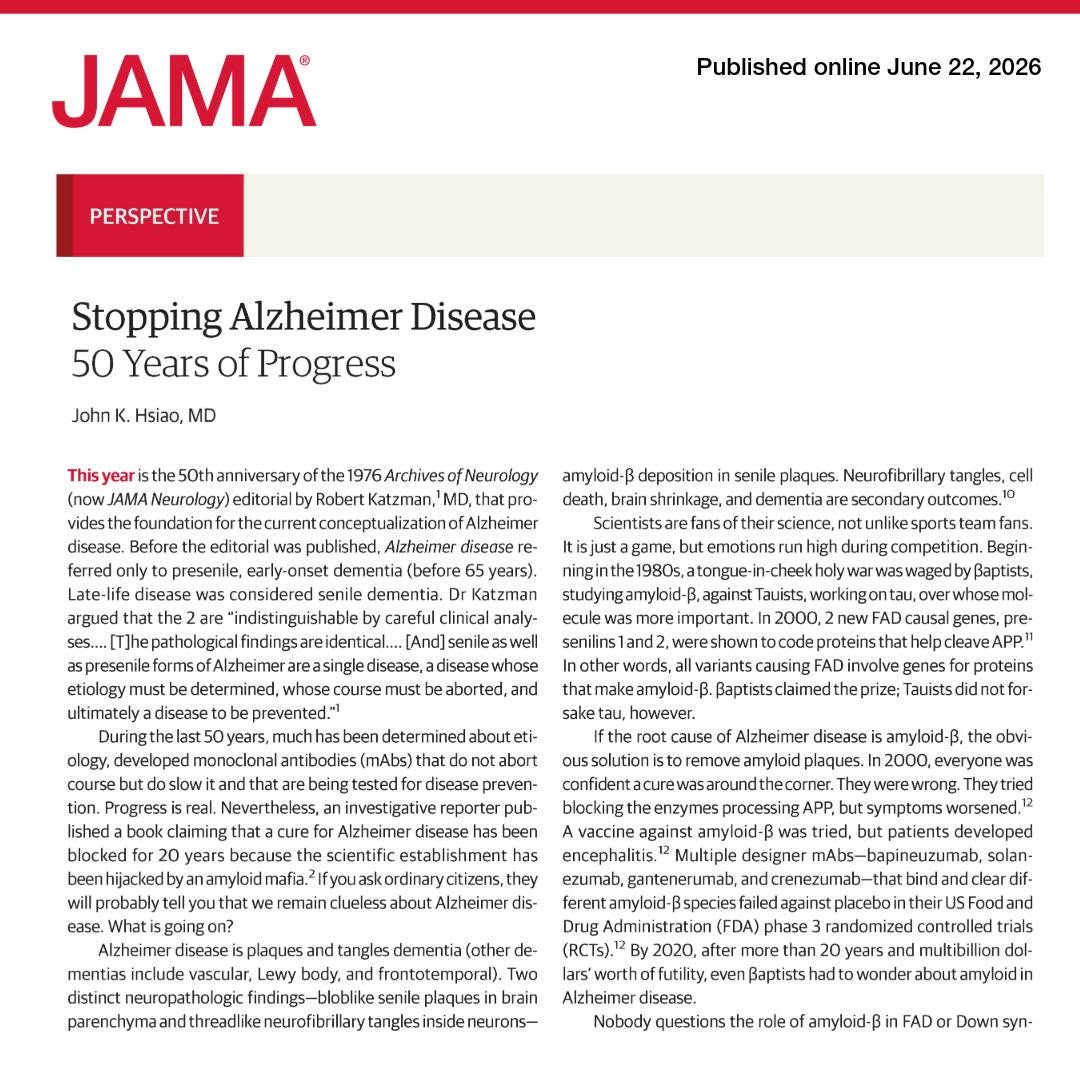
In 2025, the FDA approved the first commercial blood test to diagnose Alzheimer’s disease.
The blood test is called Lumipulse, and many neurologists in the US now offer it. It is even used by some primary care physicians.
The classic hallmark of Alzheimer’s disease is the presence of misfolded amyloid protein in the brain. If there is no amyloid, then it is not correct to diagnose Alzheimer’s disease. Updated guidelines now require the presence of amyloid to confirm a diagnosis of Alzheimer’s.
There are 3 tests that can determine if there is amyloid in the brain. In combination with symptoms, these tests can be used to diagnose Alzheimer’s:
- PET scan
- spinal tap
- Lumipulse blood test
The blood test works by measuring the ratio of the proteins pTau217 / beta-amyloid 1-42 in plasma. This ratio increases as amyloid builds-up in the brain. The Lumipulse ratio measures two specific molecular changes: soluble tau phosphorylation (which causes plasma pTau217 to rise) and beta-amyloid plaque accumulation (which causes plasma beta-amyloid 1-42 to drop).
The levels of pTau217 go up, while the levels of beta-amyloid 1-42 go down.
PET scans are time-consuming and costly. They involve exposing the body to a small amount of an injected radioactive drug (radiotracer).
Spinal taps are invasive and painful. They carry a small risk of harm.
The advantage of the blood test is that it is cheap, quick, and easy. The convenience makes it simple to diagnose Alzheimer’s early-on when there is still a lot that can be done to slow the progress of the disease.
The disadvantage of the blood test is that it is not as accurate at detecting amyloid as PET or spinal tap. A minority of patients fall into an indeterminate category after taking the blood test, which then requires followup with PET or spinal tap to make an accurate diagnosis.
#lumipulseHD #ptau217HD #betaamyloid142HD #alzheimersHD #amyloidHD