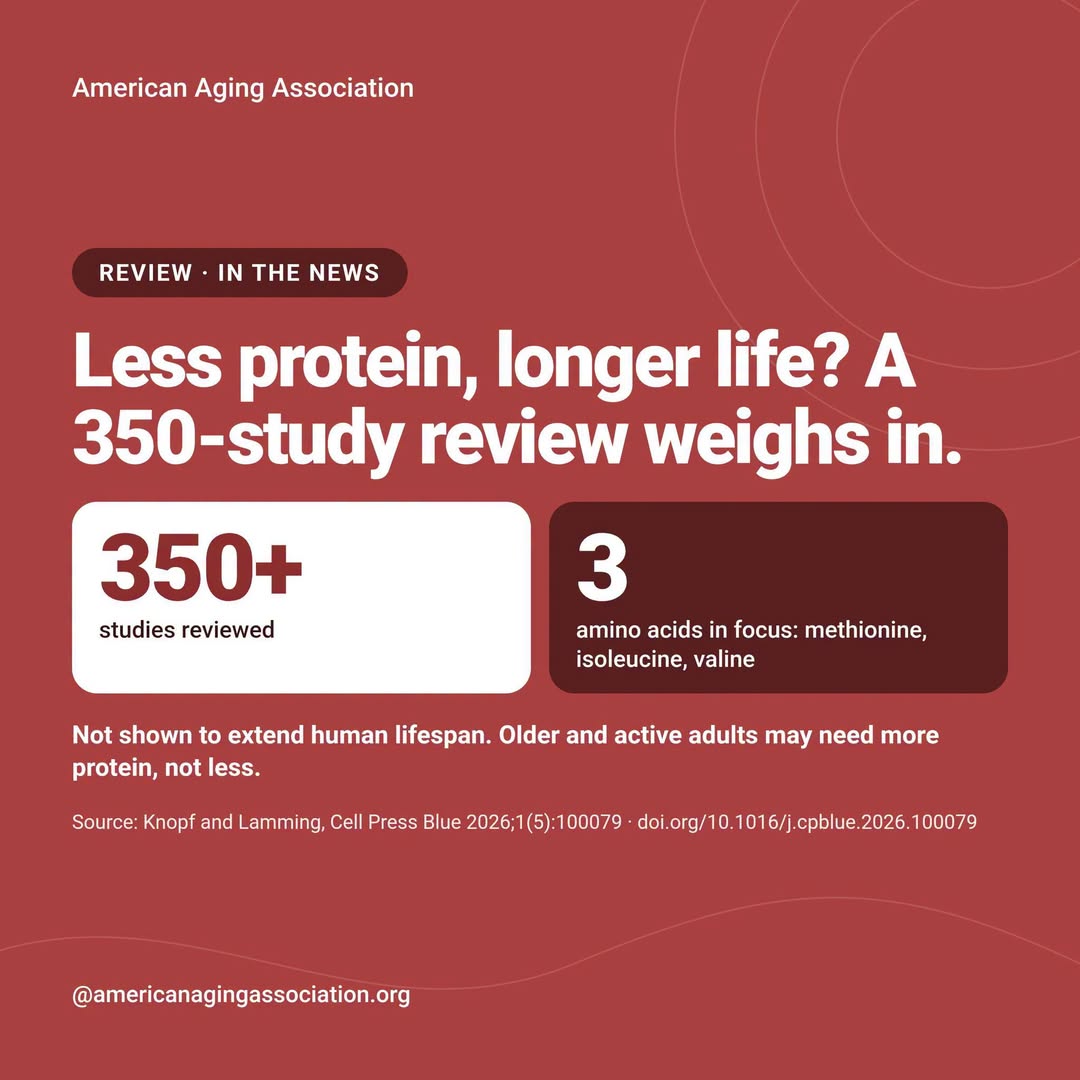
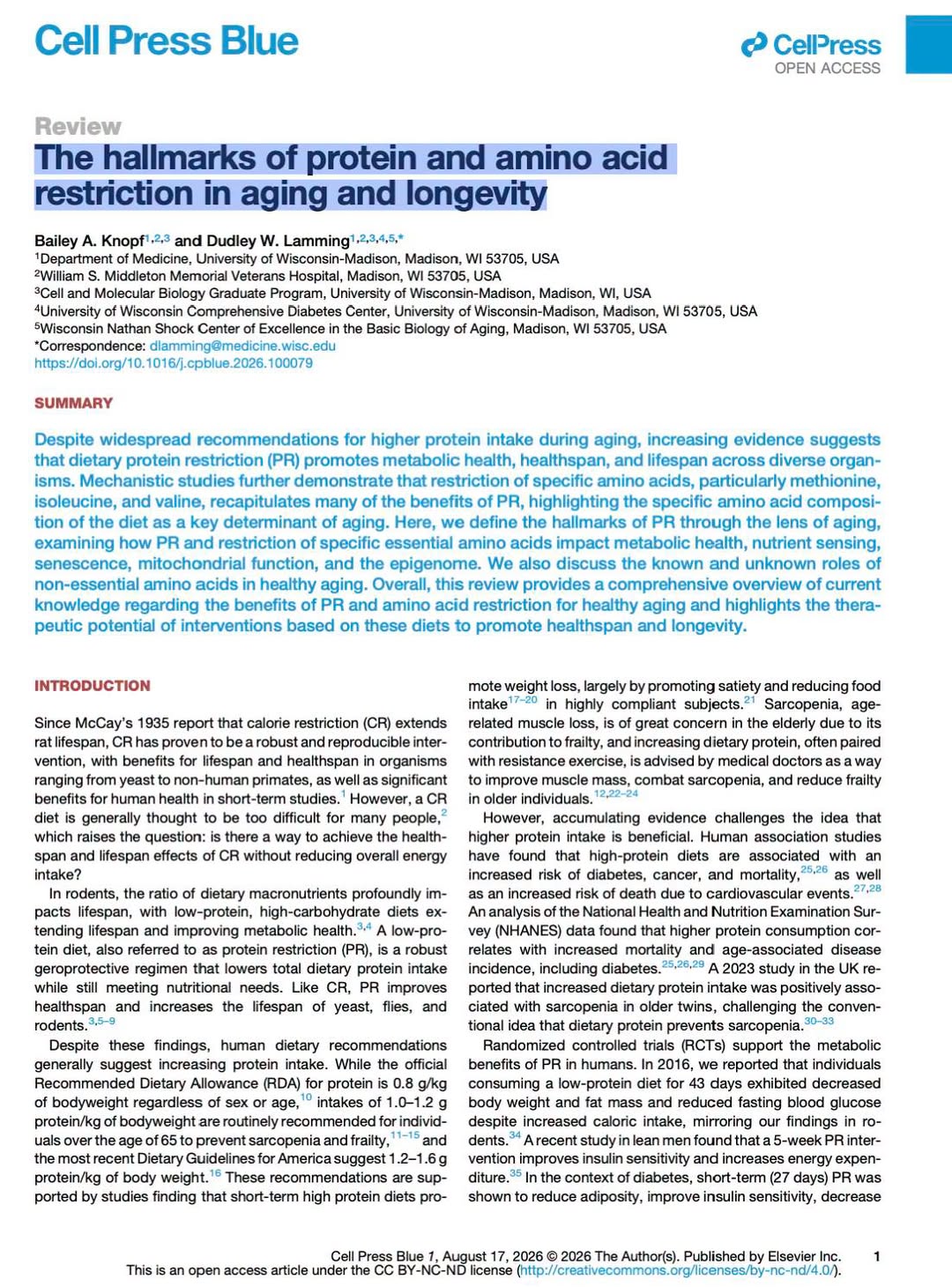
This is the same gene (FGF21) that Dudley Lamming has hi-lighted as being responsible for many of the metabolic benefits of protein restriction in animal models, specifically isoleucine restriction.
This gene might be largely responsible for the dramatic 33% lifespan extension that isoleucine restriction seems to induce in male mice.
Short term clinical trials have also shown metabolic benefits to activating this gene in humans.
You can learn more about this research by searching the group for the tags #fgf21HD or #isoleucineHD or #dudleylammingHD.
It seems to work extremely well in mice— even when given in isolation as a gene therapy— as this new research demonstrates.
The company that conducted this mouse study is developing this FGF21 gene therapy to treat fatty liver disease and other metabolic disorders in humans.
Future therapies that target this FGF21 gene look very promising.
As a reminder, this gene can be activated naturally by simply reducing isoleucine intake. The simplest way to do this is to substitute healthy plant sources of protein like legumes, nuts, seeds, and whole grains in place of less healthy sources of animal protein like red and processed meat.
Link to article:
longevity.technologyOne shot fgf21 gene therapy extends mouse healthspanlongevity.technologyLink to journal paper:
PaperMolecular therapy familycell.comQuoted:
A single intramuscular injection of gene therapy expressing FGF21 – the metabolic hormone that helps the body decide how to burn and store fuel – has extended both healthspan and lifespan in naturally aged mice, according to new research published in Molecular Therapy. Delivered via an adeno-associated virus (AAV), the treatment improved metabolic health while preserving function in the liver, kidneys, heart, skeletal muscle and brain: a fair spread of organs for one injection, and further evidence that therapies built for metabolic disease may have rather broader ambitions in the biology of aging [1].
The work, led by Professor Fátima Bosch at the Universitat Autònoma de Barcelona and supported by Kriya Therapeutics, a clinical-stage biotech, arrives as Kriya pushes its own native FGF21 gene therapy candidate, KRIYA-497, into clinical development for metabolic dysfunction-associated steatotic liver disease (MASH) – timing that is worth noting, if not making too much of.
The longevity field has no shortage of interventions that can make mice live longer; what it has far fewer of are therapies that appear to preserve function across multiple organ systems after aging is already well underway. That distinction matters. Rather than targeting a single disease or even a single hallmark of aging, this work suggests sustained FGF21 expression may influence the interconnected biology that underpins metabolic health, resilience and tissue maintenance across the body – precisely the sort of systems-level approach geroscience has long argued will be needed if we are to move the needle on healthspan rather than simply treat its consequences one organ at a time. It is also another example of the increasingly blurred line between metabolic medicine and longevity biotechnology; therapies initially developed for conditions such as MASH may ultimately prove just as interesting for what they reveal about the biology of aging itself.
The researchers did not settle for a single endpoint; they tracked a wide sweep of age-related physiological change in mice treated at 13, 19 and 22 months old – old enough, in mouse terms, to be well past their prime. A single dose of AAV-FGF21 lifted median lifespan by just over 20% in one cohort. Body weight and adiposity fell; insulin sensitivity, glucose homeostasis and energy expenditure all improved. Kidney function held up. Cardiac and renal fibrosis and amyloidosis, usually a given at this age, did not appear. Muscle strength and endurance were maintained, and the mice performed better in cognitive testing than their untreated peers – a fairly comprehensive report card for one injection [1].
The authors put this down to tissue-specific adaptations rather than any single master mechanism. Transcriptomic analysis pointed to enhanced mitochondrial function, improved proteostasis, dampened inflammatory and fibrotic signalling, and activation of AMPK across multiple organs – the therapy, as they put it, “drove four interconnected adaptive programs that counteracted fundamental aging mechanisms [1].” Whether that framing survives scrutiny in larger animals is another matter, but it is a tidy way of tying molecular tinkering to something you can actually measure in a mouse’s grip strength or its memory of an object it has seen before.
“These data show the remarkable breadth of FGF21 biology, with a single administration driving durable benefits across organs well beyond the liver,” said Shankar Ramaswamy, MD, Cofounder and CEO of Kriya Therapeutics. “These whole-body benefits in aged animals reinforce our conviction in native FGF21 gene therapy, and we remain focused on advancing KRIYA-497, our one-time gene therapy candidate expressing human native FGF21, for people living with steatotic liver disease and other conditions FGF21 is well positioned to address.”
Bosch believes the findings extend beyond metabolism alone.
“FGF21 acts as a systemic signal that keeps energy metabolism in balance across muscle, liver, fat, and brain,” she said. “In aged mice, a single administration preserved mitochondrial function and proteostasis while limiting inflammation and fibrosis. These findings point to the potential of AAV-FGF21 gene therapy as a strategy to promote healthy aging.”
One notable aspect of the study is that treatment began after age-related decline had already emerged, rather than in genetically modified animals expressing FGF21 throughout life [1]. That arguably makes the work more relevant to the clinical reality of treating older adults than many longevity studies conducted in young mice.
#fgf21HD #isoleucineHD #dudleylammingHD #genetherapyHD #aavHD #miceHD #proteinrestrictionHD