The simplest way to avoid excessive intake of isoleucine, methionine, and valine is to prioritize getting protein from whole plant foods like legumes, nuts, seeds, whole grains. These are the amino acids that accelerate aging in animal models. By simply eating more of these foods in place of red or processed meat, you are automatically lowering your intake of these three aminos. This is a proven way to improve your health, regardless whether or not it turns out these amino acids are problematic in humans like in mice.
Link to journal paper:
PaperCell press bluecell.com
Quoted:
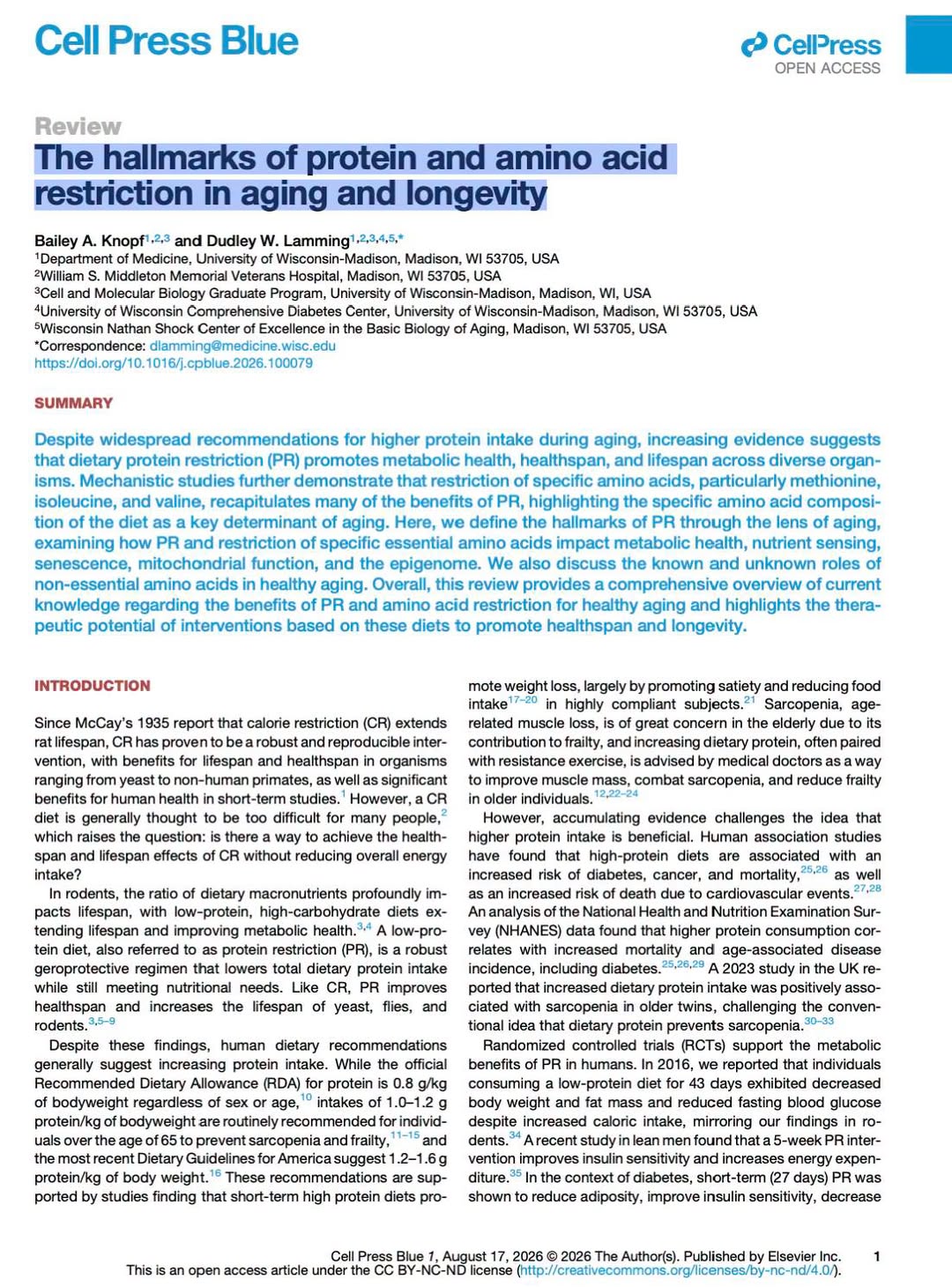
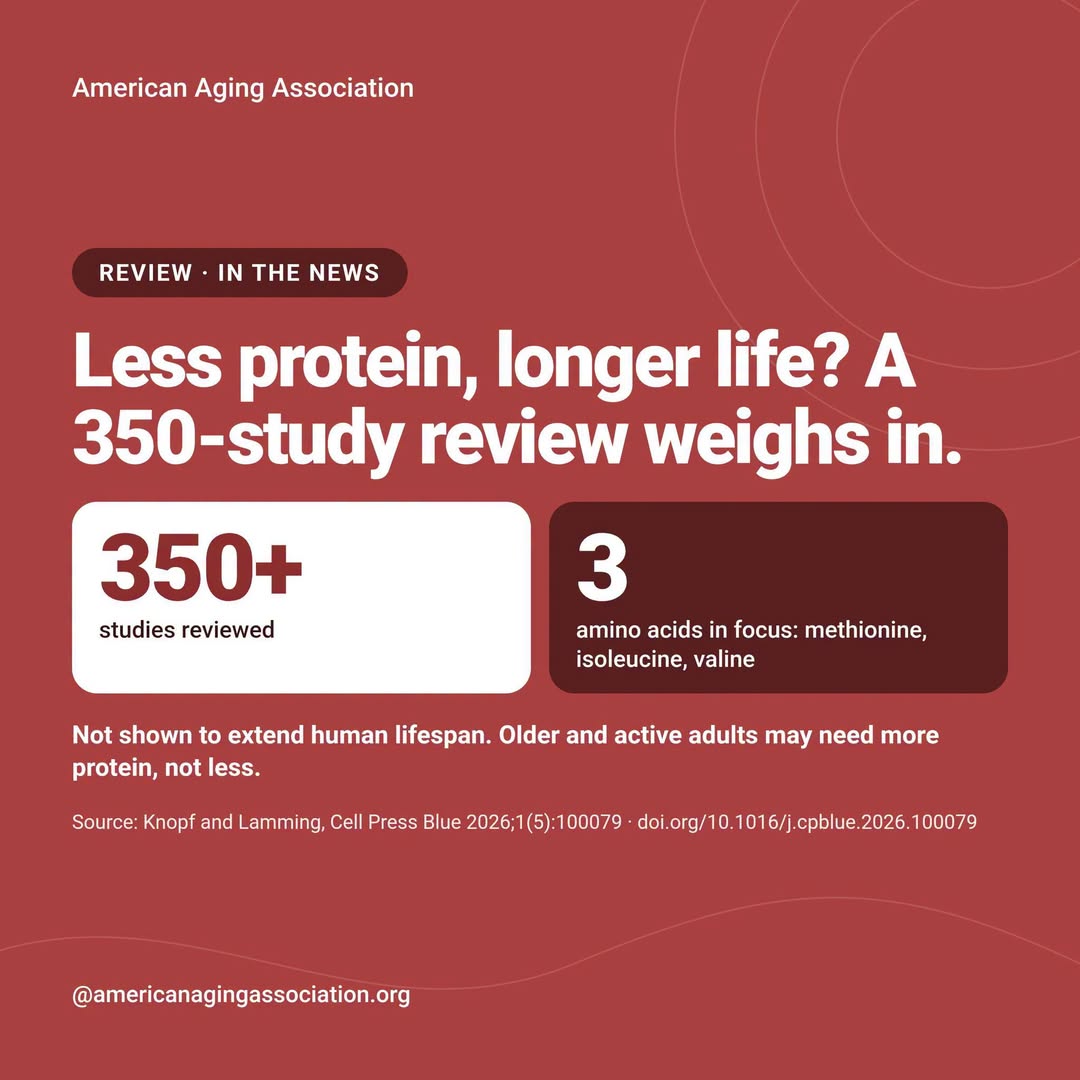
Despite widespread recommendations for higher protein intake during aging, increasing evidence suggests that dietary protein restriction (PR) promotes metabolic health, healthspan, and lifespan across diverse organisms. Mechanistic studies further demonstrate that restriction of specific amino acids, particularly methionine, isoleucine, and valine, recapitulates many of the benefits of PR, highlighting the specific amino acid composition of the diet as a key determinant of aging. Here, we define the hallmarks of PR through the lens of aging, examining how PR and restriction of specific essential amino acids impact metabolic health, nutrient sensing, senescence, mitochondrial function, and the epigenome. We also discuss the known and unknown roles of non-essential amino acids in healthy aging. Overall, this review provides a comprehensive overview of current knowledge regarding the benefits of PR and amino acid restriction for healthy aging and highlights the therapeutic potential of interventions based on these diets to promote healthspan and longevity.
#proteinHD #dudleylammingHD #methionineHD #isoleucineHD #valineHD #agingHD #longevityHD #proteinsummaryHD #miceHD #proteinrestrictionHD
Protein: Are We Solving Sarcopenia While Accelerating Aging?
Preliminary disclaimer: I think that the concept of protein restriction is wrong and dangerous for humans.
For years, we've been told a simple message:
"Eat more protein as you age."
This new review argues that the biology may be far more complex.
While higher protein intake can help preserve muscle mass, an increasing body of experimental and human evidence suggests that moderate protein restriction—or even restriction of specific amino acids—may improve metabolic health, extend healthspan, and possibly lifespan.
The most intriguing finding is that not all amino acids are created equal.
Methionine, isoleucine and valine appear to reproduce many of the benefits of global protein restriction, influencing nutrient sensing, metabolism, mitochondrial function, senescence and epigenetic regulation.
The Critical Point
Perhaps we've been asking the wrong question.
Instead of asking:
"How much protein should we eat?"
we should be asking:
"Which amino acids are driving aging biology?"
The review also highlights an important paradox.
Higher protein intake may support muscle mass, yet observational studies have linked it with higher risks of diabetes, cardiovascular disease, cancer and mortality, while several randomized studies report improved insulin sensitivity and metabolic health with protein restriction.
Biology is rarely linear.
My Take
Nutrition is entering the era of precision biology.
The future is unlikely to be "high protein" versus "low protein."
It will probably be about optimizing amino acid composition according to age, metabolic health, disease, physical activity and therapeutic goals.
Just as medicine has evolved beyond treating cholesterol alone to understanding lipoprotein biology, nutrition is moving beyond grams of protein toward understanding the biological signaling of individual amino acids.
The real question is no longer:
"How much protein should I eat?"
It may become:
"Which amino acids should I restrict—and when?"
#Longevity #HealthyAging #Protein #Nutrition #Metabolism #AminoAcids #FGF21 #mTOR #PrecisionNutrition