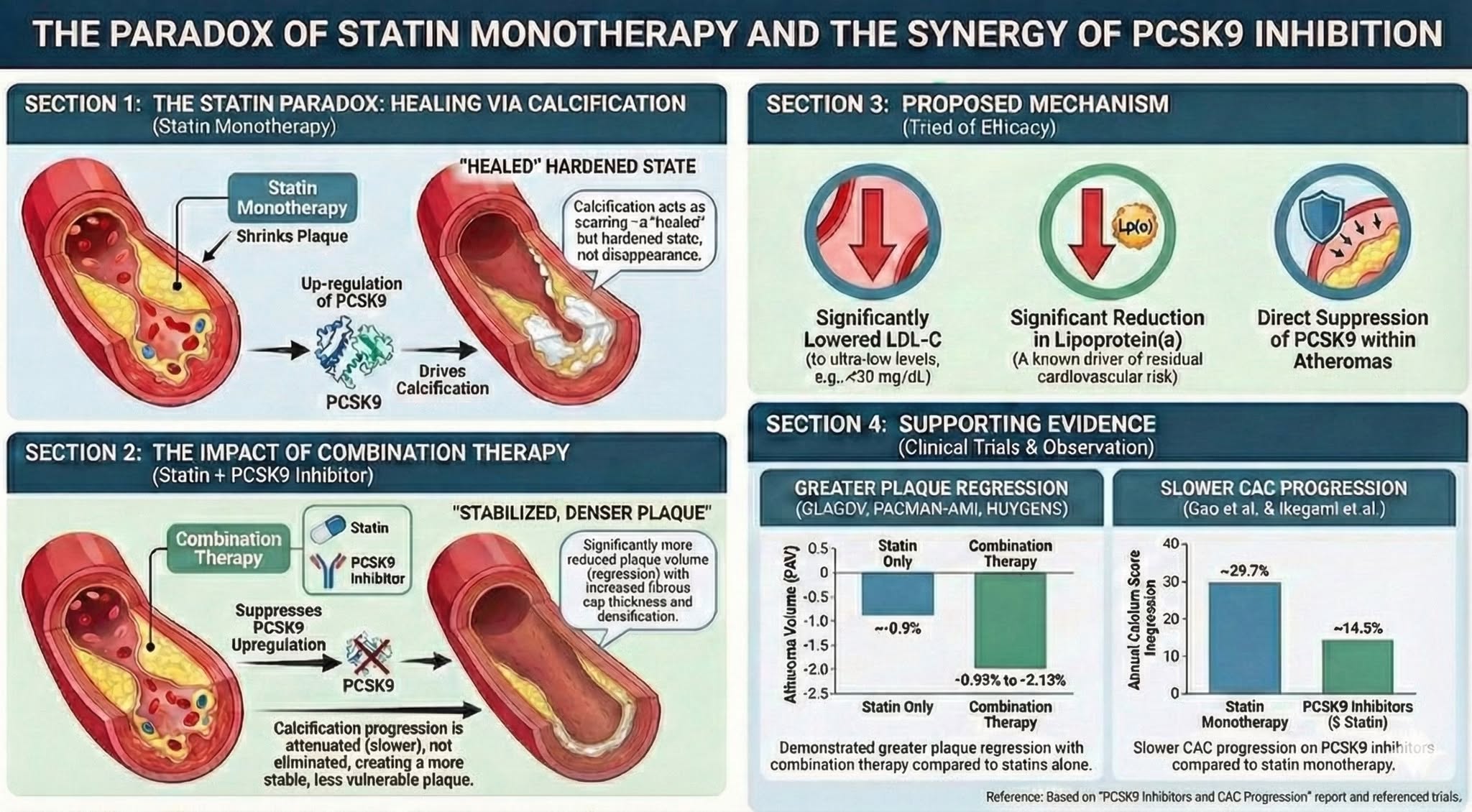
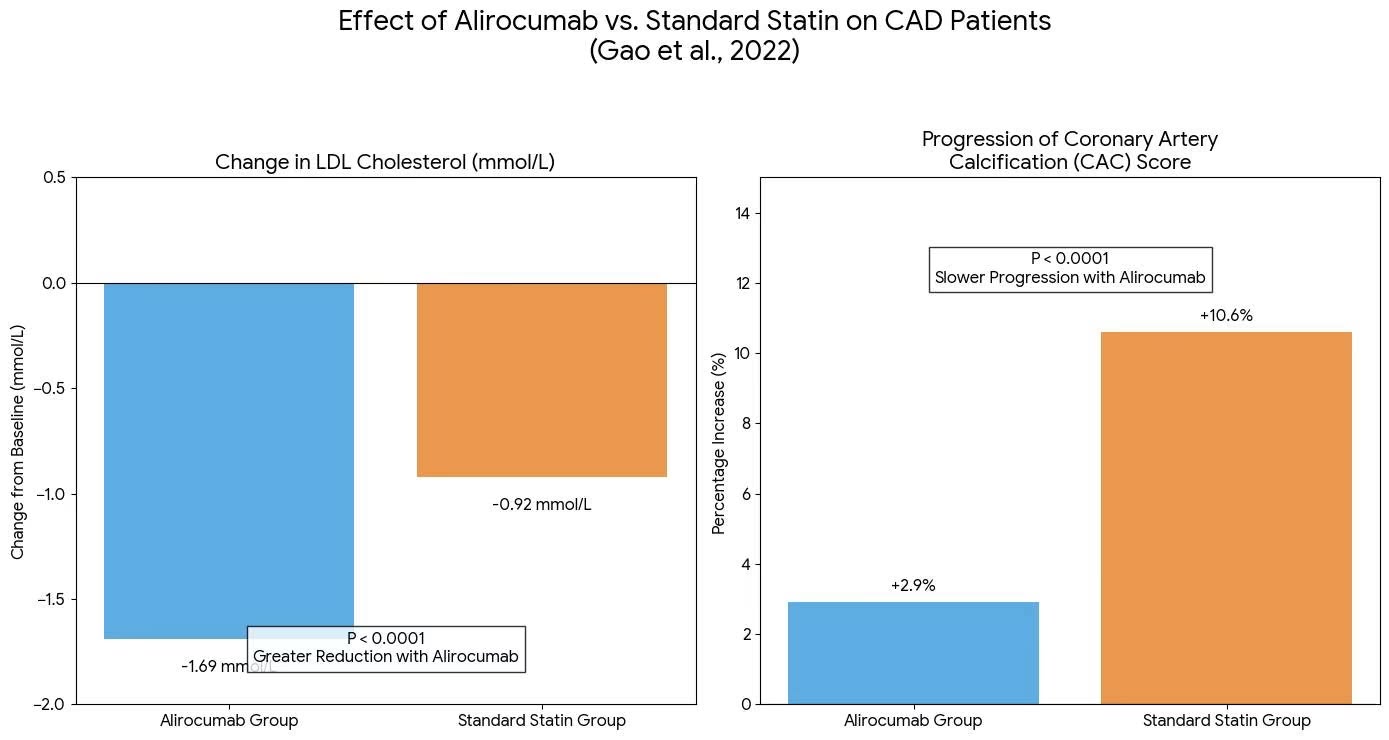
No trial proved that repatha or praluent lower risk of a heart attack by themselves
This is a very important thing to understand. These PCSK9 inhibiting drugs have only been rigorously proven to lower risk of heart attack and stroke (MACE) when combined with statins.
There is a lot of bad information on this topic from influencers. Some of these influencers have mislead people to believe that these drugs should be used in place of statins, because they are proven to work better.
They might work better (emphasis on might), but we don’t actually have rigorous outcome data that demonstrates this. The honest answer is that we don’t really know. That is why the clinical guidelines still recommend statins as the first-line therapy, and recommend adding PCSK9 inhibitors in addition to statins when a powerful second drug is needed. The guidelines only recommend PCSK9’s alone as an option for people who cannot take statins.
There is no dedicated randomized cardiovascular outcomes trial (CVOT) that has demonstrated a reduction in major adverse cardiovascular events (MACE)—such as heart attacks or strokes—for Repatha (evolocumab) or Praluent (alirocumab) as monotherapy without statin therapy.
Key Evidence and Clinical Context
Background Statin Therapy in Landmark Outcome Trials: The major landmark outcome trials that proved MACE reduction for these PCSK9 inhibitors—such as FOURIER and VESALIUS-CV for Repatha, and ODYSSEY OUTCOMES for Praluent—evaluated the drugs added to background statin therapy (or maximally tolerated statin doses). In these trials, virtually all participants were taking statins.
Monotherapy Trials Evaluated LDL-C, Not MACE: Dedicated trials evaluating Repatha or Praluent in statin-intolerant patients receiving monotherapy (such as the GAUSS trials for evolocumab or ODYSSEY ALTERNATIVE for alirocumab) were designed to measure LDL cholesterol reduction and drug tolerability, rather than hard cardiovascular outcomes like myocardial infarction, stroke, or mortality.
Comparison to Other Non-Statins: While subgroup analyses from the major CVOTs and trials of other non-statin therapies (such as the CLEAR Outcomes trial for bempedoic acid) have demonstrated MACE reduction in statin-intolerant patients, no dedicated monotherapy outcome trial of that scale exists specifically for PCSK9 inhibitors.
Clinically, while PCSK9 inhibitors lower LDL-C just as robustly without background statins and are widely prescribed for statin-intolerant patients based on LDL-C reduction guidelines, their proven MACE-reduction benefit in large-scale outcome trials rests on data where statins formed the therapeutic baseline.
This post was written in collaboration with Gemini AI.
#pcsk9HD #repathaHD #praluentHD #statinsHD #statinspcsk9HD #pcsk9monotherapyHD