PCSK9 Inhibitors (Praluent or Repatha): Plaque Reduction
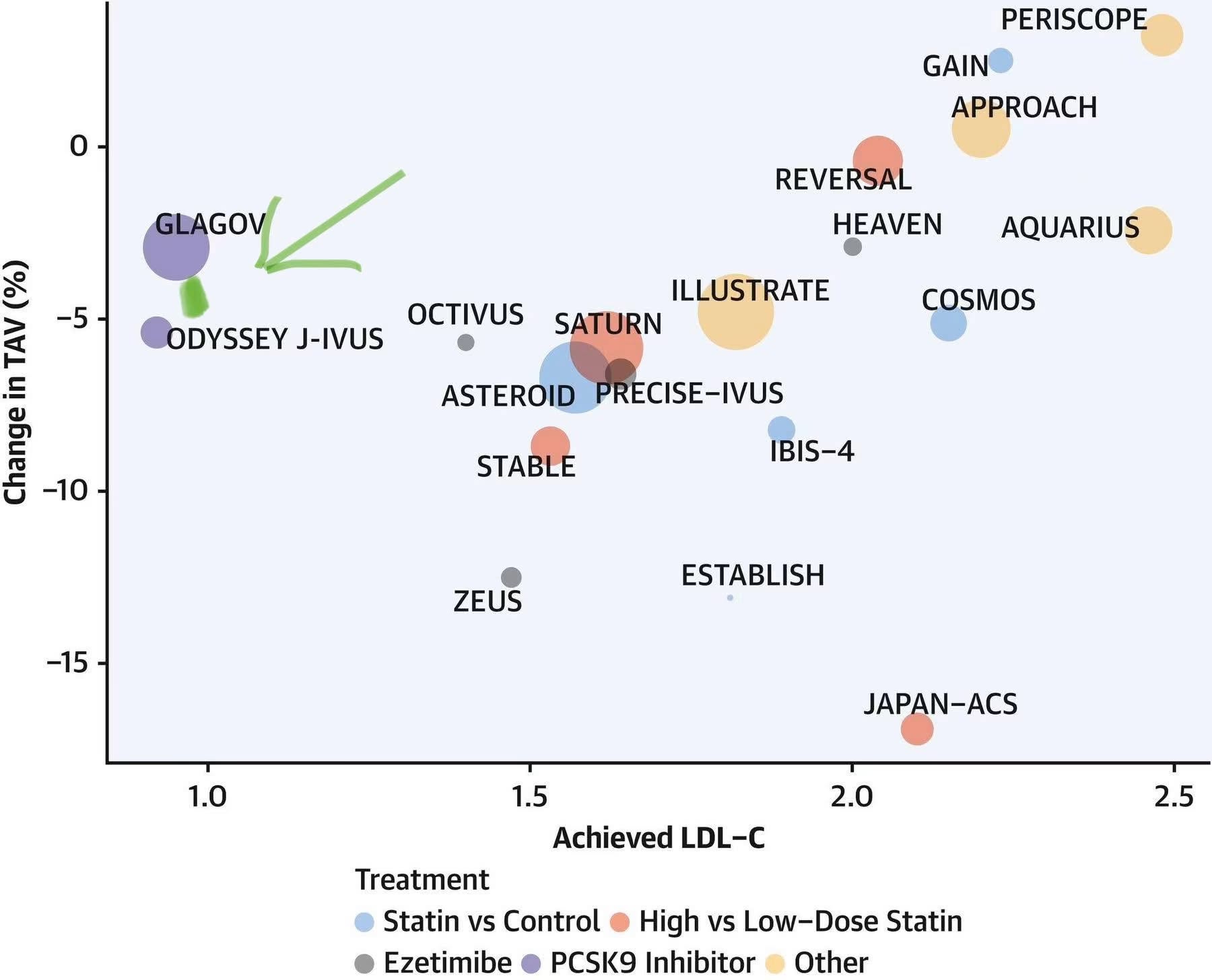
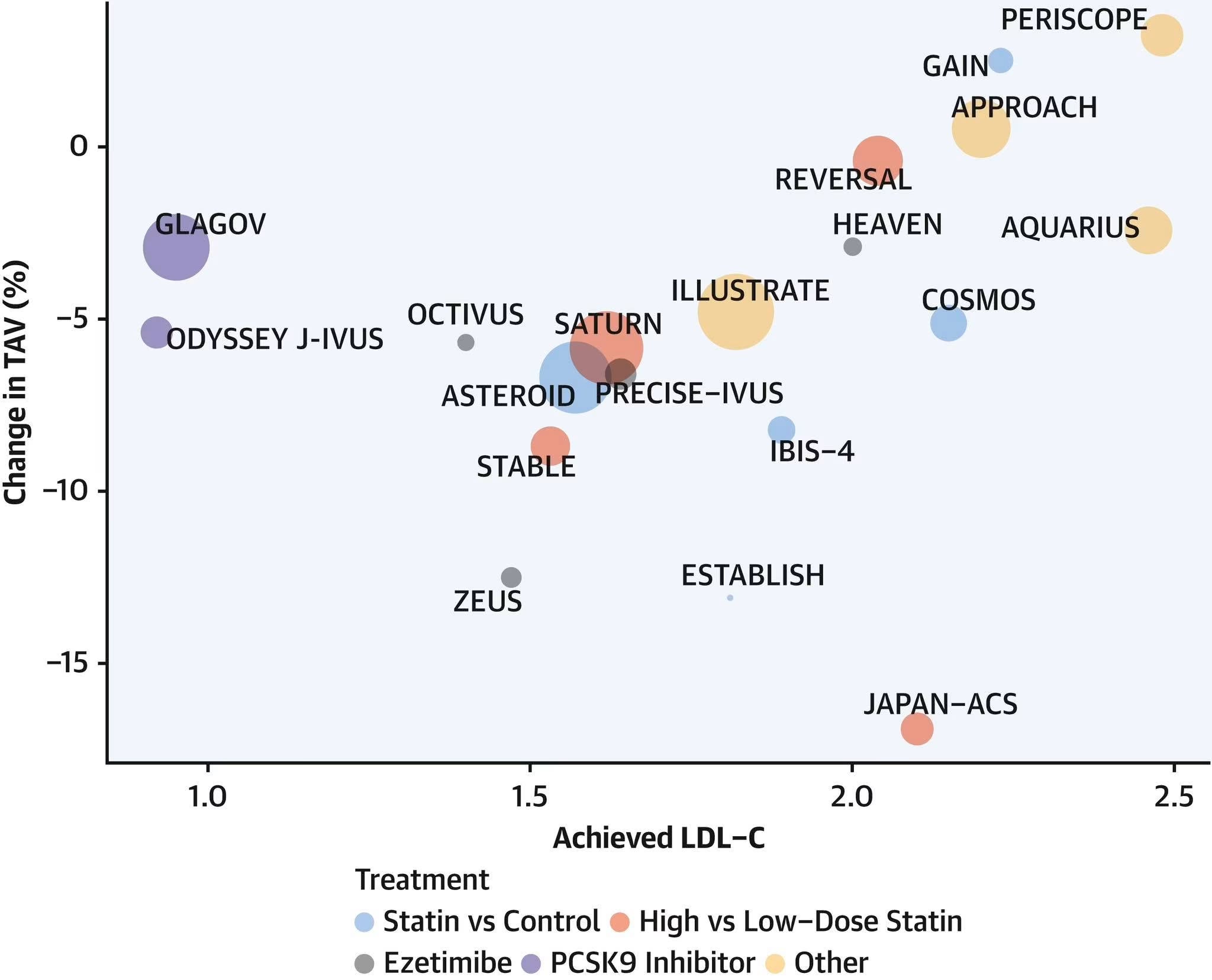
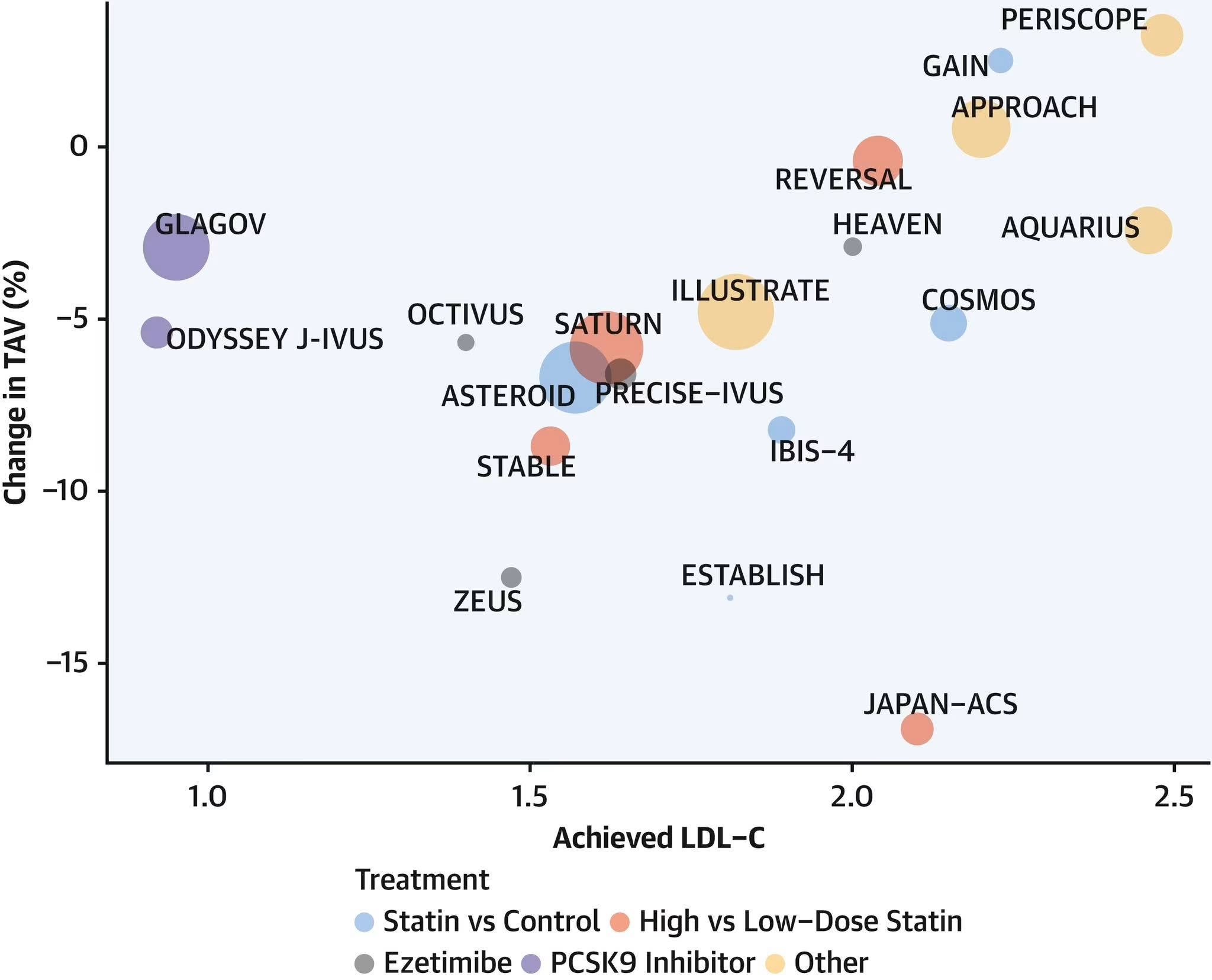
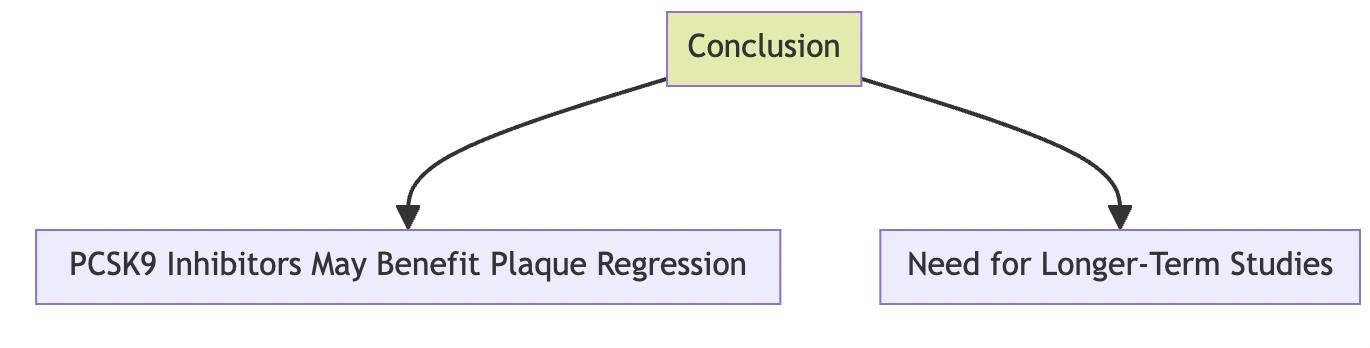
The GLAGOV trial (2016) demonstrated that the PCSK9 inhibitor evolocumab reduced total atheroma volume by 2.9%, as compared to a 0.4% reduction with placebo over a period of 76 weeks. Meanwhile, the ODYSSEY J-IVUS trial (2019) showed a slight but non-significant reduction in total atheroma volume with alirocumab over 36 weeks. These findings suggest that such agents may have significant benefits for plaque regression, highlighting the need for longer-term studies to fully demonstrate their efficacy.

Key numerical results:
- The GLAGOV trial (Nicholls et al., 2016) showed that evolocumab on top of statins significantly regressed atherosclerotic plaque volume compared to statins alone in 968 patients. Evolocumab reduced percent atheroma volume (PAV) by 0.95% compared to 0.05% increase with statins alone (p<0.001).
- The IBIS-4 trial (Puri et al., 2018) found that adding inclisiran, a PCSK9 inhibitor, to statins regressed PAV by 1.01% compared to 0.26% increase with placebo over 18 months in 505 patients (p<0.001).
- The PRECISE-IVUS trial (Tsujita et al., 2017) showed that adding evolocumab to statins regressed PAV by -0.5% compared to +0.1% increase with statins alone over 52 weeks in 329 patients (p=0.011).
##
PS: Facebook links stopped working recently. I have a longer blog post with links here:
 mylongevityjourney.blogspot.comPlaque Reduction / CVDStatins - HELPFUL Multiple studies have indicated that statins can lead to atherosclerotic plaque regression, achieving a reduction in tot...mylongevityjourney.blogspot.com