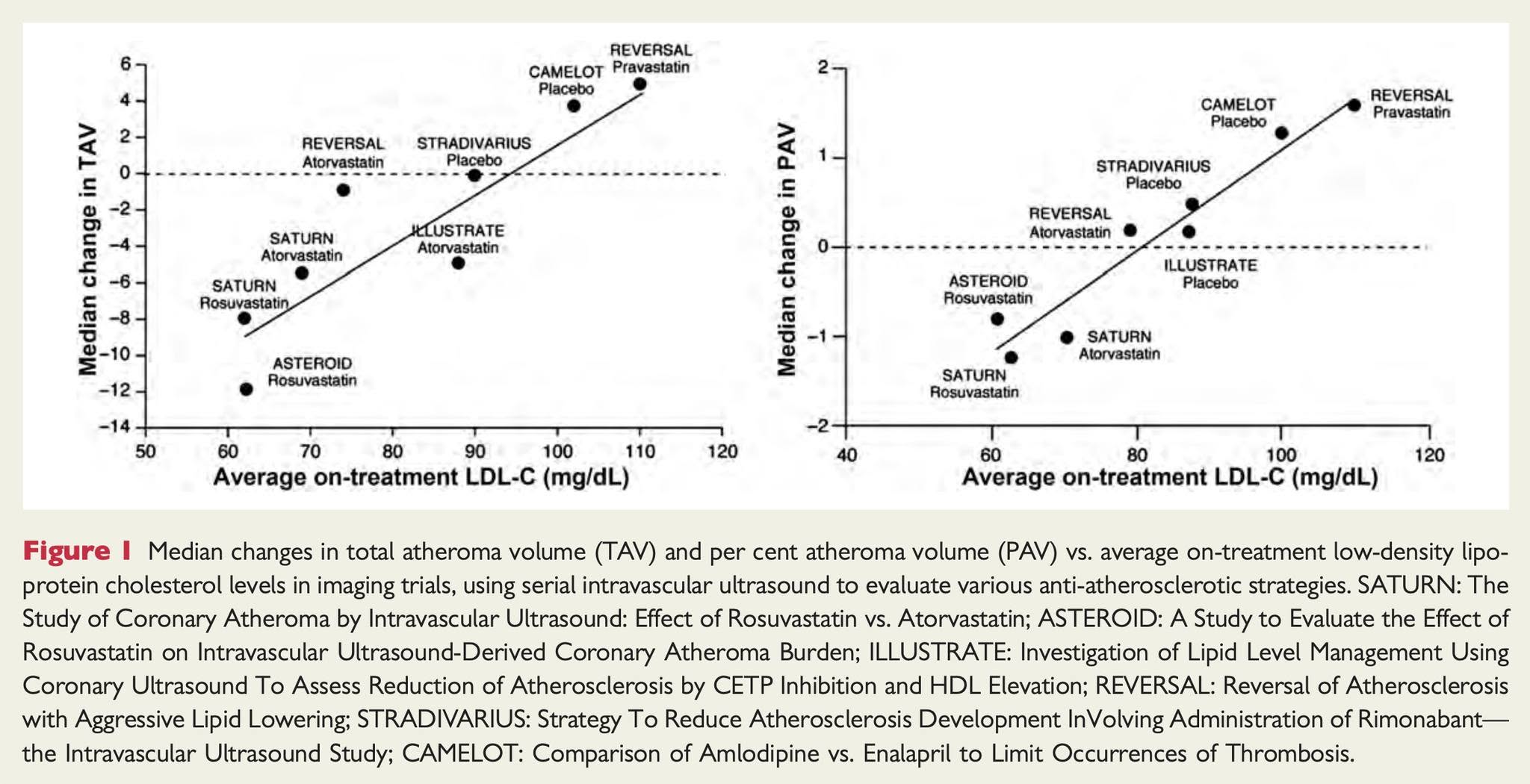
Not every therapy that lowers LDL also lowers risk of major adverse cardiac events (MACE) like heart attacks, strokes, and cardiovascular-related deaths.
There are examples of therapies that lower LDL, but do not lower MACE risk:
For example, combining niacin (nicotinic acid) with high-dose statins lowers LDL more than high-dose statins alone. Yet 2 large well-done randomized trials proved that it does not lower MACE anymore than the high dose statins by themselves.
Beyond niacin, CETP inhibitors like torcetrapib and dalcetrapib also lowered LDL-C (and raised HDL-C) but failed to reduce MACE in major outcome trials.
This is why the FDA requires rigorous proof from large randomized trials that a therapy actually lowers risk for MACE before they will approve it for the indication of lowering the risk of heart attacks, strokes, and cardiovascular-related death.
Fact checking this post with Gemini Al:
(I encourage everyone to do this to help ensure the accuracy of posts and comments in the group. You can learn how to do this here: ↪ How to fact-check posts and comments with Google Gemini.)
Prompt: Please critique and fact check this text for scientific accuracy. Do not include tables in your response.
Response:
Overall, the provided text is scientifically accurate and accurately reflects the modern cardiology consensus. The distinction between lowering a surrogate biomarker (LDL-C) and reducing clinical endpoints (MACE) is a classic example of evidence-based medicine in action.
Detailed Point-by-Point Breakdown
- "Not every therapy that lowers LDL also lowers risk of MACE..."
Verdict: Accurate.
Explanation: While lowering LDL-C via statins, ezetimibe [+ statins], or PCSK9 inhibitors [+ statins] consistently reduces cardiovascular events, other pharmacological mechanisms that lower LDL fail to do so (or cause off-target harms that negate benefits). Beyond niacin, CETP inhibitors like torcetrapib and dalcetrapib also lowered LDL-C (and raised HDL-C) but failed to reduce MACE in major outcome trials due to off-target toxicities or lack of therapeutic efficacy.
- "Combining niacin with high-dose statins lowers LDL... yet 2 large randomized trials proved it does not lower MACE..."
Verdict: Accurate.
Explanation: The two trial references are:
- AIM-HIGH (2011): Tested extended-release niacin added to statin therapy in 3,414 high-risk patients. It was stopped early for lack of efficacy and a non-significant trend toward increased ischemic stroke.
- HPS2-THRIVE (2014): Tested extended-release niacin plus laropiprant in over 25,000 patients already on statins. It showed no reduction in major vascular events and a significant increase in serious adverse events (gastrointestinal, bleeding, infection, and new-onset diabetes).
Minor Nuance: In these trials, patients were already well-managed on statin therapy, meaning their baseline LDL-C was already low. The additional modest drop in LDL-C from niacin (roughly 10–12%) was insufficient to translate into further MACE reduction on top of high-intensity statin therapy.
- "This is why the FDA requires rigorous proof from large randomized trials... before approving it for the indication of lowering the risk of heart attacks..."
Verdict: Accurate, with key regulatory context.
Explanation: Your phrasing is precise regarding indications. The FDA distinguishes between two types of drug approvals in this domain:
1 Lipid-lowering indication: The FDA can approve a drug solely to lower LDL-C based on LDL-C reduction as a validated surrogate endpoint (e.g., as an adjunct to diet).
2 Cardiovascular risk-reduction (MACE) indication: To explicitly state on the prescribing label that a drug reduces heart attacks, strokes, or cardiovascular mortality, the FDA requires prospective Cardiovascular Outcome Trials (CVOTs).
Regulatory Action: Following AIM-HIGH and HPS2-THRIVE (and the ACCORD trial for fibrates), the FDA formally withdrew approval for co-administration of extended-release niacin and fenofibric acid with statins, explicitly citing that trial data did not support MACE reduction.
Suggested Refinement
If you plan to publish or post this text, consider making one minor tweak to clarify how much niacin contributed to LDL lowering in those specific trials:
“For example, adding extended-release niacin to statin therapy further lowers LDL (and significantly raises HDL). Yet two massive randomized trials—AIM-HIGH and HPS2-THRIVE—proved that adding niacin failed to reduce MACE compared to statin therapy alone."
#niacinHD #maceHD #fdaHD #ldlHD #cetpinhibitorHD #torcetrapibHD #dalcetrapibHD