PCSK9 Inhibitors & Coronary Artery Calcium (CAC)
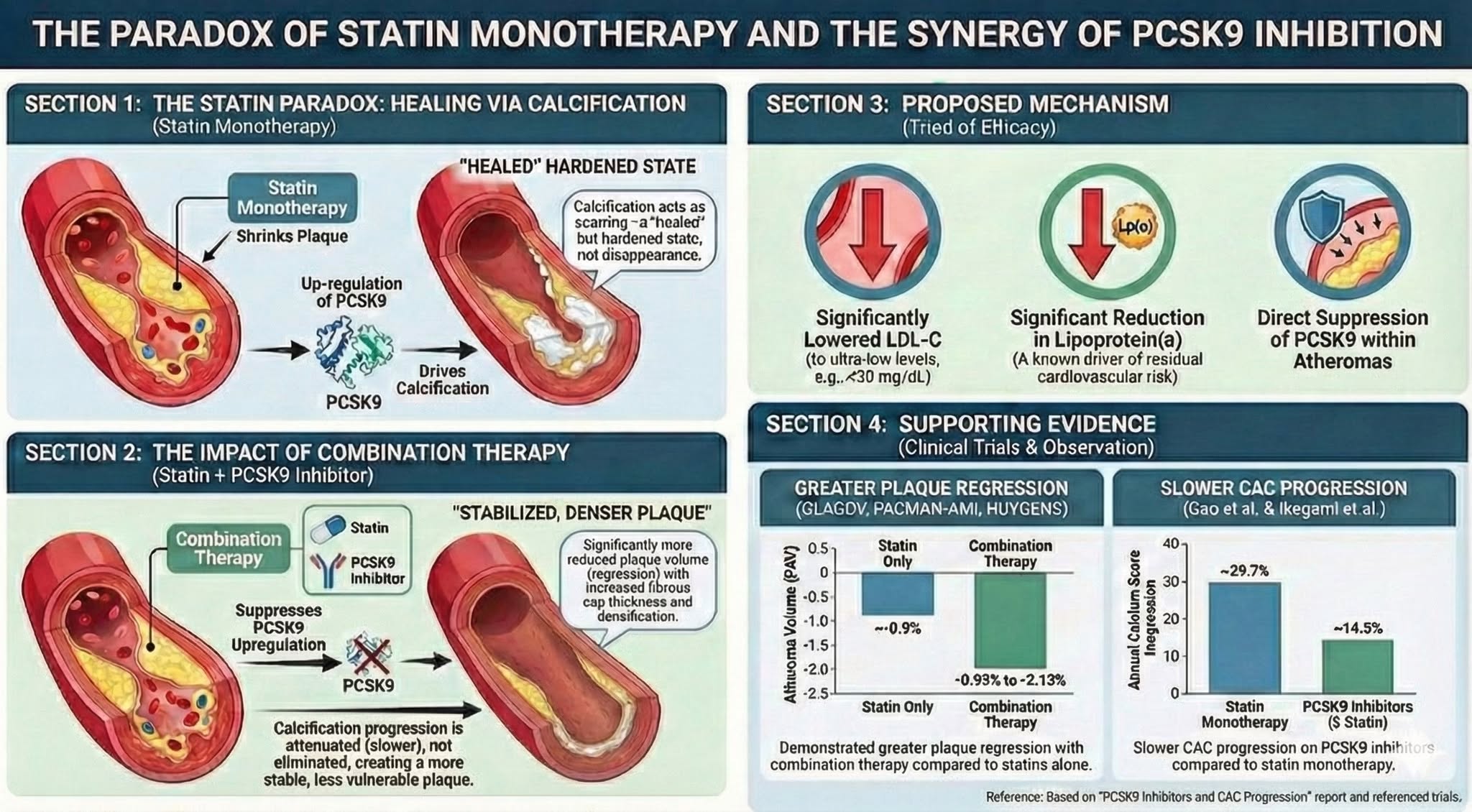
PCSK9 inhibitors (e.g., alirocumab, evolocumab) are potent LDL-lowering injectable therapies that also reduce lipoprotein(a) [Lp(a)]. Beyond their well-established ability to reduce cardiovascular events, accumulating evidence suggests they exert favorable effects on coronary plaque burden and may significantly slow the progression of coronary artery calcium (CAC) scores, exceeding what is typically observed with statin therapy alone.
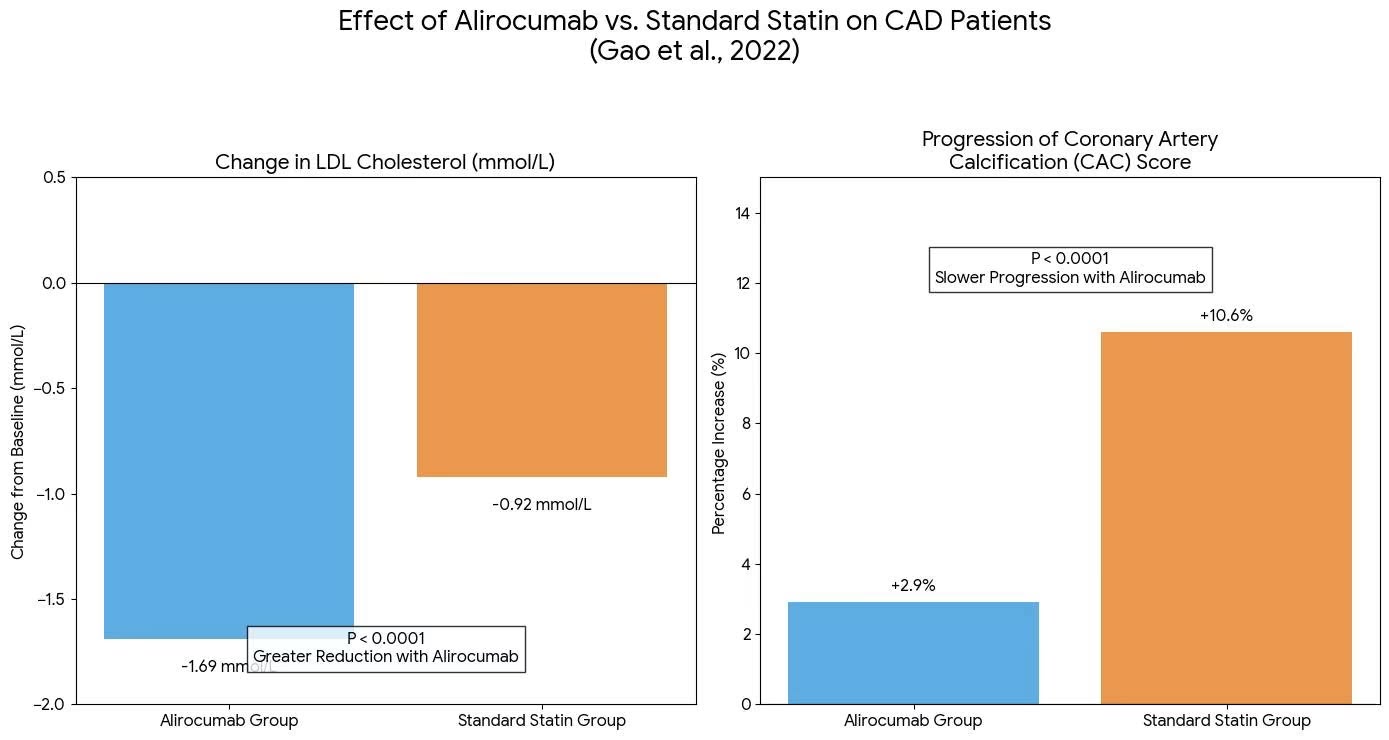
In a 2022 randomized controlled trial involving patients with coronary artery disease (CAD) already receiving moderate-intensity statins, the addition of alirocumab (75 mg every two weeks) for 18 months resulted in minimal CAC progression, whereas patients treated with statins alone experienced substantial increases [1]. Specifically, the statin-only group demonstrated a median CAC increase of +10.6% (IQR 6.3–23.3%), while the statin plus PCSK9 inhibitor group showed a median change of only +2.9% (IQR −6.7% to +8.3%) [1]. Notably, CAC scores did not rise significantly from baseline in the PCSK9 inhibitor group, whereas they increased markedly in those receiving statins alone [1].
These findings are consistent with prior observational data. In a retrospective study by Ikegami et al., annual CAC progression was approximately 14.3% in patients treated with PCSK9 inhibitor plus statin therapy, compared with 29.7% in those on statin monotherapy—representing roughly a 50% reduction in the rate of calcification [2]. This is particularly notable given that statins alone have repeatedly been shown to have minimal effect on slowing CAC progression, and in many cases may accelerate calcification as part of the plaque stabilization process [3].
The apparent CAC-slowing effect of PCSK9 inhibitors is thought to be driven by more aggressive lipid lowering, including reductions in both LDL cholesterol and Lp(a). In the randomized trial, alirocumab reduced LDL cholesterol to approximately 30–50 mg/dL and significantly lowered Lp(a), whereas statin therapy alone did not affect Lp(a) levels [1]. Importantly, changes in Lp(a) were significantly correlated with the degree of CAC progression, suggesting that Lp(a) reduction may partly mediate the observed effect of PCSK9 inhibition on vascular calcification [1].
It should be emphasized that studies examining CAC progression with PCSK9 inhibitors are relatively small, and larger, long-term trials are needed to definitively establish their impact on calcification and clinical outcomes. Nevertheless, the available evidence—including a retrospective cohort of 120 patients and at least one prospective randomized trial—consistently indicates that PCSK9 inhibition can significantly attenuate CAC progression in high-risk individuals [1,2]. As one analysis concluded, “the annual rate of CAC with a PCSK9 inhibitor plus statin is lower than with statin alone; CAC may be prevented with PCSK9 inhibitors” [2].
Clinically, these findings align with the strategy of intensive lipid lowering to stabilize atherosclerotic plaque. In practice, PCSK9 inhibitors are generally reserved for secondary prevention or very high-risk primary prevention, such as in patients with established CAD, familial hypercholesterolemia, or markedly elevated CAC in the setting of high LDL cholesterol. In such populations, adding a PCSK9 inhibitor to maximally tolerated statin therapy not only promotes plaque regression on intravascular imaging but also appears to slow the rise in CAC scores over time, contrasting with the typical steep increase observed in patients treated with statins alone [1,2].
References
1
Paper · Front. Cardiovasc. Med. · 2022Effect of Alirocumab on Coronary Calcification in Patients With Coronary Artery DiseaseBackground Proprotein convertase subtilisin kexin type 9 (PCSK9) inhibitors have been documented with significantly reduction in LDL cholesterol levels and cardiovascular events. However, evidence regarding the impact of PCSK9 inhibitors on coronary calcification is limited. Methods Eligible patients with intermediate coronary lesions and elevated LDL cholesterol values were randomized to either alirocumab 75 mg Q2W…frontiersin.org2
PaperThe annual rate of coronary artery calcification with combination therapy with a PCSK9 inhibitor and a statin is lower than that with statin monotherapyresearchgate.net3
Paper · Front. Cardiovasc. Med. · 2020Coronary Artery Calcification Under Statin Therapy and Its Effect on Cardiovascular Outcomes: A Systematic Review and Meta-AnalysisObjective: To compare Agatston scores between patients without statin therapy and those under standard and intensive statin therapy and to systematically review the relationship between coronary artery calcification (CAC) progression under statin therapy and cardiovascular outcomes. Methods: Literature search was conducted across databases. Randomized controlled trials and observational studies that reported…frontiersin.org