57% of the population has atherosclerosis.
The vast majority don’t realize it.
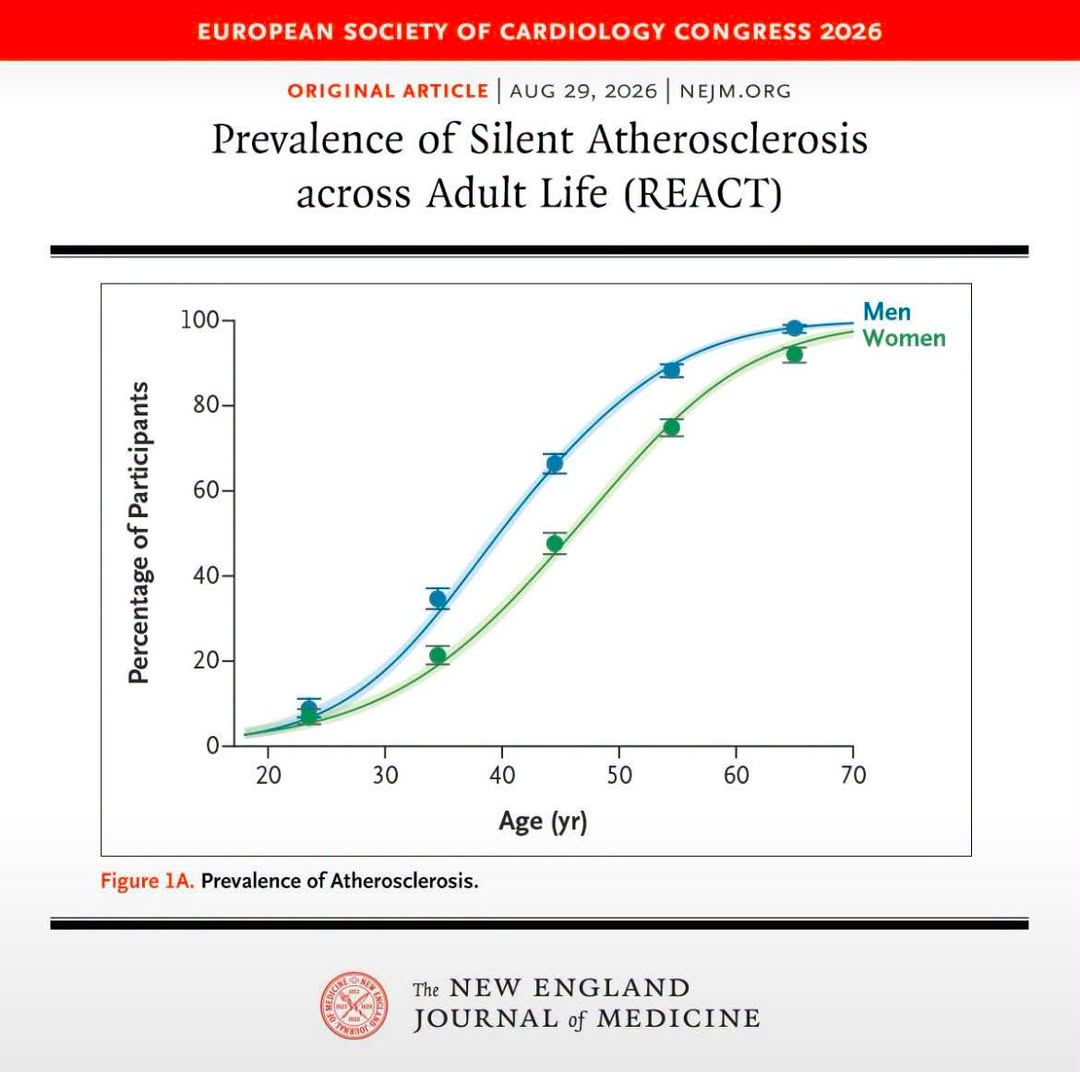
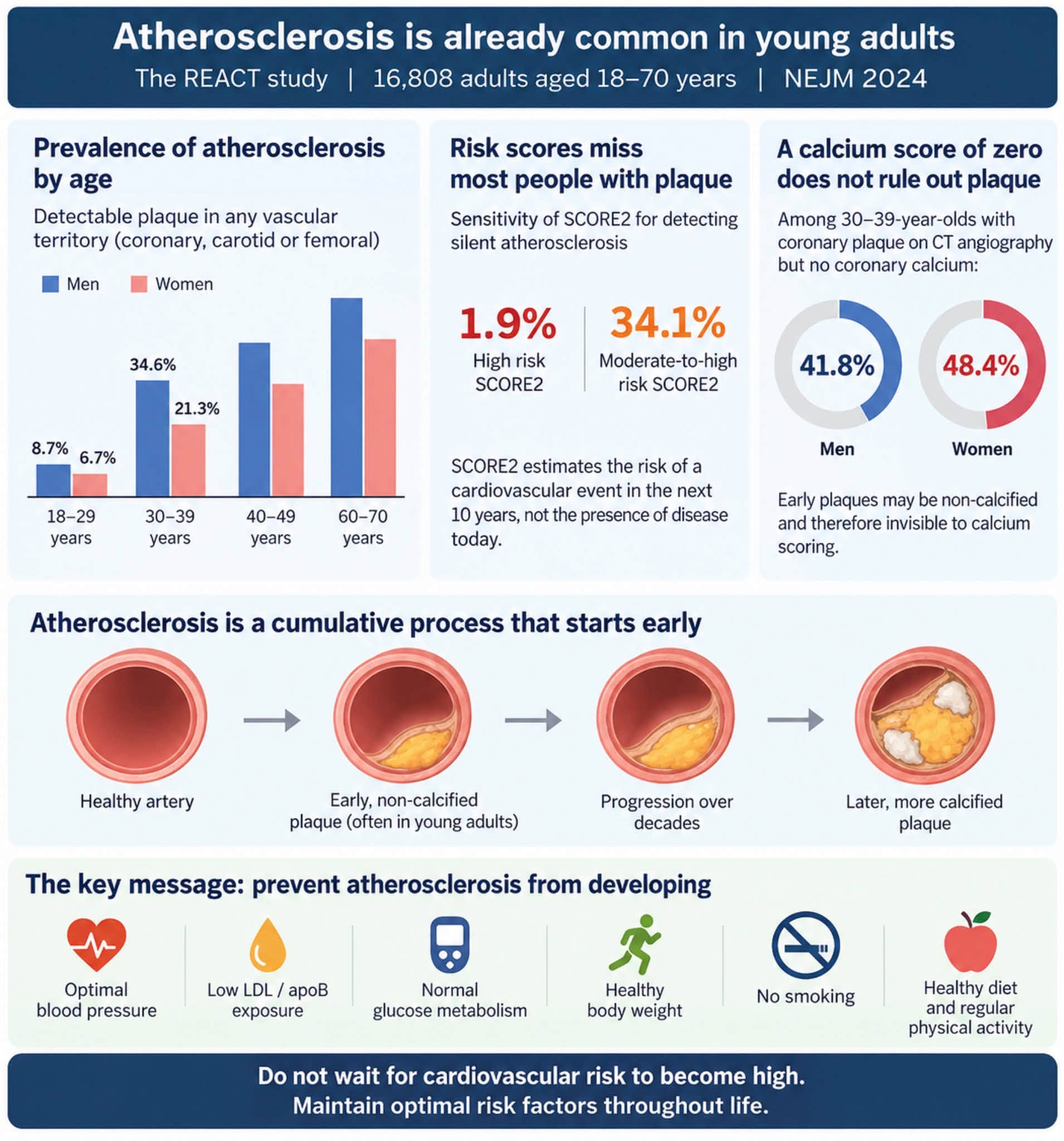
1 in 13 people in their 20’s has atherosclerosis.
By the time they reach their 60’s, this rises to 9 in 10.
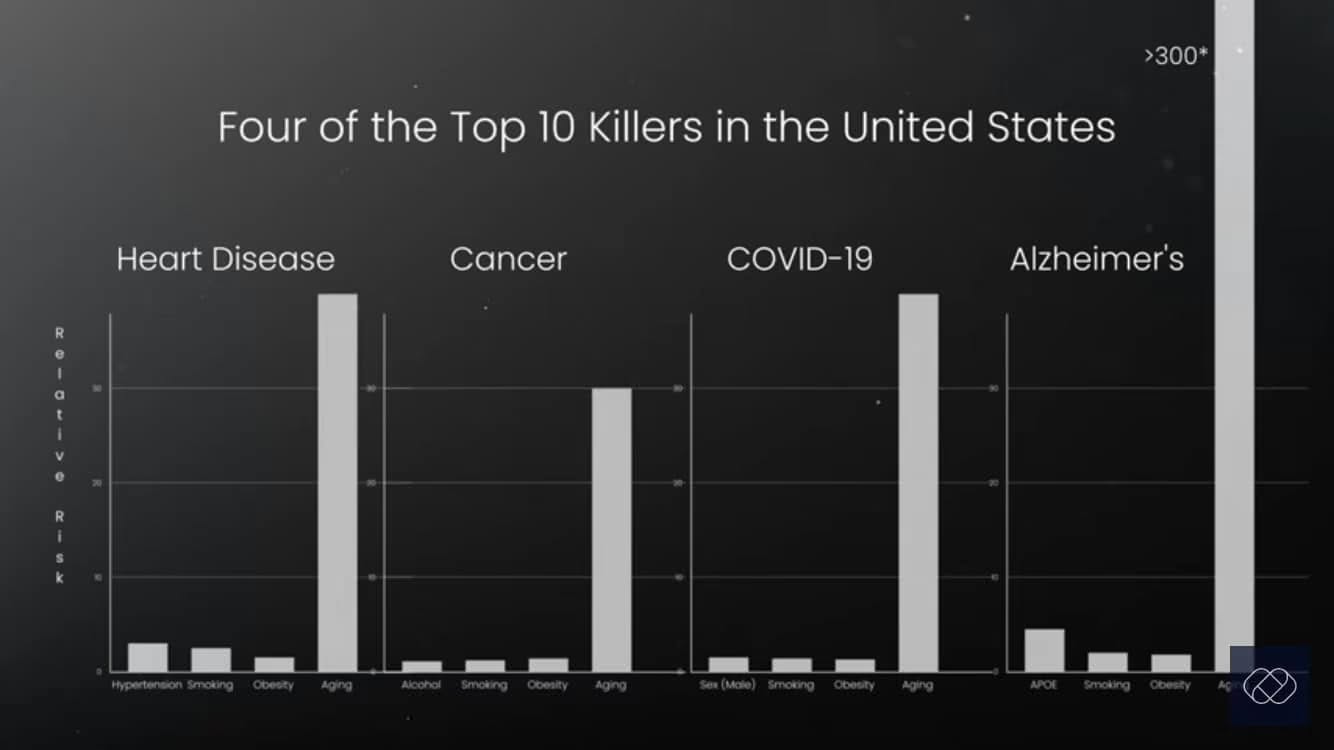
As the graph makes clear:
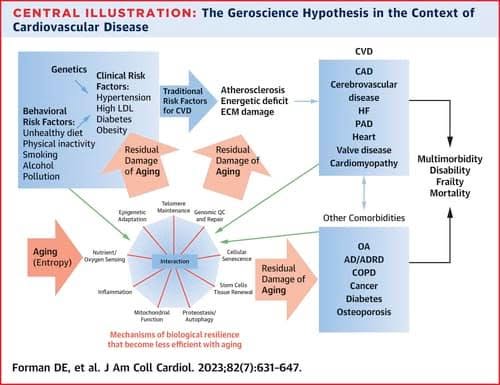
Age is by far the biggest risk factor for CVD.
The aging process itself is directly causal.
#reactHD #nejmHD #silentHD #cvdHD #ageHD #agingHD #riskfactorsHD
The Disease We Can't Feel
There's something unsettling about the word "silent" when it comes to disease. We tend to trust our bodies to tell us when something is wrong. A new study published in the New England Journal of Medicine suggests that when it comes to atherosclerosis, that trust may be badly misplaced.
The study, part of the REACT project led by researchers in Denmark and Spain, looked at more than 16,000 adults between the ages of 18 and 70, none of whom had any known cardiovascular disease. Using detailed imaging (vascular ultrasound of the carotid and femoral arteries, plus CT angiography of the coronary arteries) the researchers went looking for plaque. Not symptoms. Not risk scores. Actual, visible plaque.
What they found is striking, though we should be careful not to overinterpret a single cross-sectional study. Overall, about 57 percent of participants had detectable atherosclerotic plaque somewhere in their vascular system. Among people in their 20s, about 1 in every 13 people were already showed plaque. By the time participants reached their 60s, that number was about 9 in 10.
Men also appeared to develop silent atherosclerosis somewhere around 5 to 10 years earlier than women. Women's risk seemed to rise more gradually through early adulthood, then increase more sharply around the time of menopause. This pattern fits reasonably well with existing hypotheses about estrogen's vascular effects.
Perhaps the most interesting finding, at least for me, involves how poorly conventional risk calculators performed. Using a standard tool like SCORE2, only a small minority of people who actually had silent plaque on imaging were flagged as high risk, especially among younger participants. In other words, the tools many clinicians rely on to decide who needs closer attention may be missing a substantial amount of real, existing disease.
This is yet another study that strongly supports the “test, don’t guess” approach I take in my practice.
We tend to think of disease as something that announces itself, or like a threshold you cross. This data suggests atherosclerosis behaves more like a slow accumulation, something closer to aging itself than to a discrete illness. It also supports the “lower for longer” approach to LDL/apoB recommended in lipidology.
There is more to learn here, but one thing is true- Atherosclerosis is common. It starts early. And the main current tools for finding it may not be doing the job well enough.
Paper · N Engl J Med · 2026Prevalence of Silent Atherosclerosis across Adult Life.Conclusion: This study of silent atherosclerosis showed that the disease was detectable in early adulthood, with age- and sex-associated increases in prevalence across arterial territories and marked increases in plaque volume. (Funded by the Novo Nordisk Foundation; REACT ClinicalTrials.gov number, NCT06692127.).nejm.org