Heart disease rarely has a single cause. The group's posts describe it as multifactorial: LDL cholesterol and apoB are one major contributor, alongside age, genetics and family history, insulin resistance, chronic inflammation, endothelial dysfunction, high blood pressure, smoking and more.1 Louis Nervegna, one of the group's admins, says there are probably dozens of modifiable risk factors, that some are far more proven and important than others, and that a reasonable approach is to target as many as possible.2
A rough ranking emerges from the posts. Age is by far the largest single factor but cannot be changed. Among modifiable factors, the best-supported group is blood pressure, cholesterol (LDL, apoB or non-HDL), blood sugar and diabetes, body weight (especially abdominal or visceral fat) and tobacco, followed by diet, physical activity and sleep, and then a more speculative layer including inflammation and environmental exposures. This summary goes through them, flags where the numbers come from, and notes where evidence is observational. It is educational, not medical advice, and decisions about testing or treatment are best discussed with your own doctor.
Age: the largest factor, and the one you cannot change
Louis calls age "by far the biggest risk factor for heart disease" and illustrates it with the SCORE O.P. risk model for people over 65, using the table for women. A hazard ratio of 1.16 for each year of age means that 20 years of ageing (65 to 85) multiplies the risk of dying from coronary heart disease by about 19.5 (1.16 to the 20th power). By comparison, the same table gives diabetes 2.3 times, smoking 1.88 times, a systolic blood pressure 40 mmHg higher about 1.31 times, and total cholesterol 40 mg/dL (1 mmol/L) higher about 1.13 times.3 He elsewhere says age is more than 10 times bigger than almost all other risk factors, including LDL and apoB.78 A shared geroscience argument (Eric Verdin) goes further and says cholesterol is about seven times less important than age as a predictor.9
Show data
| Hazard ratio (log scale) | 95% CI | |
|---|---|---|
| *Age 85 versus 65 | 19.5 | – |
| Diabetes | 2.3 | – |
| Smoking | 1.88 | – |
| Systolic blood pressure 40 mmHg higher | 1.31 | – |
| Total cholesterol 40 mg/dL (1 mmol/L) higher | 1.13 | – |
Two cautions apply. These ratios compare very different things: a 20-year age span against a single-unit change in one factor, in an older population. And "age" is partly a stand-in for decades of accumulated exposure to the other factors, a point the posts themselves make when they describe plaque building silently for years.
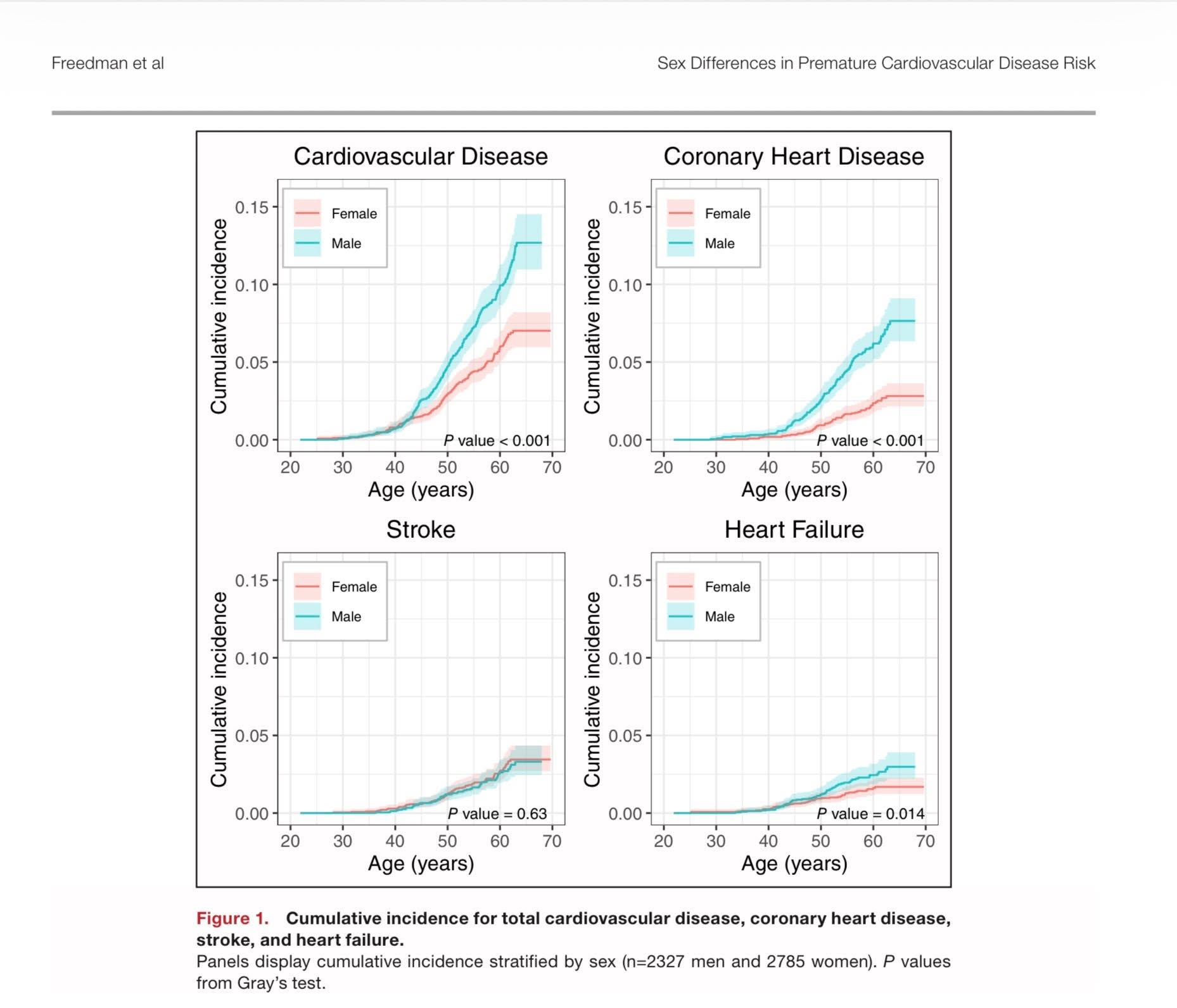
The silent build-up is documented. The REACT study in NEJM, which imaged more than 16,000 adults aged 18-70 without known cardiovascular disease, found plaque in about 57%, rising from about 1 in 13 people in their 20s to about 9 in 10 in their 60s, with men developing silent disease about 5-10 years earlier than women. A shared commentary warns against over-interpreting a single cross-sectional study.10 A JAHA study found men develop cardiovascular disease about 7 years earlier than women, with the gap appearing as early as age 35 and persisting after adjusting for traditional risk factors; blood pressure and glycemia were among the strongest attenuators.11
Louis and the shared sources also argue that ageing biology itself is a root cause, the "geroscience" view, citing a 2023 JACC scientific statement.812 That framing is a hypothesis about where future therapies may come from; posts on metformin, taurine and SGLT2 inhibitors as possible ageing-slowing agents are explicitly speculative or based mainly on animal or diabetes data.131415 A randomized trial in people with metabolic syndrome (MeMeMe) found that metformin prevented type 2 diabetes but showed no heart-disease or cancer prevention, which Gokhan Can notes will surprise the longevity community.16
The classic modifiable factors
Blood pressure
High blood pressure shows up repeatedly as the most common factor. In a study of more than 9 million South Korean adults plus thousands of US adults, over 99% of people with a first heart attack, stroke or heart failure had at least one non-optimal blood pressure, cholesterol, blood sugar or tobacco-use factor beforehand, more than 93% had two or more, and hypertension affected over 93% of patients.6 A JAMA Cardiology analysis of US coronary heart disease deaths from 1990 to 2023 attributed 88% to modifiable risk factors, led by high blood pressure, diet and high LDL, and noted that death rates fell mostly because treatment improved while weight and blood sugar worsened.5
Elevated pressure is also very common. The 2025 US blood pressure guideline, as summarized in the group, reports that about 57% of men and 53% of women aged 45-59 are above 130/80 mmHg, rising to about 84% at ages 75-80, with lifestyle (diet, activity, sleep, stress, alcohol) as the main driver.17 Blood pressure also predicts dementia: adults at 55 with normal blood pressure, no diabetes and no smoking averaged 30.1 more dementia-free years in a study of about 12,000 Americans, versus about 17 with all three, though the study is observational.1819
LDL cholesterol, apoB and non-HDL cholesterol
LDL and apoB are described as causal and as one major factor among many. In the SCORE O.P. table above, a 40 mg/dL higher total cholesterol carries a modest hazard ratio compared with age.3 The 2024 Lancet Commission on dementia attributes about 7% of dementia cases to untreated high LDL in midlife, one of 14 modifiable factors that together account for about 45%.20 Louis also warns that lowering LDL or apoB is not a cure: every randomized trial still shows residual risk after the LDL target is reached, rising with age, which is why other factors matter.7 Gokhan adds that periodontal disease, chronic immune activation, clonal hematopoiesis, gut microbiome metabolites and pollutants may drive some of this residual risk.21
Diabetes, insulin resistance and blood sugar
Diabetes carried a 2.3 times hazard ratio in the SCORE O.P. example.3 Louis argues insulin resistance is a key causal factor and cites Roy Taylor's randomized trials, in which an eight-week very low calorie liquid diet (about 700 kcal) followed by a Mediterranean diet cleared liver and pancreas fat and reversed type 2 diabetes, with an average loss of about 15 kg (33 lb).22 A shared trial found 5:2 intermittent fasting with meal replacements produced more weight loss (21 lb versus 12-13 lb) and a larger HbA1c fall (1.9% versus 1.6% and 1.5%) than metformin or empagliflozin over 16 weeks in newly diagnosed type 2 diabetes.23
A nuance on the other side: statins modestly raise new-onset diabetes. Gokhan's review reports about a 9% higher relative risk (12% at intensive doses) concentrated in people who already have metabolic risk factors, with cardiovascular benefit judged to outweigh it.24
Weight and visceral fat
Louis says epidemiology shows BMI to be the single biggest modifiable risk factor for chronic disease apart from smoking and heavy drinking.25 Gokhan goes further for cardiovascular disease, calling excess weight the most important modifiable factor, citing the lowest all-cause mortality at a BMI of 20-24, a trial meta-analysis linking 5.5 kg of lifestyle-driven weight loss to 15% lower all-cause mortality, and bariatric surgery to 38-41% lower mortality in pooled observational data.26 The posts point to visceral fat as the mechanism: it behaves like an endocrine organ, releasing inflammatory cytokines, reducing insulin sensitivity and producing an angiotensin precursor that can raise blood pressure.27
Smoking and tobacco
Smoking carried a 1.88 times hazard ratio in the SCORE O.P. example.3 The posts give it less space than other topics, but tobacco is one of the five factors in the NEJM analysis and one of the Life's Essential 8, which tells readers to avoid all nicotine including e-cigarettes and vaping and secondhand smoke.428
How much do the factors matter together?
Several posts quantify the combined effect, using different definitions, so the numbers should not be compared directly.
- NEJM, 2025 (Global Cardiovascular Risk Consortium, over 2 million people in 39 countries). At age 50, people with none of five factors (blood pressure, non-HDL cholesterol, BMI, diabetes, smoking) lived up to 13.3 more years free of cardiovascular disease and 14.5 more years without dying from any cause than those with all five. Lifetime cardiovascular risk was 13% versus 24% in women and 21% versus 38% in men. Modifying risk factors at 55-60 still helped.4
- Life's Essential 8. In 137,794 UK Biobank adults, high versus low adherence over a median of 10 years was linked to 66% lower coronary heart disease, 55% lower stroke and 64% lower cardiovascular disease, with larger benefits in women, younger adults and those with low genetic risk.28 The eight components are diet, activity, tobacco, sleep, weight, cholesterol, glucose and blood pressure; the shared guidance mentions at least 150 minutes of moderate activity a week, 7 to 9 hours of sleep, BMI 18.5 to under 25, non-HDL cholesterol ideally under 130 mg/dL and blood pressure under 120/80 mmHg.28 Matching benefits have been reported for people with type 2 diabetes and dementia risk over 13 years.29
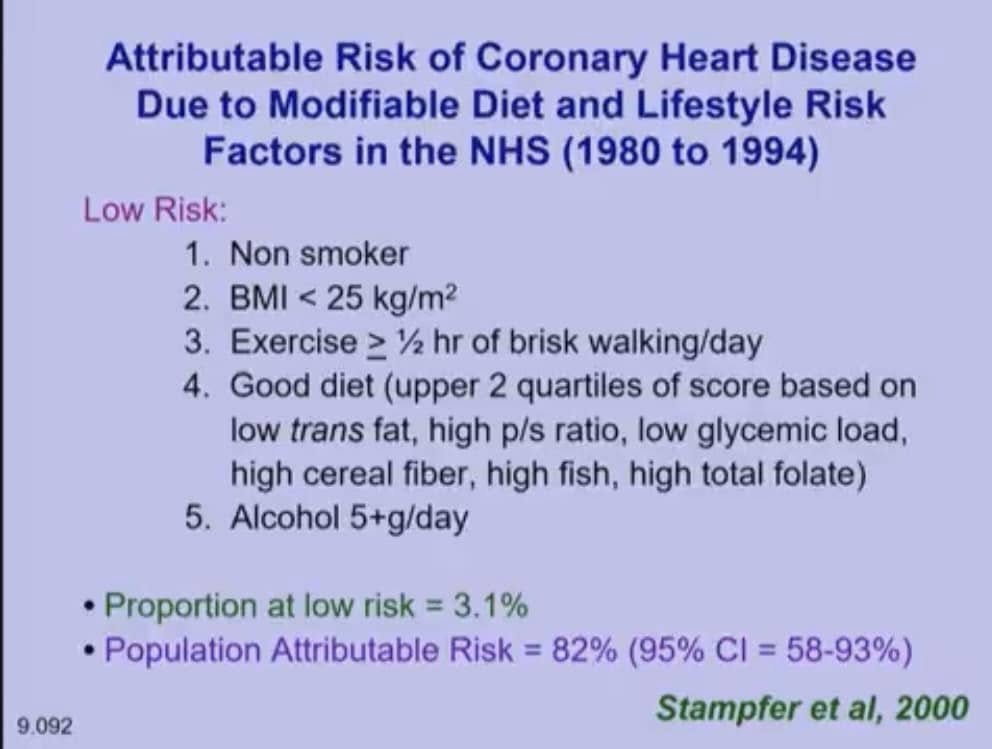
- Nurses' Health Study. Five lifestyle factors were linked to 82% lower heart disease and 90% lower diabetes over about 14 years, but only 3-4% of nurses achieved all five, and Louis stresses it is an observational cohort that cannot prove causation.30 He also shares a quote from a Harvard guide saying good eating, a healthy weight, exercise and not smoking can prevent 80% of heart attacks.31
- Genetic evidence. A Mendelian randomization study of 46 modifiable factors found higher BMI, obesity, blood pressure, type 2 diabetes, LDL and total cholesterol linked to lower odds of reaching 90 or 99, while higher HDL was linked to higher odds.32
Show data
| None of the five | All five | |
|---|---|---|
| Cardiovascular disease, women | 13% | 24% |
| Cardiovascular disease, men | 21% | 38% |
| Death from any cause, women | 53% | 88% |
| Death from any cause, men | 68% | 94% |
Why the figures differ
The NEJM summary says only about 50% of cardiovascular events are attributable to the five classic factors, with non-classic factors such as poor nutrition, insulin resistance and chronic inflammation, sedentary lifestyle, psychosocial stress, poor sleep and air pollution making up much of the rest.4 The 88% and 99% figures use broader sets of factors, or only require one non-optimal value to be present, which is a lower bar than "attributable".56 The headline message in each case is the same, that most heart disease occurs in people with identifiable, modifiable risk factors, but the posts do not claim the numbers are interchangeable.
Factors beyond the classic list
- Inflammation. Gokhan's overview describes hs-CRP in the highest quartile as linked to a 2-3 fold greater heart attack risk independent of cholesterol, and the CANTOS trial as showing a 15% reduction in major cardiovascular events when interleukin-1 beta was blocked.21 Louis shared a Scientific American piece on Paul Ridker's work arguing inflammation is largely independent of classical risk factors, and that in the JUPITER trial people with low LDL but high CRP had 54% fewer heart attacks on a statin; the article also says cholesterol crystals are what ignite the inflammation.33
- Periodontal disease and other exposures. Gokhan reports meta-analyses linking gum disease to a 1.1- to 2.2-fold coronary risk, and a JACC study of 6,418 people in which urinary metals were associated with coronary calcium at a magnitude comparable to smoking and diabetes.2134
- Diet and endothelial function. The posts discuss olive oil (a trial of 50 mL of high-polyphenol extra virgin olive oil improved flow-mediated dilation) and an ongoing Harvard trial of plain white potatoes, which had not reported in the posts.3536 Louis argues, from a pooled analysis of 30 cohorts, that higher blood omega-6 levels go with lower cardiovascular disease, a prospective-cohort claim rather than a trial result.37
- Sleep. The AHA now lists sleep among the eight most important modifiable risk factors and asks clinicians to look beyond sleep duration.38
- Heart rhythm and shared drivers. Atrial fibrillation is framed as driven by obesity, hypertension, diabetes, sleep apnea, inactivity and alcohol, and in the ARREST-AF trial a structured risk-factor program after ablation gave 61% arrhythmia-free at 12 months versus 40%.39
- Cancer and dementia. The same factors overlap with other diseases: in the ARIC cohort, 6-7 ideal AHA metrics went with 51% lower cancer risk (25% lower when smoking was excluded), and an American Cancer Society analysis attributes about 40% of US cancers to modifiable factors.4041
Nuances and common misconceptions
- Observational "U-shaped" curves. Louis notes that mortality appears lowest at middling values of cholesterol, BMI, HbA1c and blood pressure in observational studies, and says reverse causality explains it: illness lowers these numbers.4243
- Some people avoid plaque despite risk factors. Louis recommends a video making this point but stresses genetic protection is the exception, and most people are not that lucky.1
- Supplements are not a substitute. A review of 884 randomized trials of 27 micronutrients found omega-3 reduced cardiovascular mortality (relative risk 0.93), folic acid reduced stroke, vitamins C, D, E and selenium had no effect on cardiovascular disease or type 2 diabetes, and beta-carotene increased mortality.44
- Preliminary findings deserve caution. A red-meat sugar (Neu5Gc) linked to 63% higher type 2 diabetes risk in 89,953 adults is flagged in the post as observational, preliminary, not peer reviewed, and weaker after adjusting for total red meat.45
- Risk calculators have limits. The new AHA calculator estimates 10- and 30-year risk for ages 30-79 in primary prevention; Louis warns it underestimates risk after a heart attack, stroke, significant atherosclerosis or a high calcium score, and an expert quoted in the shared article says no calculator includes every relevant variable.46
What this means for you
- Know your own numbers for the core factors: blood pressure, LDL or apoB or non-HDL cholesterol, blood sugar or HbA1c, weight and waist, and smoking status. Those correspond to the NEJM five and the Life's Essential 8.428
- Use a validated risk calculator with your clinician and remember its limits.46
- Treat blood pressure, weight and blood sugar as seriously as cholesterol; the posts repeatedly show them contributing as much or more.525
- Do not expect one factor to carry the whole load. Louis says lowering LDL alone is not a cure and that residual risk remains in every trial.7
- Starting earlier helps: in the NEJM analysis, benefits appeared even when factors were modified at 55-60, and the REACT data show plaque in many people in their 20s.410
- If you are at high risk, discuss any plan with your own doctor rather than relying on social media claims.
Frequently asked questions
Which single risk factor matters most?
Age, in the models Louis cites, but it cannot be modified. Among modifiable factors the posts most often name high blood pressure, followed by diet, LDL cholesterol, weight and blood sugar.35
If I have normal cholesterol, am I safe?
Not necessarily. The NEJM summary says about half of events are not attributable to the five classic factors, and Louis says inflammation might still drive disease even when classical factors are well managed.433
How much can I change by lifestyle alone?
Observational cohorts report large gaps, such as 82% lower heart disease with five lifestyle factors in the Nurses' Health Study and 66% with high Life's Essential 8 adherence, but these are associations and few people achieve them.2830
Do these risk factors only matter for the heart?
No. The posts link the same factors to dementia, diabetes, cancer and atrial fibrillation.183940
Is it too late if risk factors are already present?
The NEJM analysis found that modifying factors at 55-60 still helped, though starting earlier gives more years free of disease.4