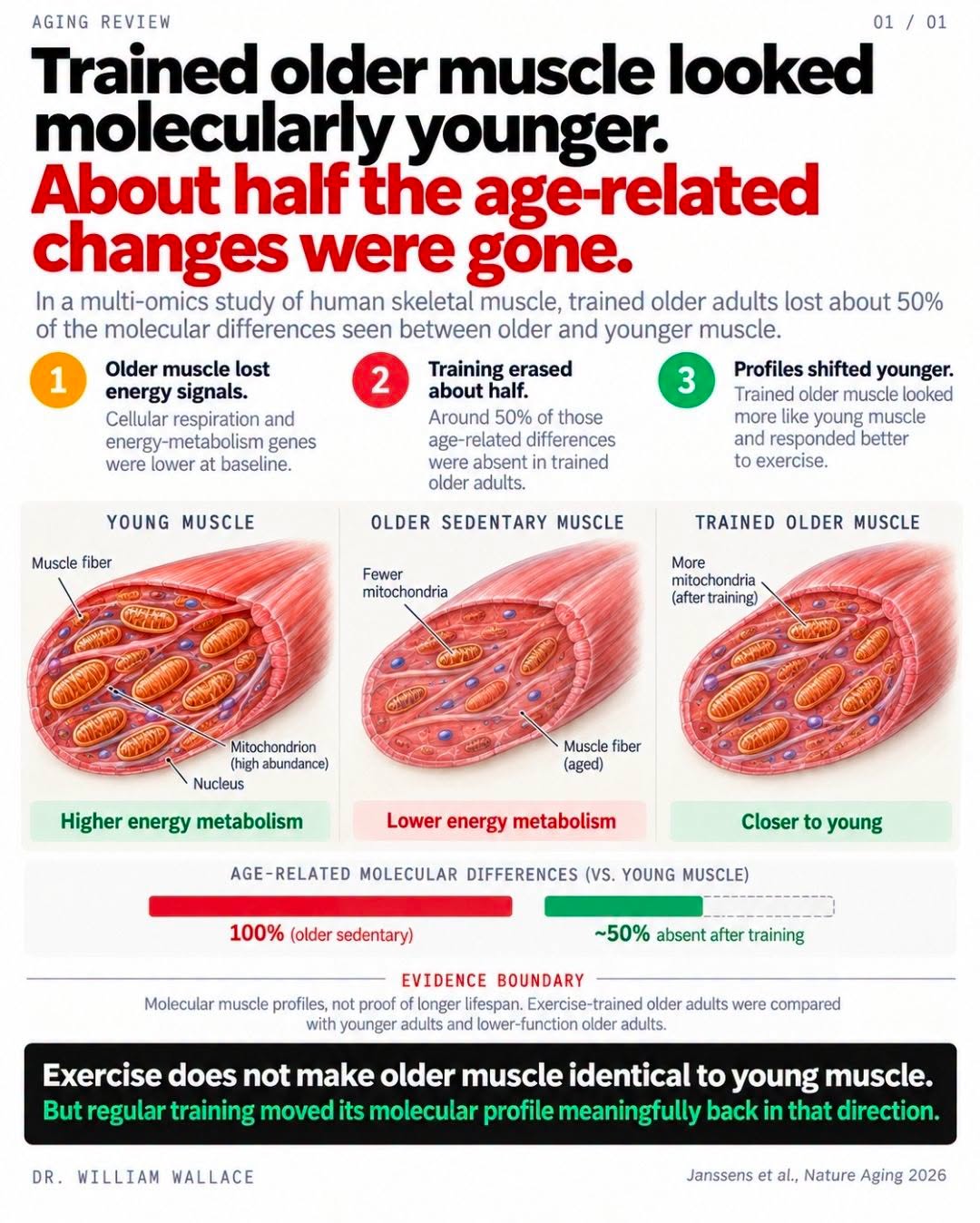
Exercise appears to slow down the biological aging of muscle in humans. The muscle does not just behave functionally like it is younger. It actually looks younger at a fundamental biological level.
Link to journal paper:
(Nature Aging, July 2026)
A Nature Aging multi-omics study compared skeletal muscle from younger and older adults and found that about half of the age-related molecular differences were absent in exercise-trained older adults, who looked more like young muscle. Gene expression for cellular respiration and energy metabolism was preserved.
Exercise appears to slow down the biological aging of muscle in humans. The muscle does not just behave functionally like it is younger. It actually looks younger at a fundamental biological level.
Link to journal paper:
(Nature Aging, July 2026)
Aging changes skeletal muscle long before the change is obvious in the mirror. A new multi-omics study suggests that long-term exercise training may preserve a surprisingly large part of that underlying biology.
Researchers analyzed gene expression, metabolites, and lipids in skeletal muscle from younger adults and older adults with different levels of physical function and training. In older adults, aging was accompanied by lower expression of genes involved in cellular respiration and energy metabolism. But among the exercise-trained older adults, about 50% of those age-related molecular differences were absent, leaving their muscle profiles substantially more similar to younger muscle.
The distinction matters. This was not simply a study showing that trained people had bigger or stronger muscles. The differences extended into mitochondrial respiration, lipid metabolism, cellular stress responses, and NAD-related biology. Fitness also influenced how strongly older muscle responded to an acute bout of exercise.
But “exercise reversed muscle aging” would overstate the result. These groups were compared based on existing training and physical function; people were not randomized to decades of exercise versus inactivity. That means the study cannot prove that training caused every molecular difference observed. Genetics, lifestyle, health status, and other factors could contribute.
What it does show is that aging muscle is not defined by chronological age alone. Older adults who remained highly trained carried substantially fewer of the molecular features associated with older muscle.That adds another layer to why lifelong exercise matters: the benefit may extend beyond preserving strength and VO₂max to preserving parts of the metabolic machinery inside the muscle itself.
Reference: Janssens GE, et al. Nature Aging.
2026;6:1482–1500. PMID 42399371. DOI 10.1038/s43587-026-01150-x.
Dudley Lamming and colleague reviewed over 350 studies and report that lower protein intake is associated with improved metabolism and healthier aging via mechanisms like a liver hormone. Lamming says benefits of protein are clear for active people but sedentary people may overeat it.
Louis shares a 2026 Nature Medicine study using plasma proteins from 60,542 people to estimate the biological age of over 40 cell types. Skeletal muscle aging best predicted all-cause mortality. He cautions about reverse causality but notes it offers a biological rationale for resistance training lowering mortality.
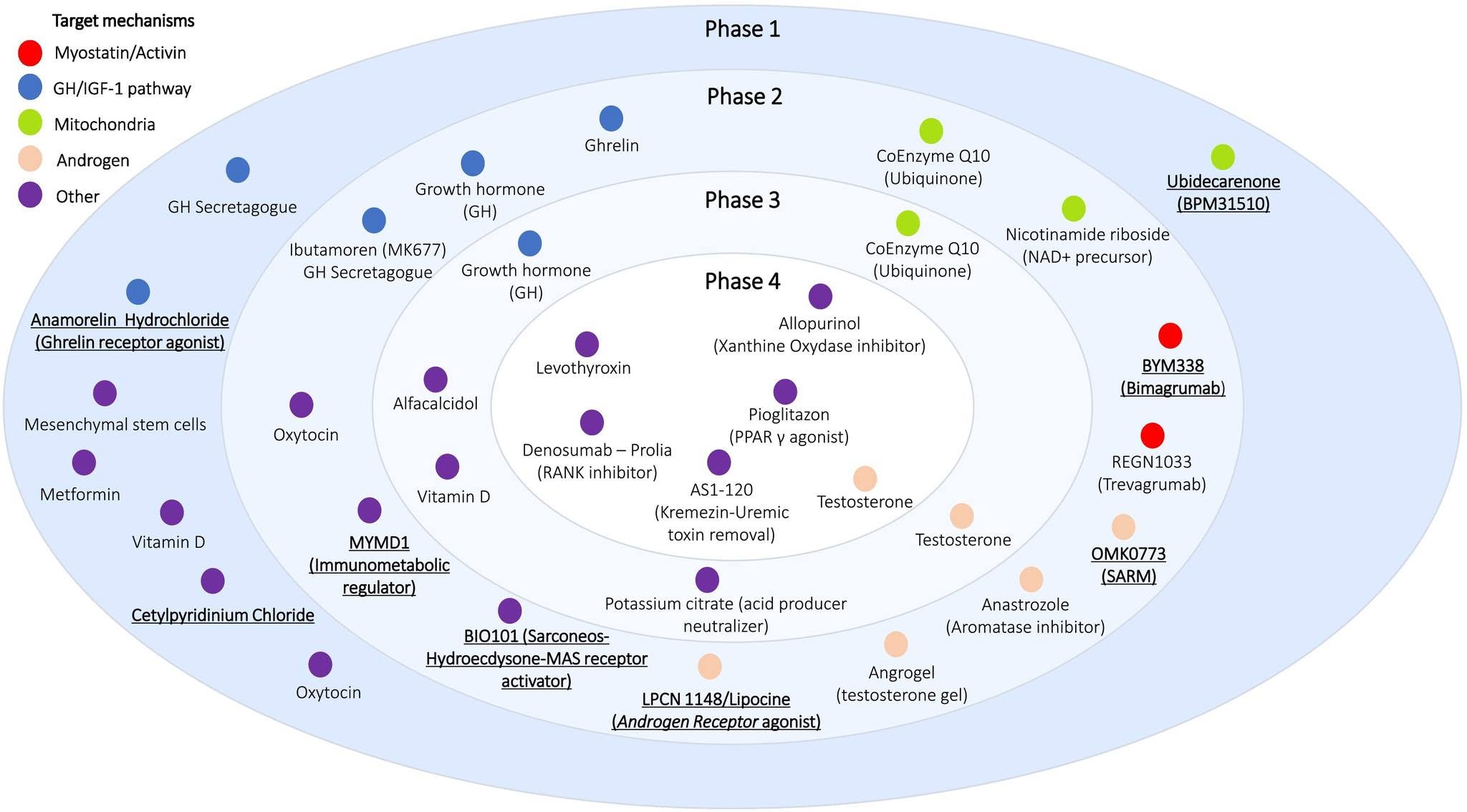
A review summary (Rolland et al., Metabolism, Dec 2023) of drug options for age-related muscle loss. No drug has regulatory approval for sarcopenia, few trials enrolled diagnosed patients, and non-drug measures remain first-line.
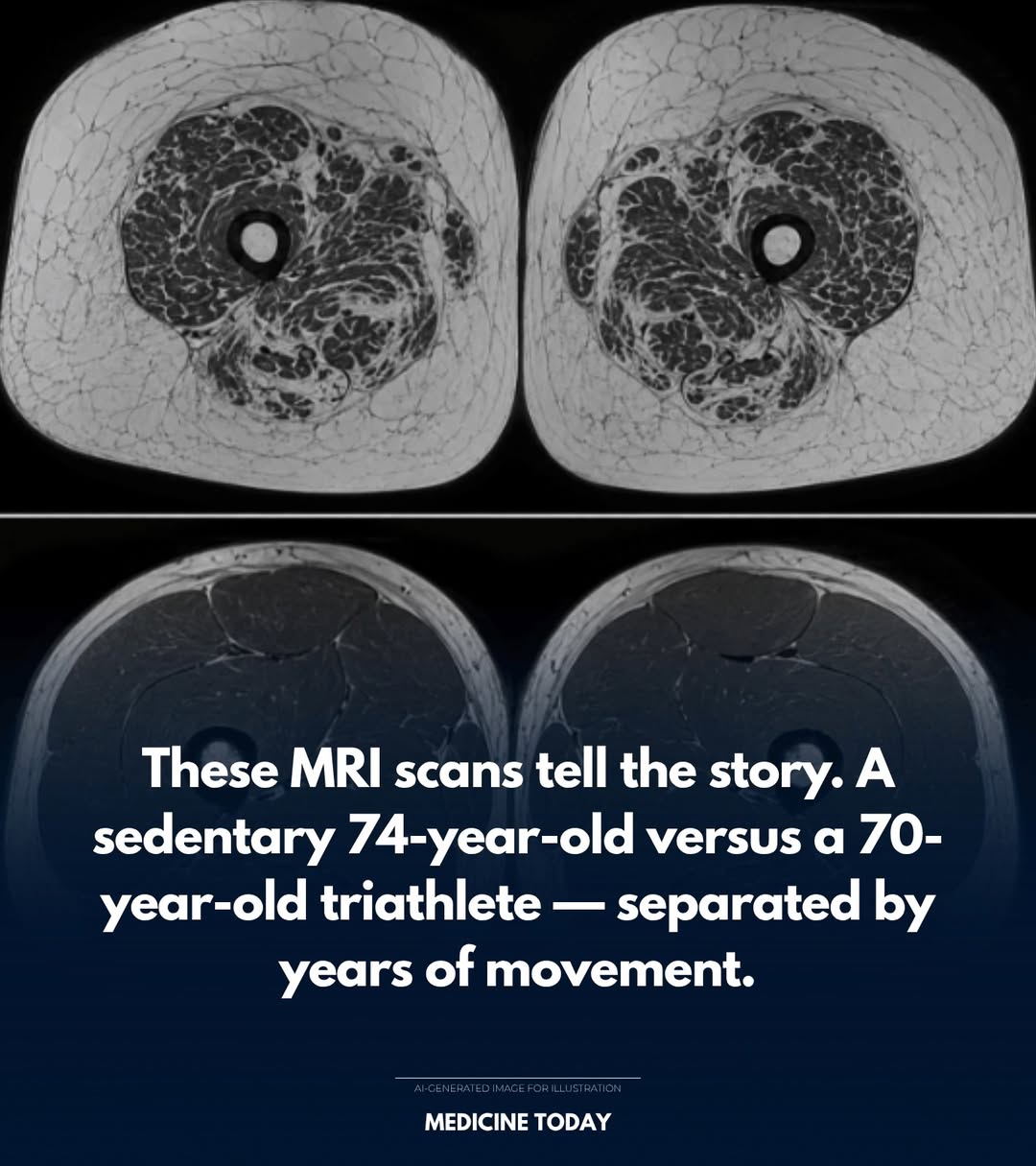
Louis shares University of Pittsburgh MRI findings in 40 high-level recreational athletes aged 40-81 training 4-5 times per week. Muscle density and strength held steady with consistent activity, suggesting much age-related decline is due to inactivity. Sedentary adults may lose up to 8% of muscle per decade after 40.
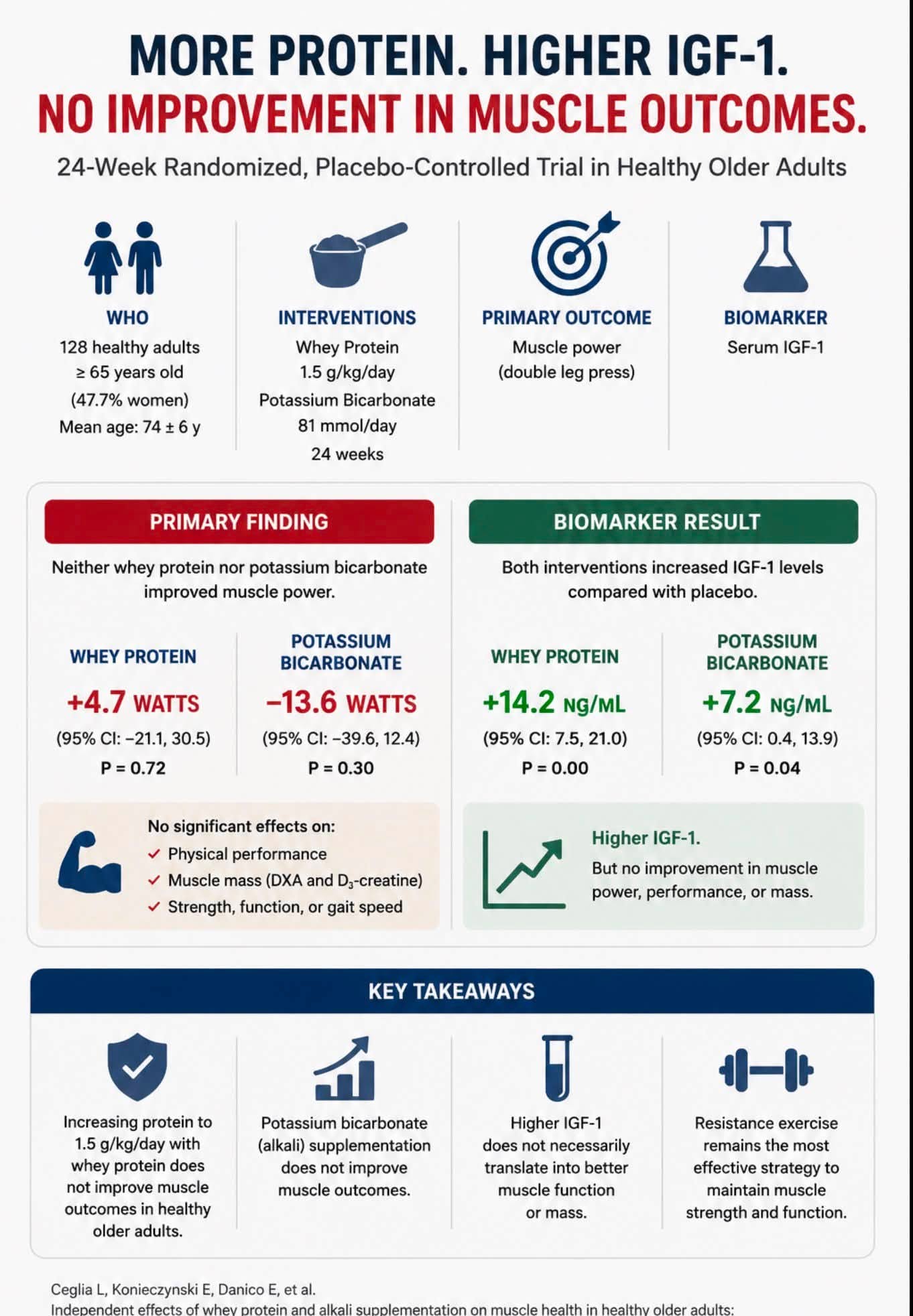
A 24-week placebo-controlled trial raised protein to 1.5 g/kg/day with whey in healthy older adults. It did not improve muscle power, strength, performance or mass, though IGF-1 rose; potassium bicarbonate was also ineffective. Louis argues this means the harms of high IGF-1 without benefit.
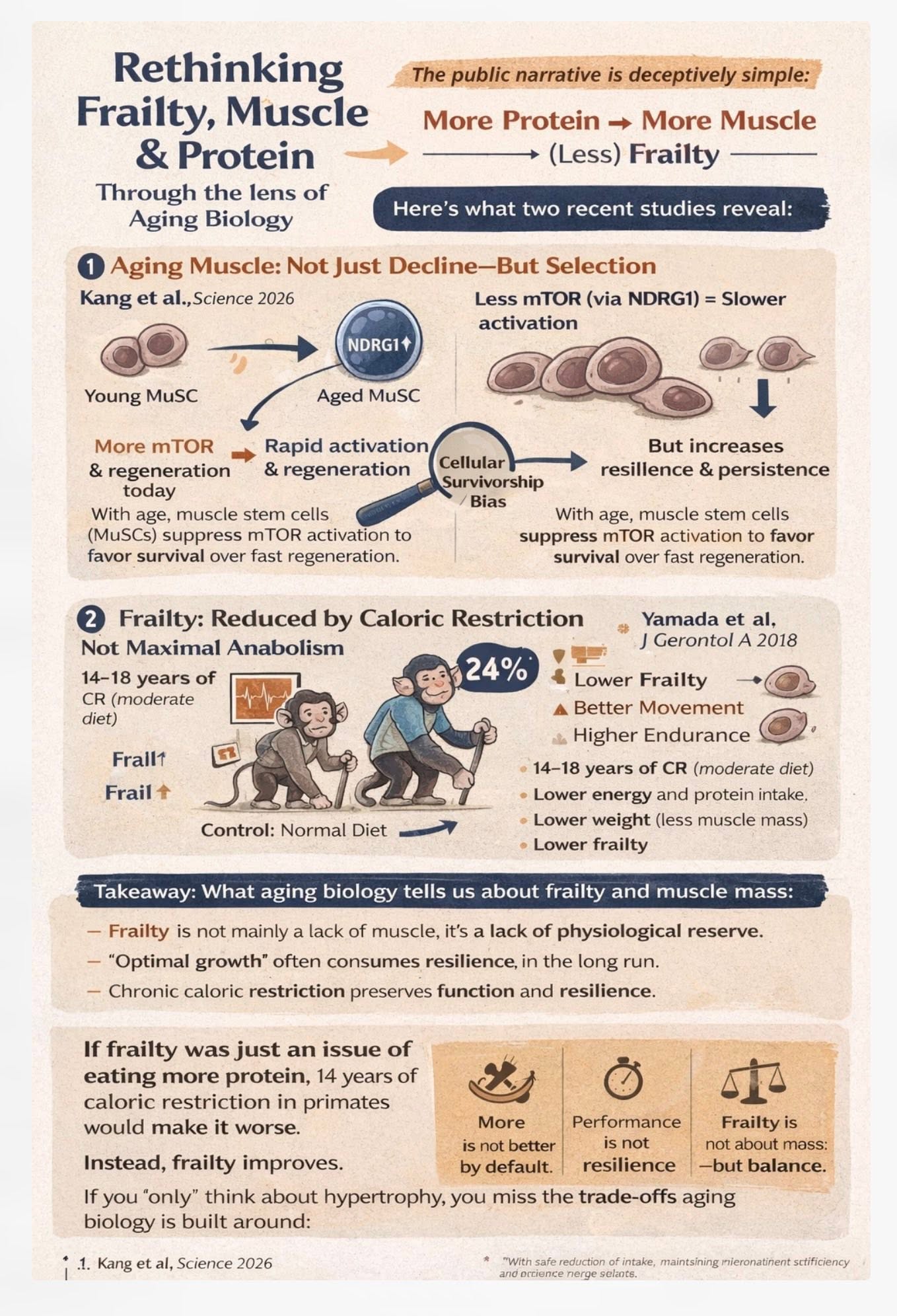
Louis copies a rapamycin-group post arguing the 'more protein, activate mTOR, build muscle' narrative is oversimplified. Calorie-restriction studies in rhesus monkeys show lower anabolic nutrient signaling protects against sarcopenia.