In a small recently published randomized trial (EVITA), vitamin C supplements improved survival and reduced adverse events in patients with particular clonal diseases, specifically pre-cancerous blood conditions and low-risk blood cancers.
Over the course of the trial, the vitamin C group had a 65% lower risk of death, compared to the placebo group. There were 11 deaths in the vitamin C arm, compared to 24 deaths in the control arm. In the vitamin C group, only 33% experienced a serious adverse event, compared to 57% in the placebo group.
One can speculate that this trial might be relevant to anyone with clonal diseases, which are common with advancing age (and typically go undiagnosed). This is a big unproven leap given the limited evidence, but there is substantial biological plausibility. These clonal diseases seem to play a role in CVD, e.g. clonal hematopoiesis of indeterminate origin (CHIP). Search the group for the tag #chipHD to learn more. Also see this recent post: facebook.com/share/v/19N5HCuCap.
Note that overall survival and adverse events were an exploratory endpoint in this trial. The increase in overall survival and decrease in adverse events occurred in spite of the fact that there was no significant difference in the clonal growth rate between the vitamin C group and the placebo group over the 12 month period of the trial, which was the primary endpoint.
The researchers specifically chose to test vitamin C because it acts as a cofactor to restore TET2 enzyme function.
TET2 is a crucial enzyme that acts as a regulator of DNA methylation, helping control how stem cells develop into mature blood cells. When TET2 is mutated or deficient— which happens frequently with aging— blood stem cells begin to clone themselves abnormally instead of maturing properly. In the context of cardiovascular disease and low-risk blood cancers, this loss of TET2 function triggers systemic inflammation, accelerating plaque buildup in the arteries and promoting pre-cancerous blood conditions.
Additionally, the TET2 biological mechanism applies more broadly to somatic mutations seen across many aging individuals.
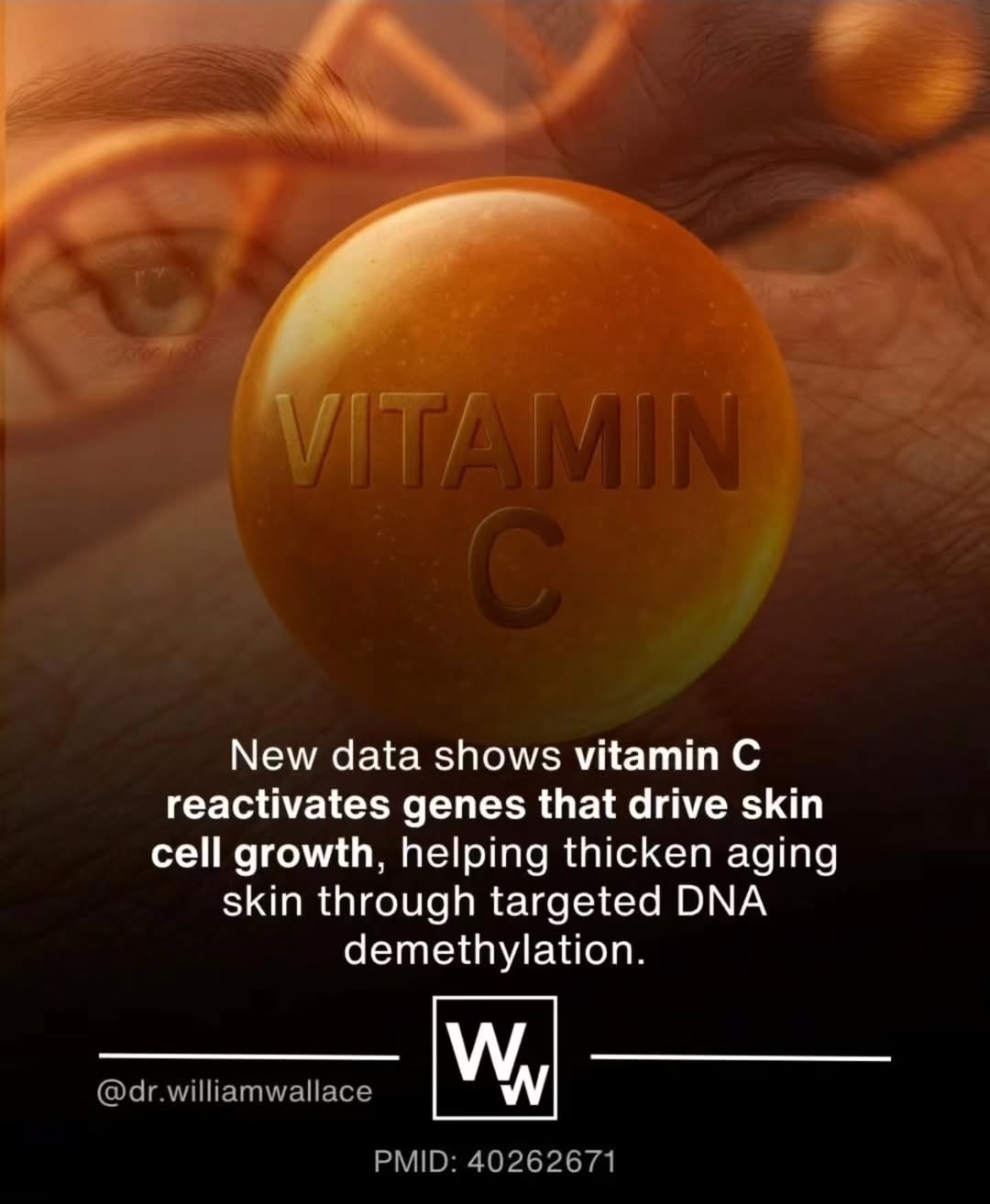
TET2 also plays a role in the aging process itself by controlling age-related DNA methylation in cells. See this post: ↪ Vitamin C may reprogram epigenetics in skin cells, a lab finding on skin aging.
Link to journal paper:
Paper · Cancer · 2026Oral vitamin C supplementation in patients with clonal cytopenia of undetermined significance or lower-risk myeloid malignancies: Results from EVITA, a phase 2 randomized, placebo-controlled trial.Conclusion: These findings suggest oral VitC as a safe, biologically active intervention in patients with early-stage myeloid malignancies and precursor conditions. A phase 3 trial is warranted.pmc.ncbi.nlm.nih.govBelow is a summary of the trial from Gemini AI:
Oral high-dose vitamin C supplementation (1000 mg/day) in patients with clonal cytopenia of undetermined significance (CCUS) or lower-risk myeloid malignancies is safe and biologically active, though it did not significantly reduce the median clonal growth rate over 12 months in the phase 2 EVITA trial.
Key Findings of the EVITA Trial
- Study Design: A double-blind, randomized, placebo-controlled phase 2 trial across Denmark and the United States involving 109 adults given either oral vitamin C (1000 mg/day) or a placebo for 12 months.
- Primary Endpoint: The median clonal growth rate from baseline to the end of treatment showed no significant difference between the vitamin C and placebo groups.
- Secondary & Exploratory Outcomes:
- Participants taking vitamin C experienced fewer serious adverse events (18 of 55 [33%] vs. 30 of 53 [57%]).
- Changes were observed in inflammatory cytokine trajectories.
- An exploratory analysis showed a significantly longer overall survival in the vitamin C group (hazard ratio, 0.35; 95% CI, 0.17 to 0.71; p = .0025).
- Clinical Takeaway: While the survival signal is promising, researchers emphasize that these findings are hypothesis-generating. Routine use or practice changes cannot be recommended until confirmed by a larger phase 3 trial.
#vitamincHD #cancerHD #ccusHD #myeloidmalignancyHD #clonaldiseasesHD #chipHD #tet2HD #somaticmutationsHD #agingHD #longevityHD