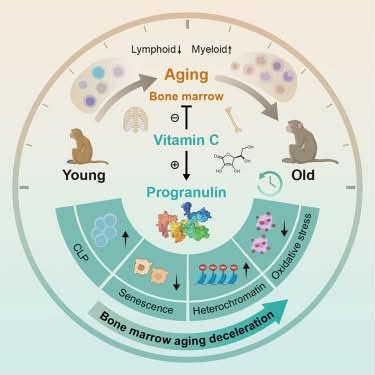
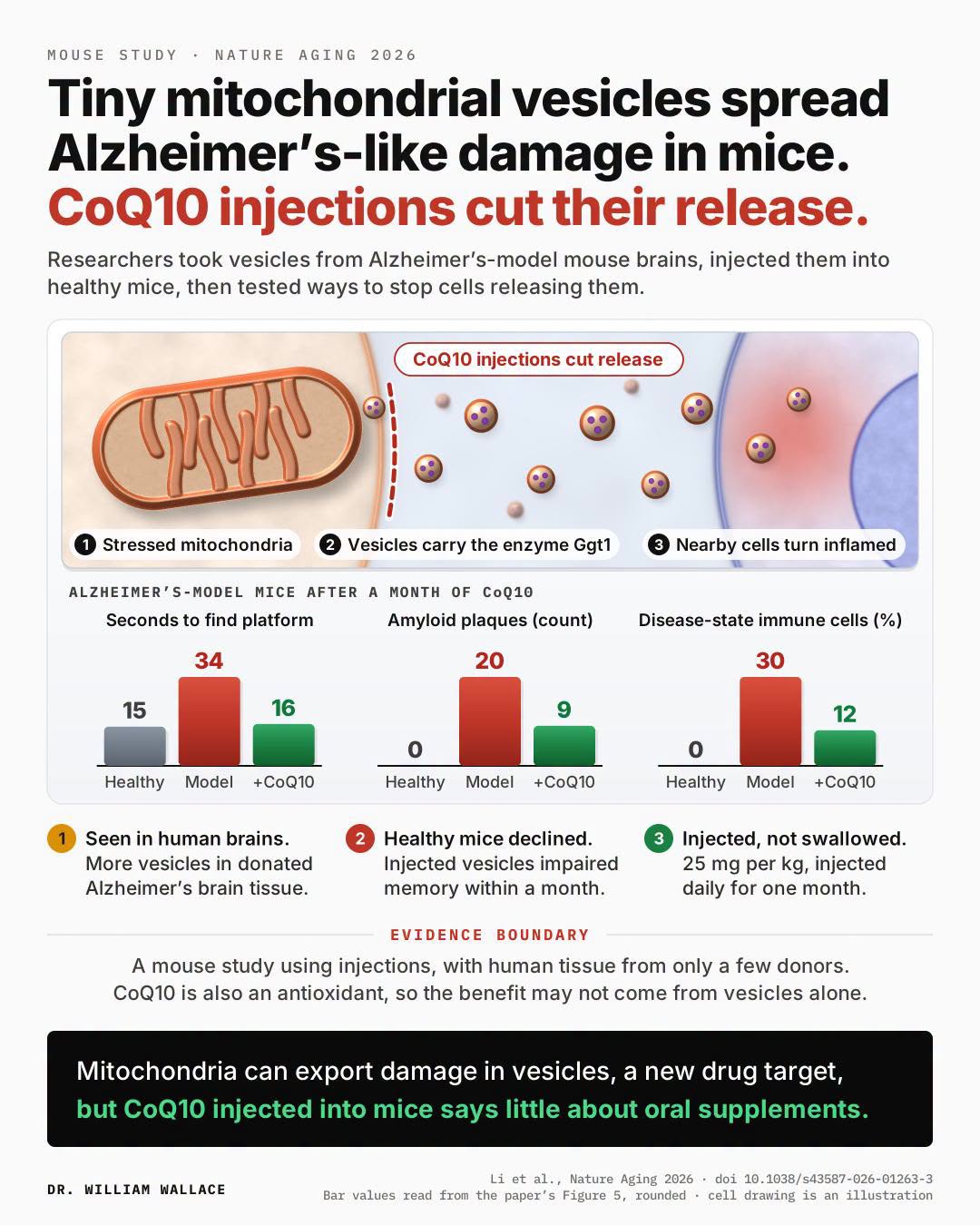
CoQ10 might protect against the aging-related changes in bone marrow which lead to the production of dysfunctional platelets as we get older.
These dysfunctional platelets are overly sticky and prone to clot. They increase risk of heart attack and stroke as people age.
This is a mouse study, but it looks very promising.
Link to journal article:
Paper · Aging Cell · 2026Dietary CoQ10 Ameliorates Age‐Related Megakaryocyte Dysfunction via COPS3 ‐Mediated Activation of AutophagyAge‐related megakaryocyte (MK) dysfunction disrupts platelet production and may increase thrombotic risk, but whether coenzyme Q10 (CoQ10) restores MK homeostasis through autophagy remains unclear. Male C57BL/6J mice aged 1, 9, 15, 19, 21, or 23 months received CoQ10 for 12 weeks. Bone marrow MK proliferation, CD41/CD61 expression, DNA polyploidy, autophagy‐associated proteins, and platelet phenotypes were…onlinelibrary.wiley.comLink to article on the study:
 BIOENGINEER.ORGCoQ10 Restores Aging Megakaryocyte Function Through a Newly IdentifiedCoenzyme Q10, the ubiquitous mitochondrial electron carrier better known as CoQ10, has long been marketed as a general-purpose anti-aging supplement with mixed clinical evidence behind it. A new studybioengineer.org
Quoted:
Researchers report that dietary CoQ10 can rejuvenate a critical population of bone marrow cells called megakaryocytes, the giant polyploid cells that manufacture every platelet circulating in the blood. The work identifies a previously unrecognized molecular circuit, running through a protein called COPS3 and the cellular waste-disposal system known as autophagy, that appears to explain how the supplement counteracts one of the more consequential consequences of growing old: platelets that become progressively stickier and more dangerous.
As people age, their platelets become hyperreactive, aggregating more readily and contributing to the elevated risk of heart attacks and strokes in older adults. Megakaryocytes sit at the origin of that problem. These enormous cells, which can contain up to 64 copies of the genome, undergo a metabolically demanding maturation program before shedding platelets into the bloodstream. Aging impairs their proliferation, differentiation, and quality-control machinery through both intrinsic cellular defects and changes in the bone marrow environment. Yet the precise molecular drivers of megakaryocyte decline during natural aging have remained poorly defined, and no targeted nutritional intervention had been shown to reverse it.
#coq10HD #plateletsHD #cop3HD #autophagyHD #hematopoeisisHD #hscHD #bonemarrowHD #stemcellsHD #megakaryocytesHD #miceHD