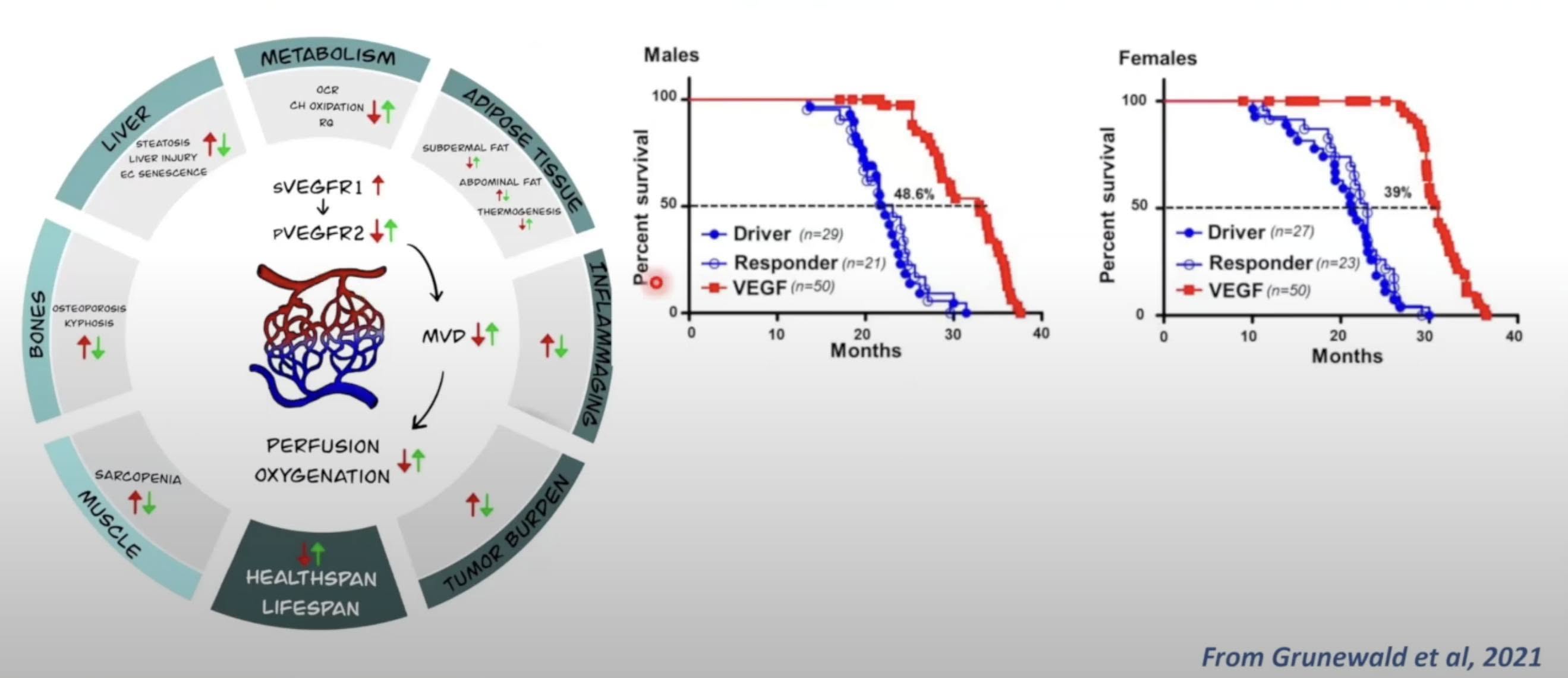
As your vasculature ages— particularly your microvasculature— it drives aging of all your tissues and organs.
Quoted:
Centuries ago, Thomas Sydenham famously wrote, “A man is as old as his arteries”, highlighting the importance of the vasculature for health and healthy aging. Here, we review recent developments in vascular aging research, focusing on how microvascular aging drives tissue dysfunction and the emerging therapeutic opportunities for vascular rejuvenation. Although macrovascular aging has long been studied, microvascular aging remains an emerging frontier
Summary of the paper:
The paper titled "Vascular aging as a driver of organ dysfunction and systemic aging" (published in Nature Cardiovascular Research by leading vascular biology researchers Stefanie Dimmeler and Hellmut G. Augustin) synthesizes growing evidence that the blood vessel network is not merely a passive delivery system, but an active driver of whole-body aging and organ-specific decline.
Core Concept & Paradigm Shift
Historically, vascular degradation was viewed as a consequence of organ aging. This paper highlights a paradigm shift: vascular dysfunction—particularly in microvessels and capillaries—acts as an upstream catalyst for organ failure and systemic aging. Drawing inspiration from Thomas Sydenham's classic phrase "A man is as old as his arteries," the review positions vascular homeostasis as a central node in longevity science.
Key Mechanisms Detailed
- Endothelial Senescence & Secretion (SASP):
Vascular endothelial cells (ECs) and vascular smooth muscle cells (VSMCs) undergo cellular senescence over time. These senescent cells secrete a pro-inflammatory cocktail known as the Senescence-Associated Secretory Phenotype (SASP). This local inflammation spreads into parenchymal tissues, damaging surrounding non-vascular cells.
- Perivascular Hotspots & "Inflammaging":
The authors emphasize that perivascular niches (the microenvironments surrounding microvessels) are primary "hotspots" for cellular senescence and chronic low-grade inflammation. Infiltrating immune cells and resident fibroblasts interact in these niches to promote tissue fibrosis and remodeling.
- Loss of Angiocrine Signaling:
Endothelial cells naturally communicate with neighboring tissues by releasing organ-specific signaling molecules (angiocrine factors). As the vasculature ages, this vital crosstalk breaks down, leading to impaired tissue repair, loss of stem cell niche support, and metabolic dysfunction in downstream organs.
- Capillary Rarefaction & Hypoxia:
Structural degradation leads to microvascular rarefaction (the loss or regression of small blood vessels and capillaries). Reduced capillary density starves surrounding tissues of oxygen and nutrients, creating localized hypoxia that accelerates parenchymal organ decline.
Organ-Specific Consequences
- Heart: Perivascular accumulation of senescent cells drives myocardial fibrosis, immune cell imbalance, and diastolic dysfunction.
- Brain: Breakdown of the blood-brain barrier (BBB) and microvascular regression accelerate neuroinflammation and cognitive decline.
- Kidney & Liver: Microvascular drop-out and calcification reduce filtration capacity and metabolic clearance, promoting progressive tissue dysfunction.
Therapeutic & Clinical Takeaways
The review highlights several emerging interventions aimed at targeting vascular aging to promote systemic healthspan:
- Senolytics: Selectively clearing senescent endothelial and perivascular cells (e.g., using targeted senolytic agents) restores healthy immune-stromal interactions and reduces tissue fibrosis.
- Angiocrine Pathway Modulation: Re-establishing healthy endothelial signaling pathways to support surrounding tissue regeneration.
- Vascular Biomarkers: Utilizing early vascular aging (EVA) markers (e.g., arterial stiffness, endothelial dysfunction indices) to predict multimorbidity before clinical organ failure manifests.