How to interpret liver function tests.
#liverHD #altHD #astHD #bilirubinHD #alpHD #ggtHD #albuminHD #ptHD #inrHD #ptinrHD
A shared infographic gives a mnemonic approach to liver function tests: ALT/AST for hepatocellular injury, bilirubin, cholestatic enzymes ALP/GGT, decreased synthesis (albumin/PT/INR) and etiology. Overlaps with a similar earlier infographic.
How to interpret liver function tests.
#liverHD #altHD #astHD #bilirubinHD #alpHD #ggtHD #albuminHD #ptHD #inrHD #ptinrHD
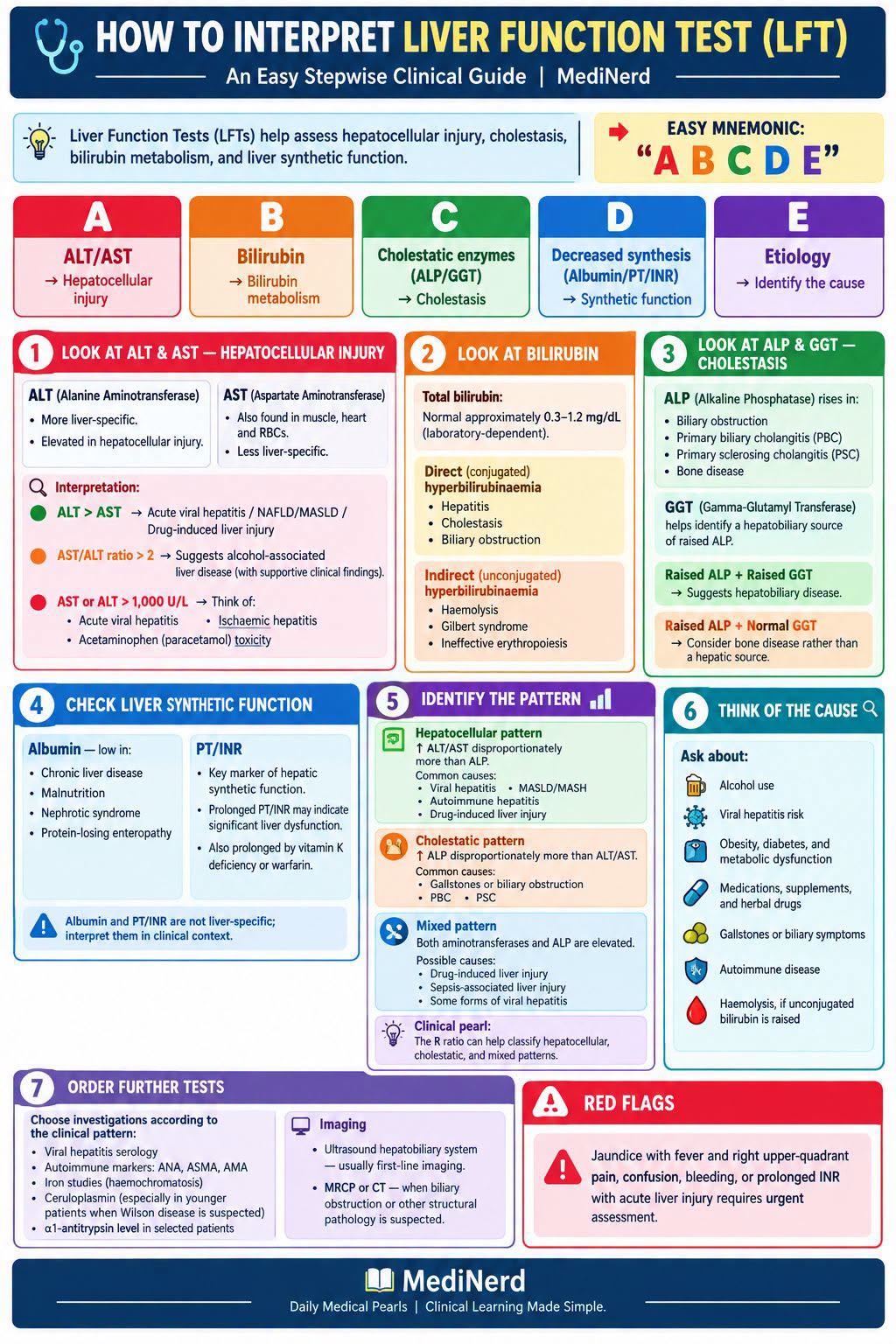
🩺 HOW TO INTERPRET LIVER FUNCTION TEST (LFT)
📚 An Easy Stepwise Clinical Guide
💡 Liver Function Tests (LFTs) help assess hepatocellular injury, cholestasis, bilirubin metabolism, and liver synthetic function.
👉 EASY MNEMONIC: “A B C D E”
🔴 A — ALT/AST → Hepatocellular injury
🟠 B — Bilirubin → Bilirubin metabolism
🟢 C — Cholestatic enzymes (ALP/GGT)
🔵 D — Decreased synthesis (Albumin/PT/INR)
🟣 E — Etiology (identify the cause)1️⃣ LOOK AT ALT & AST — HEPATOCELLULAR INJURY
🔹 ALT (Alanine Aminotransferase)
- More liver-specific.
- Elevated in hepatocellular injury.
🔹 AST (Aspartate Aminotransferase)
- Also found in muscle, heart, and RBCs.
- Less liver-specific.
🔍 Interpretation:
🟢 ALT > AST
→ Acute viral hepatitis
→ NAFLD/MASLD
→ Drug-induced liver injury🟠 AST/ALT ratio > 2
→ Suggests alcohol-associated liver disease, especially with supportive clinical findings.🔴 AST or ALT > 1,000 U/L
Think of:
- Acute viral hepatitis
- Ischaemic hepatitis (shock liver)
- Acetaminophen (paracetamol) toxicity
2️⃣ LOOK AT BILIRUBIN 🟠
Total bilirubin:
Normal approximately 0.3–1.2 mg/dL (laboratory-dependent).🔸 Direct (conjugated) hyperbilirubinaemia
- Hepatitis
- Cholestasis
- Biliary obstruction
🔸 Indirect (unconjugated) hyperbilirubinaemia
- Haemolysis
- Gilbert syndrome
- Ineffective erythropoiesis
3️⃣ LOOK AT ALP & GGT — CHOLESTASIS
🔹 ALP (Alkaline Phosphatase) rises in:
- Biliary obstruction
- Primary biliary cholangitis (PBC)
- Primary sclerosing cholangitis (PSC)
- Bone disease
🔹 GGT (Gamma-Glutamyl Transferase) helps identify a hepatobiliary source of raised ALP.
🟢 Raised ALP + Raised GGT
→ Suggests hepatobiliary disease.🟠 Raised ALP + Normal GGT
→ Consider bone disease rather than a hepatic source.4️⃣ CHECK LIVER SYNTHETIC FUNCTION 🔵
🔹 Albumin — low in:
- Chronic liver disease
- Malnutrition
- Nephrotic syndrome
- Protein-losing enteropathy
🔹 PT/INR
- A key marker of hepatic synthetic function.
- Prolonged PT/INR may indicate significant liver dysfunction.
- Also prolonged by vitamin K deficiency or warfarin.
⚠️ Albumin and PT/INR are not liver-specific; interpret them in clinical context.
5️⃣ IDENTIFY THE PATTERN 📊
🟢 Hepatocellular pattern
↑ ALT/AST disproportionately more than ALP.Common causes:
- Viral hepatitis
- MASLD/MASH
- Autoimmune hepatitis
- Drug-induced liver injury
🟠 Cholestatic pattern
↑ ALP disproportionately more than ALT/AST.Common causes:
- Gallstones or biliary obstruction
- PBC
- PSC
🔵 Mixed pattern
Both aminotransferases and ALP are elevated.Possible causes:
- Drug-induced liver injury
- Sepsis-associated liver injury
- Some forms of viral hepatitis
📌 Clinical pearl: The R ratio can help classify hepatocellular, cholestatic, and mixed patterns.
6️⃣ THINK OF THE CAUSE 🔍
Ask about:
- 🍺 Alcohol use
- 🦠 Viral hepatitis risk
- ⚖️ Obesity, diabetes, and metabolic dysfunction
- 💊 Medications, supplements, and herbal drugs
- 🪨 Gallstones or biliary symptoms
- 🛡️ Autoimmune disease
- 🩸 Haemolysis, if unconjugated bilirubin is raised
7️⃣ ORDER FURTHER TESTS 🧪
Choose investigations according to the clinical pattern:
- Viral hepatitis serology
- Autoimmune markers: ANA, ASMA, AMA
- Iron studies (haemochromatosis)
- Ceruloplasmin (especially in younger patients when Wilson disease is suspected)
- α1-antitrypsin level in selected patients
🖥️ Imaging
- Ultrasound hepatobiliary system — usually first-line imaging.
- MRCP or CT — when biliary obstruction or other structural pathology is suspected.
🚨 RED FLAGS: Jaundice with fever and right upper-quadrant pain, confusion, bleeding, or prolonged INR with acute liver injury requires urgent assessment.
#MediNerd #LiverFunctionTest #hepatology
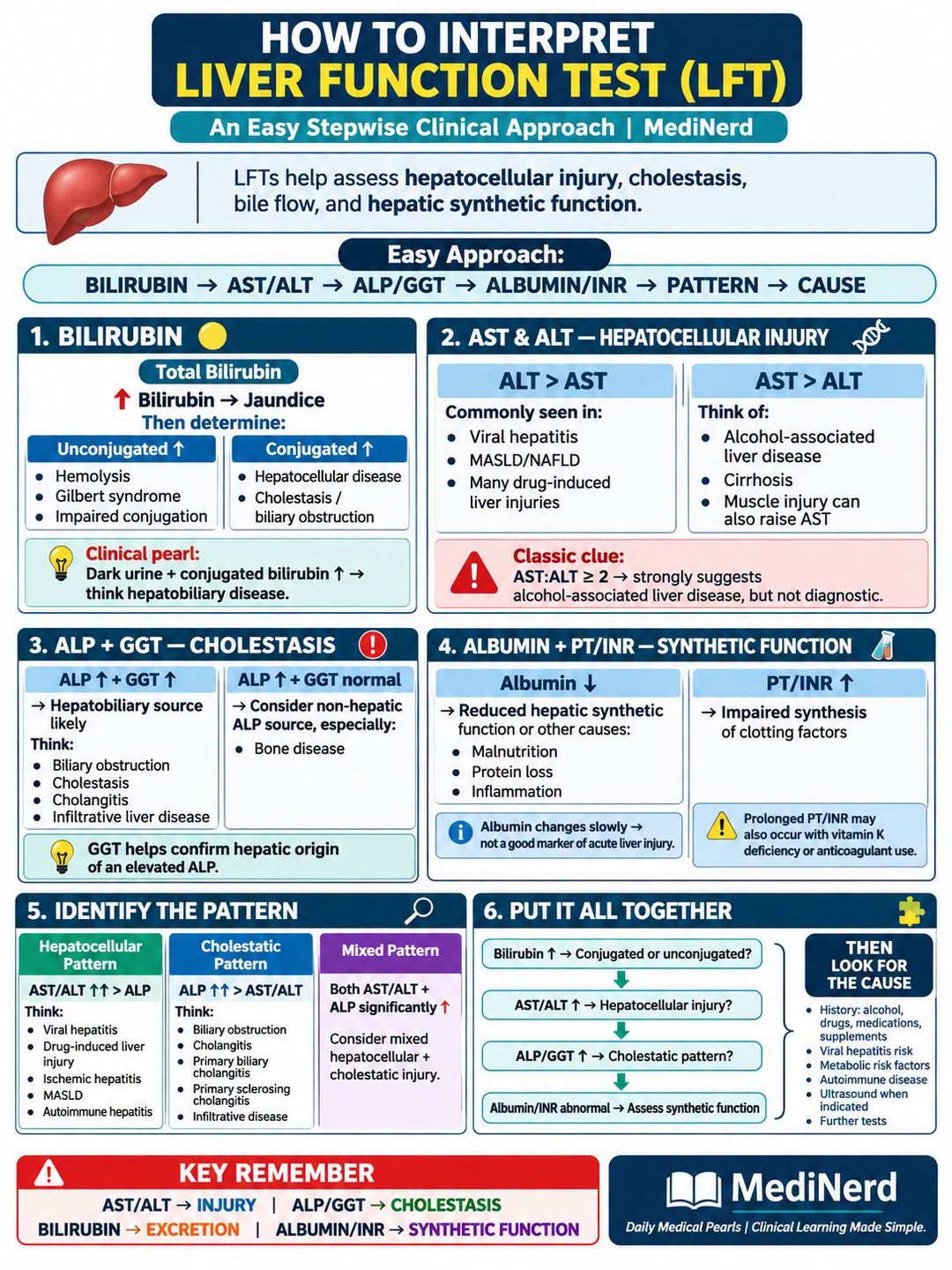
A shared infographic gives a stepwise approach to liver function tests: bilirubin, then AST/ALT, ALP/GGT, albumin/INR, then pattern and cause. It helps readers see whether abnormal results suggest hepatocellular injury, cholestasis or reduced synthetic function. General clinical reference with no study cited.
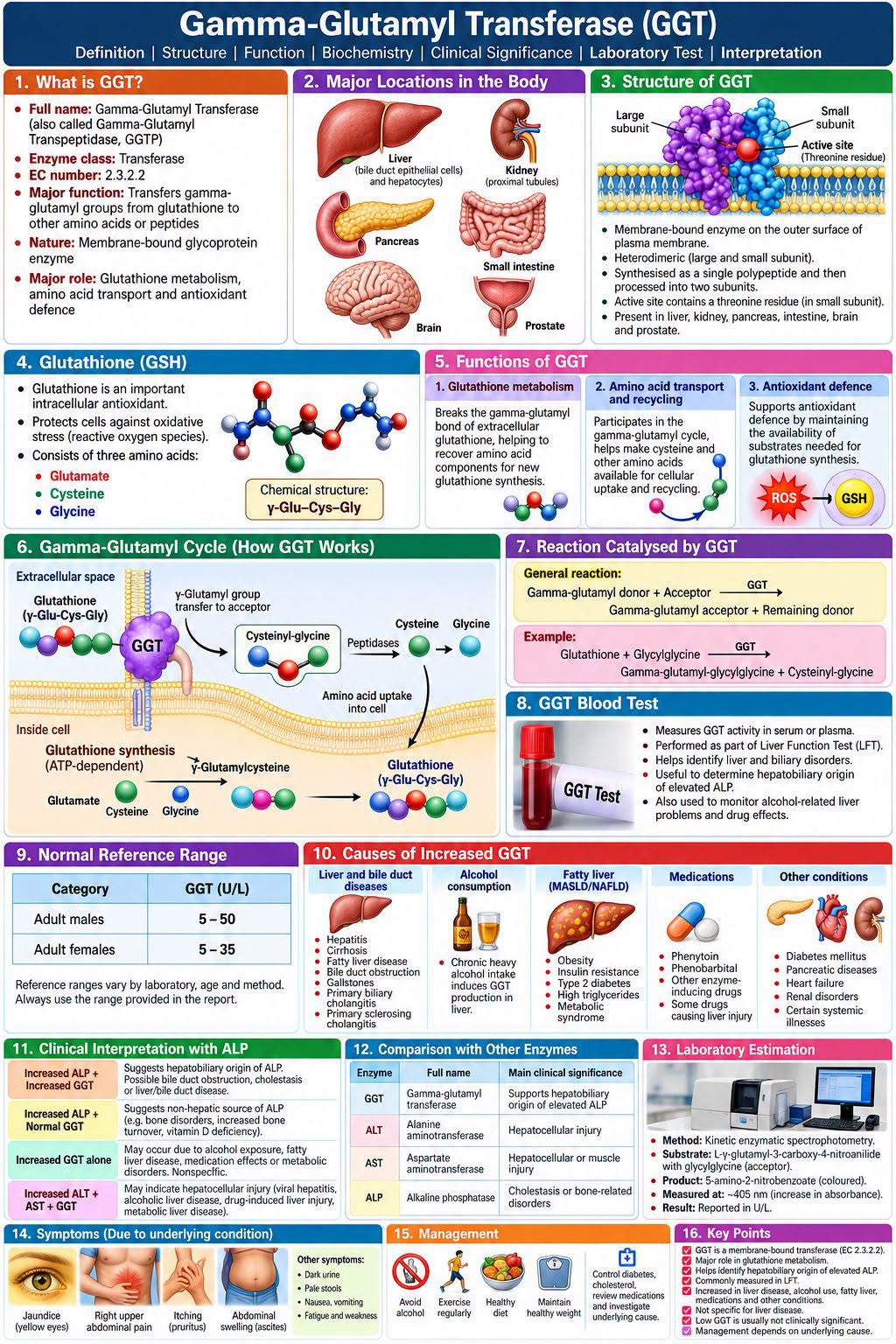
A shared educational infographic explains GGT as an enzyme in glutathione metabolism and a marker used with liver function tests to assess liver and bile duct disorders. General lab-test explainer without study data.
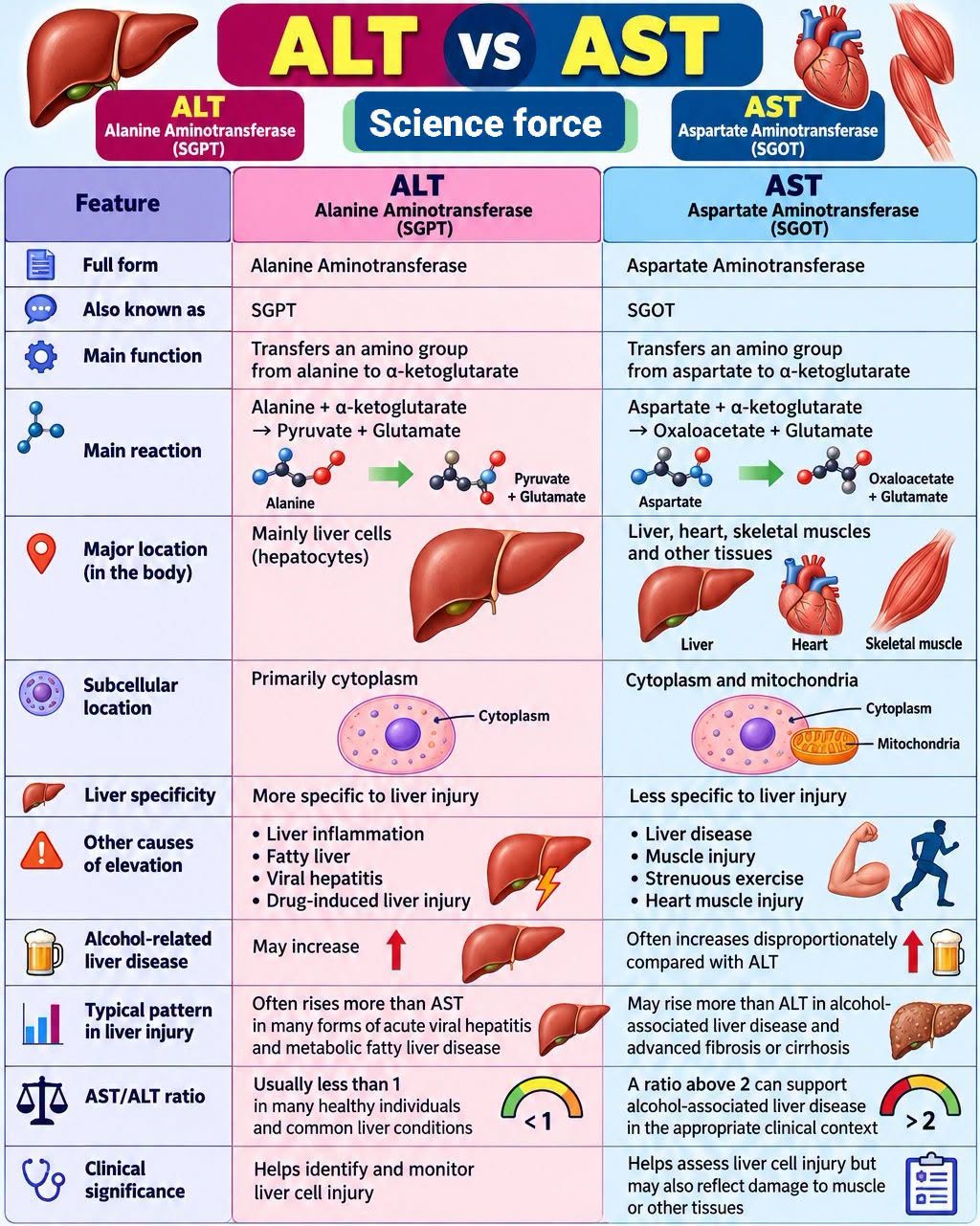
A shared explainer compares ALT and AST, enzymes in amino acid metabolism measured in liver function tests to detect liver cell damage, noting AST may also reflect other tissues. General lab-test background without study data.
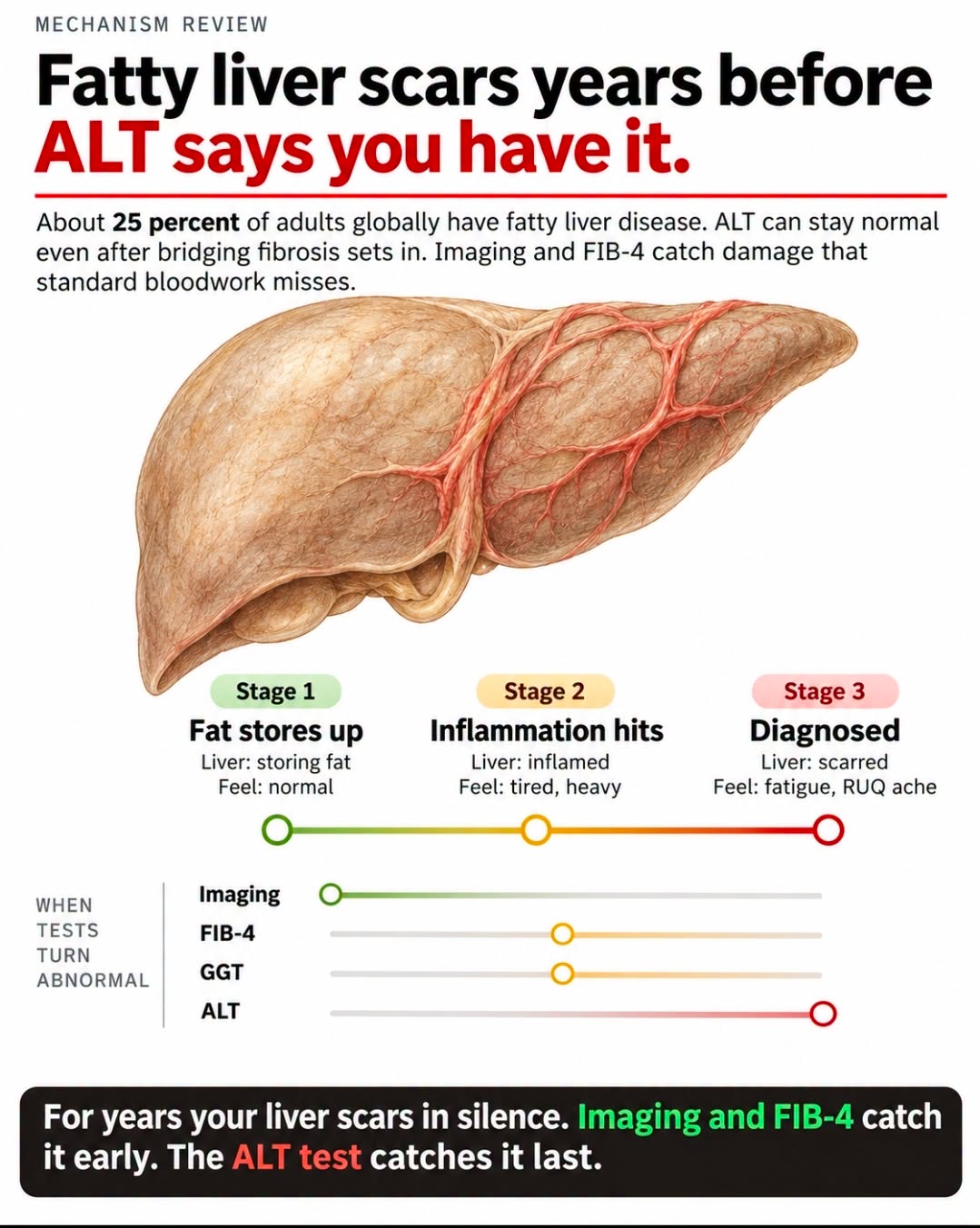
Routine ALT testing can miss advanced fatty liver disease: a Hepatology study biopsied 51 patients with normal ALT and found 12 with bridging fibrosis and 6 with cirrhosis. The post notes selection bias in that sample but says fibrosis behind a normal ALT is well established. Ten percent body weight loss resolved fatty liver in 90 percent and regressed fibrosis in 45 percent, and Mediterranean diet, resistance training and insulin-resistance management reduce liver fat independent of weight.
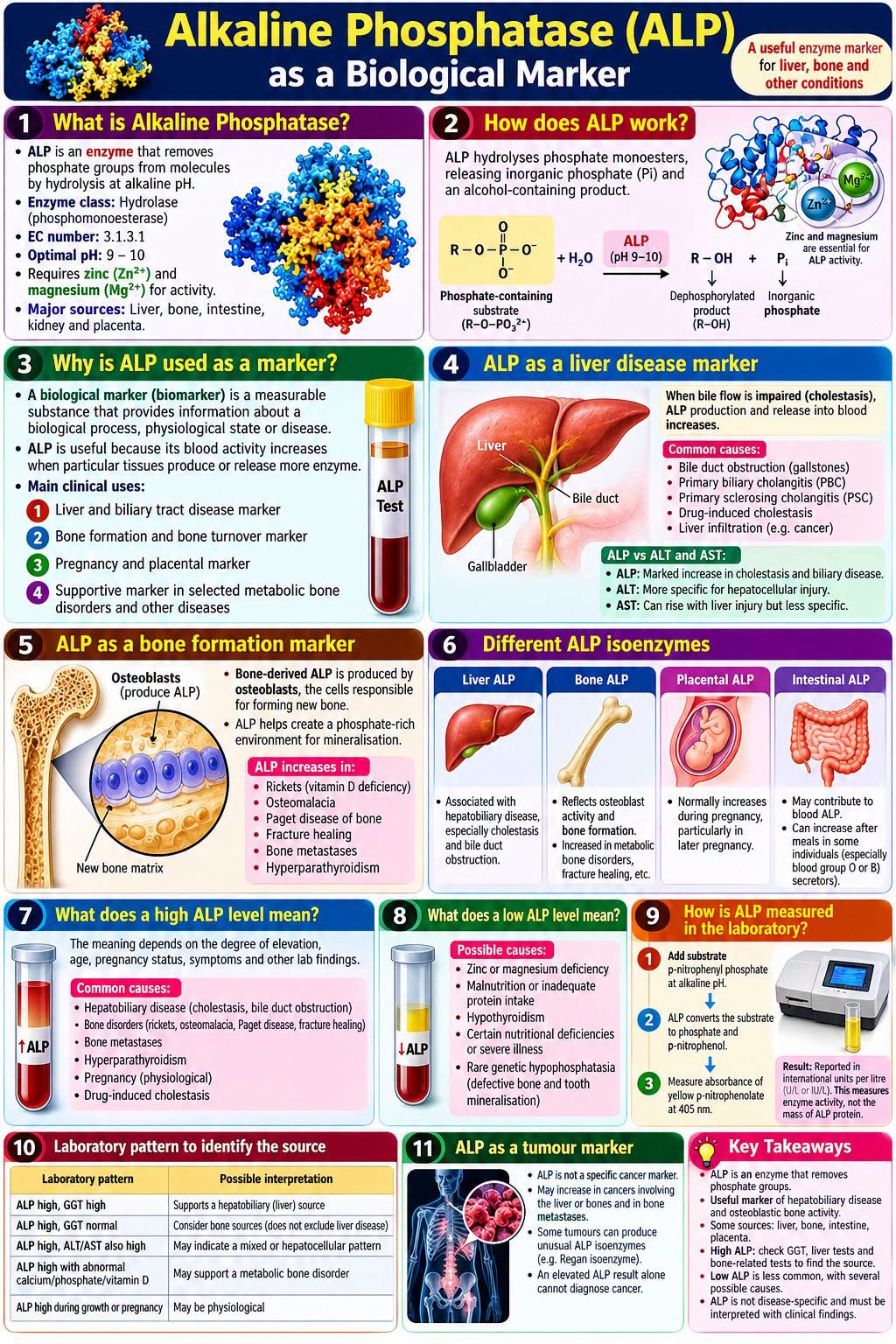
A shared explainer describes alkaline phosphatase as an enzyme measured to investigate liver, bile duct and bone disease. General lab-test background without study data.

Louis comments on a startup claiming a two-drug combination replicates the effect of young blood. He says the underlying parabiosis science is real but the commercial rollout, based on anecdotes and a pay-to-play trial, endangers the field's reputation. He speculates the drugs are anti-inflammatory agents targeting cytokines such as IL-11 and TGF-beta.