How to interpret the blood tests on your liver panel
#liverHD #astHD #altHD #alpHD #ggtHD #bilirubinHD #albuminHD #inrHD #ptHD #ptinrHD
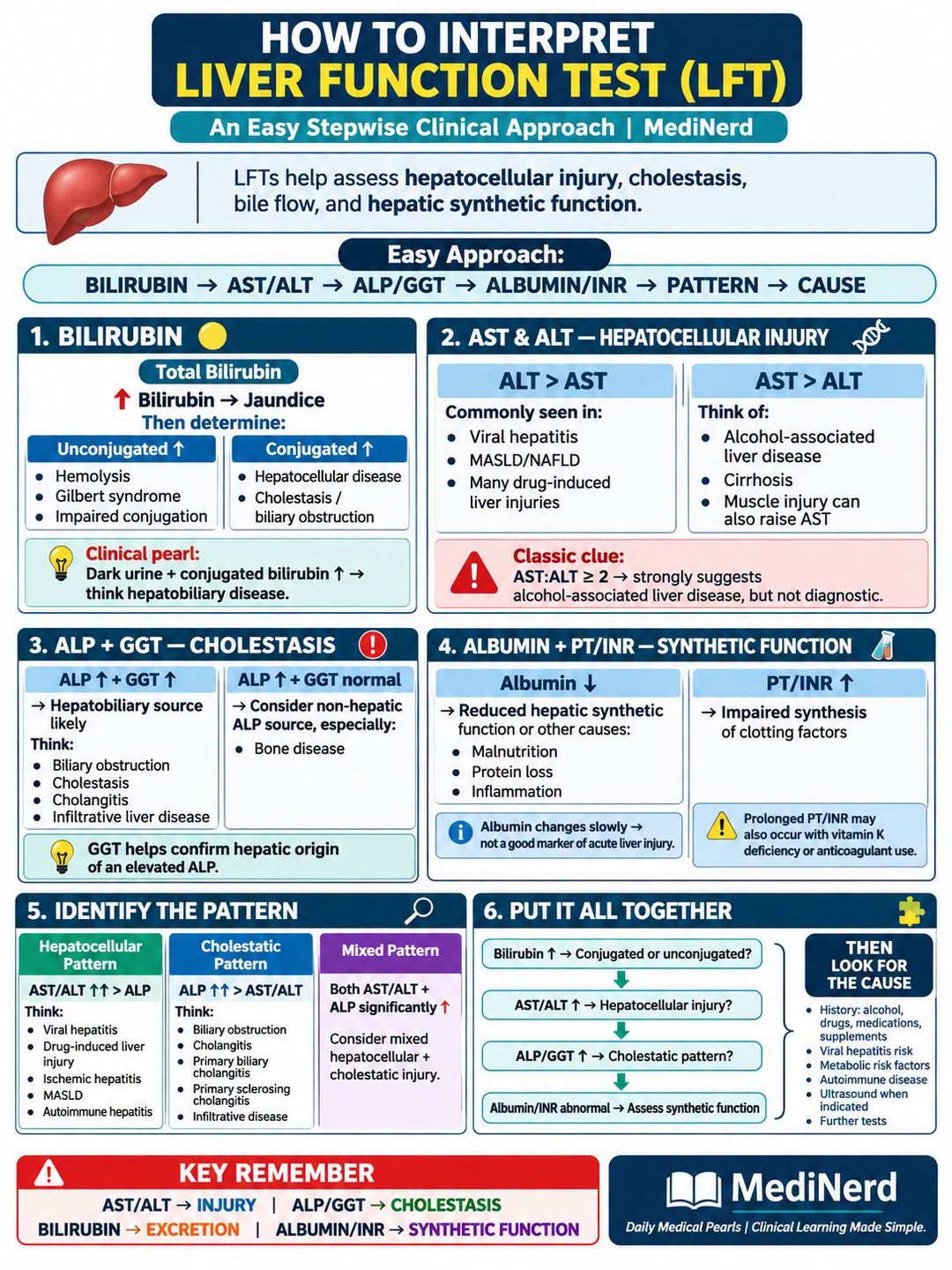
A shared infographic gives a stepwise approach to liver function tests: bilirubin, then AST/ALT, ALP/GGT, albumin/INR, then pattern and cause. It helps readers see whether abnormal results suggest hepatocellular injury, cholestasis or reduced synthetic function. General clinical reference with no study cited.
How to interpret the blood tests on your liver panel
#liverHD #astHD #altHD #alpHD #ggtHD #bilirubinHD #albuminHD #inrHD #ptHD #ptinrHD
🧪 HOW TO INTERPRET LIVER FUNCTION TEST (LFT)
📚 An Easy Stepwise Clinical Approach
💡 LFTs help assess hepatocellular injury, cholestasis, bile flow, and hepatic synthetic function.
👉 Easy approach:
BILIRUBIN → AST/ALT → ALP/GGT → ALBUMIN/INR → PATTERN → CAUSE
1️⃣ BILIRUBIN 🟡
🔹 Total Bilirubin
▪️ ↑ Bilirubin → Jaundice
Then determine:
Unconjugated ↑
→ Hemolysis
→ Gilbert syndrome
→ Impaired bilirubin conjugationConjugated ↑
→ Hepatocellular disease
→ Cholestasis / biliary obstruction💡 Clinical pearl:
Dark urine + conjugated bilirubin ↑ → think hepatobiliary disease.
2️⃣ AST & ALT — HEPATOCELLULAR INJURY 🧬
🔺 ALT > AST
Commonly seen in:
▪️ Viral hepatitis
▪️ MASLD/NAFLD
▪️ Many drug-induced liver injuries🔺 AST > ALT
Think of:
▪️ Alcohol-associated liver disease
▪️ Cirrhosis
▪️ Muscle injury can also raise AST💡 Classic clue:
AST:ALT ≥ 2 → strongly suggests alcohol-associated liver disease
—but it is not diagnostic by itself.
3️⃣ ALP + GGT — CHOLESTASIS 🚨
🔺 ALP ↑ + GGT ↑
→ Hepatobiliary source likely
Think:
▪️ Biliary obstruction
▪️ Cholestasis
▪️ Cholangitis
▪️ Infiltrative liver disease🔺 ALP ↑ + GGT normal
→ Consider non-hepatic ALP source, especially:
▪️ Bone disease💡 GGT helps confirm hepatic origin of an elevated ALP.
4️⃣ ALBUMIN + PT/INR — SYNTHETIC FUNCTION 🧪
🔻 Albumin
→ Reduced hepatic synthetic function or other causes such as:
▪️ Malnutrition
▪️ Protein loss
▪️ Inflammation⚠️ Albumin changes slowly → not a good marker of acute liver injury.
🔺 PT/INR
→ Impaired synthesis of clotting factors
→ Important marker of hepatic synthetic dysfunction⚠️ Prolonged PT/INR may also occur with vitamin K deficiency or anticoagulant use.
5️⃣ IDENTIFY THE PATTERN 🔍
🔥 HEPATOCELLULAR PATTERN
AST/ALT ↑↑ > ALP
Think:
▪️ Viral hepatitis
▪️ Drug-induced liver injury
▪️ Ischemic hepatitis
▪️ MASLD
▪️ Autoimmune hepatitis⬇️
🚧 CHOLESTATIC PATTERN
ALP ↑↑ > AST/ALT
Think:
▪️ Biliary obstruction
▪️ Cholangitis
▪️ Primary biliary cholangitis
▪️ Primary sclerosing cholangitis
▪️ Infiltrative disease⬇️
🔄 MIXED PATTERN
Both AST/ALT + ALP significantly elevated
→ Consider mixed hepatocellular + cholestatic injury.
6️⃣ PUT IT ALL TOGETHER 🧠
🩺 QUICK INTERPRETATION
Bilirubin ↑
⬇️
Conjugated or unconjugated?AST/ALT ↑
⬇️
Hepatocellular injury?ALP/GGT ↑
⬇️
Cholestatic pattern?Albumin/INR abnormal
⬇️
Assess synthetic function⬇️
🔎 THEN LOOK FOR THE CAUSE
▪️ History: alcohol, drugs, medications, supplements
▪️ Viral hepatitis risk
▪️ Metabolic risk factors
▪️ Autoimmune disease
▪️ Ultrasound when indicated
▪️ Further targeted investigations
🧠 REMEMBER
AST/ALT → INJURY
ALP/GGT → CHOLESTASIS
BILIRUBIN → EXCRETION
ALBUMIN/INR → SYNTHETIC FUNCTION#MediNerd #LiverFunctionTest #Hepatology
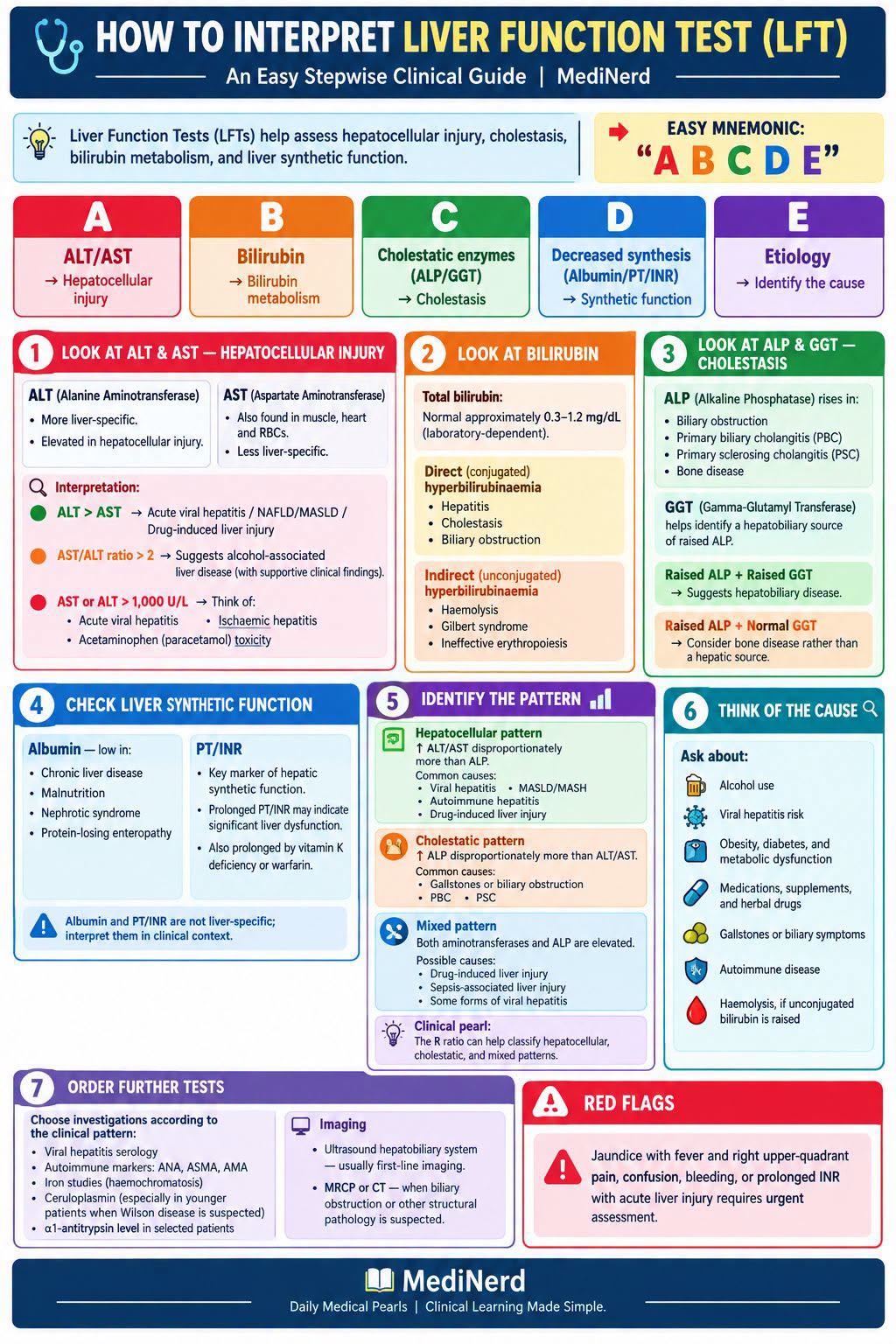
A shared infographic gives a mnemonic approach to liver function tests: ALT/AST for hepatocellular injury, bilirubin, cholestatic enzymes ALP/GGT, decreased synthesis (albumin/PT/INR) and etiology. Overlaps with a similar earlier infographic.
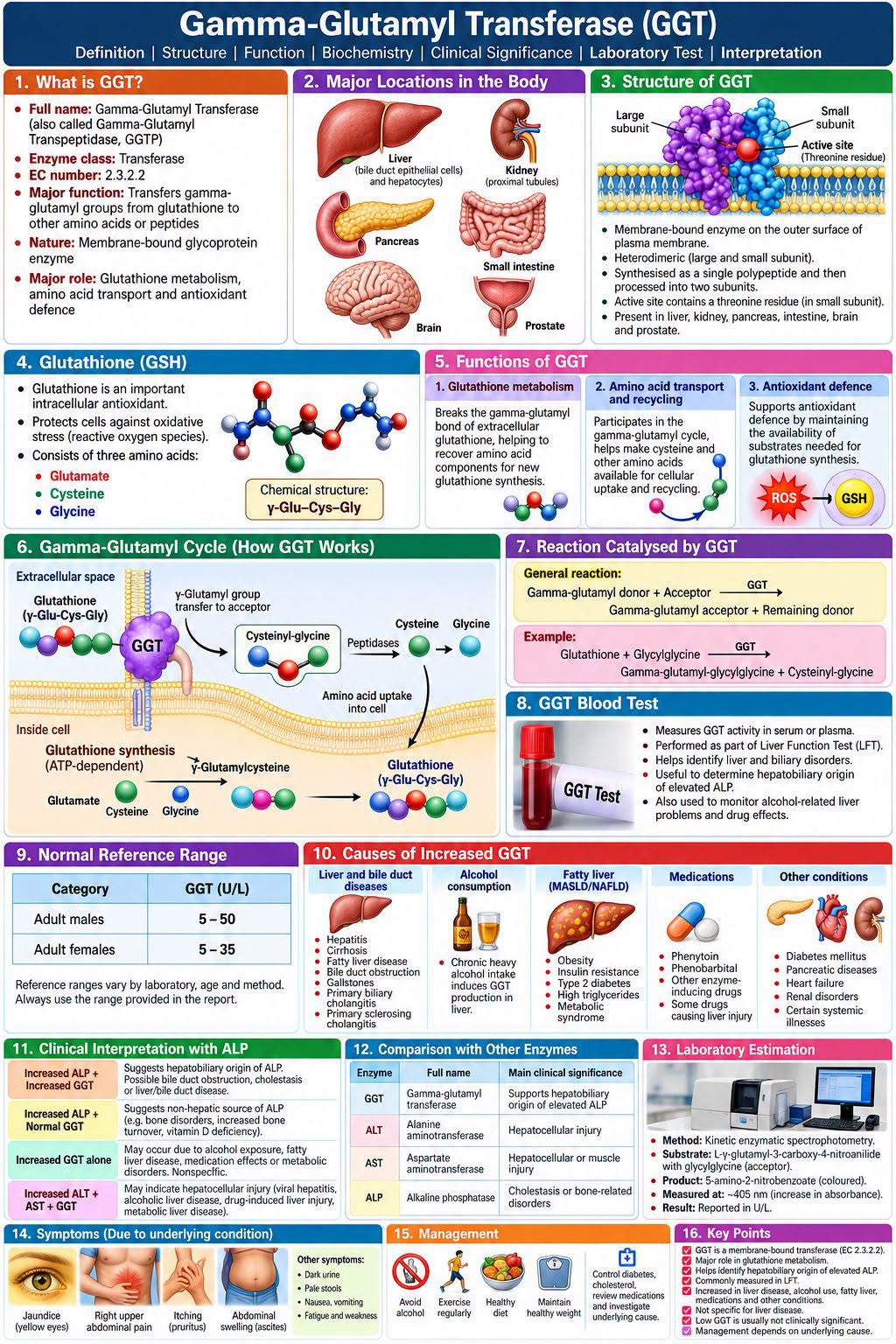
A shared educational infographic explains GGT as an enzyme in glutathione metabolism and a marker used with liver function tests to assess liver and bile duct disorders. General lab-test explainer without study data.
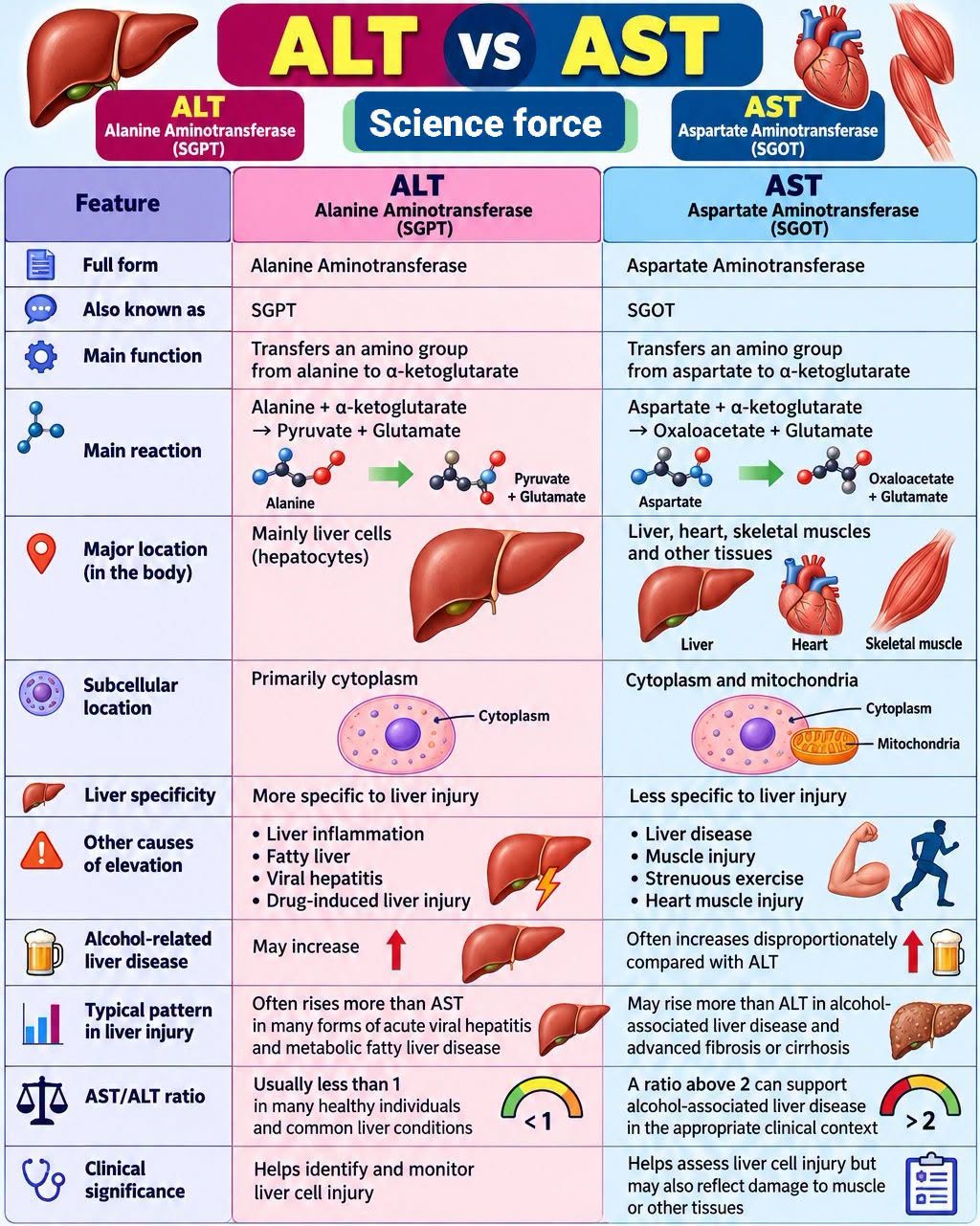
A shared explainer compares ALT and AST, enzymes in amino acid metabolism measured in liver function tests to detect liver cell damage, noting AST may also reflect other tissues. General lab-test background without study data.
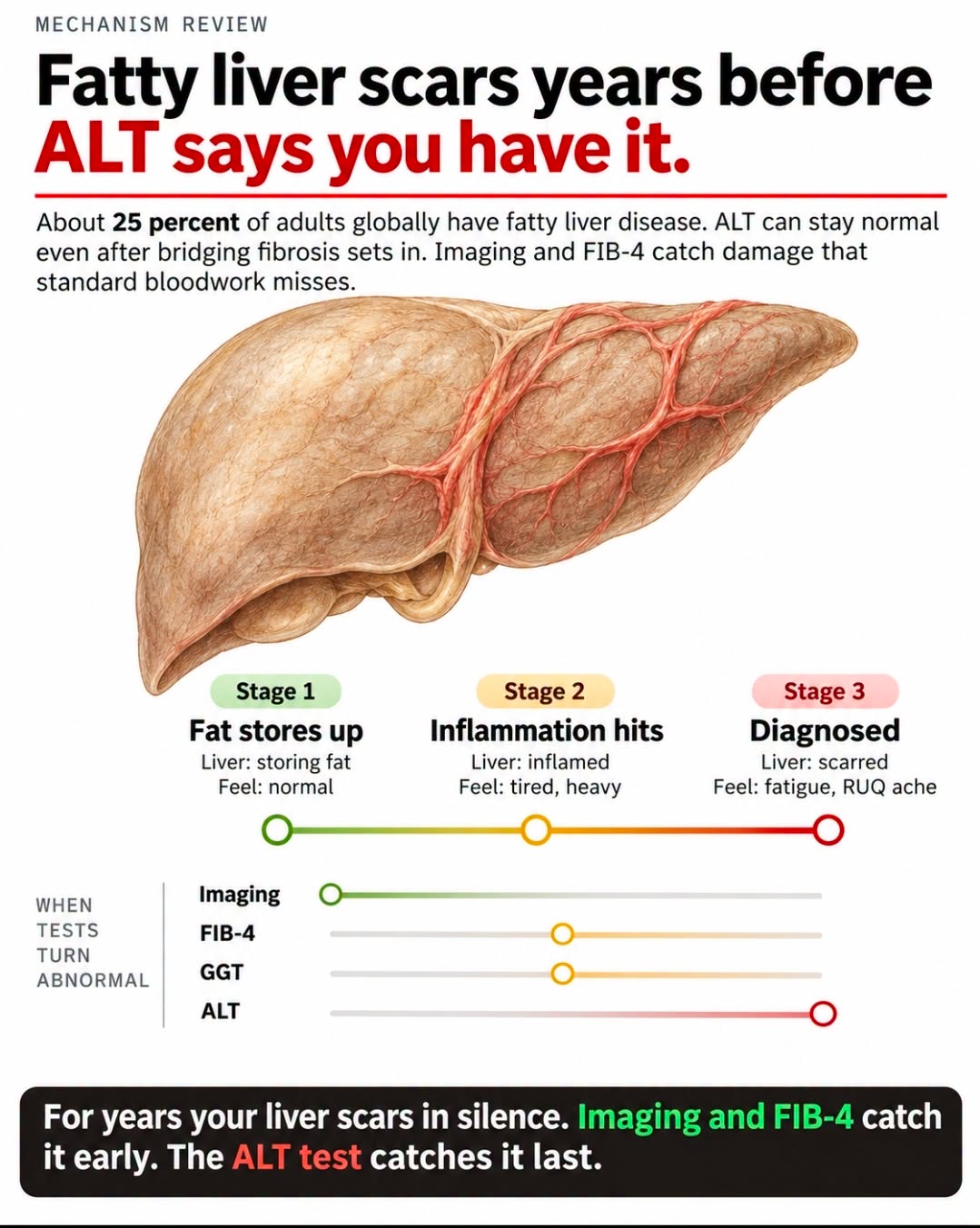
Routine ALT testing can miss advanced fatty liver disease: a Hepatology study biopsied 51 patients with normal ALT and found 12 with bridging fibrosis and 6 with cirrhosis. The post notes selection bias in that sample but says fibrosis behind a normal ALT is well established. Ten percent body weight loss resolved fatty liver in 90 percent and regressed fibrosis in 45 percent, and Mediterranean diet, resistance training and insulin-resistance management reduce liver fat independent of weight.
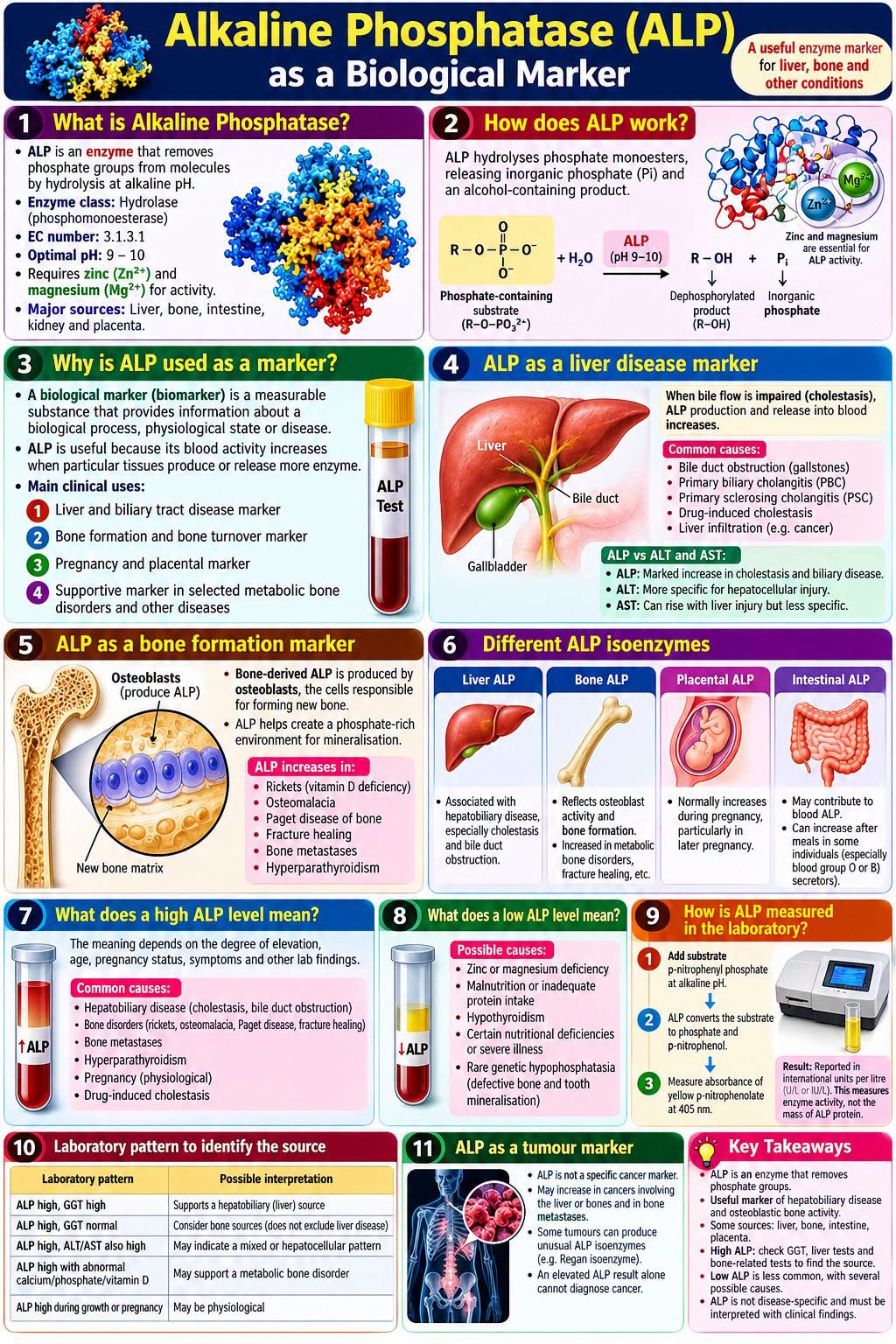
A shared explainer describes alkaline phosphatase as an enzyme measured to investigate liver, bile duct and bone disease. General lab-test background without study data.

Louis comments on a startup claiming a two-drug combination replicates the effect of young blood. He says the underlying parabiosis science is real but the commercial rollout, based on anecdotes and a pay-to-play trial, endangers the field's reputation. He speculates the drugs are anti-inflammatory agents targeting cytokines such as IL-11 and TGF-beta.