What is Alkaline Phosphatase?
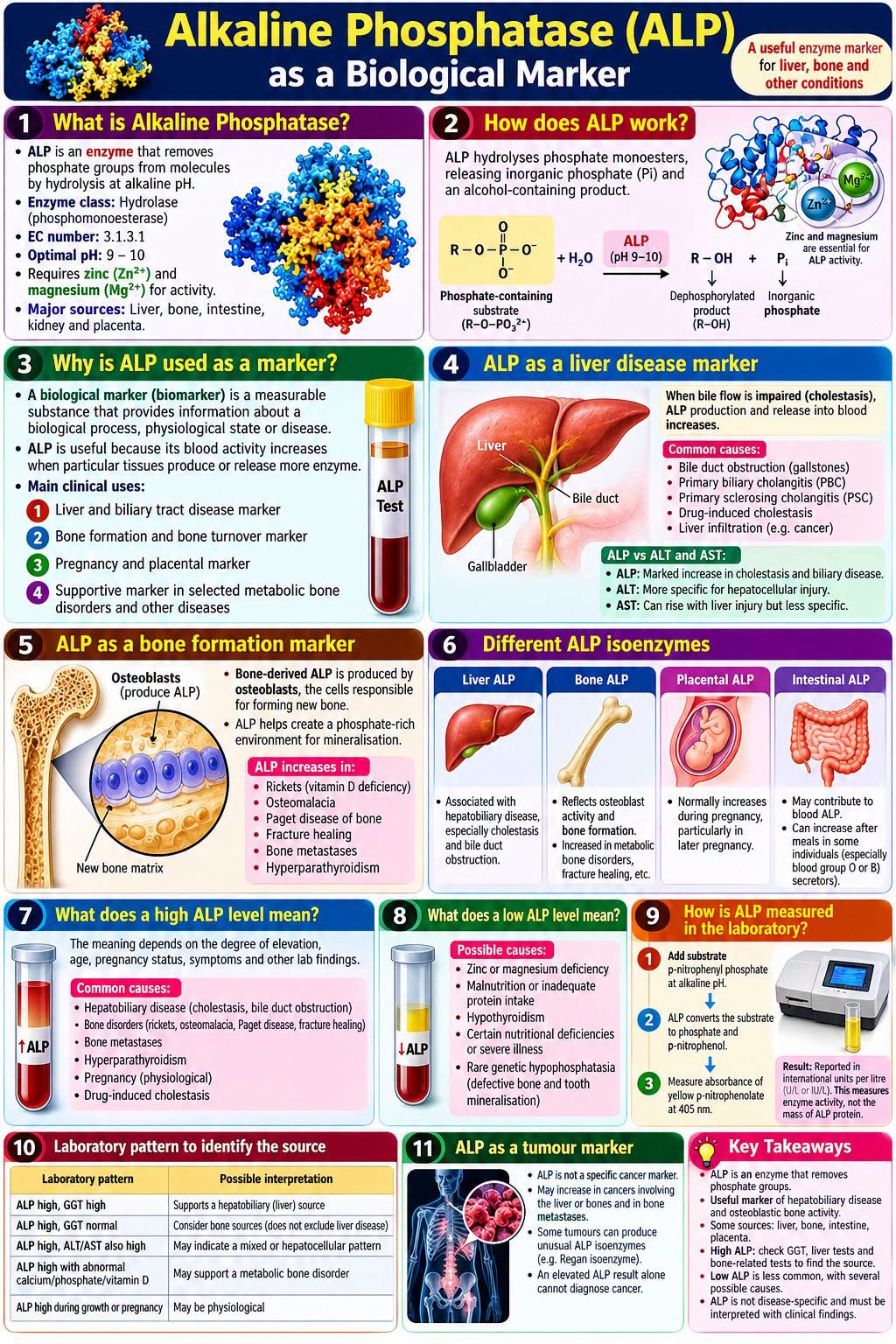
Alkaline phosphatase (ALP) is an enzyme that removes phosphate groups from various molecules through a process called hydrolysis. It functions most effectively under alkaline conditions.
ALP is clinically important because measuring its activity in the blood helps healthcare professionals investigate diseases involving the liver, bile ducts and bones.
Important characteristics of ALP:
🧬 Enzyme class: Hydrolase, specifically a phosphomonoesterase.
🔢 EC number: 3.1.3.1.
🧪 Optimal pH: Approximately 9–10 under many laboratory assay conditions.
⚙️ Essential metal ions: Zinc (Zn²⁺) and magnesium (Mg²⁺).
🫀 Major tissue sources: Liver, bone, intestine and placenta. ALP is also present in other tissues, including the kidneys.
ALP is found on cell membranes and participates in several physiological processes, particularly bone mineralisation and phosphate metabolism.
⚗️ How Does Alkaline Phosphatase Work?
ALP catalyses the hydrolysis of phosphate monoesters. During this reaction, water is used to remove a phosphate group from a substrate.
The general reaction is:
R-O-PO3^2- +H2O +ALP->R-OH+Pi
Here:
R–O–PO₃²⁻: The phosphate-containing substrate.
H₂O: Water required for hydrolysis.
R–OH: The dephosphorylated product.
Pi: Inorganic phosphate released during the reaction.
🧬 What is the significance of this reaction?
ALP helps regulate the availability of inorganic phosphate and other molecules involved in physiological processes.
In bone tissue, ALP breaks down pyrophosphate, which inhibits mineralisation.
This helps create conditions that favour the deposition of calcium phosphate minerals in the bone matrix.
Zinc and magnesium are important for the enzyme's catalytic activity.
Without appropriate metal-ion support, ALP activity may be impaired.
Why Is ALP Used as a Biological Marker?
A biological marker, or biomarker, is a measurable substance that provides information about a biological process, physiological condition or disease.
ALP is useful as a biomarker because changes in its activity in the blood may reflect increased enzyme production or release from particular tissues.
The major clinical applications of ALP include:
🫀 Liver and bile duct marker: Helps identify patterns associated with impaired bile flow.
🦴 Bone formation marker: Reflects osteoblast activity and bone formation.
🤰 Pregnancy-associated marker: Placental ALP can increase during pregnancy.
🔬 Supportive marker in selected diseases: Abnormal ALP activity may occur in metabolic bone disorders and certain cancers, although
ALP alone cannot diagnose them.
Important:
An elevated ALP result does not automatically mean that a person has liver disease. The enzyme may originate from bone or other tissues. Additional laboratory tests are needed to determine the likely source.
🫀 4. ALP as a Liver Disease Marker
The liver is one of the principal sources of ALP in the bloodstream. The enzyme is particularly associated with the canalicular membranes of liver cells, which participate in bile secretion.
What happens during liver disease?
One of the most important causes of elevated ALP is cholestasis, a condition in which bile formation or bile flow is impaired.
When bile flow is obstructed or impaired, ALP production and release into the bloodstream can increase.
Common causes include:
🔹 Bile duct obstruction: Gallstones may block the flow of bile from the liver or gallbladder.
🔹 Primary biliary cholangitis (PBC): An autoimmune disease that damages small bile ducts inside the liver.
🔹 Primary sclerosing cholangitis (PSC): A chronic disease involving inflammation and scarring of the bile ducts.
🔹 Drug-induced cholestasis: Certain medications can interfere with normal bile flow.
🔹 Liver infiltration: Some cancers and other infiltrative diseases can affect liver tissue and increase ALP.
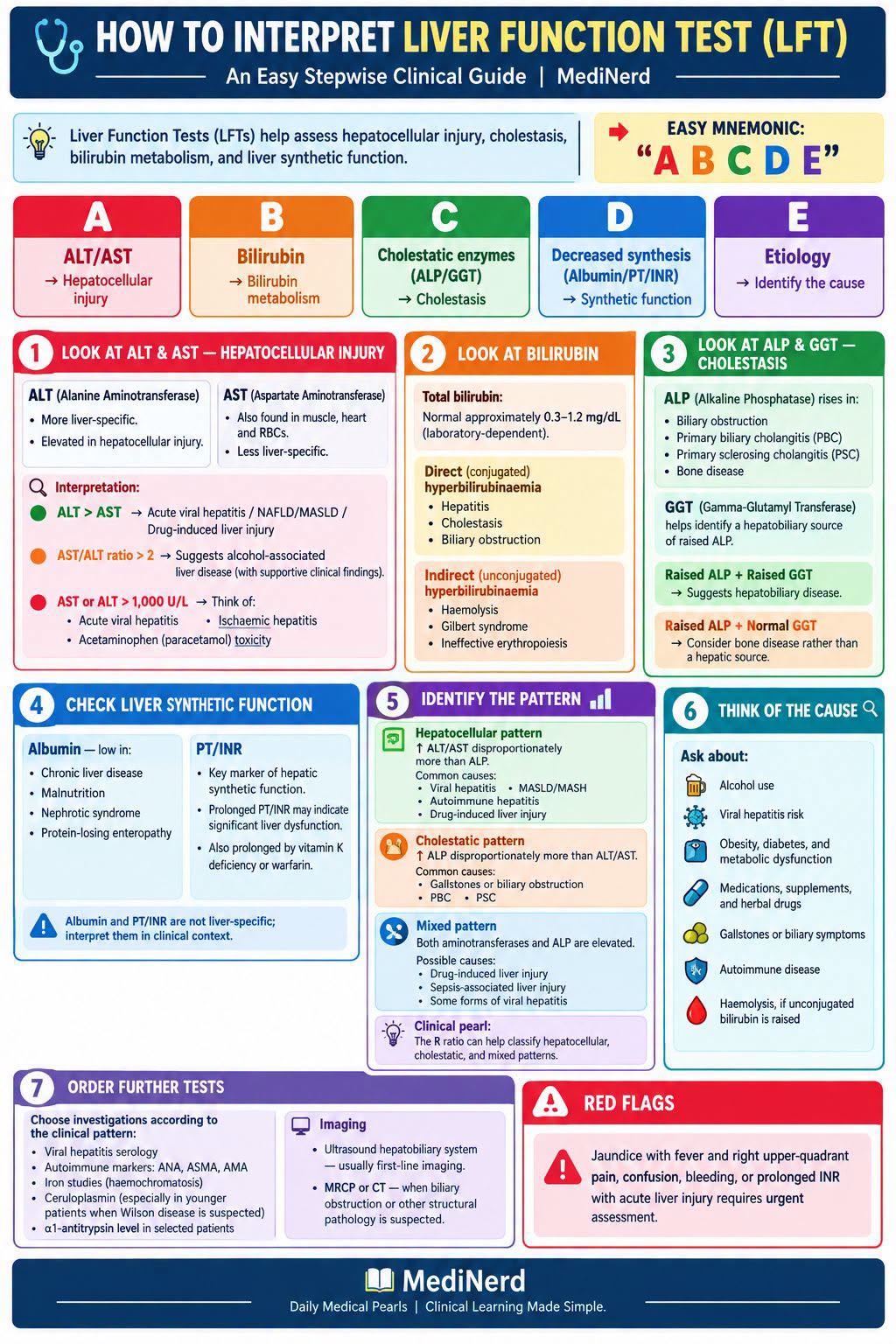
🧪 ALP versus ALT and AST
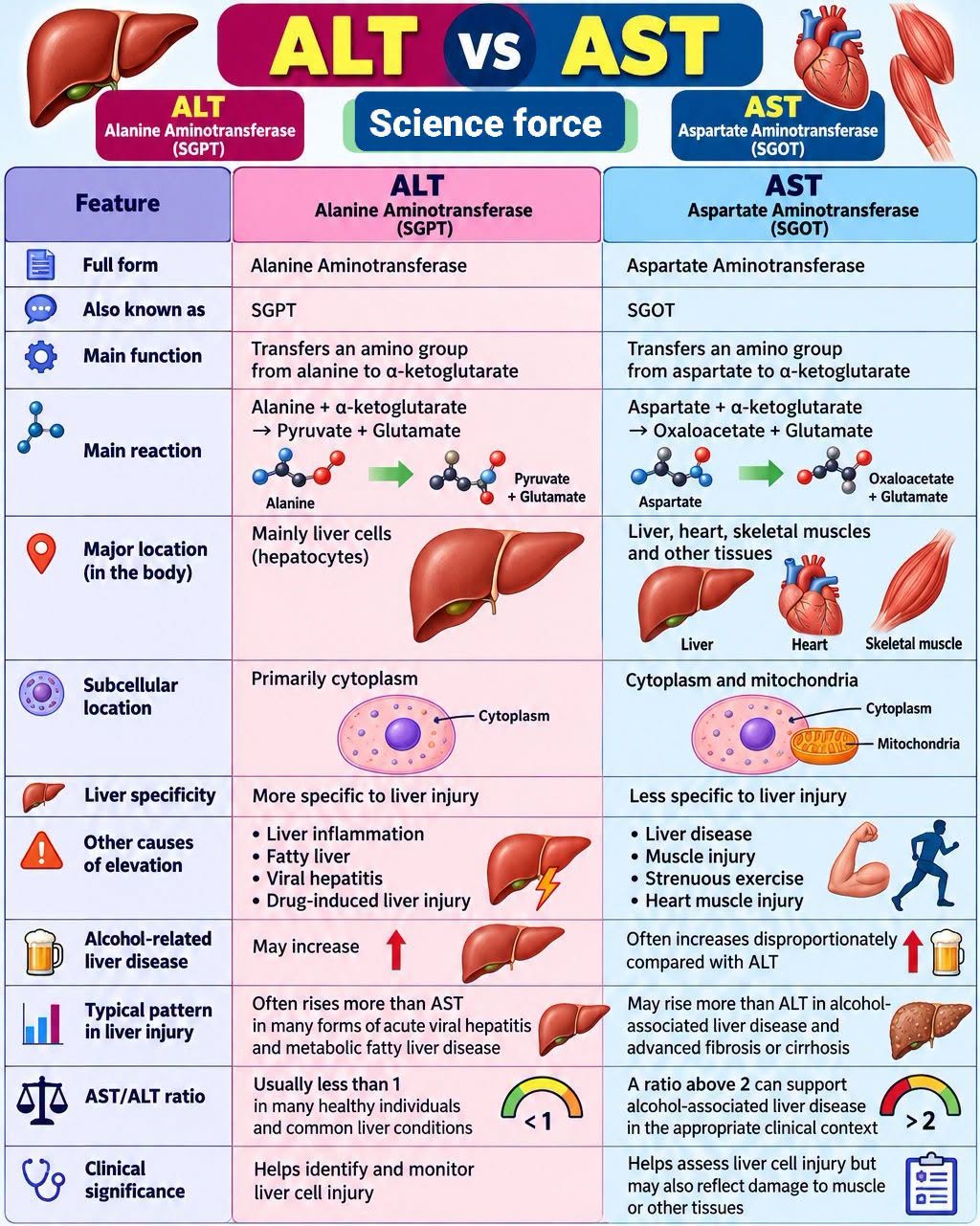
Three important enzymes commonly assessed in liver investigations are ALP, alanine aminotransferase (ALT) and aspartate aminotransferase (AST).
ALP: Often increases prominently in cholestasis and biliary obstruction.
ALT: More closely associated with injury to liver cells.
AST: Can increase with liver injury but is also found in skeletal muscle, heart muscle and other tissues.
For example, a patient with bile duct obstruction may have a substantial increase in ALP, sometimes accompanied by elevated GGT and bilirubin.
By contrast, acute hepatitis may cause much more prominent increases in ALT and AST.
These are general patterns rather than absolute rules; some conditions produce mixed results.
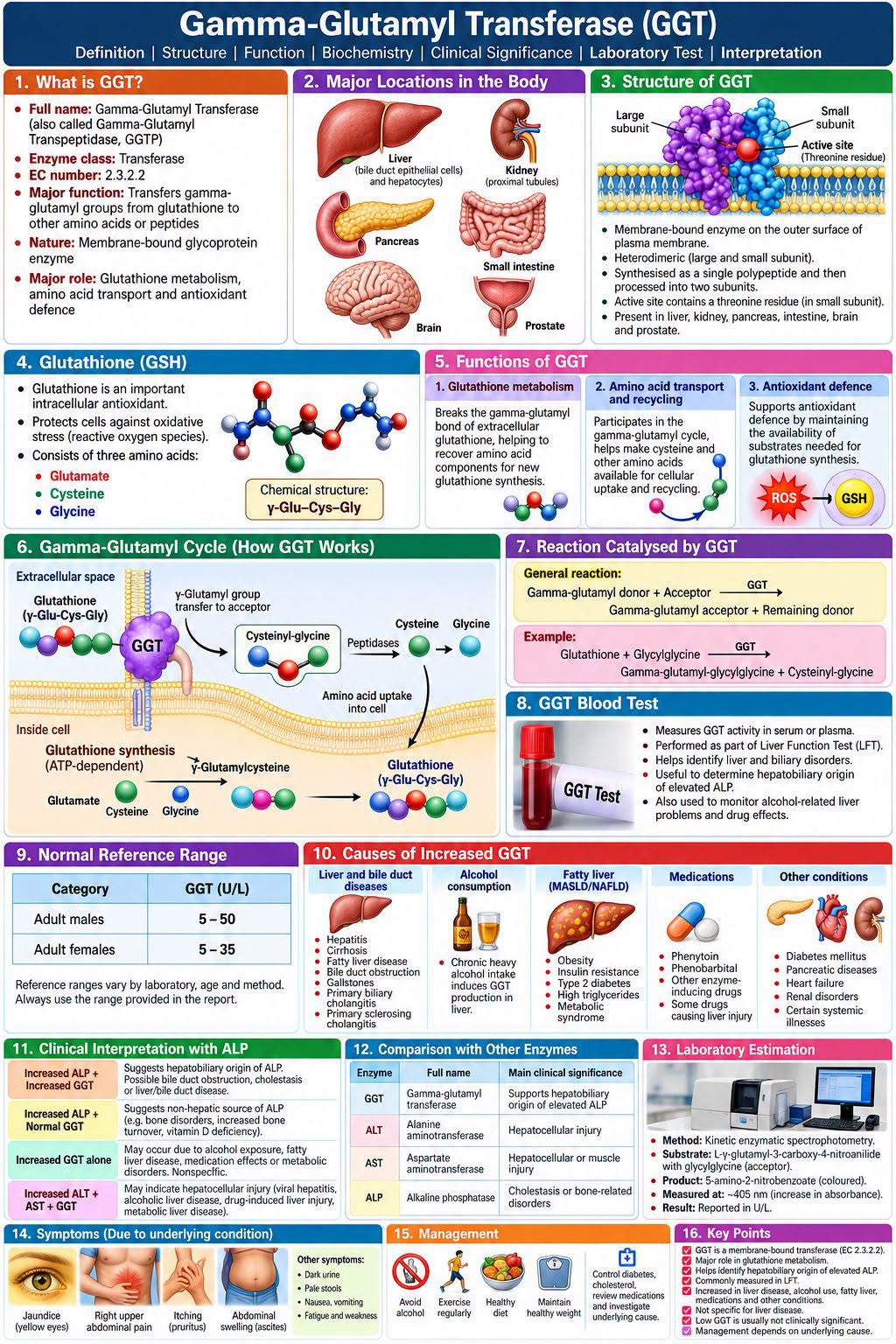
🔍 What is GGT?
Gamma-glutamyl transferase (GGT) is another enzyme measured in clinical biochemistry.
When ALP is elevated:
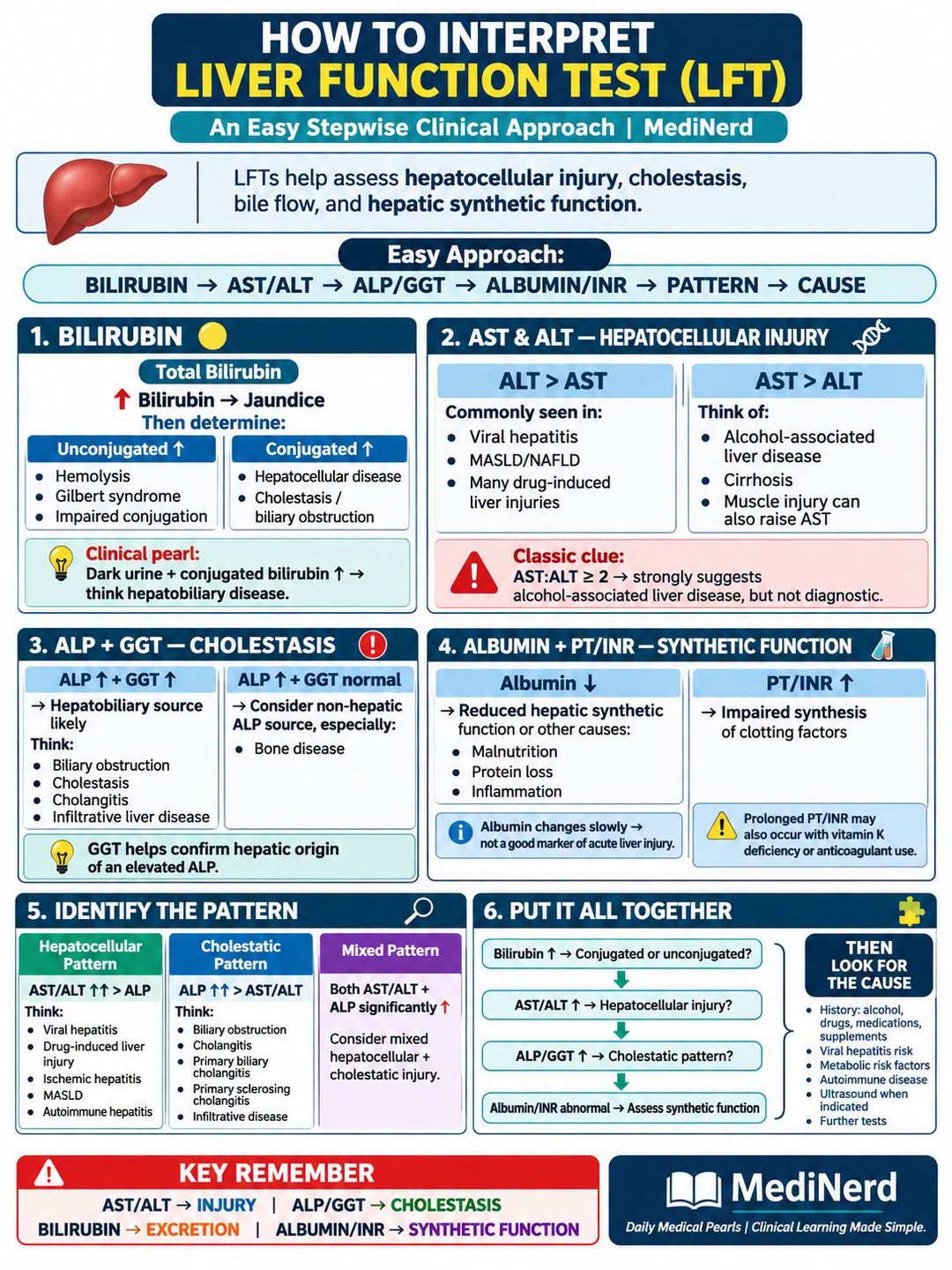
ALP high + GGT high: Supports a liver or hepatobiliary source.
ALP high + GGT normal: Makes a bone source more likely, although it does not completely exclude liver disease.
GGT is not completely specific to liver disease, so the results must be interpreted alongside other findings.
Also, ALP is not a direct measure of the liver's synthetic function. Albumin and prothrombin time/INR provide different information about the liver's ability to produce important proteins.
ALP as a Bone Formation Marker
Bone is another major source of circulating ALP.
The bone-forming cells known as osteoblasts produce bone-specific ALP. This enzyme plays an important role in mineralisation, the process by which minerals are deposited into the bone matrix.
How does ALP help bone formation?
Bone consists of an organic matrix, primarily collagen, and inorganic minerals, mainly calcium phosphate in the form of hydroxyapatite.
During bone formation:
🧬 Osteoblasts produce the bone matrix.
⚗️ Bone-specific ALP helps regulate local phosphate availability.
ALP often increases because osteoblast activity rises in response to defective mineralisation.
- Osteomalacia
Osteomalacia is defective mineralisation of newly formed bone in adults. Vitamin D deficiency is one possible cause.
ALP may increase as the body attempts to form and mineralise bone.
- Paget disease of bone
This condition causes excessive and disorganised bone remodelling. ALP may be markedly elevated when the disease involves substantial areas of bone.
- Fracture healing
Following a fracture, the body activates bone repair mechanisms. Osteoblast activity increases during healing, which may cause a temporary rise in ALP.
- Bone metastases
Some cancers spread to bone and stimulate osteoblast activity. In such cases, ALP may rise, although the result depends on the type and extent of bone involvement.
- Hyperparathyroidism
Excess parathyroid hormone can increase bone turnover. ALP may increase when bone formation is also elevated.
🧪 Total ALP versus bone-specific ALP
Total ALP: Measures enzyme activity contributed by multiple tissues.
Bone-specific ALP (BALP): Provides a more targeted assessment of osteoblast activity.
Bone-specific ALP can be useful in selected metabolic bone disorders and in some patients with chronic kidney disease.
It is often interpreted alongside calcium, phosphate, vitamin D, parathyroid hormone (PTH) and kidney function results.
🧬 Different ALP Isoenzymes
Isoenzymes are different molecular forms of an enzyme that catalyse the same reaction but differ in their tissue distribution or biochemical properties.
Different tissues produce characteristic forms of ALP.
🫀 A. Liver ALP
Liver ALP is associated with the hepatobiliary system.
Its activity can increase in:
Bile duct obstruction.
Cholestasis.
Primary biliary cholangitis.
Primary sclerosing cholangitis.
Some infiltrative liver diseases.
It is particularly useful for evaluating a cholestatic pattern of liver test abnormalities.
🦴 B. Bone ALP
Bone ALP is produced by osteoblasts.
It reflects bone-forming activity and may increase during:
Childhood growth.
Fracture healing.
Rickets and osteomalacia.
Paget disease of bone.
Certain forms of bone metastasis.
Children and adolescents can have higher ALP levels than adults because their bones are actively growing.
🤰 C. Placental ALP
Placental ALP is produced by the placenta during pregnancy.
Its activity in the maternal blood can rise, particularly in later pregnancy. This is generally a physiological change rather than a sign of disease.
Pregnancy must therefore be considered when interpreting ALP results.
🍽️ D. Intestinal ALP
Intestinal ALP is produced by cells lining the intestine.
It may contribute to circulating ALP, and a temporary increase can occur after eating in some individuals, particularly people with blood groups O or B who are secretors.
This is one reason why the patient's clinical circumstances and, where relevant, sample collection conditions can affect interpretation.
📈 What Does a High ALP Level Mean?
An elevated ALP level means that the measured enzyme activity is above the laboratory's reference interval.
The significance depends on the degree of elevation, age, pregnancy status, symptoms and other laboratory results.
Possible causes include:
🫀 Hepatobiliary disease: Cholestasis, bile duct obstruction or certain liver disorders.
🦴 Bone disorders: Rickets, osteomalacia, Paget disease or fracture healing.
🎗️ Certain cancers: Some liver cancers or bone lesions, including selected bone metastases.
🤰 Pregnancy: Increased placental ALP.
👶 Normal growth: Increased bone formation in children and adolescents.
💊 Medication-related effects: Certain drugs may affect liver or bone metabolism.
How do doctors investigate a high result?
The evaluation commonly includes:
Repeat testing if clinically appropriate.
Reviewing ALT, AST, GGT and bilirubin.
Checking calcium, phosphate, vitamin D and other bone-related tests when indicated.
Considering ALP isoenzyme testing or bone-specific ALP if the source remains uncertain.
Performing liver or bone imaging when indicated by the clinical findings.
A high ALP result alone cannot establish the diagnosis.
What Does a Low ALP Level Mean?
Low ALP is less common than elevated ALP but can also be clinically significant.
Possible causes include:
🔹 Zinc deficiency: Zinc is necessary for normal ALP activity.
🔹 Magnesium deficiency: Magnesium supports enzyme function.
🔹 Malnutrition: Inadequate nutrient intake may affect enzyme activity and bone metabolism.
🔹 Hypothyroidism: Reduced thyroid activity can be associated with lower bone turnover and sometimes lower ALP.
🔹 Severe illness or nutritional deficiencies: Certain systemic conditions can reduce ALP activity.
🔹 Hypophosphatasis
A rare inherited disorder caused by variants affecting tissue-nonspecific ALP. It can impair bone and tooth mineralisation and may be associated with fractures, bone pain or premature tooth loss.
Persistent unexplained low ALP deserves further evaluation, particularly when bone or dental symptoms are present. A single low result does not automatically indicate a disease.
How Is ALP Measured in the Laboratory?
A common laboratory method for measuring ALP activity is a spectrophotometric enzymatic assay.
One widely used method employs a synthetic substrate called p-nitrophenyl phosphate (pNPP).
Step 1: Add the substrate
The patient's serum or plasma is added to a reaction mixture containing pNPP under alkaline conditions.
Step 2: Enzymatic reaction
ALP hydrolyses pNPP to produce inorganic phosphate and p-nitrophenol.
Step 3: Formation of yellow colour
Under alkaline assay conditions, p-nitrophenol is converted to its yellow p-nitrophenolate form.
Step 4: Measure absorbance
A spectrophotometer measures the increase in absorbance, commonly around 405 nm, depending on the assay.
The rate of colour formation is proportional to ALP activity under the specified reaction conditions.
Reporting the result
ALP activity is usually reported in:
U/L: Units per litre.
IU/L: International units per litre.
These units describe enzyme activity, not simply the mass of ALP protein in the sample.
Reference intervals vary with the laboratory method, age, sex and physiological
circumstances. The laboratory's own reference range should be used for interpretation.
🎗️ ALP as a Tumour Marker
ALP can be elevated in certain cancers, but it is not a specific cancer marker.
For example:
Some cancers affecting the liver may cause elevated ALP.
Bone metastases that stimulate new bone formation may increase bone-derived ALP.
Some malignancies can produce unusual ALP forms, including a placental-like isoenzyme known as the Regan isoenzyme.
However, ALP may also be elevated in many non-cancerous conditions, including gallstones, vitamin D deficiency and fracture healing.
Likewise, a normal ALP result does not exclude cancer.
Cancer diagnosis requires clinical evaluation and appropriate investigations, which may include imaging, other laboratory tests and tissue biopsy.
#scienceforce #facts #biology #biochemistry