Applying mechanical stress to bones of mice leads to the secretion of “anti-aging chemicals” that extend their lifespan.
This mechanical stress is similar to what occurs during exercise, particularly resistance training.
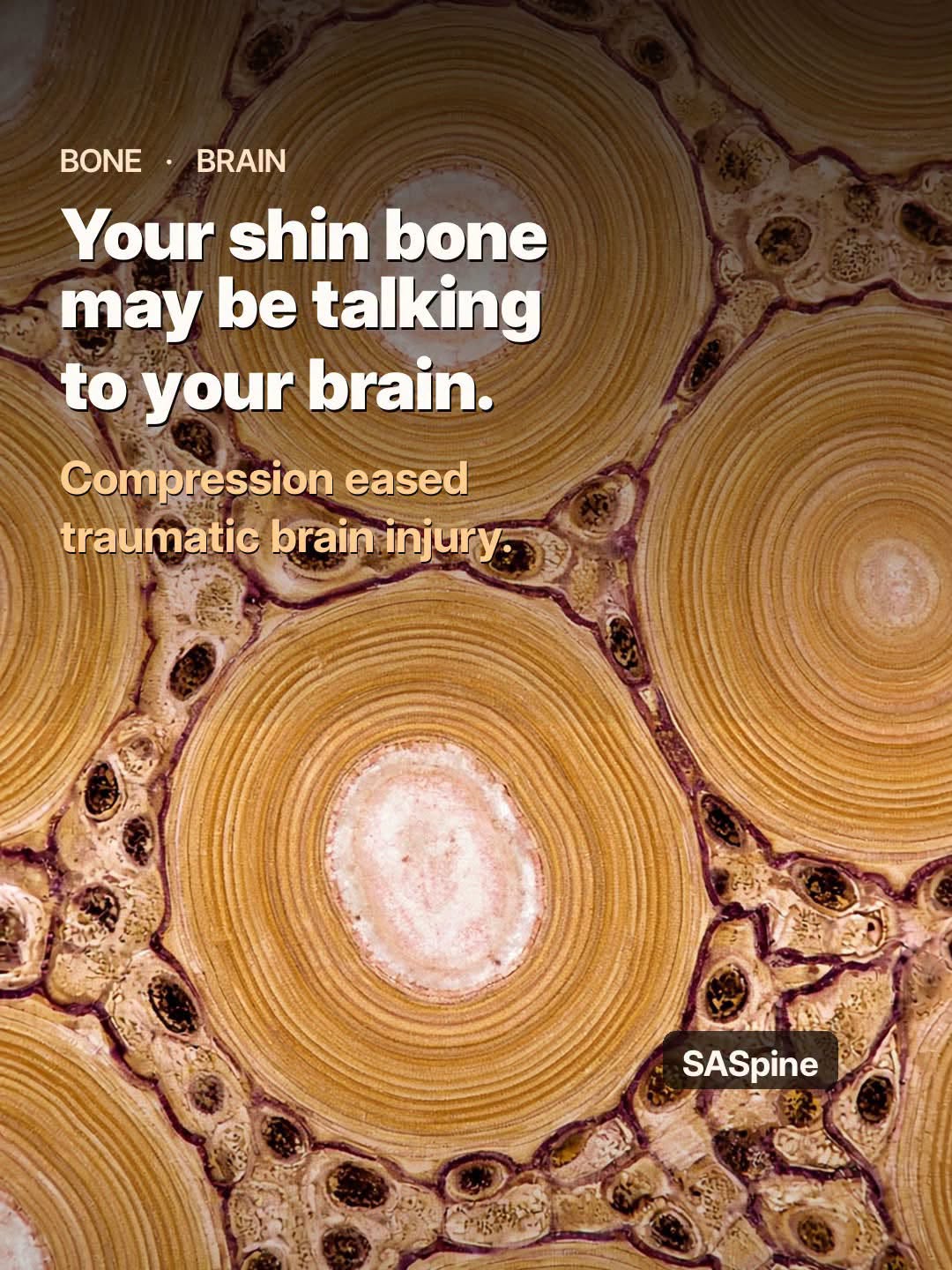
A related study published last month demonstrated that applying mechanical stress to bones improves memory and motor function after traumatic brain injury, in both mice and pigs:
↪ Shin bone loading may speed brain injury recovery via PIEZO1 in mice and pigs
↪ Bone injury may speed brain healing: tibia loading helped mice and pigs after brain injury
Link to journal paper:
Paper · Cell MetabolismS1550 4131(26)00433 Xcell.comQuoted:
Bone is not just a passive scaffold; it is an active, mechanically responsive organ that helps set the pace of aging throughout the body,” says Xiaochun Bai, a leader of the study and a bone biologist at Southern Medical University. “For the first time, we demonstrated the role of bone ‘mechanosensing’ in systemic aging.”
Decades of research have shown exercise and other forms of physical activity are linked to longer lives and reduced risks of age-related diseases such as dementia, heart disease, and frailty. But scientists have yet to figure out how exactly this works. According to Bai, most scientists have searched for clues in muscles, overlooking the neighboring bones, which experience the same forces during exercise. Khosla adds there is good reason to believe bones may play a role in exercise’s health benefit, as previous studies have shown bones may influence how other organs age.
To further explore the matter, Bai and colleagues initially engineered a line of mice in which the gene for PIEZO1, a protein that allows cells to sense forces, could be deleted in osteocytes at any age. They then turned the gene off in 10-month-old mice, middle-aged for the animals. Five months later, those mice looked older than normal mice of the same age. They performed worse on memory tests and had slower reflexes. Many of their organs, including hearts, livers, brains, and bones, showed increased signs of aging and inflammation. And, on average, they died significantly earlier—105.5 days earlier—than the control rodents, suggesting osteocytes play a role in how daily physical activity influences aging.
On the flip side, the team also showed mechanically straining the bones of mice between 20 and 24 months of age, senior citizen for rodents, appeared to provide significant health benefits. Twice a week for 4 months, the researchers used a machine to gently press against both ends of the elderly rodents’ leg bones, a kind of squeezing referred to as dynamic tibial axial loading (DTAL).
Several months after the treatment, when mice would normally be on death’s door, the squeezed rodents, both male and female, had stronger bones, faster reflexes, sharper minds, and more youthful-looking organs than normal counterparts. Treating mice with a drug that activates PIEZO1, to mimic DTAL, also delayed signs of aging.
The overall life span extension produced by DTAL surprised the researchers because a previous study in mice had showed exercise slowed aging but had no effect on life span. But in that study, the mice were simply running on a wheel. “These findings suggest that exercises that stimulate bone mechanosensing, rather than all forms of exercise, may be particularly beneficial for healthy aging,” says Mei Wan, an orthopedic surgery researcher at Johns Hopkins University who was not part of the study. “In particular, high-mechanical–loading exercises, such as weightlifting and resistance training, may provide additional antiaging benefits.”
Further experiments by Bai’s team suggested the DTAL treatment triggers osteocytes to secrete blood-borne antiaging factors. The group confirmed previous reports that giving middle-aged mice blood from old ones accelerates their aging, but showed that using blood from DTAL-treated old mice reversed these effects. In addition, DTAL enhanced the age-slowing effects of young blood.
The team identified several specific molecules released by the mice’s osteocytes that appear to deliver a one-two punch, by either directly reprogramming cells in other organs to be more youthful or indirectly influencing aging by rejuvenating newly made immune cells. One, pigment epithelium-derived factor (PEDF), mimicked the antiaging benefits of DTAL when injected into old mice.
Bai and his colleagues have started to explore PEDF’s behavior in humans. Already, they have shown the factor blocks aging in human cartilage organoids and is found at lower levels in older humans and osteoporosis patients. But Wan urges caution before trying to turn these rodent observations into medical interventions. “Future studies are needed to determine whether mechanical loading can safely and effectively slow aging in humans, particularly older adults,” she says, “and whether targeting mediators such as PEDF could offer an alternative therapeutic strategy.”
#bonesHD #resistancetrainingHD #exerciseHD #shintappingHD #miceHD #agingHD #longevityHD #piezo1HD #osteocytesHD #dtalHD #parabiosisHD #pedfHD #epigeneticreprogrammingHD