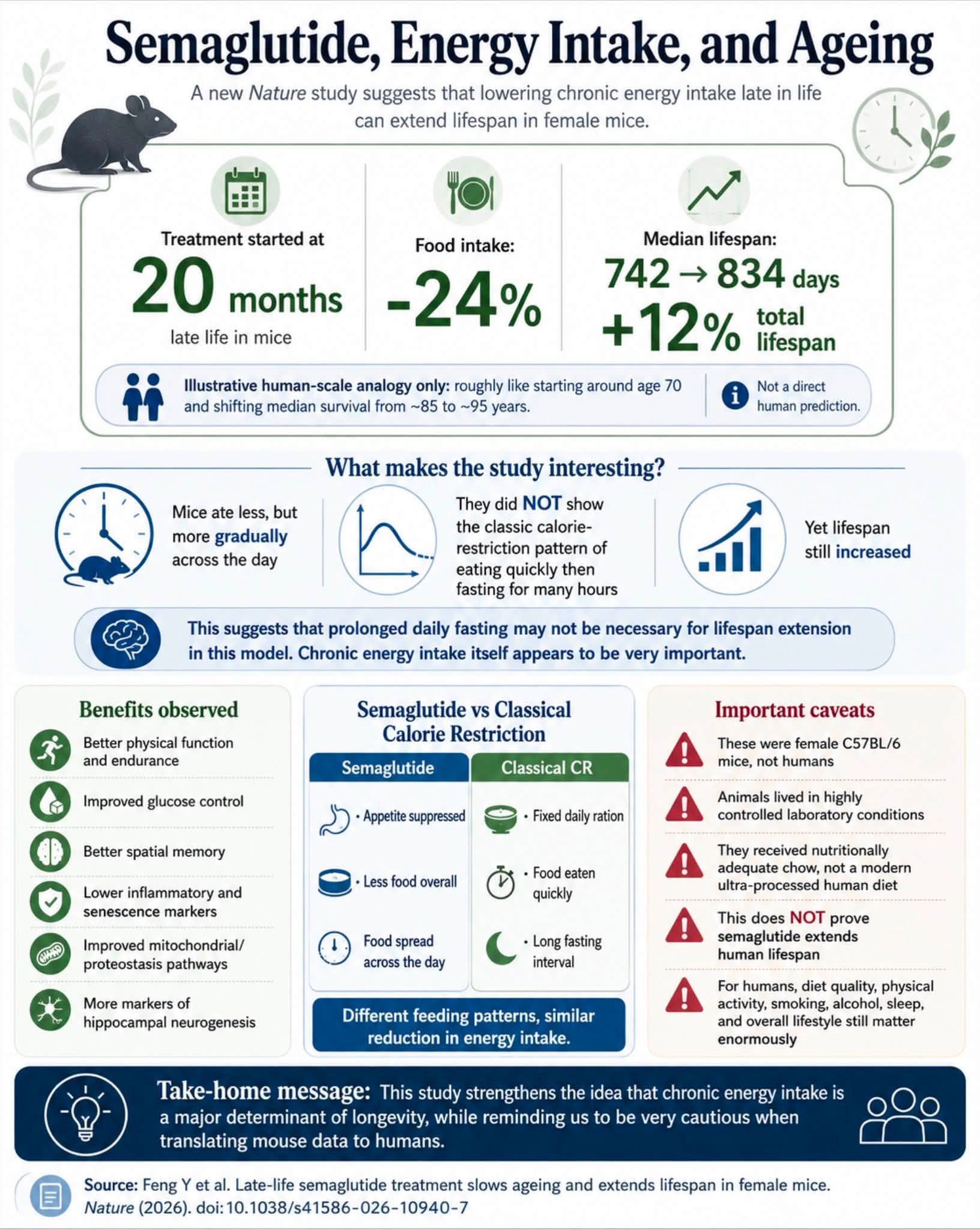
The evidence is slowly building that GLP1 agonist drugs slow the aging process in mammals.
This should not be surprising, given how decades of previous research has proven that calorie restriction robustly extends lifespan in many different animal species.
#glp1HD #glp1agingHD #calorierestrictionHD #agingHD #longevityHD
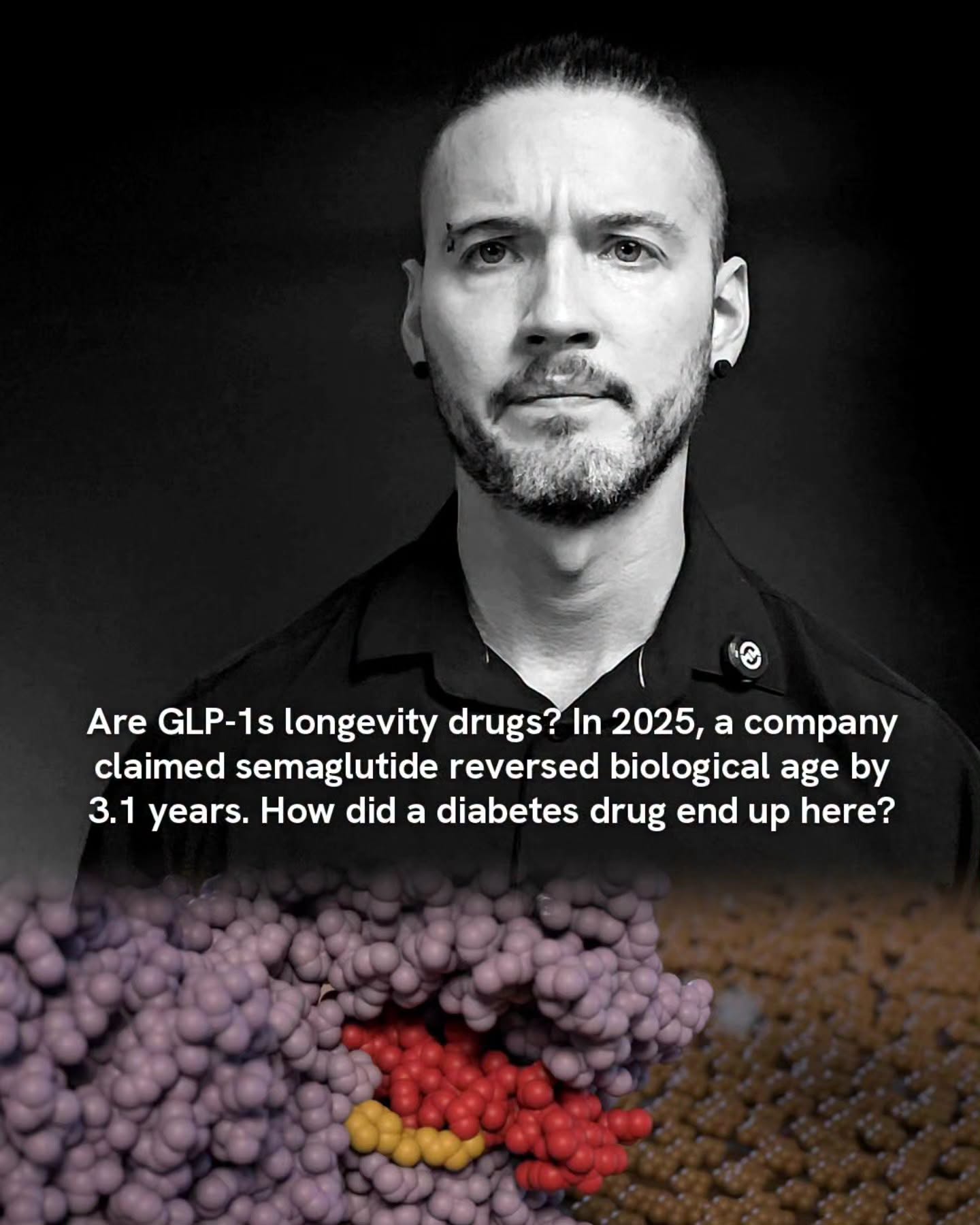
GLP-1 drugs like Ozempic are usually discussed as weight-loss medicines. But in October 2025, a testing company announced that semaglutide had reversed biological age by 3.1 years, and in 2026 a study in Nature reported that old female mice given the drug lived longer. The story of these drugs began with a gut hormone the body destroys in about two minutes, a lizard venom, and heart safety trials that were never meant to find a benefit. This investigation follows that evidence from the original discovery to the latest human trials to determine what GLP-1 drugs actually do, and whether their reputation as longevity drugs has been earned.